VS

Renault Captur vs Mazda CX-30 comparison

Compare performance (158 HP vs 186 HP), boot space and price (21,100 £ vs 25,200 £ ) at a glance. Find out which car is the better choice for you – Renault Captur or Mazda CX-30?

Renault Captur vs Mazda CX-30: Key differences

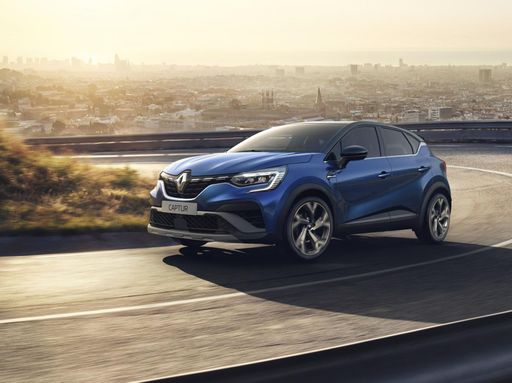
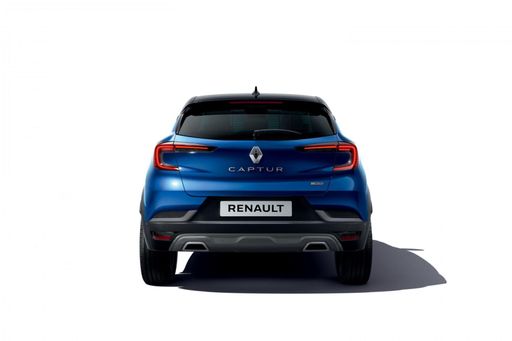
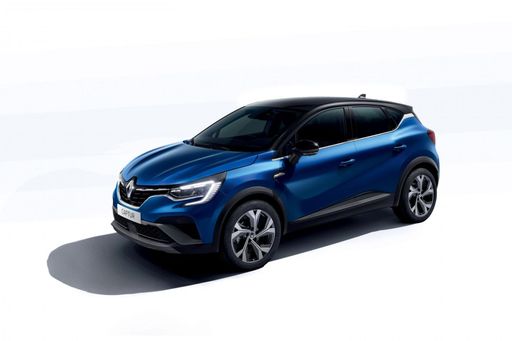
Renault Captur

4.8 (5 Reviews)
rate
  • moderately cheaper
  • noticeably more efficient
  • barely lighter

Mazda CX-30

4.6 (3 Reviews)
rate
  • slightly more power
  • barely quicker 0–100 km/h
  • only slightly more trunk space

All details on performance, efficiency, range and trunk space can be found in the technical comparison below – including user reviews for both models.

Captur

In the ever-evolving landscape of compact SUVs, the Mazda CX-30 and Renault Captur stand out as strong contenders. Both vehicles offer unique blends of aesthetics, technology, and performance but cater to different driving philosophies. This article delves into the technical aspects and innovative features of both models to help prospective buyers make an informed choice.

CX-30

Powertrain and Performance

The Mazda CX-30 boasts a robust engine lineup, featuring a petrol MHEV with options ranging from 140 HP to 186 HP. With a choice between manual and automatic transmissions, the CX-30 caters to diverse driver preferences. Its acceleration times are impressive, clocking in as low as 8.3 seconds for the 0-100 km/h sprint, thanks to its powerful 2.0-liter engine. The all-wheel-drive variant offers enhanced handling and stability, particularly in adverse weather conditions.

On the other hand, the Renault Captur offers a well-rounded powertrain lineup that includes a full hybrid, petrol MHEV, LPG, and standard petrol options. The Captur's maximum output reaches 158 HP. Its acceleration, while a touch slower than the CX-30, still competes well within its segment, achieving the 0-100 km/h mark in as little as 8.5 seconds. The front-wheel-drive setup ensures a smooth driving experience, although it might slightly lag behind the CX-30 in more challenging terrains.


Captur

Fuel Efficiency and Emissions

Fuel efficiency is a noteworthy aspect of the Mazda CX-30, with consumption figures ranging between 5.7 to 6.6 L/100 km. The vehicle also boasts a CO2 emissions rating that varies from 129 to 148 g/km, placing it within the D and E efficiency classes. The combination of performance and relatively low consumption makes it an appealing option for environmentally-conscious drivers.

Conversely, the Renault Captur shines in fuel efficiency, particularly with its hybrid variants. It records consumption figures as low as 4.7 L/100 km, showcasing its commitment to sustainability. With CO2 emissions ratings ranging from 106 to 139 g/km, the Captur holds an edge in terms of greener credentials, typical of Renault's innovative engineering philosophy.

CX-30

Interior and Technology

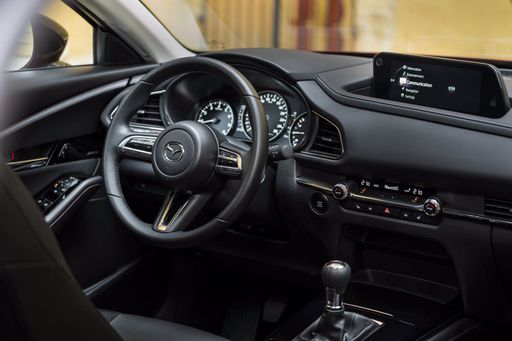
Inside, the Mazda CX-30 is celebrated for its driver-centric layout and premium materials, giving off a more upscale vibe. The infotainment system is intuitive, featuring a centrally positioned screen that integrates seamlessly with smartphone connectivity options. The spacious trunk capacity of 430 liters provides practical storage for day-to-day usage.

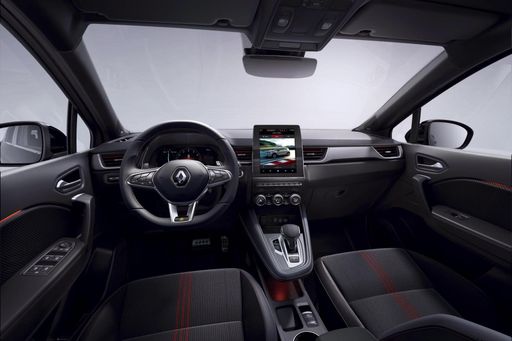
The Renault Captur, while also spacious, takes a slightly different approach with a focus on customizable interior elements. The technology packed into the Captur is impressive, with an energetic infotainment system that supports multiple connectivity options. The trunk space matches that of the CX-30 at 422 liters, making it practical for family outings and everyday tasks.

Captur

Safety Features

Safety is a priority for both vehicles, with the Mazda CX-30 equipped with an array of advanced safety features, including adaptive cruise control, lane-keeping assistance, and automatic emergency braking. These features contribute to a higher safety rating that gives drivers peace of mind on the road.

Similarly, the Renault Captur doesn't fall short in the safety department. It incorporates a suite of safety technologies, including automatic emergency braking, lane departure warnings, and other driver assistance systems, ensuring a secure driving experience for occupants.

CX-30

Conclusion: Which SUV Suits You?

Ultimately, the choice between the Mazda CX-30 and the Renault Captur boils down to personal preferences. If you prioritize performance and an upscale interior, the CX-30 is an excellent option. However, if eco-friendliness, fuel efficiency, and customizable interiors are at the forefront of your automotive desires, the Captur caters beautifully to those specific needs.

Both vehicles encapsulate the essence of modern SUVs, offering a blend of style, functionality, and innovation, ensuring that whichever model you choose, you'll be driving a truly impressive machine.

Here’s where it gets real: The technical differences in detail

Captur

Costs and Efficiency:

Looking at overall running costs, both models reveal some interesting differences in everyday economy.

Renault Captur is moderately cheaper – starting at 21,100 £ , while the Mazda CX-30 costs 25,200 £ . That’s a price difference of around 4,106 £.

Fuel consumption also shows a difference: the Renault Captur uses 4.4 L/100km and is noticeably more efficient than the Mazda CX-30 with 5.7 L/100km. The difference is about 1.3 L/100km.

CX-30

Engine and Performance:

Under the bonnet, it becomes clear which model is tuned for sportiness and which one takes the lead when you hit the accelerator.

When it comes to engine power, the Mazda CX-30 offers slightly more power – delivering 186 HP compared to 158 HP. That’s roughly 28 HP more horsepower.

When accelerating from 0 to 100 km/h, the Mazda CX-30 is barely quicker – completing the sprint in 8.3 s, while the Renault Captur takes 8.9 s. That’s about 0.6 s quicker.

There’s also a difference in torque: the Renault Captur delivers barely more torque with 265 Nm compared to 240 Nm. That’s about 25 Nm more.

Captur

Space and Everyday Use:

Cabin size, boot volume and payload all play a role in everyday practicality. Here, comfort and flexibility make the difference.

Both vehicles offer seating for 5 people.

In terms of curb weight, Renault Captur is barely lighter – 1,323 kg compared to 1,455 kg. The difference is around 132 kg.

Looking at boot space, the Mazda CX-30 offers only slightly more boot space – 430 L compared to 422 L. That’s a difference of about 8 L.

When it comes to payload, the Mazda CX-30 carries marginally more – 496 kg compared to 453 kg. That’s a difference of about 43 kg.

Who wins the race in the data check?

The Renault Captur shows a few small advantages in the objective data comparison.
This result only shows which model scores more points on paper – not which of the two cars feels right for you.

from £21,100
Captur

Renault Captur

  • Engine Type : Full Hybrid, Petrol, Petrol MHEV
  • Transmission : Automatic, Manuel
  • Drive Type : Front-Wheel Drive
  • Power HP : 115 - 158 HP
  • Consumption L/100km : 4.4 - 6 L/100km
Renault Captur
Mazda CX-30

Costs and Consumption

View detailed analysis

Engine and Performance

View detailed analysis

Dimensions and Body

View detailed analysis

Renault Captur

The Renault Captur is a cheeky little crossover that pairs city-friendly agility with a roomy, well-thought-out cabin and enough style to turn heads at the lights. It’s a sensible choice for buyers who want practical versatility and a dash of personality on their daily drives, without taking itself too seriously.

details

Mazda CX-30

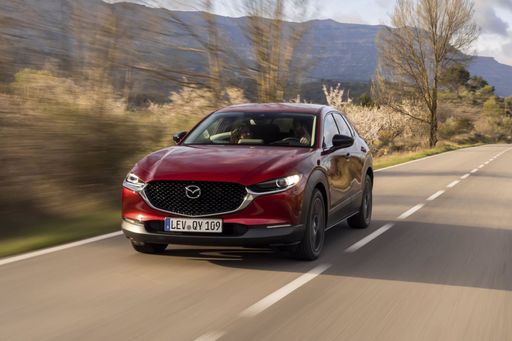
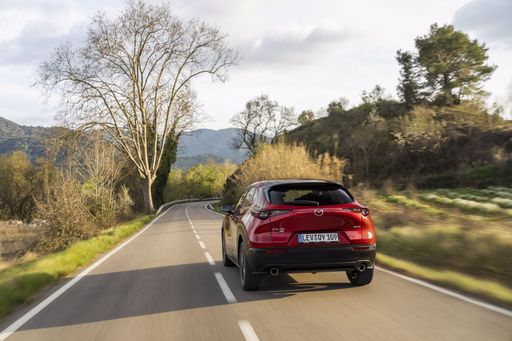
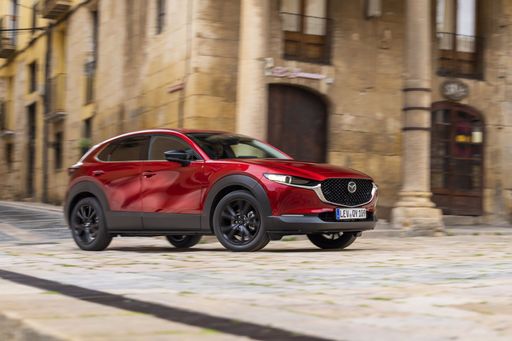
The Mazda CX-30 blends sleek coupe-like lines with the practicality of a compact crossover, feeling more premium than its price tag suggests. It’s a joy to drive for anyone who likes a taut chassis and an interior that treats daily commutes like a small luxury escape.

details
Renault Captur
Mazda CX-30

Costs and Consumption

Price
21,100 - 28,400 £
Price
25,200 - 36,800 £
Consumption L/100km
4.4 - 6 L/100km
Consumption L/100km
5.7 - 6.6 L/100km
Consumption kWh/100km
-
Consumption kWh/100km
-
Electric Range
-
Electric Range
-
Battery Capacity
-
Battery Capacity
-
co2
100 - 137 g/km
co2
129 - 148 g/km
Fuel tank capacity
48 L
Fuel tank capacity
-

Dimensions and Body

Body Type
SUV
Body Type
SUV
Seats
5
Seats
5
Doors
5
Doors
-
Curb weight
1,323 - 1,441 kg
Curb weight
1,455 - 1,587 kg
Trunk capacity
326 - 422 L
Trunk capacity
422 - 430 L
Length
4,239 mm
Length
-
Width
1,797 mm
Width
1,795 mm
Height
1,575 mm
Height
-
Max trunk capacity
1,363 L
Max trunk capacity
-
Payload
447 - 453 kg
Payload
458 - 496 kg

Engine and Performance

Engine Type
Full Hybrid, Petrol, Petrol MHEV
Engine Type
Petrol MHEV
Transmission
Automatic, Manuel
Transmission
Manuel, Automatic
Transmission Detail
Automatic Gearbox, Manual Gearbox, Dual-Clutch Automatic
Transmission Detail
Manual Gearbox, Automatic Gearbox
Drive Type
Front-Wheel Drive
Drive Type
Front-Wheel Drive, All-Wheel Drive
Power HP
115 - 158 HP
Power HP
140 - 186 HP
Acceleration 0-100km/h
8.9 - 12.3 s
Acceleration 0-100km/h
8.3 - 10.3 s
Max Speed
180 km/h
Max Speed
-
Torque
160 - 265 Nm
Torque
238 - 240 Nm
Number of Cylinders
3 - 4
Number of Cylinders
4
Power kW
84 - 116 kW
Power kW
103 - 137 kW
Engine capacity
1,199 - 1,789 cm3
Engine capacity
1,998 - 2,488 cm3

General

Model Year
2,025
Model Year
2,025
CO2 Efficiency Class
C, D, E
CO2 Efficiency Class
D, E
Brand
Renault
Brand
Mazda
DriveDuel uses data analysis and artificial intelligence to evaluate vehicle data and create content. Content is regularly reviewed and improved. The displayed prices are estimates based on German list prices, adjusted to the respective country’s VAT. Country-specific registration taxes are not included. This information is not legally binding.