VS

Renault Clio vs Dacia Duster comparison

Compare performance (158 HP vs 158 HP), boot space and price (17,100 £ vs 16,300 £ ) at a glance. Find out which car is the better choice for you – Renault Clio or Dacia Duster?

Renault Clio vs Dacia Duster: Key differences

Renault Clio

4.7 (1 Reviews)
rate
  • somewhat more efficient
  • a bit quicker 0–100 km/h
  • somewhat lighter

Dacia Duster

5 (2 Reviews)
rate
  • very slightly cheaper
  • noticeably more trunk space

All details on performance, efficiency, range and trunk space can be found in the technical comparison below – including user reviews for both models.

Clio

Dacia Duster vs. Renault Clio: A Clash of Versatility and Urban Efficiency

As car enthusiasts continue to look for the best blend of performance, economy, and innovation, the competition between the Dacia Duster and Renault Clio heats up. Both vehicles have carved their niches in the automotive industry, yet they cater to different target audiences. This comparison looks into their core specifications and technological advancements to help potential buyers make an informed choice.
Duster

Engine Choices and Performance

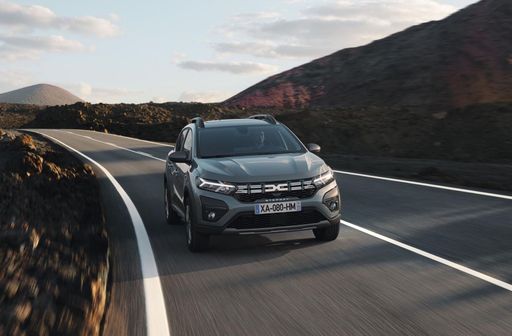
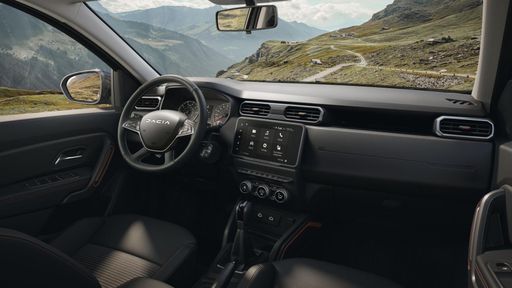
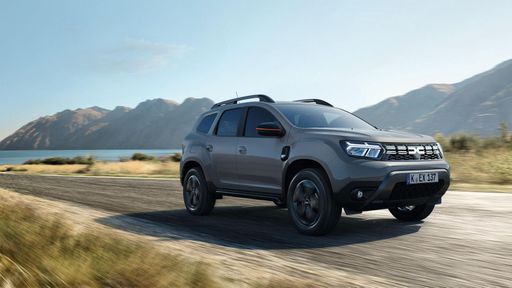
The 2024 Dacia Duster is available with a range of engine options including LPG, Full Hybrid, and Petrol MHEV, delivering power outputs ranging from 91 HP to 140 HP. With both manual and automated manual transmission systems, the Duster offers the flexibility of front-wheel and all-wheel drive configurations. Its acceleration from 0 to 100 km/h varies between 9.9 to 14 seconds, showcasing versatility for both urban and off-road adventures.

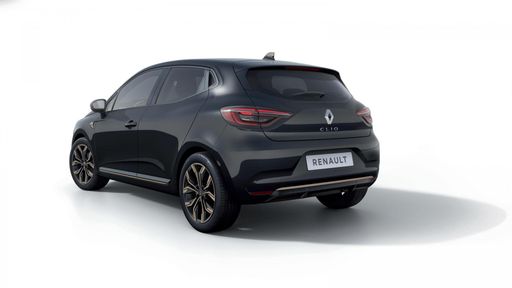
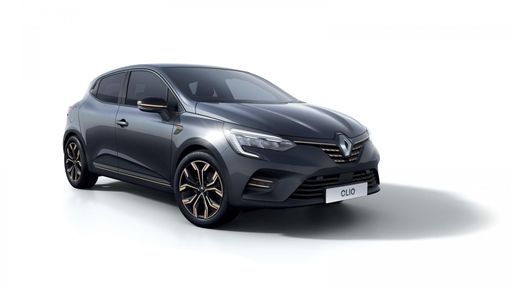
Contrarily, the Renault Clio, a 2023 and 2024 model hatchback, offers engine types including Full Hybrid, Petrol, and LPG, with power outputs ranging from 67 HP to 143 HP. Its transmission options include an automatic gearbox and manual gearbox, with the vehicle commonly utilizing front-wheel drive. The Clio accelerates from 0 to 100 km/h in 9.3 to 17.1 seconds, reflecting its primary focus on city driving and fuel efficiency.

Clio

Fuel Efficiency and Emissions

With a consumption range of 5 to 8.1 L/100km, the Dacia Duster is engineered for balance between power and economy. Its CO2 emissions span from 114 to 147 g/km, aligning with D, C, and E efficiency classes. Such specs are complemented by a fuel tank capacity of up to 55 liters, accommodating long journeys with fewer stops.

The Renault Clio shines with impressive fuel efficiency, particularly the full hybrid variant, boasting a consumption of 4.3 L/100km. For emissions, it presents figures of 97 to 130 g/km, classifying into C and D efficiency classes. Its manageable fuel tank capacity of up to 42 liters emphasizes its suitability for city commutes.

Duster

Dimensions and Practicality

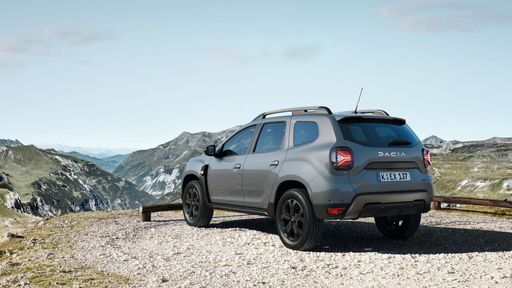
The Duster’s robust SUV frame measures 4343 mm in length and 1813 mm in width, with a notable height of up to 1661 mm. It offers a generous trunk capacity ranging from 430 to 517 liters, making it ideal for families and adventure enthusiasts alike. Curb weight options vary from 1351 to 1465 kg.

In comparison, the Renault Clio’s compact hatchback design stands at a length of 4053 mm, width of 1798 mm, and height of 1440 mm. It provides a trunk space of 301 to 391 liters, catering to the urban driver’s needs. Its lighter curb weight range of 1124 to 1245 kg enhances its maneuverability within city confines.

Clio

Technological Innovations

The Dacia Duster offers practical innovations that bolster its adventure-ready image. Its hybrid and LPG options demonstrate the brand’s commitment to eco-friendly alternatives without compromising on versatility and performance.

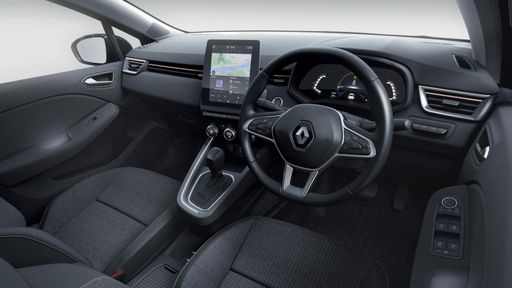
Renault's Clio dazzles with advanced hybrid technology and a sleek, modern design. Its focus on lower emissions aligns with heightened environmental consciousness, whereas the available automatic transmission augments convenience for the driver.

Duster

Conclusion: Choosing Based on Needs

The choice between the Dacia Duster and Renault Clio largely depends on individual preferences and requirements. The Duster delivers a rugged, spacious, and versatile solution for those desiring adventure and off-road capabilities. Meanwhile, the Clio offers a chic, efficient, and environmentally conscious option for urban drivers seeking agility and style. Both vehicles underscore the unique strengths of their respective brands, offering something for every type of motorist.

Here’s where it gets real: The technical differences in detail

Clio

Costs and Efficiency:

Price and efficiency are key factors when choosing a car – and this is often where the real differences emerge.

Dacia Duster is very slightly cheaper – starting at 16,300 £ , while the Renault Clio costs 17,100 £ . That’s a price difference of around 780 £.

Fuel consumption also shows a difference: the Renault Clio uses 4.1 L/100km and is somewhat more efficient than the Dacia Duster with 4.7 L/100km. The difference is about 0.6 L/100km.

Duster

Engine and Performance:

Under the bonnet, it becomes clear which model is tuned for sportiness and which one takes the lead when you hit the accelerator.

Both models deliver identical power – 158 HP each.

When accelerating from 0 to 100 km/h, the Renault Clio is a bit quicker – completing the sprint in 8.3 s, while the Dacia Duster takes 9.4 s. That’s about 1.1 s quicker.

There’s no difference in top speed – both reach 180 km/h.

There’s also a difference in torque: the Dacia Duster delivers slightly more torque with 230 Nm compared to 190 Nm. That’s about 40 Nm more.

Clio

Space and Everyday Use:

Cabin size, boot volume and payload all play a role in everyday practicality. Here, comfort and flexibility make the difference.

Both vehicles offer seating for 5 people.

In terms of curb weight, Renault Clio is somewhat lighter – 1,202 kg compared to 1,377 kg. The difference is around 175 kg.

Looking at boot space, the Dacia Duster offers noticeably more boot space – 517 L compared to 327 L. That’s a difference of about 190 L.

For maximum load capacity, the Dacia Duster offers clearly more capacity – up to 1,609 L, about 433 L more than the Renault Clio.

When it comes to payload, the Renault Clio carries only slightly more – 463 kg compared to 453 kg. That’s a difference of about 10 kg.

Who wins the race in the data check?

The Dacia Duster holds a solid overall lead in the objective data comparison.
This result only shows which model scores more points on paper – not which of the two cars feels right for you.

from £16,300
Duster

Dacia Duster

  • Engine Type : Petrol MHEV, Full Hybrid, LPG
  • Transmission : Manuel, Automatic
  • Drive Type : Front-Wheel Drive, All-Wheel Drive
  • Power HP : 115 - 158 HP
  • Consumption L/100km : 4.7 - 7.6 L/100km
Renault Clio
Dacia Duster

Costs and Consumption

View detailed analysis

Engine and Performance

View detailed analysis

Dimensions and Body

View detailed analysis

Renault Clio

The Clio punches above its weight with chic French styling and a surprisingly grown-up cabin that makes city driving feel effortlessly stylish. It's an easy-to-live-with choice that keeps ownership simple and even manages to put a grin on your face when the traffic gets dull.

details

Dacia Duster

The Dacia Duster is a no-nonsense compact SUV that delivers rugged practicality and surprisingly comfortable everyday driving without fuss. It might not win any beauty contests, but its honest design, easy-to-live-with cabin and tough attitude make it a smart pick for buyers who want reliable transport without luxury frills.

details
Renault Clio
Dacia Duster

Costs and Consumption

Price
17,100 - 23,700 £
Price
16,300 - 24,900 £
Consumption L/100km
4.1 - 5.1 L/100km
Consumption L/100km
4.7 - 7.6 L/100km
Consumption kWh/100km
-
Consumption kWh/100km
-
Electric Range
-
Electric Range
-
Battery Capacity
-
Battery Capacity
0.6 kWh
co2
92 - 115 g/km
co2
107 - 140 g/km
Fuel tank capacity
39 - 42 L
Fuel tank capacity
50 L

Dimensions and Body

Body Type
Hatchback
Body Type
SUV
Seats
5
Seats
5
Doors
5
Doors
5
Curb weight
1,202 - 1,316 kg
Curb weight
1,377 - 1,455 kg
Trunk capacity
301 - 327 L
Trunk capacity
348 - 517 L
Length
4,116 mm
Length
4,343 mm
Width
1,768 mm
Width
1,813 mm
Height
1,451 mm
Height
1,656 - 1,659 mm
Max trunk capacity
1,094 - 1,176 L
Max trunk capacity
1,414 - 1,609 L
Payload
453 - 463 kg
Payload
402 - 453 kg

Engine and Performance

Engine Type
Petrol, Full Hybrid
Engine Type
Petrol MHEV, Full Hybrid, LPG
Transmission
Manuel, Automatic
Transmission
Manuel, Automatic
Transmission Detail
Manual Gearbox, Dual-Clutch Automatic, Automatic Gearbox
Transmission Detail
Manual Gearbox, Automated Manual, Dual-Clutch Automatic
Drive Type
Front-Wheel Drive
Drive Type
Front-Wheel Drive, All-Wheel Drive
Power HP
115 - 158 HP
Power HP
115 - 158 HP
Acceleration 0-100km/h
8.3 - 10.1 s
Acceleration 0-100km/h
9.4 - 11.7 s
Max Speed
180 km/h
Max Speed
180 km/h
Torque
190 Nm
Torque
190 - 230 Nm
Number of Cylinders
3 - 4
Number of Cylinders
3 - 4
Power kW
84 - 116 kW
Power kW
84 - 116 kW
Engine capacity
1,199 - 1,789 cm3
Engine capacity
1,199 - 1,789 cm3

General

Model Year
2,026
Model Year
2,025 - 2,026
CO2 Efficiency Class
C, B
CO2 Efficiency Class
D, C
Brand
Renault
Brand
Dacia
DriveDuel uses data analysis and artificial intelligence to evaluate vehicle data and create content. Content is regularly reviewed and improved. The displayed prices are estimates based on German list prices, adjusted to the respective country’s VAT. Country-specific registration taxes are not included. This information is not legally binding.