@ Renault Group Media
VS

Renault Clio vs Renault Mégane – Performance, range & efficiency compared

Two cars, one duel: Renault Clio meets Renault Mégane.
Which one wins in performance, efficiency and value for money? Find out now!

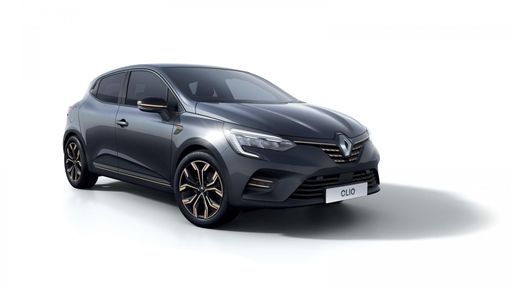
Clio @ Renault Group Media

The automotive landscape is evolving rapidly, and within the French manufacturer Renault, two models stand out: the Clio and Mégane. While both cars embody Renault’s commitment to style and innovation, they cater to different tastes and needs. This comparison will delve into the technical aspects and innovations of the 2023 Renault Clio and the 2024 Renault Mégane to help you decide which one is the best fit for you.

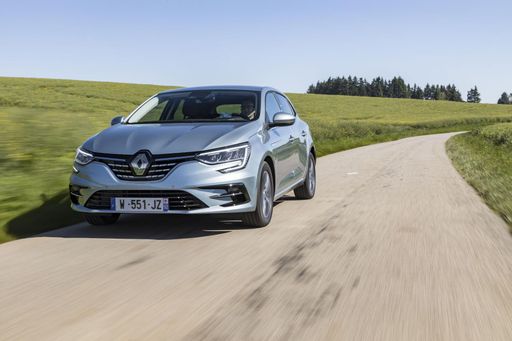
Mégane @ Renault Group Media

Body Type and Design

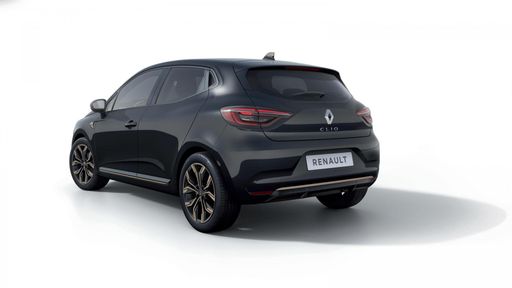
The Renault Clio continues its legacy as a stylish hatchback, measuring 4053 mm in length, 1798 mm in width, and 1440 mm in height. Its compact size makes it a great choice for urban environments, offering easy maneuverability and parking.

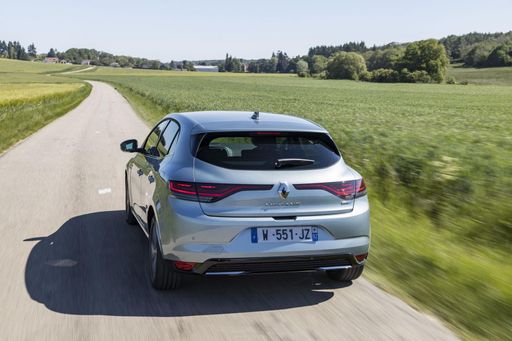
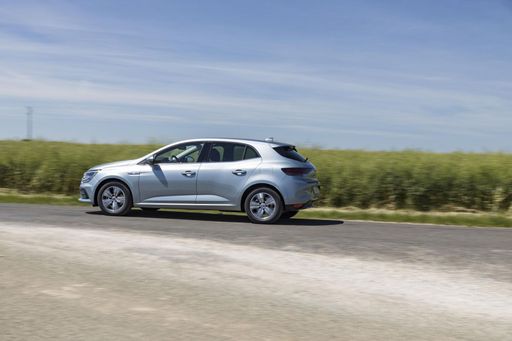
On the other hand, the Renault Mégane has transitioned into the SUV category, reflecting a growing trend in consumer preferences. Slightly larger at 4200 mm in length, 1768 mm in width, and standing taller at 1505 mm, the Mégane offers a more commanding presence on the road and increased cabin space.

Clio @ Renault Group Media

Engine Options and Performance

The Clio boasts a variety of engine types, including Full Hybrid, Petrol, and LPG configurations. With power outputs ranging from 67 HP to a robust 143 HP, the Clio offers flexibility for drivers looking for efficiency alongside performance. Its acceleration from 0-100 km/h could be as quick as 9.3 seconds in its 143 HP variant, making it competitive in its class.

Conversely, the Mégane exclusively offers electric powertrains, with outputs of 130 HP and a higher performance option reaching 218 HP. This transition to electric not only reflects a commitment to sustainability but also offers impressive torque of up to 300 Nm, allowing it to reach 0-100 km/h in a mere 7.4 seconds. With a maximum speed of up to 160 km/h, it stands firm on performance while being environmentally friendly.

Mégane @ Renault Group Media

Fuel Efficiency and Range

Efficiency is crucial in today’s automotive market. The Clio delivers solid fuel consumption figures ranging from 4.3 to 7 L/100 km, depending on the engine choice. This is complemented by its economical CO2 output, with some variants registering as low as 97 g/km, making it a viable option for eco-conscious drivers.

In comparison, the Mégane, being electric, boasts an efficiency of 14.9 to 15.4 kWh/100 km. Its electric range varies from 308 km to an impressive 460 km, which allows for extended journeys without the anxiety of frequent charging, positioning it well for both city and highway driving.

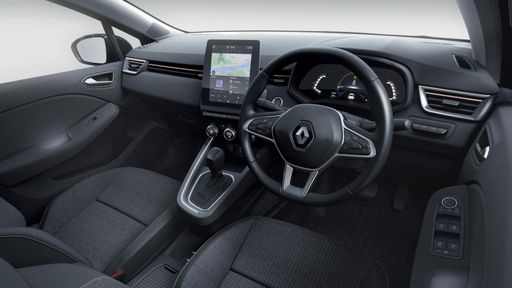
Clio @ Renault Group Media

Interior Space and Features

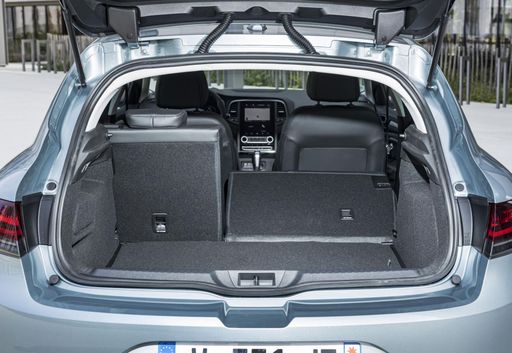
Both models accommodate five passengers comfortably, but their cargo space differs. The Clio offers a trunk capacity ranging from 301 L to 391 L, which is spacious for a hatchback. In contrast, the Mégane’s trunk capacity starts at 389 L, indicating a focus on utility ideal for SUV buyers who may prioritize space for luggage and gear.

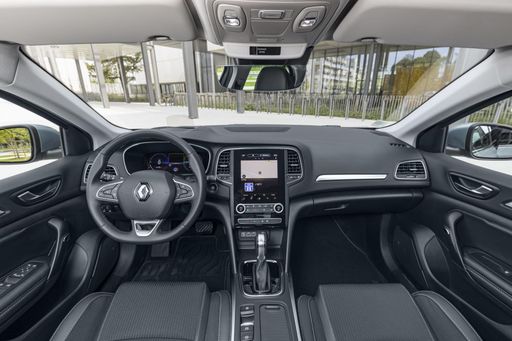
Both cars feature modern technologies and connectivity options, including touch-screen interfaces, smartphone integration, and advanced safety features, providing drivers with a comprehensive driving experience.

Mégane @ Renault Group Media

Innovations and Safety Features

Renault has equipped both vehicles with cutting-edge technologies. The Clio includes features such as lane assist, a rearview camera, and parking sensors that enhance safety and convenience in urban driving conditions. Its design also incorporates elements aimed at improving aerodynamics for better fuel efficiency.

The Mégane shines with its electric innovations, offering regenerative braking and advanced energy management systems that optimize battery performance. It also includes enhanced safety features like autonomous emergency braking and an advanced airbag system, reinforcing Renault’s commitment to driver and passenger safety.

Conclusion: Which Should You Choose?

In conclusion, the choice between the Renault Clio and Renault Mégane largely depends on your personal preference and driving needs. If you are looking for a compact and economical hatchback ideal for city travel, the Clio offers a compelling package with its variety of engine choices and efficiency. However, if you prefer a more spacious and modern SUV with the advantages of electric driving, the Mégane is poised to impress with its eco-friendly attributes and advanced technology.

Ultimately, both cars represent Renault's dedication to quality and innovation, continuing to cater to a diverse range of automotive consumers.

Here’s where it gets real: The technical differences in detail

Costs and Efficiency:

Price and efficiency are key factors when choosing a car – and this is often where the real differences emerge.

Renault Clio has a decisively advantage in terms of price – it starts at 16600 £, while the Renault Mégane costs 35100 £. That’s a price difference of around 18472 £.

Engine and Performance:

Power, torque and acceleration say a lot about how a car feels on the road. This is where you see which model delivers more driving dynamics.

When it comes to engine power, the Renault Mégane has a evident edge – offering 218 HP compared to 158 HP. That’s roughly 60 HP more horsepower.

In acceleration from 0 to 100 km/h, the Renault Mégane is somewhat quicker – completing the sprint in 7.40 s, while the Renault Clio takes 8.30 s. That’s about 0.90 s faster.

In terms of top speed, the Renault Clio performs somewhat better – reaching 180 km/h, while the Renault Mégane tops out at 160 km/h. The difference is around 20 km/h.

There’s also a difference in torque: Renault Mégane pulls distinct stronger with 300 Nm compared to 205 Nm. That’s about 95 Nm difference.

Space and Everyday Use:

Whether family car or daily driver – which one offers more room, flexibility and comfort?

Both vehicles offer seating for 5 people.

In curb weight, Renault Clio is decisively lighter – 1124 kg compared to 1719 kg. The difference is around 595 kg.

In terms of boot space, the Renault Clio offers barely noticeable more room – 391 L compared to 389 L. That’s a difference of about 2 L.

In maximum load capacity, the Renault Mégane performs slightly better – up to 1332 L, which is about 156 L more than the Renault Clio.

When it comes to payload, Renault Clio minimal takes the win – 463 kg compared to 446 kg. That’s a difference of about 17 kg.

Who comes out on top?

Overall, the Renault Clio shows itself to be wins the duel decisively and secures the title of DriveDuel Champion.
It convinces with the more balanced overall package and proves to be the more versatile choice for everyday use.

from about £16,600
Clio @ Renault Group Media

Renault Clio

  • Engine Type : Full Hybrid, Petrol
  • Transmission : Automatic, Manuel
  • Drive Type : Front-Wheel Drive
  • Power HP : 67 - 158 HP
  • Consumption L/100km : 4.1 - 5.3 L

Renault Clio

The Clio punches above its weight with chic French styling and a surprisingly grown-up cabin that makes city driving feel effortlessly stylish. It's an easy-to-live-with choice that keeps ownership simple and even manages to put a grin on your face when the traffic gets dull.

details

Renault Mégane

The Renault Mégane blends Gallic flair with practical everyday charm, showing that sensible transport can still have personality and poise. It’s a smart pick for buyers who want a comfortable, stylish hatchback that feels a little more special than the usual commute companion.

details
Renault Clio
Renault Mégane
Clio @ Renault Group Media
Mégane @ Renault Group Media

Costs and Consumption

Price
16600 - 23700 £
Price
35100 - 38500 £
Consumption L/100km
4.1 - 5.3 L
Consumption L/100km
-
Consumption kWh/100km
-
Consumption kWh/100km
15.40 kWh
Electric Range
-
Electric Range
452 km
Battery Capacity
0.60 kWh
Battery Capacity
-
co2
92 - 121 g/km
co2
0 g/km
Fuel tank capacity
39 - 42 L
Fuel tank capacity
-

Dimensions and Body

Body Type
Hatchback
Body Type
SUV
Seats
5
Seats
5
Doors
5
Doors
5
Curb weight
1124 - 1331 kg
Curb weight
1719 kg
Trunk capacity
301 - 391 L
Trunk capacity
389 L
Length
4053 - 4116 mm
Length
4200 mm
Width
1768 - 1798 mm
Width
1783 mm
Height
1440 - 1451 mm
Height
1505 mm
Max trunk capacity
979 - 1176 L
Max trunk capacity
1332 L
Payload
398 - 463 kg
Payload
446 kg

Engine and Performance

Engine Type
Full Hybrid, Petrol
Engine Type
Electric
Transmission
Automatic, Manuel
Transmission
Automatic
Transmission Detail
Automatic Gearbox, Manual Gearbox, Dual-Clutch Automatic
Transmission Detail
Reduction Gearbox
Drive Type
Front-Wheel Drive
Drive Type
Front-Wheel Drive
Power HP
67 - 158 HP
Power HP
218 HP
Acceleration 0-100km/h
8.3 - 17.1 s
Acceleration 0-100km/h
7.40 s
Max Speed
160 - 180 km/h
Max Speed
160 km/h
Torque
95 - 205 Nm
Torque
300 Nm
Number of Cylinders
3 - 4
Number of Cylinders
-
Power kW
49 - 116 kW
Power kW
160 kW
Engine capacity
999 - 1789 cm3
Engine capacity
-

General

Model Year
2023 - 2026
Model Year
2025
CO2 Efficiency Class
C, D, B
CO2 Efficiency Class
A
Brand
Renault
Brand
Renault
Is the Renault Clio offered with different drivetrains?

The Renault Clio is offered with Front-Wheel Drive.

The prices and data displayed are estimates based on German list prices and may vary by country. This information is not legally binding.