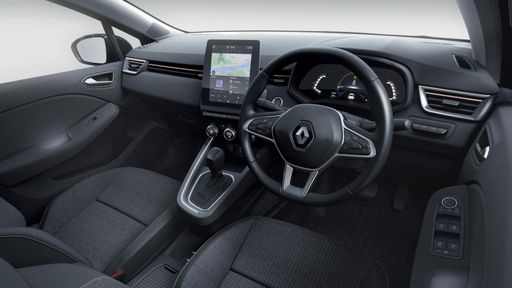
@ Renault Group Media
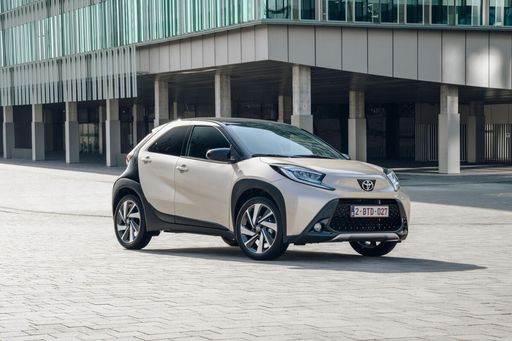
@ Toyota Motor Corporation
VS

Renault Clio vs Toyota Aygo – Which one offers the better deal?

Everyday use, family trips or long-distance drives – here’s where the differences show.
Discover whether Renault Clio or Toyota Aygo fits your lifestyle better.

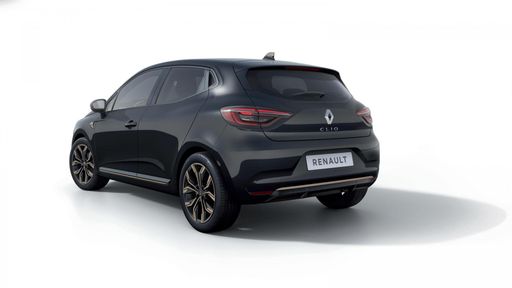
Clio @ Renault Group Media

Introduction: Tailoring the Urban Experience

In the competitive world of compact cars, the Renault Clio and Toyota Aygo stand out as popular choices for city dwellers and small car enthusiasts. Both models offer unique features, technologies, and driving experiences tailored for urban environments. In this article, we will delve into a detailed comparison of these two appealing vehicles, examining their technical specifications, innovations, and overall performance.
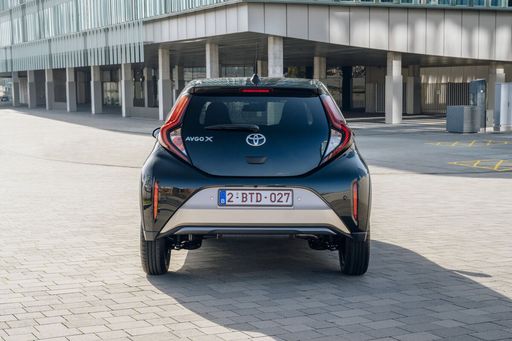
Aygo @ Toyota Motor Corporation

Design and Dimensions: Making a Statement

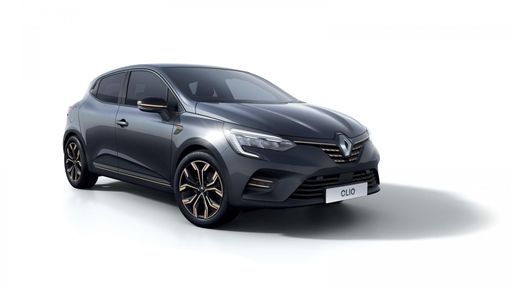
The Renault Clio showcases a modern hatchback design, measuring 4053 mm in length, 1798 mm in width, and 1440 mm in height. Its sporty appearance and five-door configuration make it practical and attractive for young drivers.

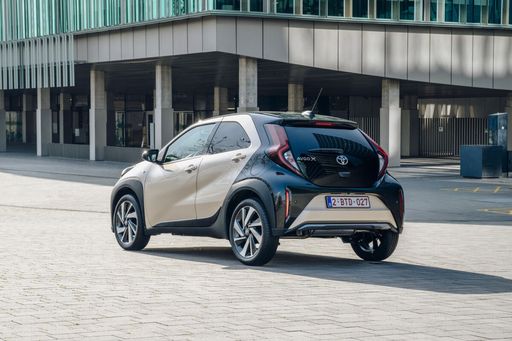
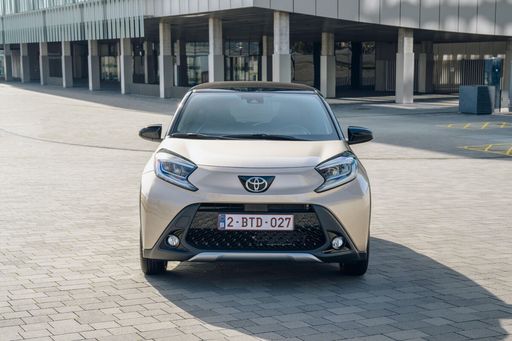
On the other hand, the Toyota Aygo features a compact SUV design, with dimensions of 3700 mm long, 1740 mm wide, and 1510 mm high. Although slightly smaller, the Aygo's distinctive styling and five-door entry ensure that it also leaves a mark in the crowded urban landscape.

Clio @ Renault Group Media

Engine Options: Power and Efficiency

The engine line-up of the Renault Clio is versatile, featuring options like a 1.6L full hybrid and petrol variants ranging up to 143 HP. It also offers LPG engines, which is a bonus for those seeking alternative fuel options. The automatic transmissions, including a CVT option, provide smooth gear shifting, while the front-wheel drive system ensures efficient handling on city roads.

Conversely, the Toyota Aygo packs a 1.0L petrol engine generating 72 HP. Though less powerful compared to the Clio, it is still a reliable option for maneuvering through urban settings. It is available with both manual and CVT automatic transmissions. The consistency of fuel consumption—approximately 4.8 to 4.9 L/100km—along with a CO2 emission rating between 108 and 112 g/km, supports its reputation as an economical vehicle.

Aygo @ Toyota Motor Corporation

Performance: Acceleration and Top Speed

Acceleration is one of the key differentiators between the two cars. The Renault Clio impressively accelerates from 0 to 100 km/h in as little as 9.3 seconds, proving to be the faster option for those who crave performance. The Clio boasts a maximum speed of 174 km/h, which is notably higher than the Aygo's top speed of 158 km/h.

The Aygo lagged behind, with an acceleration time of 15.5 to 15.6 seconds. While not built for speed, its driving characteristics are perfect for navigating urban traffic, making it more about convenience than raw performance.

Clio @ Renault Group Media

Interior and Comfort: Room for the Journey

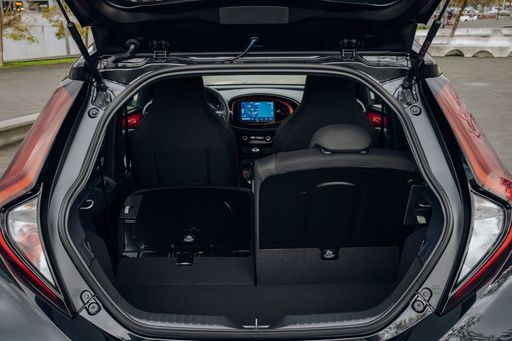
When it comes to interior space, the Renault Clio takes the lead with its capacity to accommodate five passengers comfortably. The trunk space is also generous, offering a trunk capacity of 301 to 391 liters depending on the model. This additional space caters well to families and those who require room for luggage or groceries.

The Toyota Aygo, however, only seats four and has a smaller trunk capacity of 231 liters. Despite this, the Aygo's smaller size can be an advantage for urban maneuverability, making parking in tight spots easier.

Aygo @ Toyota Motor Corporation

Innovations: Tech Features at the Forefront

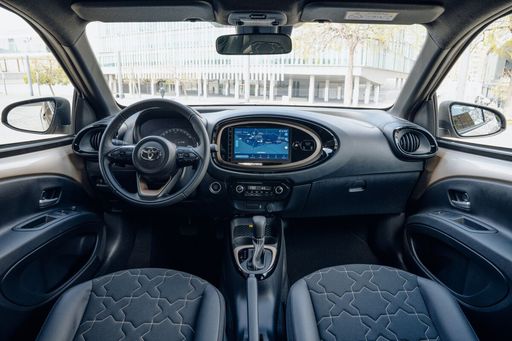
Both the Renault Clio and Toyota Aygo come equipped with modern technology, but the Clio edges out slightly with advanced features. It includes a robust infotainment system with an intuitive touchscreen interface, offering seamless smartphone connectivity, and driver assistance features such as lane departure warning and adaptive cruise control.

The Aygo isn't far behind, featuring a user-friendly entertainment system with essential connectivity options. While it lacks some of the more advanced tech found in the Clio, it still offers a sufficient level of comfort for most urban users.

Conclusion: Choosing Your Champion

Deciding between the Renault Clio and Toyota Aygo ultimately hinges on personal preferences and requirements. If performance, interior space, and advanced technology are high on your list, the Clio is undoubtedly the better choice. Conversely, if you prefer a compact, economical vehicle that's easy to navigate through urban environments, the Aygo might be just what you need. Both cars have something to offer, fitting various lifestyles and needs in the busy landscape of modern driving.

Here’s where it gets real: The technical differences in detail

Costs and Efficiency:

Price and efficiency are key factors when choosing a car – and this is often where the real differences emerge.

Toyota Aygo has a minimal advantage in terms of price – it starts at 15500 £, while the Renault Clio costs 16600 £. That’s a price difference of around 1080 £.

Fuel consumption also shows a difference: Renault Clio manages with 4.10 L and is therefore somewhat more efficient than the Toyota Aygo with 4.80 L. The difference is about 0.70 L per 100 km.

Engine and Performance:

Power, torque and acceleration are the classic benchmarks for car enthusiasts – and here, some clear differences start to show.

When it comes to engine power, the Renault Clio has a clearly edge – offering 158 HP compared to 72 HP. That’s roughly 86 HP more horsepower.

In acceleration from 0 to 100 km/h, the Renault Clio is decisively quicker – completing the sprint in 8.30 s, while the Toyota Aygo takes 15.50 s. That’s about 7.20 s faster.

In terms of top speed, the Renault Clio performs a bit better – reaching 180 km/h, while the Toyota Aygo tops out at 158 km/h. The difference is around 22 km/h.

There’s also a difference in torque: Renault Clio pulls clearly stronger with 205 Nm compared to 93 Nm. That’s about 112 Nm difference.

Space and Everyday Use:

Cabin size, boot volume and payload all play a role in everyday practicality. Here, comfort and flexibility make the difference.

Seats: Renault Clio offers a bit more seating capacity – 5 vs 4.

In curb weight, Toyota Aygo is somewhat lighter – 1015 kg compared to 1124 kg. The difference is around 109 kg.

In terms of boot space, the Renault Clio offers clearly more room – 391 L compared to 231 L. That’s a difference of about 160 L.

In maximum load capacity, the Renault Clio performs noticeable better – up to 1176 L, which is about 347 L more than the Toyota Aygo.

When it comes to payload, Renault Clio distinct takes the win – 463 kg compared to 345 kg. That’s a difference of about 118 kg.

Who wins the race?

The Renault Clio proves to be leaves the rival little chance and therefore becomes our DriveDuel Champion!
Renault Clio is the better all-rounder in this comparison.

from about £16,600
Clio @ Renault Group Media

Renault Clio

  • Engine Type : Full Hybrid, Petrol
  • Transmission : Automatic, Manuel
  • Drive Type : Front-Wheel Drive
  • Power HP : 67 - 158 HP
  • Consumption L/100km : 4.1 - 5.3 L

Renault Clio

The Clio punches above its weight with chic French styling and a surprisingly grown-up cabin that makes city driving feel effortlessly stylish. It's an easy-to-live-with choice that keeps ownership simple and even manages to put a grin on your face when the traffic gets dull.

details

Toyota Aygo

The Aygo is a cheeky city car that turns congested streets into a playground, with bold styling and sprightly manners that make parking a pleasure rather than a pain. Economical to run and surprisingly well equipped for its size, the Aygo is a smart choice for urban buyers who want personality without a premium price and a car that brings a smile to the daily commute.

details
Renault Clio
Toyota Aygo
Clio @ Renault Group Media
Aygo @ Toyota Motor Corporation

Costs and Consumption

Price
16600 - 23700 £
Price
15500 - 22100 £
Consumption L/100km
4.1 - 5.3 L
Consumption L/100km
4.8 - 4.9 L
Consumption kWh/100km
-
Consumption kWh/100km
-
Electric Range
-
Electric Range
-
Battery Capacity
0.60 kWh
Battery Capacity
-
co2
92 - 121 g/km
co2
108 - 111 g/km
Fuel tank capacity
39 - 42 L
Fuel tank capacity
35 L

Dimensions and Body

Body Type
Hatchback
Body Type
SUV
Seats
5
Seats
4
Doors
5
Doors
5
Curb weight
1124 - 1331 kg
Curb weight
1015 kg
Trunk capacity
301 - 391 L
Trunk capacity
231 L
Length
4053 - 4116 mm
Length
3700 mm
Width
1768 - 1798 mm
Width
1740 mm
Height
1440 - 1451 mm
Height
1510 mm
Max trunk capacity
979 - 1176 L
Max trunk capacity
829 L
Payload
398 - 463 kg
Payload
345 kg

Engine and Performance

Engine Type
Full Hybrid, Petrol
Engine Type
Petrol
Transmission
Automatic, Manuel
Transmission
Manuel, Automatic
Transmission Detail
Automatic Gearbox, Manual Gearbox, Dual-Clutch Automatic
Transmission Detail
Manual Gearbox, CVT
Drive Type
Front-Wheel Drive
Drive Type
Front-Wheel Drive
Power HP
67 - 158 HP
Power HP
72 HP
Acceleration 0-100km/h
8.3 - 17.1 s
Acceleration 0-100km/h
15.5 - 15.6 s
Max Speed
160 - 180 km/h
Max Speed
151 - 158 km/h
Torque
95 - 205 Nm
Torque
93 Nm
Number of Cylinders
3 - 4
Number of Cylinders
3
Power kW
49 - 116 kW
Power kW
53 kW
Engine capacity
999 - 1789 cm3
Engine capacity
998 cm3

General

Model Year
2023 - 2026
Model Year
2024 - 2025
CO2 Efficiency Class
C, D, B
CO2 Efficiency Class
C
Brand
Renault
Brand
Toyota
Is the Renault Clio offered with different drivetrains?

The Renault Clio is offered with Front-Wheel Drive.

The prices and data displayed are estimates based on German list prices and may vary by country. This information is not legally binding.