VS

Renault Scénic vs VW ID.5 comparison

Compare performance (218 HP vs 299 HP), boot space and price (34,600 £ vs 37,200 £ ) at a glance. Find out which car is the better choice for you – Renault Scénic or VW ID.5?

Renault Scénic vs VW ID.5: Key differences

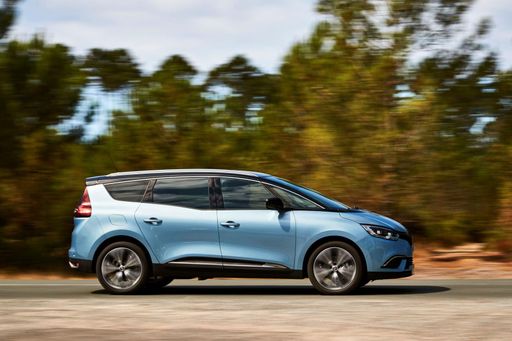
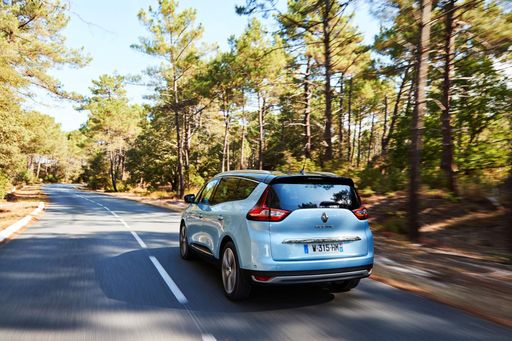
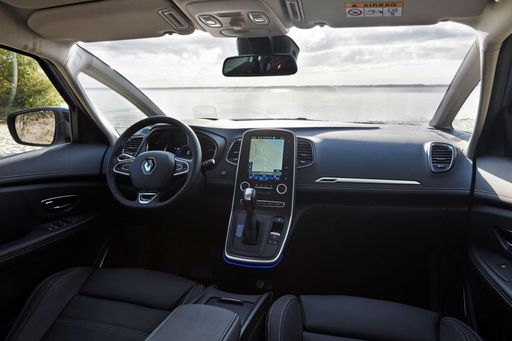
Renault Scénic

4.6 (4 Reviews)
rate
  • very slightly cheaper
  • barely more electric range
  • slightly lighter
details

VW ID.5

2.9 (2 Reviews)
rate
  • visibly more power
  • very slightly more efficient
  • clearly quicker 0–100 km/h
details

All details on performance, efficiency, range and trunk space can be found in the technical comparison below – including user reviews for both models.

By Achim Sedelmaier

Scénic

Electric Duel: Renault Scénic vs. VW ID.5

The electric vehicle market is rapidly transforming the automotive landscape, and two contenders stand out in the SUV category: the revamped Renault Scénic and the sleek VW ID.5. Both vehicles promise cutting-edge technology, efficient powertrains, and modernist design, but how do they compare? In this head-to-head, we delve into the technical aspects and innovative features of these electric SUVs to see which one might be the better fit for prospective buyers.
ID.5

Power Delivery and Performance

The 2024 Renault Scénic offers an electric powertrain with options delivering 170 or 220 horsepower, achieved through a front-wheel-drive configuration. This translates to competent acceleration figures, with the Scénic rushing from 0 to 100 km/h in 8.6 to 7.9 seconds, depending on the variant. Maximum speeds are capped at 150 km/h and 170 km/h, indicative of a vehicle perfect for urban and suburban environments.

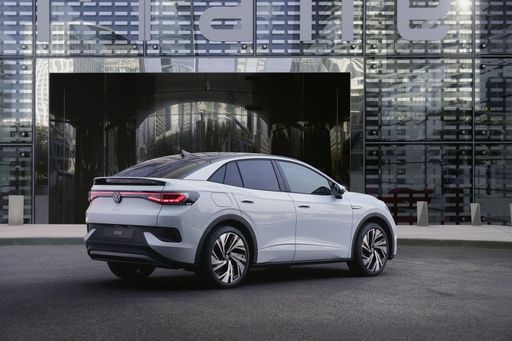
In contrast, the VW ID.5 comes with a diverse powertrain lineup, offering configurations that deliver between 286 and 340 horsepower with rear-wheel and all-wheel-drive options. With a brisker acceleration time of 5.4 seconds (in the high-performance models), the ID.5 edges out the Scénic for those with a keen need for speed, all while maintaining a maximum speed of 180 km/h.

Scénic

Energy Efficiency and Range

The Renault Scénic delivers a satisfying range between 420 and 598 kilometers on a single charge, consuming between 16.7 and 17.6 kWh per 100 kilometers. Its CO2 efficiency class is rated at A, emphasizing its commitment to sustainability.

The VW ID.5 impresses with a competitive range spanning 365 to 563 kilometers, varying by its extensive battery options between 52 kWh and 79 kWh. Notably, the ID.5 consumes slightly less energy, with figures as low as 15.6 kWh per 100 kilometers, reinforcing its efficient design philosophy.

ID.5

Interior and Cargo Space

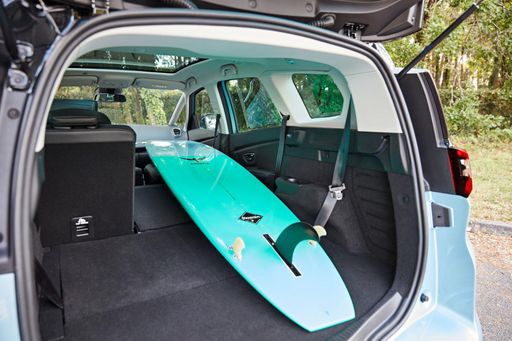
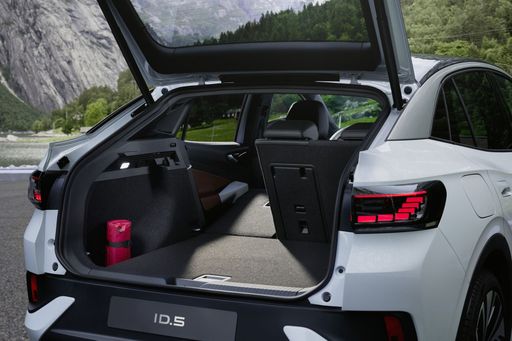
Inside, both vehicles cater to five passengers with comfort and style. The Renault Scénic offers a trunk capacity of 545 liters, providing ample storage for family excursions or trips with an essential luggage load.

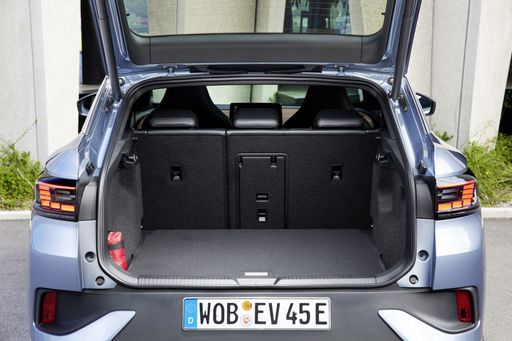
The VW ID.5 comes slightly ahead in storage with 549 liters of trunk capacity. This minimal difference indicates both vehicles are well-suited to handle family outings or longer adventures with ease.

Scénic

Dimensions and Design

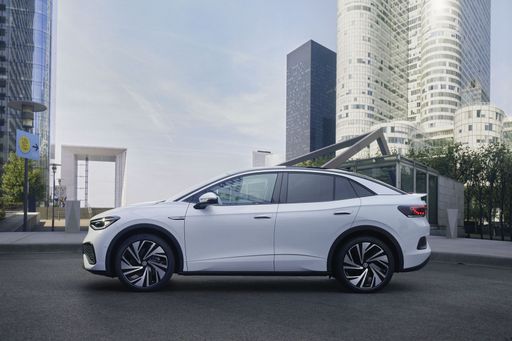
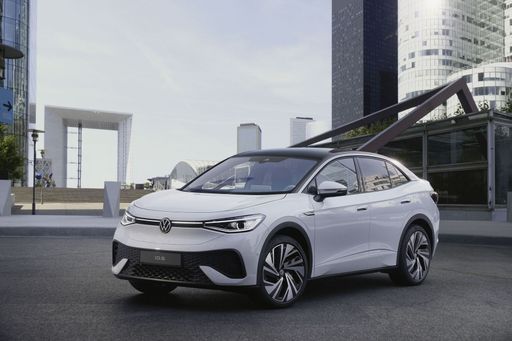
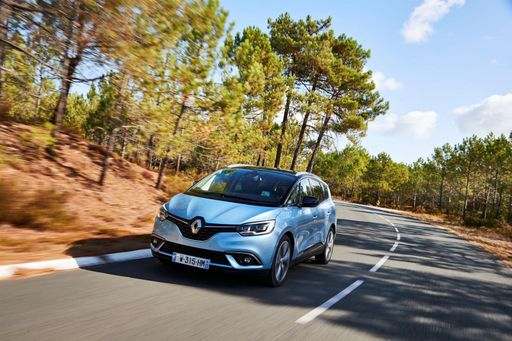
The Renault Scénic's dimensions—the length is 4470 mm, width 1864 mm, and height 1571 mm—offer a robust yet manageable urban driving profile. In comparison, the VW ID.5 slightly stretches out with a length of up to 4599 mm, width of 1852 mm, and height reaching 1618 mm, placing emphasis on a more aerodynamic silhouette.

ID.5

Conclusion

In this clash of electric SUVs, both the Renault Scénic and VW ID.5 exhibit remarkable aptitude, ensuring they cater to a wide variety of electric vehicle enthusiasts. The Scénic impresses with its range and compact SUV dynamics, ideal for those prioritizing a balance of performance and efficiency. Conversely, the VW ID.5 stands out with its powerful acceleration and sleek design, appealing to those with a penchant for spirited drives and aesthetic appeal.

Ultimately, the decision between the Renault Scénic and VW ID.5 will rest upon your driving preferences, range requirements, and aesthetic inclinations. Both SUVs signify a step towards the future of automotive transport, embodying the shift towards electrification with their innovative features and green footprints.

Here’s where it gets real: The technical differences in detail

Scénic

Costs and Efficiency:

Looking at overall running costs, both models reveal some interesting differences in everyday economy.

Renault Scénic is very slightly cheaper – starting at 34,600 £ , while the VW ID.5 costs 37,200 £ . That’s a price difference of around 2,537 £.

In terms of energy consumption, the VW ID.5 is very slightly more efficient: consuming 15.4 kWh/100km compared to 16.6 kWh/100km for the Renault Scénic. That’s a difference of about 1.2 kWh/100km.

As for electric range, the Renault Scénic offers barely more range – reaching up to 598 km, about 27 km more than the VW ID.5.

ID.5

Engine and Performance:

Power, torque and acceleration say a lot about how a car feels on the road. This is where you see which model delivers more driving dynamics.

When it comes to engine power, the VW ID.5 offers visibly more power – delivering 299 HP compared to 218 HP. That’s roughly 81 HP more horsepower.

When accelerating from 0 to 100 km/h, the VW ID.5 is clearly quicker – completing the sprint in 6.1 s, while the Renault Scénic takes 7.9 s. That’s about 1.8 s quicker.

There’s also a difference in torque: the VW ID.5 delivers substantially more torque with 545 Nm compared to 300 Nm. That’s about 245 Nm more.

Scénic

Space and Everyday Use:

Cabin size, boot volume and payload all play a role in everyday practicality. Here, comfort and flexibility make the difference.

Both vehicles offer seating for 5 people.

In terms of curb weight, Renault Scénic is slightly lighter – 1,822 kg compared to 2,051 kg. The difference is around 229 kg.

When it comes to payload, the VW ID.5 carries barely more – 552 kg compared to 518 kg. That’s a difference of about 34 kg.

Who wins the race in the data check?

The VW ID.5 is decisively ahead in the objective data comparison.
This result only shows which model scores more points on paper – not which of the two cars feels right for you.

from £37,200
ID.5

VW ID.5

  • Engine Type Electric
  • Transmission Automatic
  • Drive Type Rear-Wheel Drive, All-Wheel Drive
  • Power HP 190 - 299 HP
  • Consumption kWh/100km 15.4 - 16.1 kWh/100km
  • Electric Range 436 - 571 km
Renault Scénic
VW ID.5

Costs and Consumption

View detailed analysis

Engine and Performance

View detailed analysis

Dimensions and Body

View detailed analysis

Renault Scénic

The Renault Scenic is a practical and comfortable family car that prioritises interior flexibility and everyday usability. With a composed ride and clever storage solutions, it suits buyers who want a versatile, easy-to-live-with vehicle for family duties and daily driving.

details

VW ID.5

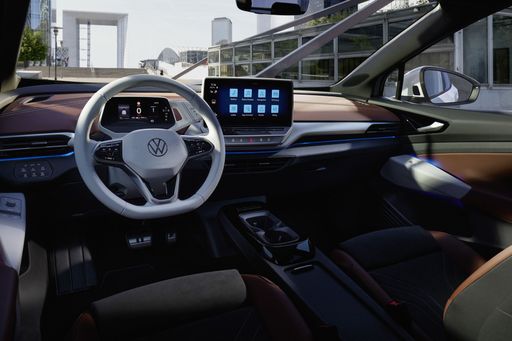
VW ID.5 dresses electric power in a sleek, coupe-like profile that turns sensible motoring into something a touch more stylish and smug. Inside it’s spacious and user-friendly, with calm, confidence-inspiring driving that suits buyers who want EV simplicity without the sci‑fi theatrics.

details
Renault Scénic
VW ID.5

Costs and Consumption

Price
34,600 - 44,000 £
Price
37,200 - 49,300 £
Consumption L/100km
-
Consumption L/100km
-
Consumption kWh/100km
16.6 - 17.5 kWh/100km
Consumption kWh/100km
15.4 - 16.1 kWh/100km
Electric Range
420 - 598 km
Electric Range
436 - 571 km
Battery Capacity
-
Battery Capacity
-
co2
0 g/km
co2
0 g/km
Fuel tank capacity
-
Fuel tank capacity
-

Dimensions and Body

Body Type
SUV
Body Type
SUV
Seats
5
Seats
5
Doors
5
Doors
-
Curb weight
1,822 - 1,927 kg
Curb weight
2,051 - 2,204 kg
Trunk capacity
545 L
Trunk capacity
-
Length
4,470 mm
Length
-
Width
1,864 mm
Width
1,852 mm
Height
1,571 mm
Height
-
Max trunk capacity
1,670 L
Max trunk capacity
-
Payload
514 - 518 kg
Payload
529 - 552 kg

Engine and Performance

Engine Type
Electric
Engine Type
Electric
Transmission
Automatic
Transmission
Automatic
Transmission Detail
Reduction Gearbox
Transmission Detail
Reduction Gearbox
Drive Type
Front-Wheel Drive
Drive Type
Rear-Wheel Drive, All-Wheel Drive
Power HP
170 - 218 HP
Power HP
190 - 299 HP
Acceleration 0-100km/h
7.9 - 8.6 s
Acceleration 0-100km/h
6.1 - 8.4 s
Max Speed
150 - 170 km/h
Max Speed
-
Torque
280 - 300 Nm
Torque
310 - 545 Nm
Number of Cylinders
-
Number of Cylinders
-
Power kW
125 - 160 kW
Power kW
140 - 220 kW
Engine capacity
-
Engine capacity
-

General

Model Year
2025
Model Year
2026
CO2 Efficiency Class
A
CO2 Efficiency Class
A
Brand
Renault
Brand
VW
DriveDuel uses data analysis and artificial intelligence to evaluate vehicle data and create content. Content is regularly reviewed and improved. The displayed prices are estimates based on German list prices, adjusted to the respective country’s VAT. Country-specific registration taxes are not included. This information is not legally binding.