VS

Renault Scénic vs VW T-Roc comparison

Compare performance (218 HP vs 150 HP), boot space and price (34600 £ vs 26400 £ ) at a glance. Find out which car is the better choice for you – Renault Scénic or VW T-Roc?

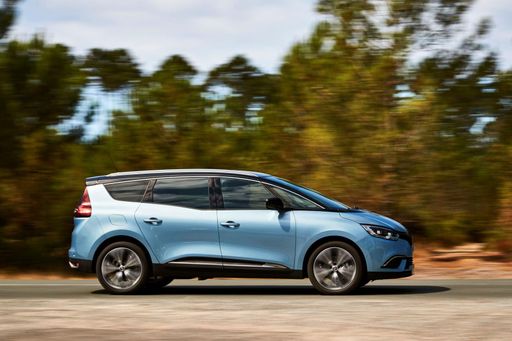
Scénic

Rethinking Family Travel: Renault Scénic vs. VW T-Roc

In the rapidly evolving landscape of compact SUVs, two contenders stand out in the 2024 lineup: the Renault Scénic and VW T-Roc. Both vehicles offer distinct takes on modern efficiency, technology, and family-friendly design. How do they stack up against each other? Let's dive into the details and find out.
T-Roc

Power and Performance

The 2024 Renault Scénic strides confidently into the electric vehicle arena. It's equipped with options for 170 HP or 220 HP electric motors, promising a seamless and eco-friendly driving experience with zero emissions (0g/km CO2). The Renault offers impressive torque figures of 280-300 Nm, providing quick acceleration of 0-100 km/h in 7.9 to 8.6 seconds and a top speed range from 150 to 170 km/h. The electric range is a standout feature, between 420 and 598 km on a single charge, making it ideal for both short city trips and long-distance journeys.

On the other hand, the VW T-Roc offers versatility with both petrol and diesel engine options. Power output ranges from 115 HP to a robust 300 HP for those seeking a high-performance edge. While petrol and diesel engines come with CO2 emissions ranging from 125 to 194 g/km, the VW compensates with rapid acceleration: achieving 0-100 km/h in as fast as 4.9 seconds, and a thrilling top speed that maxes out at 250 km/h. The choice between front-wheel and all-wheel drive provides adaptability for various driving conditions.

Scénic

Design and Dimensions

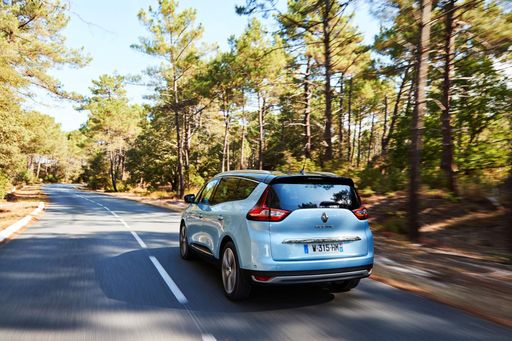
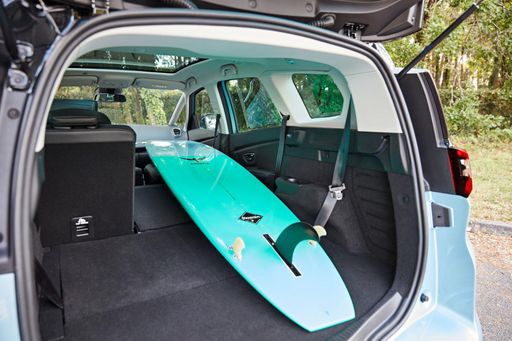
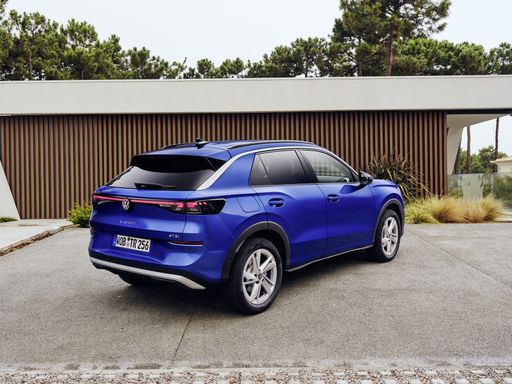
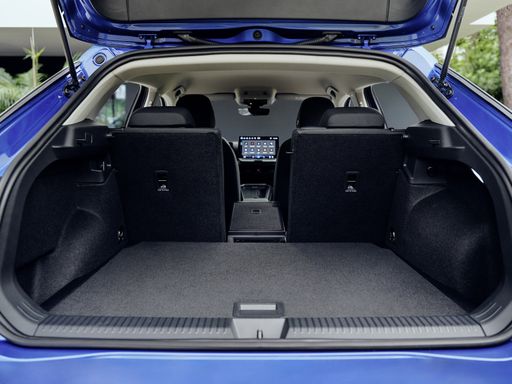
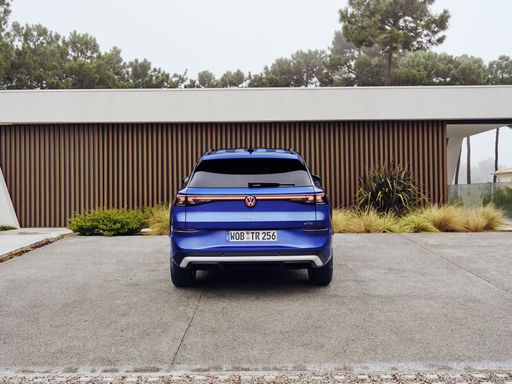
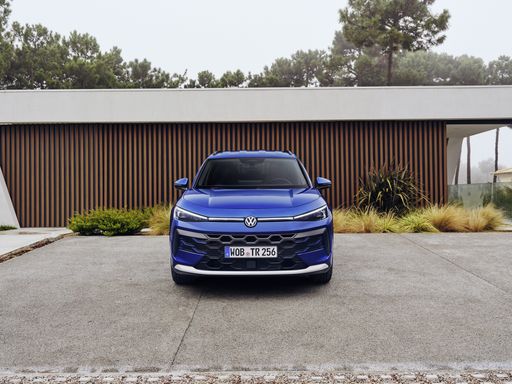
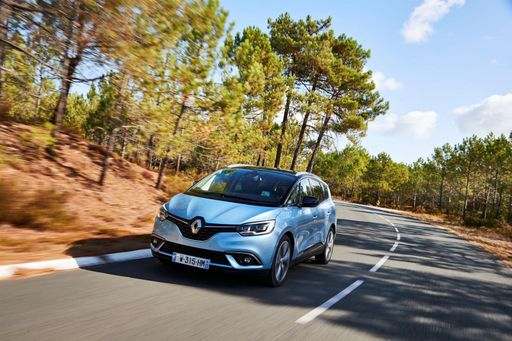
Renault has crafted the Scénic with a focus on aerodynamics and elegance. With a length of 4470 mm, a width of 1864 mm, and a height of 1571 mm, it offers a balance between spaciousness and maneuverability. The substantial trunk capacity of 545 liters caters to the needs of growing families and adventurers alike.

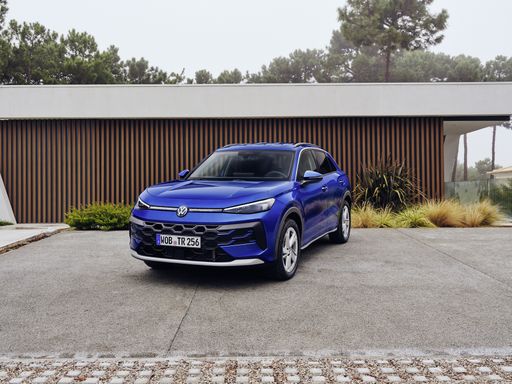
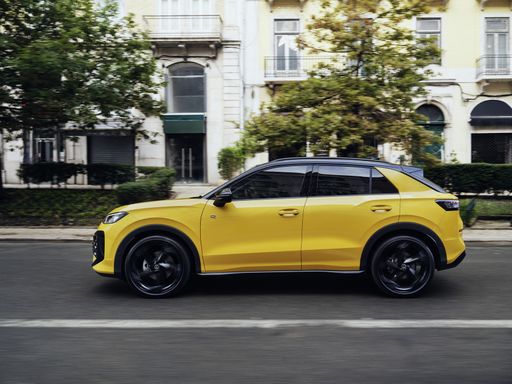
VW T-Roc presents itself as a compact yet practical option for urban and rural settings. Slightly smaller with a length ranging from 4236 mm to 4271 mm, and a width of around 1811 to 1819 mm, the T-Roc provides trunk capacities from 284 to 445 liters depending on the variant, underscoring its adaptability.

T-Roc

Efficiency and Innovation

The Scénic's commitment to sustainability is highlighted by its A-class CO2 efficiency rating and consumption between 16.7 kWh to 17.6 kWh per 100 km. Renault's investment in electric mobility is evident, presenting a quiet revolution in everyday driving.

Conversely, the T-Roc's efficiency spans different spectrums with its petrol and diesel options. Consumption varies widely, reflecting its adaptable engineering to different needs and driving styles, alongside varied CO2 efficiency classes from D to G, demonstrating a broad performance range.

Scénic

Comfort and Capacity

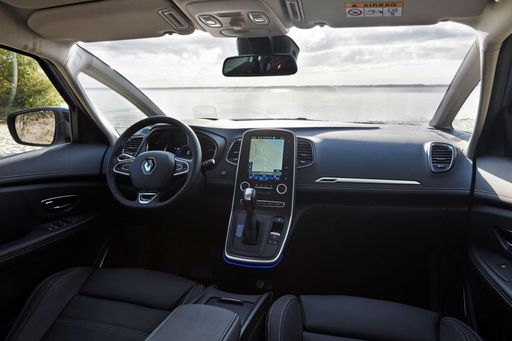
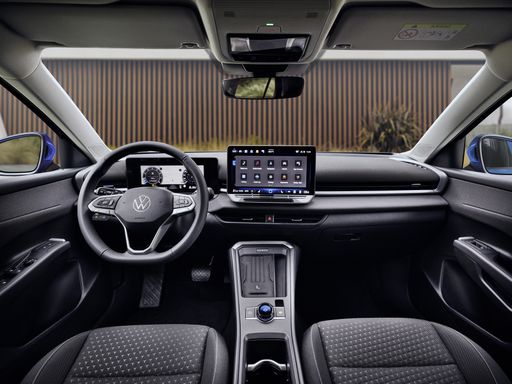
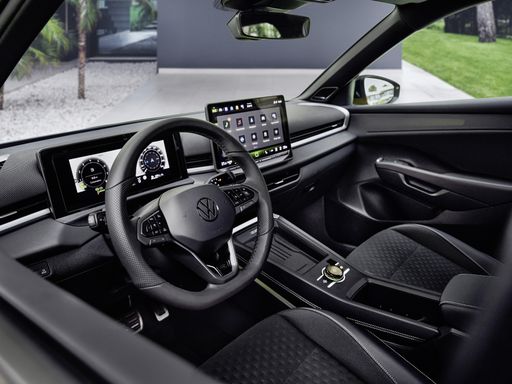
Both vehicles accommodate up to five occupants comfortably, yet each offers unique interior experiences. Renault places a heavy emphasis on modern interior design concepts for a plush and innovative ambiance. Meanwhile, VW prioritizes functionality without skimping on style, delivering a versatile and ergonomic driving environment for both short commutes and longer excursions.

T-Roc

Final Verdict

Choosing between the Renault Scénic and VW T-Roc ultimately boils down to personal preference and lifestyle needs. For those committed to reducing their carbon footprint with cutting-edge electric technology, the Scénic offers a pioneering path. Meanwhile, the T-Roc provides the thrill of traditional automotive performance with the flexibility of conventional fuel options. Both vehicles are ready to redefine how we navigate the roads ahead.

Renault Scénic vs VW T-Roc: Key differences

Renault Scénic

5 (1 Reviews)
rate
  • evident more power
  • slightly quicker from 0–100 km/h
  • decisively more trunk space

VW T-Roc

4.7 (4 Reviews)
rate
  • evident cheaper
  • evident lighter

All details on performance, efficiency, range and trunk space can be found in the technical comparison below – including user reviews for both models.

Here’s where it gets real: The technical differences in detail

Scénic

Costs and Efficiency:

When it comes to price and running costs, the biggest differences usually appear. This is often where you see which car fits your budget better in the long run.

VW T-Roc has a evident advantage in terms of price – it starts at 26400 £ , while the Renault Scénic costs 34600 £ . That’s a price difference of around 8190 £.

T-Roc

Engine and Performance:

Power, torque and acceleration are the classic benchmarks for car enthusiasts – and here, some clear differences start to show.

When it comes to engine power, the Renault Scénic has a evident edge – offering 218 HP compared to 150 HP. That’s roughly 68 HP more horsepower.

In acceleration from 0 to 100 km/h, the Renault Scénic is slightly quicker – completing the sprint in 7.90 s, while the VW T-Roc takes 8.90 s. That’s about 1 s faster.

There’s also a difference in torque: Renault Scénic pulls somewhat stronger with 300 Nm compared to 250 Nm. That’s about 50 Nm difference.

Scénic

Space and Everyday Use:

Whether family car or daily driver – which one offers more room, flexibility and comfort?

Both vehicles offer seating for 5 people.

In curb weight, VW T-Roc is evident lighter – 1465 kg compared to 1822 kg. The difference is around 357 kg.

In terms of boot space, the Renault Scénic offers decisively more room – 545 L compared to 284 L. That’s a difference of about 261 L.

When it comes to payload, Renault Scénic slight takes the win – 518 kg compared to 515 kg. That’s a difference of about 3 kg.

Who wins the race in the data check?

The Renault Scénic holds a decisive overall lead in the objective data comparison.
This result only shows which model scores more points on paper – not which of the two cars feels right for you.

Renault Scénic
VW T-Roc

Costs and Consumption

View detailed analysis

Engine and Performance

View detailed analysis

Dimensions and Body

View detailed analysis
from about £34,600
Scénic

Renault Scénic

  • Engine Type : Electric
  • Transmission : Automatic
  • Drive Type : Front-Wheel Drive
  • Power HP : 170 - 218 HP
  • Consumption kWh/100km : 16.6 - 17.5 kWh
  • Electric Range : 420 - 598 km

Renault Scénic

5 (1 Reviews)
rate

The Renault Scénic is a quietly clever family MPV that balances everyday practicality with unexpected flair, offering a roomy, flexible cabin that makes school runs and weekend escapes less of a chore. It won't dazzle like a sports car, but its composed ride, sensible tech and thoughtful storage solutions make it a superbly pragmatic choice for buyers who prefer substance with a wink.

details

VW T-Roc

4.7 (4 Reviews)
rate

The VW T-Roc mixes cheeky, coupe-like styling with the everyday sense and space of an SUV, so it looks fun without sacrificing family sense. It’s a likeable all-rounder with tidy road manners and plenty of personality, ideal if you want a car that’s practical enough for chores but entertaining enough to enjoy.

details
Renault Scénic
VW T-Roc

Costs and Consumption

Price
34600 - 44000 £
Price
26400 - 38600 £
Consumption L/100km
-
Consumption L/100km
5.5 - 6.3 L
Consumption kWh/100km
16.6 - 17.5 kWh
Consumption kWh/100km
-
Electric Range
420 - 598 km
Electric Range
-
Battery Capacity
-
Battery Capacity
-
co2
0 g/km
co2
126 - 143 g/km
Fuel tank capacity
-
Fuel tank capacity
-

Dimensions and Body

Body Type
SUV
Body Type
SUV
Seats
5
Seats
4 - 5
Doors
5
Doors
-
Curb weight
1822 - 1927 kg
Curb weight
1465 - 1539 kg
Trunk capacity
545 L
Trunk capacity
284 L
Length
4470 mm
Length
-
Width
1864 mm
Width
1811 - 1828 mm
Height
1571 mm
Height
-
Max trunk capacity
1670 L
Max trunk capacity
-
Payload
514 - 518 kg
Payload
368 - 515 kg

Engine and Performance

Engine Type
Electric
Engine Type
Petrol, Petrol MHEV
Transmission
Automatic
Transmission
Manuel, Automatic
Transmission Detail
Reduction Gearbox
Transmission Detail
Manual Gearbox, Dual-Clutch Automatic
Drive Type
Front-Wheel Drive
Drive Type
Front-Wheel Drive
Power HP
170 - 218 HP
Power HP
115 - 150 HP
Acceleration 0-100km/h
7.9 - 8.6 s
Acceleration 0-100km/h
8.9 - 12.3 s
Max Speed
150 - 170 km/h
Max Speed
-
Torque
280 - 300 Nm
Torque
200 - 250 Nm
Number of Cylinders
-
Number of Cylinders
3 - 4
Power kW
125 - 160 kW
Power kW
85 - 110 kW
Engine capacity
-
Engine capacity
999 - 1498 cm3

General

Model Year
2025
Model Year
2024 - 2025
CO2 Efficiency Class
A
CO2 Efficiency Class
E, D
Brand
Renault
Brand
VW
What drive types are available for the Renault Scénic?

Available configurations include Front-Wheel Drive.

The prices shown are estimates based on German list prices, adjusted for local VAT. Local registration taxes (e.g. NoVA, BPM or CO2 malus) are not included. This information is not legally binding.