VS

Renault Symbioz vs Ford Kuga comparison

Compare performance (158 HP vs 243 HP), boot space and price (24,400 £ vs 34,200 £ ) at a glance. Find out which car is the better choice for you – Renault Symbioz or Ford Kuga?

Renault Symbioz vs Ford Kuga: Key differences

Renault Symbioz

5 (3 Reviews)
rate
  • substantially cheaper
  • somewhat lighter

Ford Kuga

4.2 (6 Reviews)
rate
  • markedly more power
  • considerably more efficient
  • visibly quicker 0–100 km/h

All details on performance, efficiency, range and trunk space can be found in the technical comparison below – including user reviews for both models.

Symbioz

Head-to-head: Ford Kuga and Renault Symbioz in one direct comparison

Ford Kuga and Renault Symbioz go head-to-head in this clear Ford Kuga VS Renault Symbioz comparison that buyers search for when weighing a compact SUV-style option against a roomier family crossover. If you’re hunting for a real-world read on character, comfort and day-to-day usability, this comparison frames the differences that matter beyond the brochure. We’ll talk perceived space, ride feel, design presence and who each car actually suits when the keys are in your hand. Expect practical impressions, not a spec-sheet recital, so you know which model fits your life, not just the headline figures.
Kuga

Two different temperaments: playful driver vs quiet practical

The Ford Kuga delivers a sportier, more engaged personality — it’s the one that leans into driving dynamics and a firmer road feel, while the Renault Symbioz plays the calm, sensible card with an emphasis on smoothness and usable space. Kuga projects a more dynamic presence on the road; Symbioz communicates everyday composure and sensible execution. Materials and cabin layout follow the same script: Kuga aims to feel a touch more driver-focused, Symbioz wants to be an unflappable family companion. That contrast makes the Kuga feel like a small SUV with swagger and the Symbioz like a no-nonsense mover for daily life.

Symbioz

Daily life: long runs and country roads or city chores and cargo?

When the commute stretches and you want a car that holds its nerve on faster roads, the Ford Kuga tends to feel firmer and more planted, better suited to mixed driving with a bit of enthusiasm thrown in. The Renault Symbioz shows its strengths in everyday practicality — easier loading, a more relaxed ride and a cabin that keeps the family content on school runs and shopping trips. City drivers who regularly need to stash bags, pushchairs or suitcases will notice how Symbioz makes life simpler without fuss. For weekend getaways the Kuga’s planted nature will appeal to those who still want a bit of driving sparkle en route.

Kuga

Why you’ll tell your friends you picked one over the other

Choose the Ford Kuga and you’ll justify it as the sporty, grown-up choice — a car that looks purposeful and rewards when you ask it to be lively, which makes for good small-talk at the petrol station. Pick the Renault Symbioz and your reasoning will be more about sensible decisions: roomy practicality, calm ride and the satisfaction of having thought ahead. Kuga buyers often lean on image and involvement; Symbioz owners wear the badge of convenience and low-drama usefulness. Both stories sell — it’s down to whether you want to be seen as the driver or the one who made a grown-up decision.

Symbioz

Who should seriously consider the Ford Kuga?

If you prioritise an engaging drive and a car that doubles as a credible daily driver and weekend companion, the Ford Kuga is aimed at you; it suits buyers who like their commute with a little pep and a bolder on-road persona. Those who value perceived refinement and a firmer, more controlled ride will feel at home behind the Kuga’s wheel. It’s also a good fit for someone who wants a compact SUV that doesn’t hide the fact it enjoys being driven. In short: if involvement and image matter, take a close look at the Kuga.

Kuga

Who should seriously consider the Renault Symbioz (and what that says about the Kuga)

The Renault Symbioz will appeal to buyers who prioritise interior space, a relaxed ride and practical day-to-day usability — think family duties, urban errands and luggage-minded weekend plans. If you prize ease of use, roomy practicality and low-stress driving above theatrics, Symbioz is the sensible, quietly confident choice. That pragmatic stance also highlights what you’d be giving up with the Ford Kuga: a bit of driver engagement and sporting tone in exchange for greater calm and usability. Read on to see the finer differences and decide which temperament fits your garage.

Here’s where it gets real: The technical differences in detail

Symbioz

Costs and Efficiency:

When it comes to price and running costs, the biggest differences usually appear. This is often where you see which car fits your budget better in the long run.

Renault Symbioz is substantially cheaper – starting at 24,400 £ , while the Ford Kuga costs 34,200 £ . That’s a price difference of around 9,814 £.

Fuel consumption also shows a difference: the Ford Kuga uses 2.8 L/100km and is considerably more efficient than the Renault Symbioz with 4.5 L/100km. The difference is about 1.7 L/100km.

Kuga

Engine and Performance:

Under the bonnet, it becomes clear which model is tuned for sportiness and which one takes the lead when you hit the accelerator.

When it comes to engine power, the Ford Kuga offers markedly more power – delivering 243 HP compared to 158 HP. That’s roughly 85 HP more horsepower.

When accelerating from 0 to 100 km/h, the Ford Kuga is visibly quicker – completing the sprint in 7.3 s, while the Renault Symbioz takes 9.1 s. That’s about 1.8 s quicker.

There’s also a difference in torque: the Renault Symbioz delivers marginally more torque with 265 Nm compared to 240 Nm. That’s about 25 Nm more.

Symbioz

Space and Everyday Use:

Beyond pure performance, interior space and usability matter most in daily life. This is where you see which car is more practical and versatile.

Both vehicles offer seating for 5 people.

In terms of curb weight, Renault Symbioz is somewhat lighter – 1,359 kg compared to 1,526 kg. The difference is around 167 kg.

When it comes to payload, the Ford Kuga carries somewhat more – 550 kg compared to 459 kg. That’s a difference of about 91 kg.

Who wins the race in the data check?

The Ford Kuga is clearly superior overall in the objective data comparison.
This result only shows which model scores more points on paper – not which of the two cars feels right for you.

from £34,200
Kuga

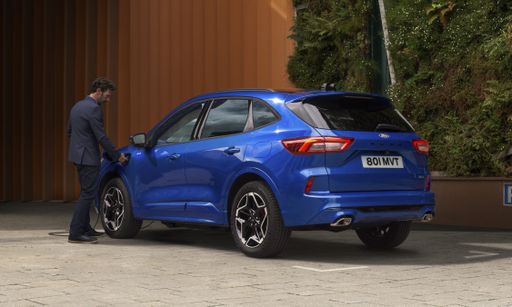
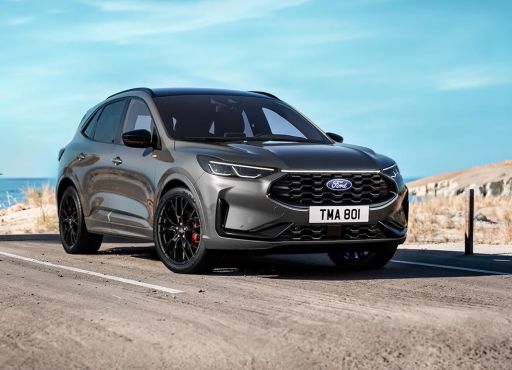
Ford Kuga

  • Engine Type : Petrol, Full Hybrid, Plugin Hybrid
  • Transmission : Manuel, Automatic
  • Drive Type : Front-Wheel Drive, All-Wheel Drive
  • Power HP : 150 - 243 HP
  • Consumption L/100km : 2.8 - 6.8 L/100km
  • Electric Range : 68 km
Renault Symbioz
Ford Kuga

Costs and Consumption

View detailed analysis

Engine and Performance

View detailed analysis

Dimensions and Body

View detailed analysis

Renault Symbioz

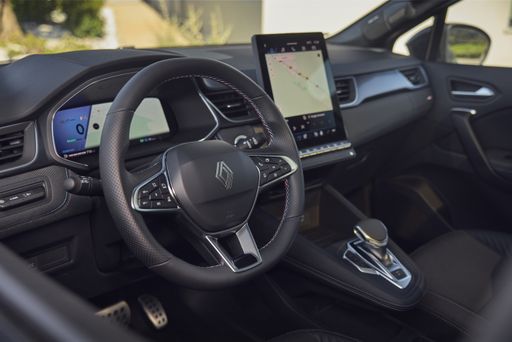
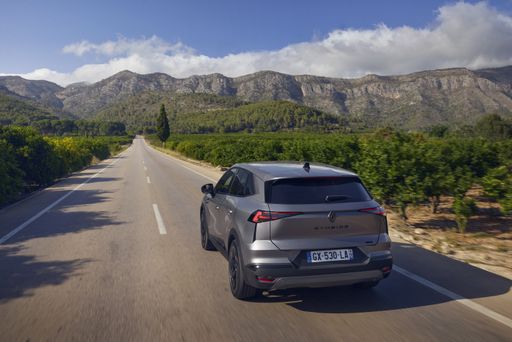
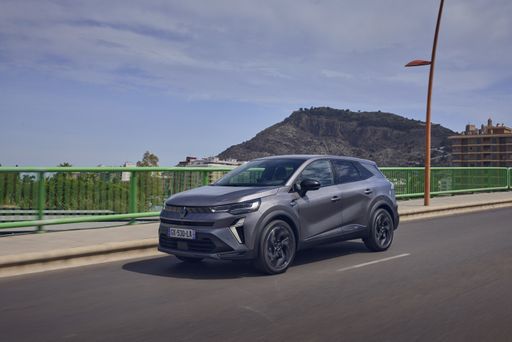
The Renault Symbioz feels less like a traditional car and more like a rolling living room that's been told it's allowed to drive — its flowing lines and minimalist cabin are pure concept-car theatre that teases the future of everyday transport. For buyers with an eye for design and a taste for tech-forward ideas, the Symbioz is an alluring vision of what Renault could offer tomorrow, even if it's not yet a model you can park in your driveway.

details

Ford Kuga

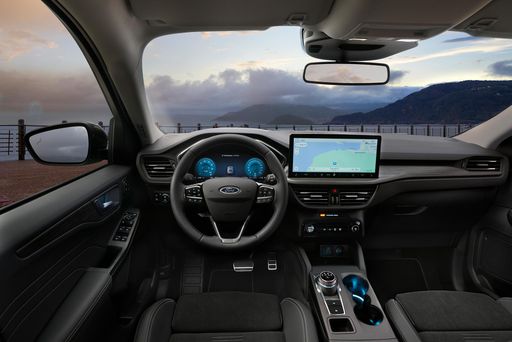
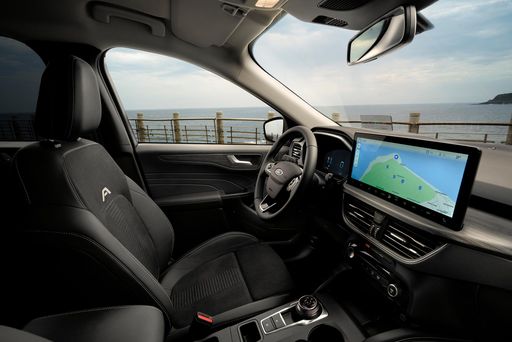
The Kuga is Ford’s adaptable family SUV that blends usable space with a surprisingly lively driving character, making daily commutes and weekend escapes equally enjoyable. With smart interior packaging, an easy-to-use infotainment setup and composed road manners, it’s a sensible choice for buyers who want a bit of fun without the fuss.

details
Renault Symbioz
Ford Kuga

Costs and Consumption

Price
24,400 - 30,700 £
Price
34,200 - 46,300 £
Consumption L/100km
4.5 - 6 L/100km
Consumption L/100km
2.8 - 6.8 L/100km
Consumption kWh/100km
-
Consumption kWh/100km
-
Electric Range
-
Electric Range
68 km
Battery Capacity
-
Battery Capacity
-
co2
102 - 136 g/km
co2
55 - 154 g/km
Fuel tank capacity
48 L
Fuel tank capacity
-

Dimensions and Body

Body Type
SUV
Body Type
SUV
Seats
5
Seats
5
Doors
5
Doors
-
Curb weight
1,359 - 1,465 kg
Curb weight
1,526 - 1,859 kg
Trunk capacity
492 - 576 L
Trunk capacity
-
Length
4,413 mm
Length
-
Width
1,797 mm
Width
1,882 mm
Height
1,575 mm
Height
-
Max trunk capacity
1,682 L
Max trunk capacity
-
Payload
455 - 459 kg
Payload
541 - 550 kg

Engine and Performance

Engine Type
Full Hybrid, Petrol MHEV
Engine Type
Petrol, Full Hybrid, Plugin Hybrid
Transmission
Automatic, Manuel
Transmission
Manuel, Automatic
Transmission Detail
Automatic Gearbox, Manual Gearbox, Dual-Clutch Automatic
Transmission Detail
Manual Gearbox, CVT, Automatic Gearbox
Drive Type
Front-Wheel Drive
Drive Type
Front-Wheel Drive, All-Wheel Drive
Power HP
140 - 158 HP
Power HP
150 - 243 HP
Acceleration 0-100km/h
9.1 - 11 s
Acceleration 0-100km/h
7.3 - 9.9 s
Max Speed
180 km/h
Max Speed
-
Torque
250 - 265 Nm
Torque
240 Nm
Number of Cylinders
4
Number of Cylinders
3 - 4
Power kW
103 - 116 kW
Power kW
111 - 178 kW
Engine capacity
1,332 - 1,789 cm3
Engine capacity
1,496 - 2,488 cm3

General

Model Year
2,025
Model Year
2,025
CO2 Efficiency Class
C, D, E
CO2 Efficiency Class
E, D, B
Brand
Renault
Brand
Ford
DriveDuel uses data analysis and artificial intelligence to evaluate vehicle data and create content. Content is regularly reviewed and improved. The displayed prices are estimates based on German list prices, adjusted to the respective country’s VAT. Country-specific registration taxes are not included. This information is not legally binding.