
 Deutschland
 France
 Nederland
 Great Britain
 Sverige
 Danmark
 Suomi
Suomi Italia
 Polska
 Česko
Česko España
VS
Renault Symbioz vs SsangYong Korando comparison
Compare performance (158 HP vs 190 HP), boot space and price (24,700 £ vs 27,000 £ ) at a glance. Find out which car is the better choice for you – Renault Symbioz or SsangYong Korando?
Renault Symbioz vs SsangYong Korando: Key differences
All details on performance, efficiency, range and trunk space can be found in the technical comparison below – including user reviews for both models.
Symbioz
Costs and Efficiency:
Looking at overall running costs, both models reveal some interesting differences in everyday economy.
Renault Symbioz is very slightly cheaper – starting at 24,700 £ , while the SsangYong Korando costs 27,000 £ . That’s a price difference of around 2,306 £.
Fuel consumption also shows a difference: the Renault Symbioz uses 4.5 L/100km and is clearly more efficient than the SsangYong Korando with 7.5 L/100km. The difference is about 3 L/100km.
Korando
Engine and Performance:
Power, torque and acceleration are the classic benchmarks for car enthusiasts – and here, some clear differences start to show.
When it comes to engine power, the SsangYong Korando offers somewhat more power – delivering 190 HP compared to 158 HP. That’s roughly 32 HP more horsepower.
When accelerating from 0 to 100 km/h, the SsangYong Korando is barely quicker – completing the sprint in 8.4 s, while the Renault Symbioz takes 9.1 s. That’s about 0.7 s quicker.
There’s also a difference in torque: the SsangYong Korando delivers markedly more torque with 360 Nm compared to 265 Nm. That’s about 95 Nm more.
Symbioz
Space and Everyday Use:
Beyond pure performance, interior space and usability matter most in daily life. This is where you see which car is more practical and versatile.
Both vehicles offer seating for 5 people.
In terms of curb weight, Renault Symbioz is moderately lighter – 1,359 kg compared to 1,517 kg. The difference is around 158 kg.
Looking at boot space, the Renault Symbioz offers barely more boot space – 576 L compared to 551 L. That’s a difference of about 25 L.
When it comes to payload, the SsangYong Korando carries barely more – 463 kg compared to 459 kg. That’s a difference of about 4 kg.
Who wins the race in the data check?
The SsangYong Korando is clearly superior overall in the objective data comparison.
This result only shows which model scores more points on paper – not which of the two cars feels right for you.
from £27,000
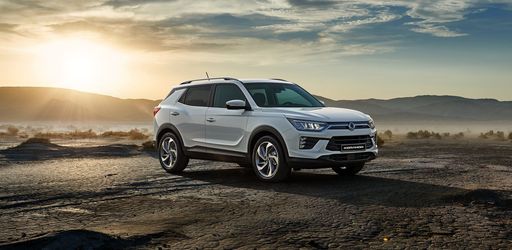
SsangYong Korando
Renault Symbioz
SsangYong Korando
Costs and Consumption
View detailed analysis
View detailed analysis
Engine and Performance
View detailed analysis
View detailed analysis
Dimensions and Body
View detailed analysis
View detailed analysis
Renault Symbioz
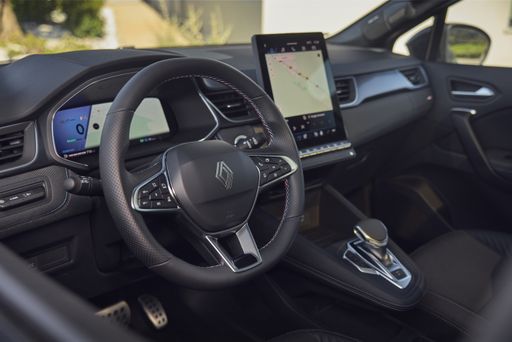
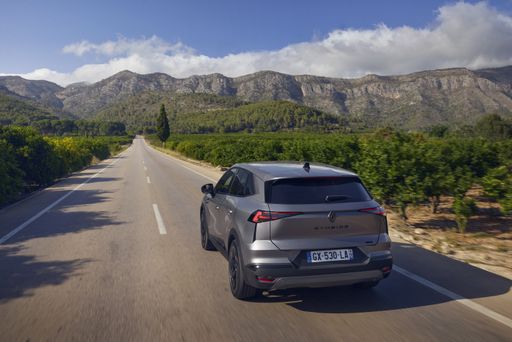
The Renault Symbioz is a forward-looking concept car that imagines a seamless link between vehicle and home, pairing a lounge-like cabin with striking, futuristic styling. More idea than production plan, it showcases Renault's vision for connected, autonomous and sustainable mobility while provoking debate about how we will live and travel.
details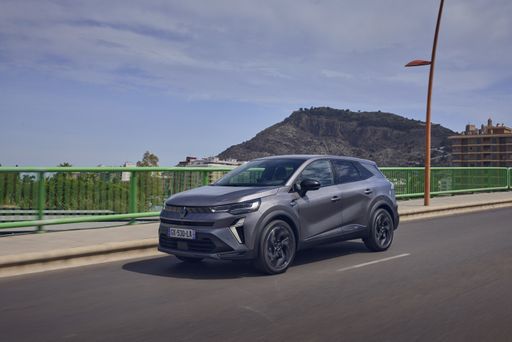
SsangYong Korando
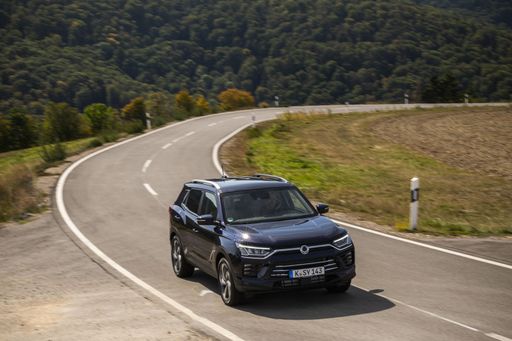
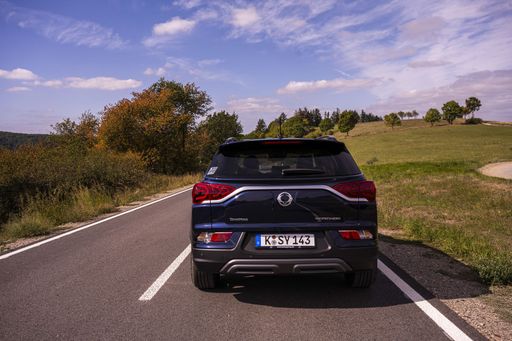
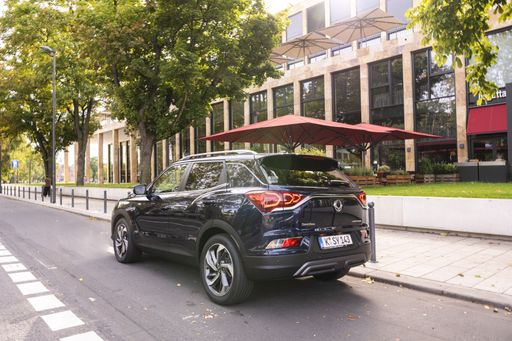
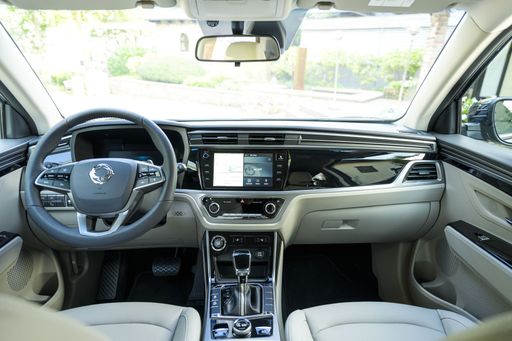
The SsangYong Korando pairs bold, modern styling with a surprisingly roomy and practical cabin, so it looks confident at the lights and handles the daily grind without fuss. It swaps flashy badges for honest value, offering a composed ride, useful equipment and wallet-friendly running that make it an appealing pick for buyers who'd rather spend on weekends than on extravagant finance packages.
details
Renault Symbioz
SsangYong Korando
Costs and Consumption |
|
|---|---|
|
Price
24,700 - 31,100 £
|
Price
27,000 - 42,000 £
|
|
Consumption L/100km
4.5 - 6 L/100km
|
Consumption L/100km
7.5 - 8.6 L/100km
|
|
Consumption kWh/100km
-
|
Consumption kWh/100km
16.8 kWh/100km
|
|
Electric Range
-
|
Electric Range
339 km
|
|
Battery Capacity
-
|
Battery Capacity
-
|
|
co2
102 - 136 g/km
|
co2
0 - 197 g/km
|
|
Fuel tank capacity
-
|
Fuel tank capacity
50 L
|
Dimensions and Body |
|
|---|---|
|
Body Type
SUV
|
Body Type
SUV
|
|
Seats
5
|
Seats
5
|
|
Doors
-
|
Doors
5
|
|
Curb weight
1,359 - 1,465 kg
|
Curb weight
1,517 - 1,840 kg
|
|
Trunk capacity
492 - 576 L
|
Trunk capacity
551 L
|
|
Length
-
|
Length
4,450 - 4,465 mm
|
|
Width
1,797 mm
|
Width
1,870 mm
|
|
Height
-
|
Height
1,620 - 1,645 mm
|
|
Max trunk capacity
-
|
Max trunk capacity
1,248 L
|
|
Payload
455 - 459 kg
|
Payload
410 - 463 kg
|
Engine and Performance |
|
|---|---|
|
Engine Type
Full Hybrid, Petrol MHEV
|
Engine Type
Petrol, Electric
|
|
Transmission
Automatic, Manuel
|
Transmission
Manuel, Automatic
|
|
Transmission Detail
Automatic Gearbox, Manual Gearbox, Dual-Clutch Automatic
|
Transmission Detail
Manual Gearbox, Automatic Gearbox, Reduction Gearbox
|
|
Drive Type
Front-Wheel Drive
|
Drive Type
Front-Wheel Drive, All-Wheel Drive
|
|
Power HP
140 - 158 HP
|
Power HP
163 - 190 HP
|
|
Acceleration 0-100km/h
9.1 - 11 s
|
Acceleration 0-100km/h
8.4 s
|
|
Max Speed
-
|
Max Speed
156 - 191 km/h
|
|
Torque
250 - 265 Nm
|
Torque
260 - 360 Nm
|
|
Number of Cylinders
4
|
Number of Cylinders
4
|
|
Power kW
103 - 116 kW
|
Power kW
120 - 140 kW
|
|
Engine capacity
1,332 - 1,789 cm3
|
Engine capacity
1,497 cm3
|
General |
|
|---|---|
|
Model Year
2025
|
Model Year
2,021 - 2,023
|
|
CO2 Efficiency Class
C, D, E
|
CO2 Efficiency Class
F, G, A
|
|
Brand
Renault
|
Brand
SsangYong
|
DriveDuel uses data analysis and artificial intelligence to evaluate vehicle data and create content. Content is regularly reviewed and improved.
The displayed prices are estimates based on German list prices, adjusted to the respective country’s VAT. Country-specific registration taxes are not included. This information is not legally binding.