VS

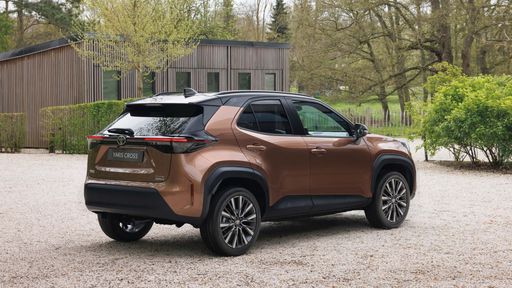
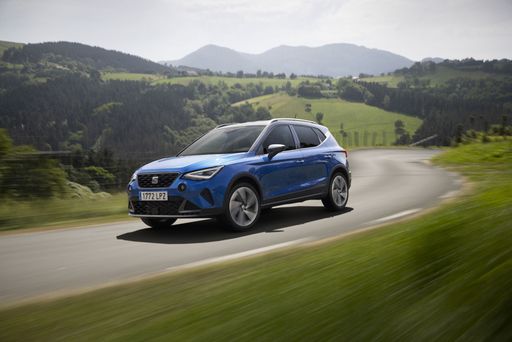
SEAT Arona vs Toyota Yaris Cross comparison

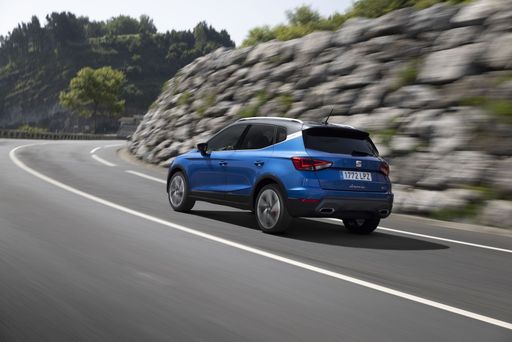
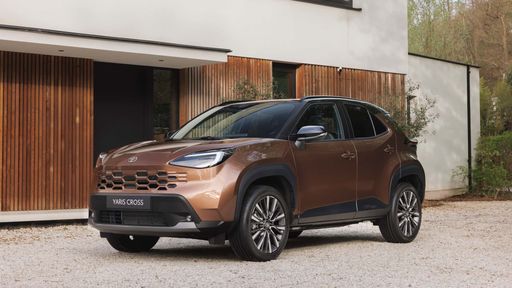
Compare performance (150 HP vs 130 HP), boot space and price (20,700 £ vs 23,700 £ ) at a glance. Find out which car is the better choice for you – SEAT Arona or Toyota Yaris Cross?

SEAT Arona vs Toyota Yaris Cross: Key differences

SEAT Arona

4.8 (6 Reviews)
rate
  • moderately cheaper
  • a bit more power
  • clearly quicker 0–100 km/h
  • very slightly more trunk space
details

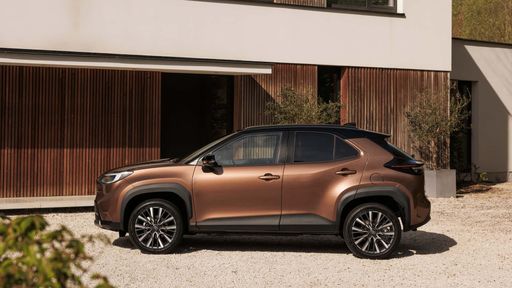
Toyota Yaris Cross

4.2 (19 Reviews)
rate
  • somewhat more efficient
  • very slightly lighter
details

All details on performance, efficiency, range and trunk space can be found in the technical comparison below – including user reviews for both models.

By Achim Sedelmaier

Arona

SEAT Arona VS Toyota Yaris Cross — a short take for buyers

SEAT Arona VS Toyota Yaris Cross is a matchup between two small crossovers that approach the same job from different angles: the Arona pushes for livelier driving and sharper value, while the Yaris Cross prioritises hybrid thrift and everyday calm. This comparison looks less at trim sheets and more at how each car behaves day-to-day — steering feel, cabin usability, long‑distance composure and city life. Expect the Arona to reward drivers who enjoy a more direct, slightly sporty experience and the Yaris Cross to reward those who want low running costs and a fuss‑free, automatic style. Read on to see which trade‑offs matter for your routine before you dive into the technical numbers below.
Yaris Cross

Character and driving feel

The SEAT Arona wears its personality on its sleeve: direct steering, a firm chassis and a tendency to feel more involving than typical B‑SUVs. The Toyota Yaris Cross deliberately dials emotion down in favour of smoothness and predictability, especially around town where its hybrid system makes stop‑start traffic feel lazy and relaxed. That firmness in the Arona is a double‑edged sword — enjoyable on twisty B‑roads, less so over broken urban surfaces — whereas the Yaris Cross soaks up small speed bumps but won’t excite a driver looking for feedback. Put simply, choose the Arona if you want a small crossover that still behaves like a small car; choose the Yaris Cross if you prefer a calming, efficient daily companion.

Arona

Comfort and long‑distance behavior

On the motorway the differences become obvious: the Arona stays planted and feels capable at speed but passes more road and wind noise into the cabin, making long runs a bit louder. The Yaris Cross trades a touch of motorway serenity for far better fuel calm — the hybrid drivetrain reduces visits to the pump and the automatic bias keeps urban stress low, though the engine can be audible under sustained load. Seat comfort is broadly similar up front, but both cars show their class limits in the rear: adults sit tighter in the Yaris Cross and the Arona’s rear is only marginally roomier depending on how the front seats are set. If long miles and low running costs are your priority the Yaris Cross is more comfortable economically; if you want firmer handling and a sense of stability at higher speeds the Arona will feel more assured.

Yaris Cross

Usability, cabin feel and practicality

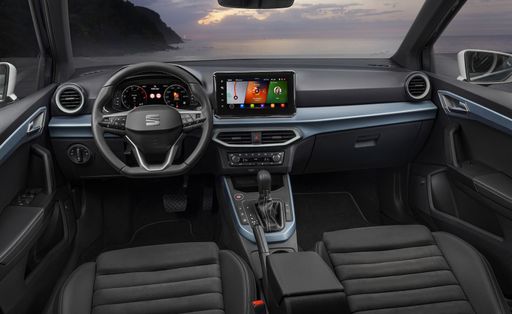
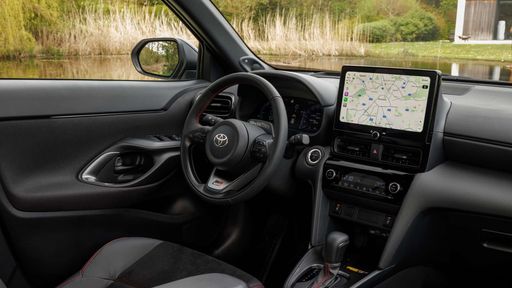
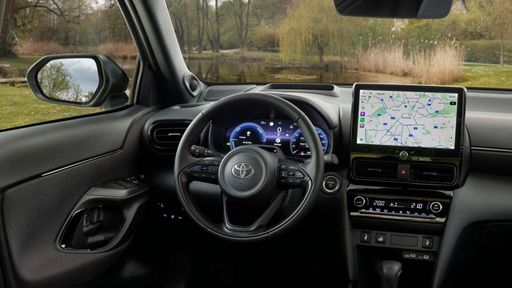
The two cabins take different practical routes: the SEAT Arona focuses on straightforward ergonomics with physical buttons and a no‑nonsense layout that makes everyday controls easy to use without hunting through menus. The Toyota Yaris Cross’s interior is slightly more modern after recent updates, with a better infotainment experience and a variable load floor that helps real‑world packing — though the optional all‑wheel drive reduces that boot advantage. Materials in the Arona are more utilitarian and can feel harder than the Yaris Cross’s tidier finishes, so perceived quality leans toward Toyota while tactile convenience (big buttons, predictable layout) leans to SEAT. Rear-seat usability is a persistent difference: both are compact, but the Yaris Cross’s rear feels tighter, which matters if you regularly carry grown passengers.

Arona

City friendliness and running costs

In urban settings the Yaris Cross shines because its hybrid system and seamless automatic manner make short trips cheap and unstressful, letting you cruise in electric phases whenever traffic allows. The SEAT Arona remains very city‑friendly too — it’s compact, easy to park and its lighter, crisper steering makes manoeuvres feel natural — but it won’t match the Yaris Cross for fuel bills in daily stop‑start use. Purchase price and trim level also tilt the scales: the Arona often undercuts rivals on entry price and can feel like a better deal if upfront cost is a concern, whereas the Yaris Cross pays back over time through lower consumption and strong resale. If your commute is heavy on short runs and you value economy, the Yaris Cross is the smarter city tool; if you prioritise a lively, inexpensive-to-buy small crossover, the Arona is the practical pick.

Yaris Cross

Who should choose which car — buyer profiles and trade‑offs

If you’re a driver who enjoys sharper steering, wants a straightforward interior and cares about getting the most car for your money, the SEAT Arona will suit you best: it’s the pick for singles or couples who value driver engagement and a lower sticker price. If your daily life is dominated by urban commuting, frequent short trips, or you want an easy, automatic experience with better fuel economy and a more usable boot, the Toyota Yaris Cross is the more logical choice — particularly for winter buyers who might value the optional AWD. Families that often carry three adults or lots of luggage should beware: neither is a space king, but the Yaris Cross’s flexible load area gives it a slight edge unless you choose the AWD variant. Below this editorial comparison you’ll find the technical breakdown to confirm which trade‑offs align with your priorities; there’s no single winner, only the better fit for your routine.

Here’s where it gets real: The technical differences in detail

Arona

Costs and Efficiency:

Price and efficiency are often the first things buyers look at. Here it becomes clear which model has the long-term edge – whether at the pump, the plug, or in purchase price.

SEAT Arona is moderately cheaper – starting at 20,700 £ , while the Toyota Yaris Cross costs 23,700 £ . That’s a price difference of around 2,991 £.

Fuel consumption also shows a difference: the Toyota Yaris Cross uses 4.5 L/100km and is somewhat more efficient than the SEAT Arona with 5.3 L/100km. The difference is about 0.8 L/100km.

Yaris Cross

Engine and Performance:

Power, torque and acceleration say a lot about how a car feels on the road. This is where you see which model delivers more driving dynamics.

When it comes to engine power, the SEAT Arona offers a bit more power – delivering 150 HP compared to 130 HP. That’s roughly 20 HP more horsepower.

When accelerating from 0 to 100 km/h, the SEAT Arona is clearly quicker – completing the sprint in 8.3 s, while the Toyota Yaris Cross takes 10.7 s. That’s about 2.4 s quicker.

Arona

Space and Everyday Use:

Whether family car or daily driver – which one offers more room, flexibility and comfort?

Both vehicles offer seating for 5 people.

In terms of curb weight, Toyota Yaris Cross is very slightly lighter – 1,180 kg compared to 1,188 kg. The difference is around 8 kg.

Looking at boot space, the SEAT Arona offers very slightly more boot space – 400 L compared to 397 L. That’s a difference of about 3 L.

When it comes to payload, the SEAT Arona carries marginally more – 522 kg compared to 510 kg. That’s a difference of about 12 kg.

Who wins the race in the data check?

The SEAT Arona holds a decisive overall lead in the objective data comparison.
This result only shows which model scores more points on paper – not which of the two cars feels right for you.

from £20,700
Arona

SEAT Arona

  • Engine Type Petrol
  • Transmission Manuel, Automatic
  • Drive Type Front-Wheel Drive
  • Power HP 95 - 150 HP
  • Consumption L/100km 5.3 - 5.8 L/100km
SEAT Arona
Toyota Yaris Cross

Costs and Consumption

View detailed analysis

Engine and Performance

View detailed analysis

Dimensions and Body

View detailed analysis

SEAT Arona

The SEAT Arona is a compact crossover that blends practical, city-friendly packaging with a sporty, youthful design. It delivers a comfortable ride, an intuitive cabin and economical running costs, making it a sensible pick for daily drives and weekend getaways.

details

Toyota Yaris Cross

The Toyota Yaris Cross blends the maneuverability of a small hatch with the higher driving position and practicality of a crossover, wrapped in Toyota's dependable build quality. It suits urban buyers who need easy parking, flexible cargo space and a comfortable, economical daily driver.

details
SEAT Arona
Toyota Yaris Cross

Costs and Consumption

Price
20,700 - 30,300 £
Price
23,700 - 34,300 £
Consumption L/100km
5.3 - 5.8 L/100km
Consumption L/100km
4.5 - 4.8 L/100km
Consumption kWh/100km
-
Consumption kWh/100km
-
Electric Range
-
Electric Range
-
Battery Capacity
-
Battery Capacity
-
co2
120 - 132 g/km
co2
101 - 108 g/km
Fuel tank capacity
-
Fuel tank capacity
-

Dimensions and Body

Body Type
SUV
Body Type
SUV
Seats
5
Seats
5
Doors
-
Doors
-
Curb weight
1,188 - 1,268 kg
Curb weight
1,180 - 1,290 kg
Trunk capacity
400 L
Trunk capacity
320 - 397 L
Length
-
Length
-
Width
1,780 mm
Width
1,765 mm
Height
-
Height
-
Max trunk capacity
-
Max trunk capacity
-
Payload
502 - 522 kg
Payload
485 - 510 kg

Engine and Performance

Engine Type
Petrol
Engine Type
Full Hybrid
Transmission
Manuel, Automatic
Transmission
Automatic
Transmission Detail
Manual Gearbox, Dual-Clutch Automatic
Transmission Detail
CVT
Drive Type
Front-Wheel Drive
Drive Type
Front-Wheel Drive, All-Wheel Drive
Power HP
95 - 150 HP
Power HP
116 - 130 HP
Acceleration 0-100km/h
8.3 - 11.1 s
Acceleration 0-100km/h
10.7 - 11.3 s
Max Speed
-
Max Speed
-
Torque
175 - 250 Nm
Torque
-
Number of Cylinders
3 - 4
Number of Cylinders
3
Power kW
70 - 110 kW
Power kW
85 - 96 kW
Engine capacity
999 - 1,498 cm3
Engine capacity
1,490 cm3

General

Model Year
2025
Model Year
2026
CO2 Efficiency Class
D
CO2 Efficiency Class
C
Brand
SEAT
Brand
Toyota
DriveDuel uses data analysis and artificial intelligence to evaluate vehicle data and create content. Content is regularly reviewed and improved. The displayed prices are estimates based on German list prices, adjusted to the respective country’s VAT. Country-specific registration taxes are not included. This information is not legally binding.