@ Škoda Auto a.s. / Škoda Storyboard
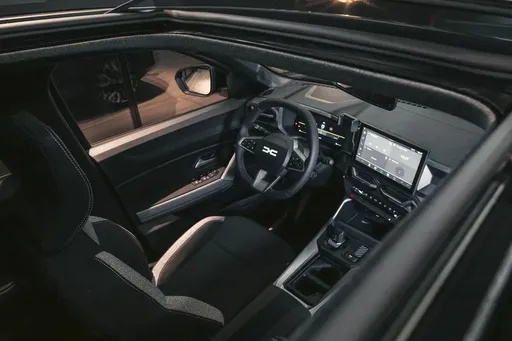
@ Dacia / Renault Group Media
VS

Skoda Octavia Combi vs Dacia Bigster – Which one offers the better deal?

Two cars, one duel: Skoda Octavia Combi meets Dacia Bigster.
Which one wins in performance, efficiency and value for money? Find out now!

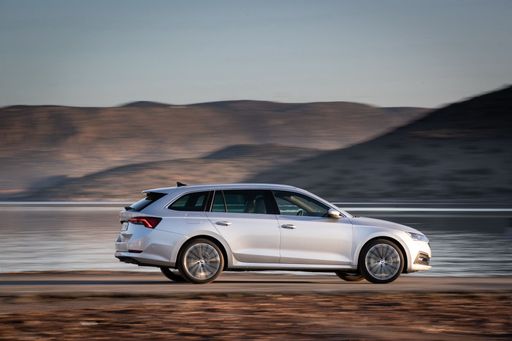
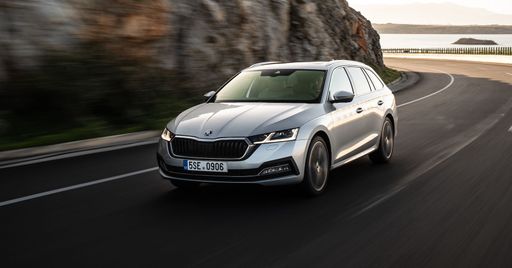
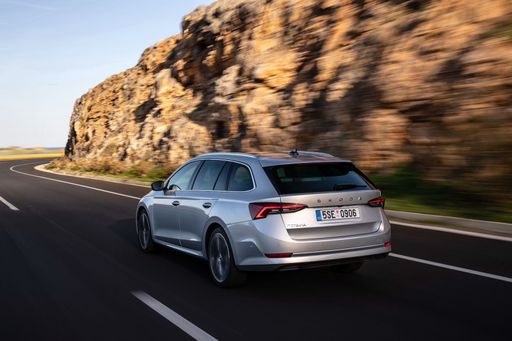
Octavia Combi @ Škoda Auto a.s. / Škoda Storyboard

A Battle of Versatile Icons: Skoda Octavia Combi vs. Dacia Bigster

In the automotive world, few matchups stir as much interest as the clash between wagons and SUVs. Two noteworthy contenders in this arena are the Skoda Octavia Combi and the Dacia Bigster. Both are making waves in their own ways, with a medley of technical specifications and innovative features. Let’s dive into what each vehicle offers and compare them across several facets.
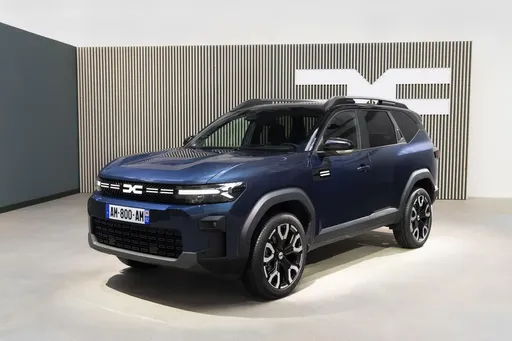
Bigster @ Dacia / Renault Group Media

Performance and Engine Specifications

The Skoda Octavia Combi brings a wide array of powertrains to the table, with options ranging from a 116 HP 1.5L petrol engine to a robust 265 HP 2.0L engine, offering both petrol MHEV and diesel variants. Whatever your choice, the Combi delivers either a manual gearbox or a sophisticated dual-clutch automatic transmission. Its performance credentials include a top speed spanning from 203 km/h to a swift 250 km/h, along with an enviable acceleration time of just 6.5 seconds in its most potent guise.

The Dacia Bigster, coming to market as a 2025 model, offers a mix of petrol MHEV, full hybrid, and LPG engines with horsepower ranging between 130 HP and 155 HP. The Bigster’s performance is concentrated with a maximum speed of 180 km/h and an acceleration time ranging from 9.7 to 11.2 seconds. Its blend of manual options provides an interesting choice for those who value a more traditional driving experience.

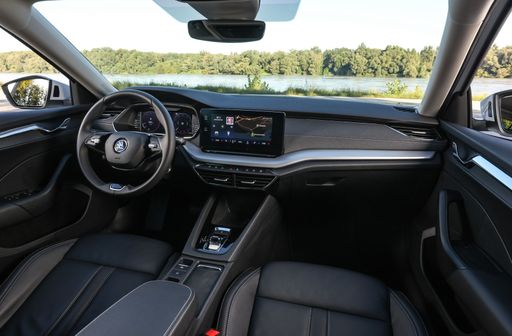
Octavia Combi @ Škoda Auto a.s. / Škoda Storyboard

Fuel Efficiency and Environmental Impact

Fuel efficiency is a strong suit for the Skoda Octavia Combi, boasting consumption figures between 4.4 L/100km and 6.9 L/100km, depending on the engine choice. Its technologically advanced engine designs result in CO2 emissions as low as 114 g/km. Such efficiency aligns with its clean reputation in the D to F CO2 efficiency classes.

On the other hand, the Dacia Bigster showcases solid fuel efficiency for its class, with consumption figures ranging from 4.7 L/100km to 6.1 L/100km. Its CO2 output starts from 106 g/km, placing it within the C to E efficiency classes, making it a considerable option for the eco-conscious.

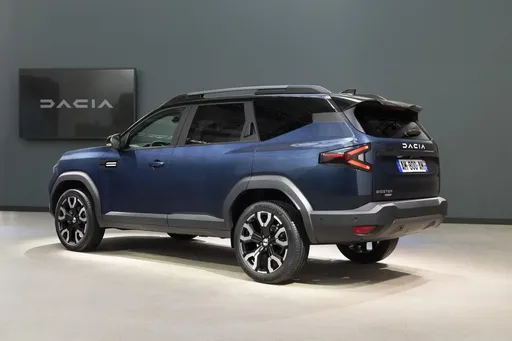
Bigster @ Dacia / Renault Group Media

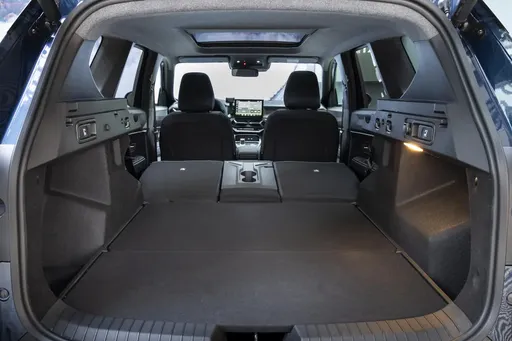
Space and Comfort

Both vehicles provide ample space and comfort, integral facets of their appeal. The Skoda Octavia Combi, despite being a wagon, astonishes with a trunk capacity of 640 L and an overall length of 4698 mm, ensuring that space is never at a premium. Its dimensions (1829 mm in width and up to 1491 mm in height) ensure a roomy ride for five passengers.

The Dacia Bigster offers a compelling SUV stance with a modest trunk capacity of 667 L. Its overall length is slightly shorter at 4570 mm, but its height of 1705 mm provides cabin spaciousness that supports both adventure and practical city commutes. Its ability to comfortably carry a payload up to 467 kg further enhances its family-friendly credentials.

Octavia Combi @ Škoda Auto a.s. / Škoda Storyboard

Concluding Thoughts

In this head-to-head, each vehicle champions its category. The Skoda Octavia Combi is perfect for those who yearn for refinement, power, and superior efficiency. Meanwhile, the Dacia Bigster captures the adventurous spirit with its rugged design and practicality, ideal for those seeking a balance of utility and economy. Whether your preference leans towards the versatility of a wagon or the robustness of an SUV, both vehicles promise a drive brimming with innovativeness and reliability.

Ultimately, your choice will hinge on your lifestyle needs and what you value more – the raw efficiency and capacity of a wagon or the strong, imposing presence of an SUV.

Here’s where it gets real: The technical differences in detail

Bigster @ Dacia / Renault Group Media

Costs and Efficiency:

Price and efficiency are often the first things buyers look at. Here it becomes clear which model has the long-term edge – whether at the pump, the plug, or in purchase price.

Dacia Bigster has a slightly advantage in terms of price – it starts at 20600 £, while the Skoda Octavia Combi costs 24400 £. That’s a price difference of around 3858 £.

Fuel consumption also shows a difference: Skoda Octavia Combi manages with 4.40 L and is therefore hardly perceptible more efficient than the Dacia Bigster with 4.70 L. The difference is about 0.30 L per 100 km.

Octavia Combi @ Škoda Auto a.s. / Škoda Storyboard

Engine and Performance:

Under the bonnet, it becomes clear which model is tuned for sportiness and which one takes the lead when you hit the accelerator.

When it comes to engine power, the Skoda Octavia Combi has a decisively edge – offering 265 HP compared to 155 HP. That’s roughly 110 HP more horsepower.

In acceleration from 0 to 100 km/h, the Skoda Octavia Combi is convincingly quicker – completing the sprint in 6.50 s, while the Dacia Bigster takes 9.70 s. That’s about 3.20 s faster.

In terms of top speed, the Skoda Octavia Combi performs distinct better – reaching 250 km/h, while the Dacia Bigster tops out at 180 km/h. The difference is around 70 km/h.

There’s also a difference in torque: Skoda Octavia Combi pulls evident stronger with 370 Nm compared to 230 Nm. That’s about 140 Nm difference.

Bigster @ Dacia / Renault Group Media

Space and Everyday Use:

Beyond pure performance, interior space and usability matter most in daily life. This is where you see which car is more practical and versatile.

Both vehicles offer seating for 5 people.

In curb weight, Skoda Octavia Combi is hardly perceptible lighter – 1366 kg compared to 1425 kg. The difference is around 59 kg.

In terms of boot space, the Dacia Bigster offers minimal more room – 667 L compared to 640 L. That’s a difference of about 27 L.

In maximum load capacity, the Dacia Bigster performs slightly better – up to 1937 L, which is about 237 L more than the Skoda Octavia Combi.

When it comes to payload, Skoda Octavia Combi a bit takes the win – 534 kg compared to 467 kg. That’s a difference of about 67 kg.

Who comes out on top?

Overall, the Skoda Octavia Combi shows itself to be wins the duel decisively and secures the title of DriveDuel Champion.
It convinces with the more balanced overall package and proves to be the more versatile choice for everyday use.

from about £24,400
Octavia Combi @ Škoda Auto a.s. / Škoda Storyboard

Skoda Octavia Combi

  • Engine Type : Petrol, Petrol MHEV, Diesel
  • Transmission : Automatic, Manuel
  • Drive Type : Front-Wheel Drive, All-Wheel Drive
  • Power HP : 116 - 265 HP
  • Consumption L/100km : 4.4 - 6.9 L

Skoda Octavia Combi

The Skoda Octavia Combi is the sensible family wagon that somehow turns grocery runs and long trips into a pleasant, unshowy experience — spacious, practical and built like it prefers reliability over flash. With smart touches, clever storage and a cabin that feels grown-up rather than frugal, it’s an easy recommendation for buyers who want maximum utility without sacrificing comfort or style.

details

Dacia Bigster

5 (1)
rate

The Bigster is poised to redefine the SUV segment with its bold design and spacious interior, catering to the needs of both families and adventure seekers alike. Emphasizing sustainability and practicality, this model reflects a modern approach to automotive engineering, making it a compelling choice for environmentally conscious drivers. With its striking presence on the road, the Bigster not only captures attention but also embodies a new era of versatile mobility.

details
Skoda Octavia Combi
Dacia Bigster
Octavia Combi @ Škoda Auto a.s. / Škoda Storyboard
Bigster @ Dacia / Renault Group Media

Costs and Consumption

Price
24400 - 42300 £
Price
20600 - 26600 £
Consumption L/100km
4.4 - 6.9 L
Consumption L/100km
4.7 - 7.1 L
Consumption kWh/100km
-
Consumption kWh/100km
-
Electric Range
-
Electric Range
-
Battery Capacity
-
Battery Capacity
-
co2
113 - 157 g/km
co2
106 - 137 g/km
Fuel tank capacity
45 - 55 L
Fuel tank capacity
50 - 55 L

Dimensions and Body

Body Type
Estate
Body Type
SUV
Seats
5
Seats
5
Doors
5
Doors
5
Curb weight
1366 - 1553 kg
Curb weight
1425 - 1547 kg
Trunk capacity
640 L
Trunk capacity
510 - 667 L
Length
4698 - 4709 mm
Length
4570 mm
Width
1829 mm
Width
1813 mm
Height
1455 - 1468 mm
Height
1705 mm
Max trunk capacity
1700 L
Max trunk capacity
1813 - 1937 L
Payload
471 - 534 kg
Payload
383 - 467 kg

Engine and Performance

Engine Type
Petrol, Petrol MHEV, Diesel
Engine Type
Petrol MHEV, Full Hybrid, LPG
Transmission
Automatic, Manuel
Transmission
Manuel, Automatic
Transmission Detail
Dual-Clutch Automatic, Manual Gearbox
Transmission Detail
Manual Gearbox, Automated Manual
Drive Type
Front-Wheel Drive, All-Wheel Drive
Drive Type
All-Wheel Drive, Front-Wheel Drive
Power HP
116 - 265 HP
Power HP
130 - 155 HP
Acceleration 0-100km/h
6.5 - 10.7 s
Acceleration 0-100km/h
9.7 - 11.2 s
Max Speed
203 - 250 km/h
Max Speed
180 km/h
Torque
220 - 370 Nm
Torque
230 Nm
Number of Cylinders
4
Number of Cylinders
3 - 4
Power kW
85 - 195 kW
Power kW
96 - 115 kW
Engine capacity
1498 - 1984 cm3
Engine capacity
1199 - 1799 cm3

General

Model Year
2024 - 2025
Model Year
2025
CO2 Efficiency Class
E, F, D, C
CO2 Efficiency Class
E, D, C
Brand
Skoda
Brand
Dacia
Is the Skoda Octavia Combi offered with different drivetrains?

The Skoda Octavia Combi is available as Front-Wheel Drive or All-Wheel Drive.

The prices and data displayed are estimates based on German list prices and may vary by country. This information is not legally binding.