VS

Subaru Solterra vs Ford Explorer EV comparison

Compare performance (343 HP vs 340 HP), boot space and price (39,400 £ vs 34,200 £ ) at a glance. Find out which car is the better choice for you – Subaru Solterra or Ford Explorer EV?

Subaru Solterra vs Ford Explorer EV: Key differences

Subaru Solterra

4.9 (1 Reviews)
rate
  • only slightly more power
  • very slightly quicker 0–100 km/h
details

Ford Explorer EV

4.9 (3 Reviews)
rate
  • slightly cheaper
  • marginally more efficient
  • somewhat more electric range
  • only slightly lighter
  • very slightly more trunk space
details

All details on performance, efficiency, range and trunk space can be found in the technical comparison below – including user reviews for both models.

By Achim Sedelmaier

Solterra

Electric SUV Showdown: Ford Explorer EV vs. Subaru Solterra

The automotive industry is rapidly shifting towards electrification, with many car manufacturers introducing electric versions of their popular models. In the arena of electric SUVs, two significant contenders have emerged: the Ford Explorer EV and the Subaru Solterra. This article delves into the specifics of both models, examining their technical aspects and innovations. Which of these electric SUVs will come out on top?
Explorer EV

Design and Dimensions

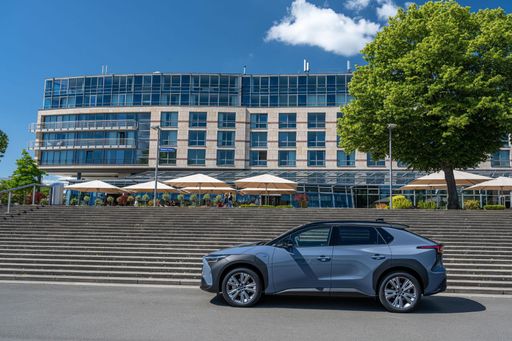
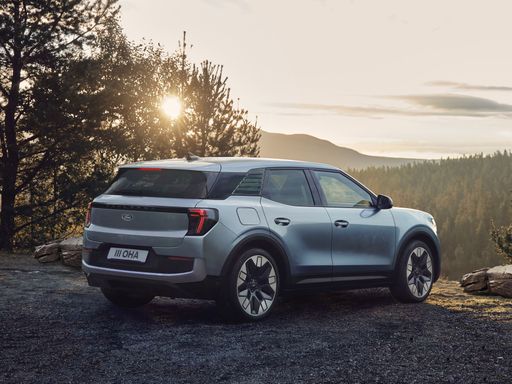
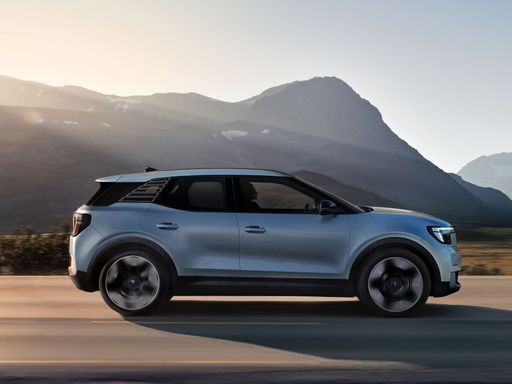
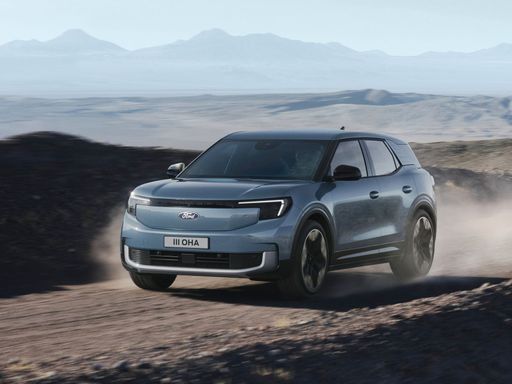
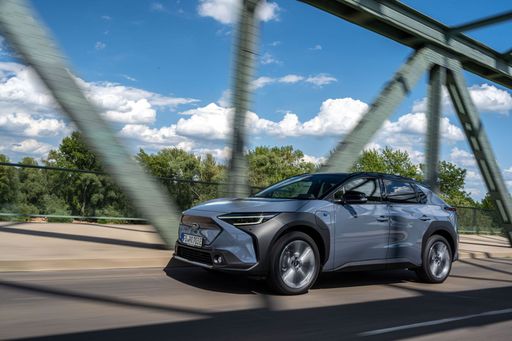
The Ford Explorer EV and Subaru Solterra both embody the quintessential SUV design but differ in personality and size. The Explorer EV boasts a sleek, modern SUV aesthetic, measuring 4468 mm in length, 1871 mm in width, and stands 1630 to 1639 mm tall. In comparison, the Solterra is slightly larger at 4690 mm in length, 1860 mm in width, and 1650 mm in height, offering a more traditional SUV size.

Solterra

Performance and Power

Under the hood, the Ford Explorer EV offers multiple configurations with power outputs ranging from 170 HP to 340 HP, delivering a torque between 310 to 679 Nm. It supports both rear-wheel drive and all-wheel drive options, and its acceleration ranges from 5.3 to 6.4 seconds for the 0-100 km/h sprint. The maximum speed of the Explorer EV caps at 180 km/h.

The Subaru Solterra, with its all-wheel drive configuration, provides a consistent power output of 218 HP with a torque of 336 Nm. Its acceleration from 0 to 100 km/h is slightly slower at 6.9 seconds, and it tops out at a max speed of 160 km/h. Despite being less powerful, the Solterra is tailored for Subaru enthusiasts preferring reliable AWD performance.

Explorer EV

Efficiency and Range

When it comes to efficiency and range, Ford's Explorer EV takes the lead with an impressive range spanning from 365 km to as far as 602 km, depending on the variant and conditions. Its energy consumption varies between 13.9 kWh/100 km to 16.6 kWh/100 km.

On the other hand, the Solterra offers a range between 416 km to 466 km, with energy consumption rates ranging from 16 kWh/100 km to 17.9 kWh/100 km. While its range isn't as extensive as the Explorer EV, it holds its own, particularly in urban settings.

Solterra

Practicality and Utility

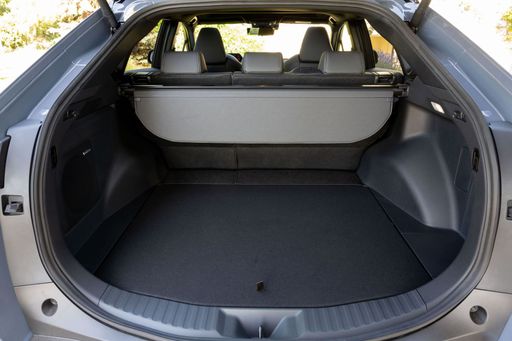
Utility is crucial in an SUV, and both vehicles offer ample space, albeit with slight differences. Ford's Explorer EV presents a trunk capacity between 445 to 450 liters, while Subaru's Solterra offers a tad more with capacities ranging from 441 to 452 liters. Both models provide seating for five, ensuring comfort for all passengers.

Explorer EV

Innovative Features

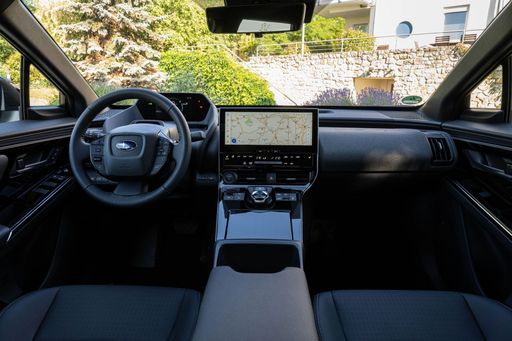
Both models incorporate innovative features that showcase their commitment to green technology and user-friendly experiences. The Explorer EV flaunts advanced driving assistance systems, catering to tech-savvy drivers. Its reduced curb weight, ranging from 2090 to 2167 kg, allows for a nimble driving experience, maintaining its agility on various terrains.

Meanwhile, the Solterra emphasizes Subaru's dedication to safety and rugged dependability, offering features typical of the brand, such as robust AWD systems and versatile payload capacities up to 537 kg. Despite its slightly higher curb weight of up to 2057 kg, the Solterra remains a formidable presence on the road.

Solterra

The Verdict

In the Ford Explorer EV versus Subaru Solterra battle, each SUV stands out in its own right. The Explorer EV shines for those seeking performance and range, while the Solterra caters to drivers who prioritize traditional SUV elements with Subaru's renowned all-wheel-drive system. Ultimately, the choice between the two boils down to personal preference, driving style, and brand loyalty.

Here’s where it gets real: The technical differences in detail

Solterra

Costs and Efficiency:

Price and efficiency are key factors when choosing a car – and this is often where the real differences emerge.

Ford Explorer EV is slightly cheaper – starting at 34,200 £ , while the Subaru Solterra costs 39,400 £ . That’s a price difference of around 5,220 £.

In terms of energy consumption, the Ford Explorer EV is marginally more efficient: consuming 14.6 kWh/100km compared to 16 kWh/100km for the Subaru Solterra. That’s a difference of about 1.4 kWh/100km.

As for electric range, the Ford Explorer EV offers somewhat more range – reaching up to 602 km, about 70 km more than the Subaru Solterra.

Explorer EV

Engine and Performance:

Power, torque and acceleration are the classic benchmarks for car enthusiasts – and here, some clear differences start to show.

When it comes to engine power, the Subaru Solterra offers only slightly more power – delivering 343 HP compared to 340 HP. That’s roughly 3 HP more horsepower.

When accelerating from 0 to 100 km/h, the Subaru Solterra is very slightly quicker – completing the sprint in 5.1 s, while the Ford Explorer EV takes 5.3 s. That’s about 0.2 s quicker.

There’s also a difference in torque: the Ford Explorer EV delivers noticeably more torque with 679 Nm compared to 437 Nm. That’s about 242 Nm more.

Solterra

Space and Everyday Use:

Whether family car or daily driver – which one offers more room, flexibility and comfort?

Both vehicles offer seating for 5 people.

In terms of curb weight, Ford Explorer EV is only slightly lighter – 1,996 kg compared to 2,013 kg. The difference is around 17 kg.

Looking at boot space, the Ford Explorer EV offers very slightly more boot space – 472 L compared to 452 L. That’s a difference of about 20 L.

When it comes to payload, the Ford Explorer EV carries only slightly more – 585 kg compared to 537 kg. That’s a difference of about 48 kg.

Who wins the race in the data check?

The Ford Explorer EV is far ahead overall in the objective data comparison.
This result only shows which model scores more points on paper – not which of the two cars feels right for you.

from £34,200
Explorer EV

Ford Explorer EV

  • Engine Type : Electric
  • Transmission : Automatic
  • Drive Type : Rear-Wheel Drive, All-Wheel Drive
  • Power HP : 190 - 340 HP
  • Consumption kWh/100km : 14.6 - 17.3 kWh/100km
  • Electric Range : 417 - 602 km
Subaru Solterra
Ford Explorer EV

Costs and Consumption

View detailed analysis

Engine and Performance

View detailed analysis

Dimensions and Body

View detailed analysis

Subaru Solterra

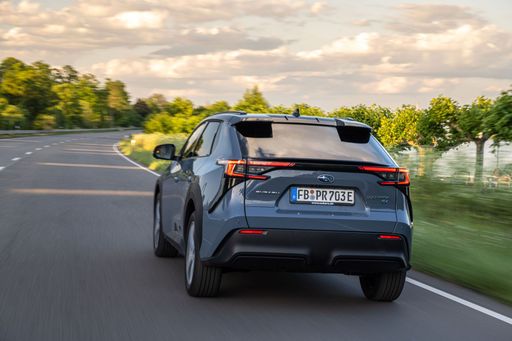
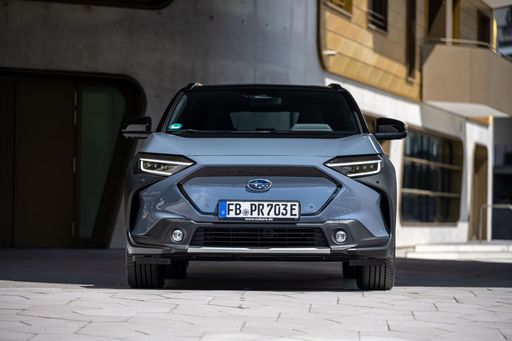
The Subaru Solterra translates Subaru's rugged, go-anywhere character into an electric package, offering sure-footed handling and a thoughtfully practical cabin that feels ready for weekend escapes. It isn't trying to outshine flashier rivals — instead it stakes its claim on reliability and friendly simplicity, making it a sensible, slightly cheeky choice for buyers who want an EV that behaves like a Subaru.

details

Ford Explorer EV

The Ford Explorer EV translates the familiar big‑American SUV presence into whisper‑quiet electric motoring, offering roomy seating and a tech‑forward cabin that will please families and road‑trippers alike. It drives with more composure than its boxy looks suggest, blending a comfortable ride and eager acceleration while undercutting the guilt of gas stops — a practical, modern alternative for buyers who want Explorer space with electric charm.

details
Subaru Solterra
Ford Explorer EV

Costs and Consumption

Price
39,400 - 46,200 £
Price
34,200 - 48,800 £
Consumption L/100km
-
Consumption L/100km
-
Consumption kWh/100km
16 - 17.9 kWh/100km
Consumption kWh/100km
14.6 - 17.3 kWh/100km
Electric Range
416 - 532 km
Electric Range
417 - 602 km
Battery Capacity
-
Battery Capacity
-
co2
0 g/km
co2
0 g/km
Fuel tank capacity
-
Fuel tank capacity
-

Dimensions and Body

Body Type
SUV
Body Type
SUV
Seats
5
Seats
5
Doors
5
Doors
-
Curb weight
2,013 - 2,100 kg
Curb weight
1,996 - 2,209 kg
Trunk capacity
441 - 452 L
Trunk capacity
472 L
Length
4,690 mm
Length
-
Width
1,860 mm
Width
1,872 mm
Height
1,650 mm
Height
-
Max trunk capacity
-
Max trunk capacity
-
Payload
485 - 537 kg
Payload
531 - 585 kg

Engine and Performance

Engine Type
Electric
Engine Type
Electric
Transmission
Automatic
Transmission
Automatic
Transmission Detail
Reduction Gearbox
Transmission Detail
Reduction Gearbox
Drive Type
All-Wheel Drive
Drive Type
Rear-Wheel Drive, All-Wheel Drive
Power HP
218 - 343 HP
Power HP
190 - 340 HP
Acceleration 0-100km/h
5.1 - 6.9 s
Acceleration 0-100km/h
5.3 - 8 s
Max Speed
160 km/h
Max Speed
-
Torque
336 - 437 Nm
Torque
350 - 679 Nm
Number of Cylinders
-
Number of Cylinders
-
Power kW
160 - 252 kW
Power kW
140 - 250 kW
Engine capacity
-
Engine capacity
-

General

Model Year
2,022 - 2,026
Model Year
2026
CO2 Efficiency Class
A
CO2 Efficiency Class
A
Brand
Subaru
Brand
Ford
DriveDuel uses data analysis and artificial intelligence to evaluate vehicle data and create content. Content is regularly reviewed and improved. The displayed prices are estimates based on German list prices, adjusted to the respective country’s VAT. Country-specific registration taxes are not included. This information is not legally binding.