VS

Suzuki S-Cross vs Skoda Kamiq comparison

Compare performance (110 HP vs 150 HP), boot space and price (21,800 £ vs 22,300 £ ) at a glance. Find out which car is the better choice for you – Suzuki S-Cross or Skoda Kamiq?

Suzuki S-Cross vs Skoda Kamiq: Key differences

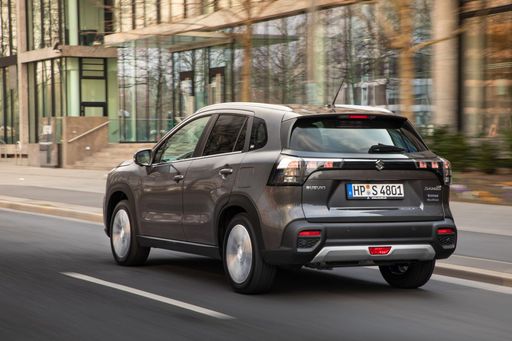
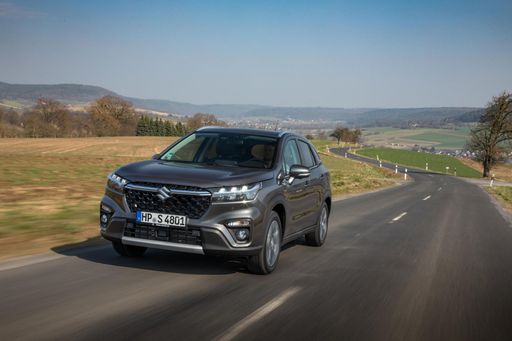
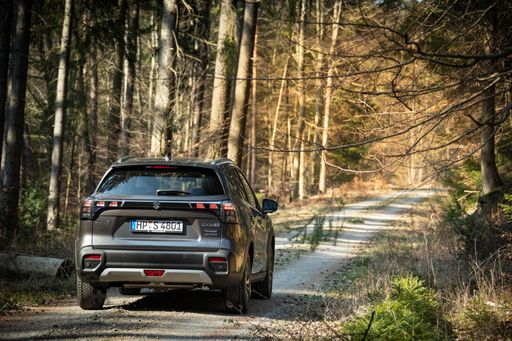
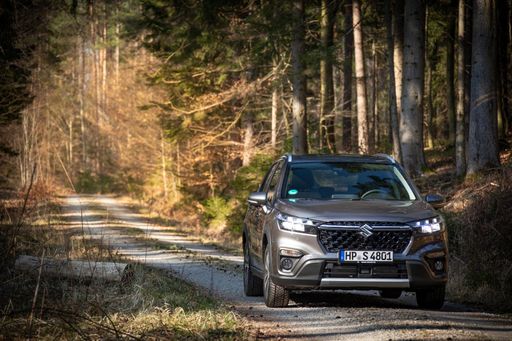
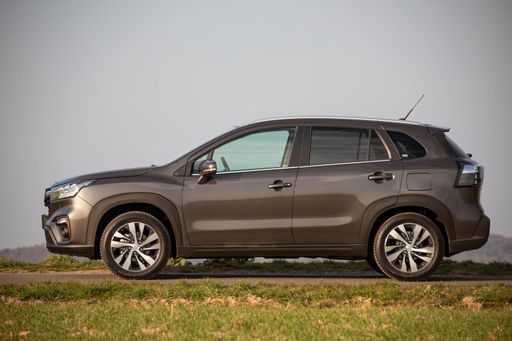
Suzuki S-Cross

4.7 (4 Reviews)
rate
  • very slightly cheaper
  • marginally more trunk space
details

Skoda Kamiq

5 (5 Reviews)
rate
  • markedly more power
  • marginally lighter
details

All details on performance, efficiency, range and trunk space can be found in the technical comparison below – including user reviews for both models.

By Achim Sedelmaier

S-Cross

Performance Comparison: Skoda Kamiq vs. Suzuki S-Cross

In the ever-growing SUV market, the 2024 models of the Skoda Kamiq and the Suzuki S-Cross stand out as top contenders. Both vehicles offer a blend of style, performance, and practicality. Let's dive deeper into their technical specifications and innovations to see how they stack up against each other.
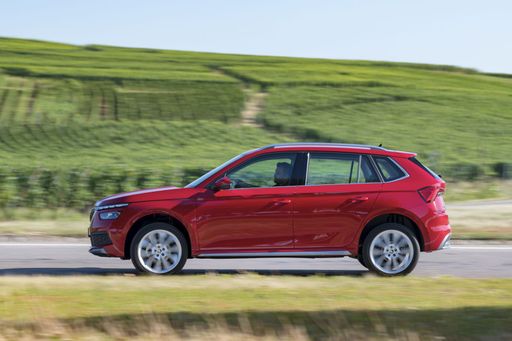
Kamiq

Engine and Performance

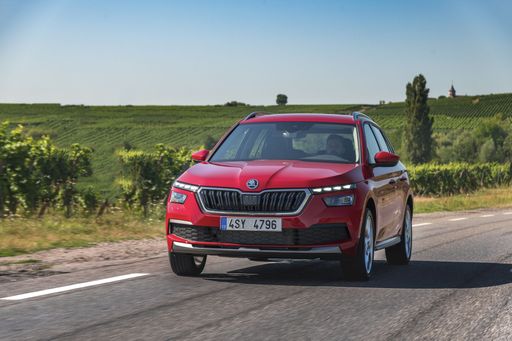
The Skoda Kamiq offers a range of petrol engines with power outputs of 95, 115, and 150 HP, allowing drivers to choose based on their performance needs. The engine options include both 3-cylinder and 4-cylinder configurations, with engine capacities of 999 cm3 and 1498 cm3, respectively. The Kamiq features both manual and automatic transmissions with a dual-clutch automatic option, and is strictly front-wheel drive.

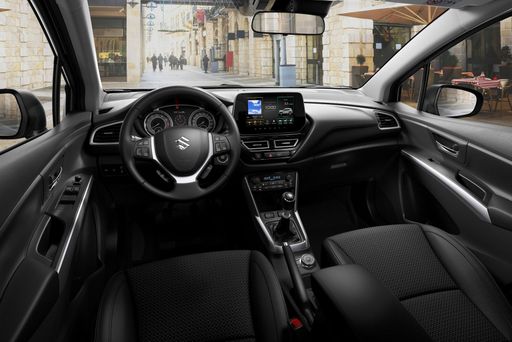
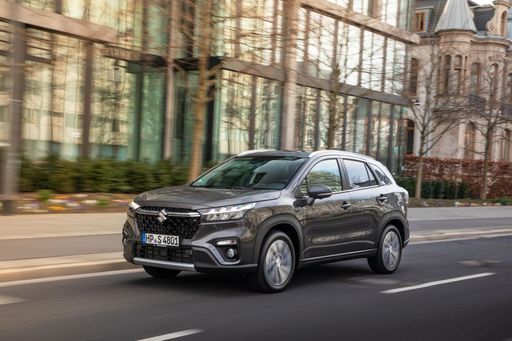
On the other hand, the Suzuki S-Cross presents a unique choice between a Full Hybrid and Petrol MHEV engine. The power outputs are slightly less varied, with options for 116 and 129 HP. The S-Cross offers both front-wheel drive and the versatility of all-wheel drive. Additionally, its engine capacity lies between 1373 cm3 and 1462 cm3.

S-Cross

Fuel Efficiency and Emissions

When it comes to fuel efficiency, the Skoda Kamiq delivers consumption rates ranging from 5.4 to 5.7 liters per 100 km, making it a competitive choice in terms of cost-effectiveness and emissions, with CO2 output ranging from 121 to 130 g/km.

The Suzuki S-Cross also impresses with a consumption rate between 5.1 and 5.8 liters per 100 km, showcasing its efficiency, especially for urban and mixed driving scenarios. Its CO2 emissions span from 116 to 131 g/km, aligning closely with the Kamiq's performance in terms of environmental impact.

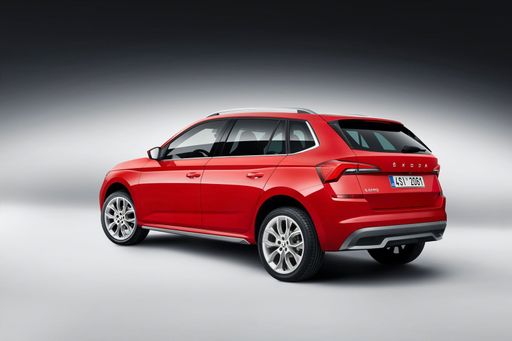
Kamiq

Speed and Acceleration

For those who value speed, the Skoda Kamiq offers a range in maximum speed from 183 km/h to an impressive 214 km/h and accelerates from 0 to 100 km/h between 8.3 seconds and 11 seconds, varying by engine choice. This makes it appealing for drivers looking for a nimble city car that can hold its own on the highway.

The Suzuki S-Cross, while slightly more modest in speed, has a maximum of 195 km/h and accelerates from 0 to 100 km/h in 9.5 seconds, providing a smooth and reliable performance that suits daily commuting and family outings.

S-Cross

Design and Practicality

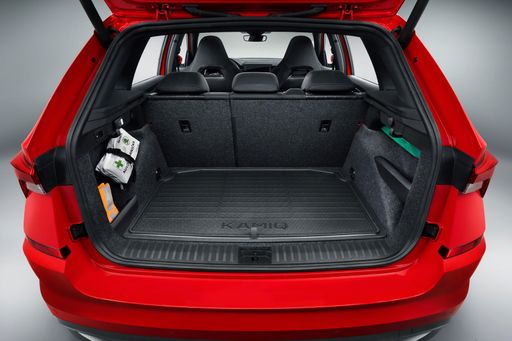
In terms of size, the Skoda Kamiq measures 4241 mm in length, 1793 mm in width, and 1562 mm in height. It offers a trunk capacity of 400 liters, which is more than sufficient for everyday use.

The Suzuki S-Cross, with dimensions of 4300 mm length, 1785 mm width, and 1580 mm height, offers a slightly larger trunk capacity of 430 liters, catering to those who may require additional cargo space.

Kamiq

Concluding Remarks

Both the Skoda Kamiq and the Suzuki S-Cross present attractive features tailored to a contemporary lifestyle. The Kamiq thrives on offering multiple engine choices and superior speed, while the S-Cross provides hybrid options and the flexibility of all-wheel drive. Purchasing decisions for potential buyers will depend largely on preferences for engine type, efficiency, and specific driving needs.

Here’s where it gets real: The technical differences in detail

S-Cross

Costs and Efficiency:

Price and efficiency are often the first things buyers look at. Here it becomes clear which model has the long-term edge – whether at the pump, the plug, or in purchase price.

Suzuki S-Cross is very slightly cheaper – starting at 21,800 £ , while the Skoda Kamiq costs 22,300 £ . That’s a price difference of around 506 £.

Both cars consume an average of 5.3 L/100km – no difference here.

Kamiq

Engine and Performance:

Under the bonnet, it becomes clear which model is tuned for sportiness and which one takes the lead when you hit the accelerator.

When it comes to engine power, the Skoda Kamiq offers markedly more power – delivering 150 HP compared to 110 HP. That’s roughly 40 HP more horsepower.

There’s also a difference in torque: the Skoda Kamiq delivers only slightly more torque with 250 Nm compared to 235 Nm. That’s about 15 Nm more.

S-Cross

Space and Everyday Use:

Cabin size, boot volume and payload all play a role in everyday practicality. Here, comfort and flexibility make the difference.

Both vehicles offer seating for 5 people.

In terms of curb weight, Skoda Kamiq is marginally lighter – 1,231 kg compared to 1,280 kg. The difference is around 49 kg.

Looking at boot space, the Suzuki S-Cross offers marginally more boot space – 430 L compared to 400 L. That’s a difference of about 30 L.

When it comes to payload, the Skoda Kamiq carries noticeably more – 539 kg compared to 405 kg. That’s a difference of about 134 kg.

Who wins the race in the data check?

The Skoda Kamiq is decisively ahead in the objective data comparison.
This result only shows which model scores more points on paper – not which of the two cars feels right for you.

from £22,300
Kamiq

Skoda Kamiq

  • Engine Type Petrol
  • Transmission Manuel, Automatic
  • Drive Type Front-Wheel Drive
  • Power HP 95 - 150 HP
  • Consumption L/100km 5.3 - 5.7 L/100km
Suzuki S-Cross
Skoda Kamiq

Costs and Consumption

View detailed analysis

Engine and Performance

View detailed analysis

Dimensions and Body

View detailed analysis

Suzuki S-Cross

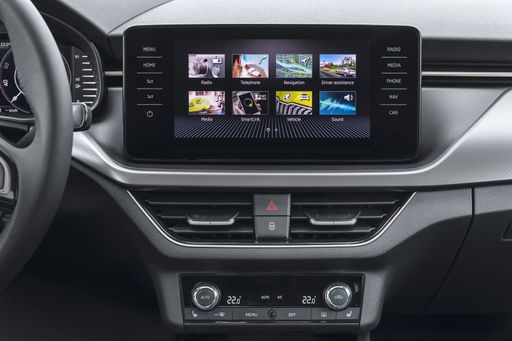
The Suzuki S-Cross is a practical, well-built compact crossover that puts comfort, efficiency and everyday reliability first. With a roomy cabin, straightforward technology and sensible design, it’s a no-nonsense choice for buyers seeking a versatile family car.

details

Skoda Kamiq

The Skoda Kamiq is a practical, well-built small crossover that mixes city-friendly manners with surprisingly versatile interior space and clever storage solutions. It offers a comfortable ride, user-friendly technology and solid value, making it a sensible choice for everyday driving.

details
Suzuki S-Cross
Skoda Kamiq

Costs and Consumption

Price
21,800 - 34,200 £
Price
22,300 - 32,700 £
Consumption L/100km
5.3 - 5.8 L/100km
Consumption L/100km
5.3 - 5.7 L/100km
Consumption kWh/100km
-
Consumption kWh/100km
-
Electric Range
-
Electric Range
-
Battery Capacity
-
Battery Capacity
-
co2
119 - 138 g/km
co2
121 - 128 g/km
Fuel tank capacity
-
Fuel tank capacity
-

Dimensions and Body

Body Type
SUV
Body Type
SUV
Seats
5
Seats
5
Doors
-
Doors
-
Curb weight
1,280 - 1,385 kg
Curb weight
1,231 - 1,340 kg
Trunk capacity
430 L
Trunk capacity
400 L
Length
-
Length
-
Width
1,785 mm
Width
1,793 mm
Height
-
Height
-
Max trunk capacity
-
Max trunk capacity
-
Payload
395 - 405 kg
Payload
439 - 539 kg

Engine and Performance

Engine Type
Petrol MHEV
Engine Type
Petrol
Transmission
Manuel, Automatic
Transmission
Manuel, Automatic
Transmission Detail
Manual Gearbox, Automatic Gearbox
Transmission Detail
Manual Gearbox, Dual-Clutch Automatic
Drive Type
Front-Wheel Drive, All-Wheel Drive
Drive Type
Front-Wheel Drive
Power HP
110 HP
Power HP
95 - 150 HP
Acceleration 0-100km/h
-
Acceleration 0-100km/h
8.1 - 11 s
Max Speed
-
Max Speed
-
Torque
235 Nm
Torque
175 - 250 Nm
Number of Cylinders
4
Number of Cylinders
3 - 4
Power kW
81 kW
Power kW
70 - 110 kW
Engine capacity
1,373 cm3
Engine capacity
999 - 1,498 cm3

General

Model Year
2025
Model Year
2025
CO2 Efficiency Class
D, E
CO2 Efficiency Class
D
Brand
Suzuki
Brand
Skoda
DriveDuel uses data analysis and artificial intelligence to evaluate vehicle data and create content. Content is regularly reviewed and improved. The displayed prices are estimates based on German list prices, adjusted to the respective country’s VAT. Country-specific registration taxes are not included. This information is not legally binding.