VS

Tesla Model 3 vs Toyota C-HR comparison

Compare performance (460 HP vs 223 HP), boot space and price (31,700 £ vs 29,100 £ ) at a glance. Find out which car is the better choice for you – Tesla Model 3 or Toyota C-HR?

Tesla Model 3 vs Toyota C-HR: Key differences

Tesla Model 3

4.3 (7 Reviews)
rate
  • clearly more power
  • substantially more electric range
  • clearly quicker 0–100 km/h
  • noticeably more trunk space
details

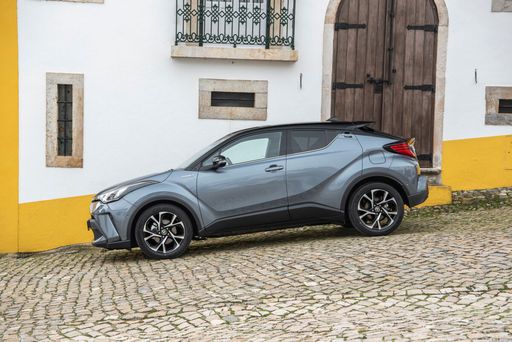
Toyota C-HR

4.8 (7 Reviews)
rate
  • very slightly cheaper
  • markedly lighter
details

All details on performance, efficiency, range and trunk space can be found in the technical comparison below – including user reviews for both models.

By Achim Sedelmaier

Model 3

An Exciting Matchup: Toyota C-HR vs. Tesla Model 3

In today's automotive world, innovation and cutting-edge technology often determine the reign of new-era vehicles. Two contenders making rounds in the market from different spectra are the Toyota C-HR and the Tesla Model 3. Distinct in their engineering and conceptual approaches, both offer extraordinary features. Let's dive into a detailed comparison to help consumers make an informed choice.
C-HR

Body Type and Design

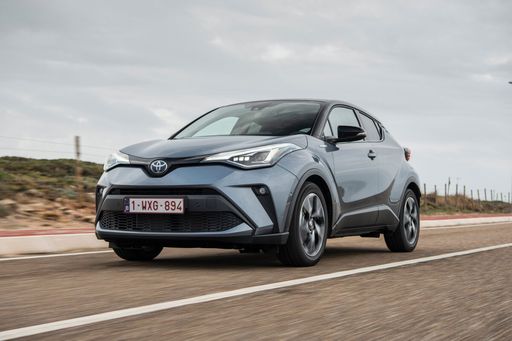
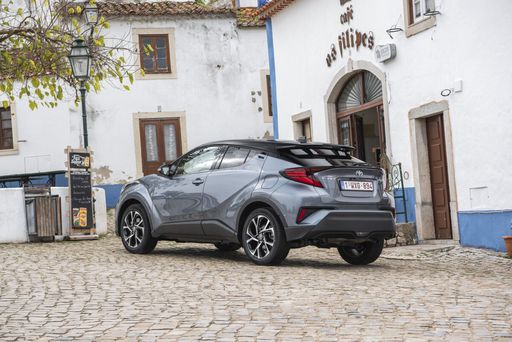
The Toyota C-HR is categorized as an SUV, boasting compact dimensions but a robust road presence. With modern aesthetics marked by aggressive lines and sporty elements, the C-HR appeals to those looking for a stylish urban companion.

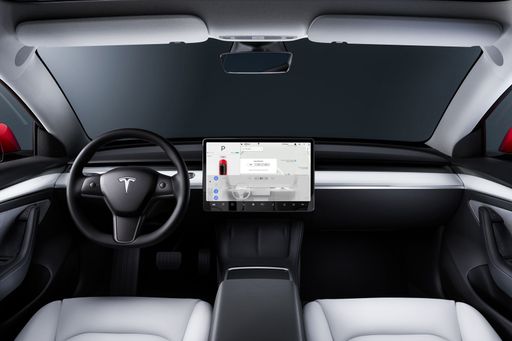
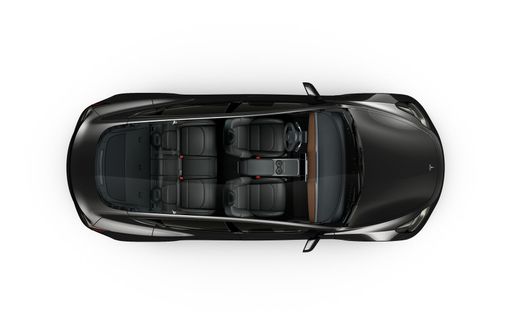
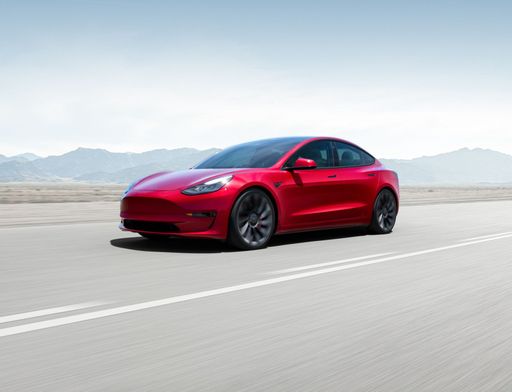
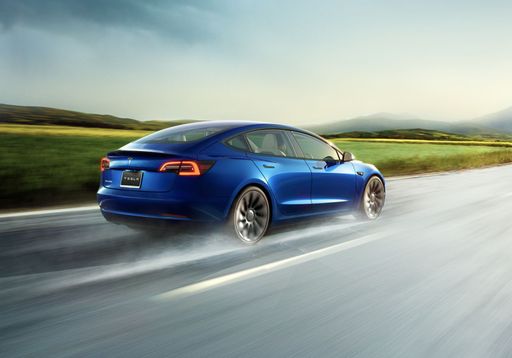
On the other hand, the Tesla Model 3 is a sleek hatchback that introduces a futuristic exterior design. Longer and slightly wider than the C-HR, its elegant look is complemented by minimalist yet sophisticated design choices that highlight its electric legacy.

Model 3

Engine and Performance

The Toyota C-HR brings hybrid versatility to the table, offering both full and plug-in hybrid engines. The power output ranges from 140 to 223 HP, depending on the variant. Its acceleration can achieve 0-100 km/h in a range from 7.4 to 9.9 seconds, and it is available in both front-wheel and all-wheel drive configurations. With a CO2 efficiency class of B and C, it presents a fuel-efficient choice, consuming as low as 4.7 L/100km.

In stark contrast, the Tesla Model 3 features an all-electric engine, delivering a powerful punch with HP ratings from 283 to 460. This electric dynamo accelerates swiftly from 0-100 km/h in merely 3.1 to 6.1 seconds. It stands out with a zero carbon emission performance, earning an A in CO2 efficiency, combining environmental responsibility with exhilarating speed.

C-HR

Range, Consumption, and Environmental Impact

For eco-conscious drivers, the Toyota C-HR's hybrid options offer up to 68 km of electric-only driving range, ideal for daily urban commutes without extensive emissions. The Tesla Model 3 outpaces its counterpart with an impressive electric range up to 702 km, catering to long-distance electrified journeys with ease. The energy consumption for Model 3 optimizes between 13.2 and 16.5 kWh/100km, making it a leader in energy efficiency.

Model 3

Comfort and Convenience

Both vehicles comfortably accommodate five passengers. The Toyota C-HR prioritizes practicality with a trunk capacity ranging from 424 to 447 liters, slightly tailored for the urban dweller with space needs. The Tesla Model 3, however, outshines in cargo handling with a 594-liter trunk capacity, ensuring ample room for family adventures or business transport.

C-HR

Innovation and Technology

Toyota equips the C-HR with intuitive technologies and advanced safety features, focusing on hybrid advancements and an ergonomic driving experience. The seamless CVT transmission enhances comfort, vital for city drives.

Tesla's Model 3 is a benchmark of technological innovation, with its renowned Autopilot driver assist system. The reduction gearbox and fewer mechanical components in the electric motor design reinforce long-term durability and low maintenance. The minimalist interior is designed around touch-screen interfaces, reflecting a hi-tech lifestyle.

Model 3

Final Thoughts

Choosing between the Toyota C-HR and the Tesla Model 3 boils down to individual needs and lifestyles. The C-HR is a compelling choice for those looking for the reliability of a hybrid SUV, while the Model 3 is undeniably appealing to tech enthusiasts and eco-warriors pushing the electric vehicle revolution. Both vehicles stand as sterling representatives of modern technological progress, fueling the debate of hybrid vs. electric for years to come.

Here’s where it gets real: The technical differences in detail

Model 3

Costs and Efficiency:

Price and efficiency are key factors when choosing a car – and this is often where the real differences emerge.

Toyota C-HR is very slightly cheaper – starting at 29,100 £ , while the Tesla Model 3 costs 31,700 £ . That’s a price difference of around 2,571 £.

As for electric range, the Tesla Model 3 offers substantially more range – reaching up to 750 km, about 684 km more than the Toyota C-HR.

C-HR

Engine and Performance:

Under the bonnet, it becomes clear which model is tuned for sportiness and which one takes the lead when you hit the accelerator.

When it comes to engine power, the Tesla Model 3 offers clearly more power – delivering 460 HP compared to 223 HP. That’s roughly 237 HP more horsepower.

When accelerating from 0 to 100 km/h, the Tesla Model 3 is clearly quicker – completing the sprint in 3.1 s, while the Toyota C-HR takes 7.4 s. That’s about 4.3 s quicker.

Model 3

Space and Everyday Use:

Cabin size, boot volume and payload all play a role in everyday practicality. Here, comfort and flexibility make the difference.

Both vehicles offer seating for 5 people.

In terms of curb weight, Toyota C-HR is markedly lighter – 1,505 kg compared to 1,822 kg. The difference is around 317 kg.

Looking at boot space, the Tesla Model 3 offers noticeably more boot space – 594 L compared to 447 L. That’s a difference of about 147 L.

When it comes to payload, the Toyota C-HR carries clearly more – 425 kg compared to 333 kg. That’s a difference of about 92 kg.

Who wins the race in the data check?

The Tesla Model 3 is clearly superior overall in the objective data comparison.
This result only shows which model scores more points on paper – not which of the two cars feels right for you.

from £31,700
Model 3

Tesla Model 3

  • Engine Type Electric
  • Transmission Automatic
  • Drive Type All-Wheel Drive, Rear-Wheel Drive
  • Power HP 283 - 460 HP
  • Consumption kWh/100km 13 - 16.5 kWh/100km
  • Electric Range 534 - 750 km
Tesla Model 3
Toyota C-HR

Costs and Consumption

View detailed analysis

Engine and Performance

View detailed analysis

Dimensions and Body

View detailed analysis

Tesla Model 3

The Tesla Model 3 is a compact electric sedan that pairs brisk, responsive driving with a sleek, minimalist cabin and intuitive, software-led features. It makes a practical, modern choice for daily commutes and long-term ownership while emphasizing simplicity and advanced driver assistance.

details

Toyota C-HR

The Toyota C-HR is a bold, coupe-styled crossover that grabs attention with angular lines and a modern interior design. It’s aimed at comfortable urban driving and sensible efficiency, offering practical features and distinctive looks rather than rugged off-road ability.

details
Tesla Model 3
Toyota C-HR

Costs and Consumption

Price
31,700 - 50,100 £
Price
29,100 - 42,800 £
Consumption L/100km
-
Consumption L/100km
2.3 - 5.1 L/100km
Consumption kWh/100km
13 - 16.5 kWh/100km
Consumption kWh/100km
-
Electric Range
534 - 750 km
Electric Range
66 km
Battery Capacity
-
Battery Capacity
-
co2
0 g/km
co2
52 - 116 g/km
Fuel tank capacity
-
Fuel tank capacity
-

Dimensions and Body

Body Type
Sedan
Body Type
SUV
Seats
5
Seats
5
Doors
-
Doors
-
Curb weight
1,822 - 1,929 kg
Curb weight
1,505 - 1,755 kg
Trunk capacity
594 L
Trunk capacity
350 - 447 L
Length
-
Length
-
Width
1,850 mm
Width
1,832 mm
Height
-
Height
-
Max trunk capacity
-
Max trunk capacity
-
Payload
302 - 333 kg
Payload
375 - 425 kg

Engine and Performance

Engine Type
Electric
Engine Type
Full Hybrid, Plugin Hybrid
Transmission
Automatic
Transmission
Automatic
Transmission Detail
Reduction Gearbox
Transmission Detail
CVT
Drive Type
All-Wheel Drive, Rear-Wheel Drive
Drive Type
Front-Wheel Drive, All-Wheel Drive
Power HP
283 - 460 HP
Power HP
140 - 223 HP
Acceleration 0-100km/h
3.1 - 6.2 s
Acceleration 0-100km/h
7.4 - 9.9 s
Max Speed
-
Max Speed
-
Torque
420 - 660 Nm
Torque
-
Number of Cylinders
-
Number of Cylinders
4
Power kW
208 - 338 kW
Power kW
103 - 164 kW
Engine capacity
-
Engine capacity
1,798 - 1,987 cm3

General

Model Year
2025
Model Year
2026
CO2 Efficiency Class
A
CO2 Efficiency Class
C, D, B
Brand
Tesla
Brand
Toyota
DriveDuel uses data analysis and artificial intelligence to evaluate vehicle data and create content. Content is regularly reviewed and improved. The displayed prices are estimates based on German list prices, adjusted to the respective country’s VAT. Country-specific registration taxes are not included. This information is not legally binding.