VS

Tesla Model Y vs Audi Q4 e-tron comparison

Compare performance (460 HP vs 340 HP), boot space and price (34,300 £ vs 39,600 £ ) at a glance. Find out which car is the better choice for you – Tesla Model Y or Audi Q4 e-tron?

Tesla Model Y vs Audi Q4 e-tron: Key differences

Tesla Model Y

4.5 (4 Reviews)
rate
  • a bit cheaper
  • markedly more power
  • clearly more efficient
  • moderately more electric range
  • considerably quicker 0–100 km/h
  • only slightly lighter
  • clearly more trunk space

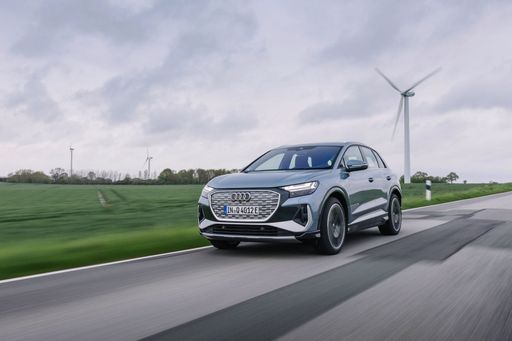
Audi Q4 e-tron

4.9 (2 Reviews)
rate

All details on performance, efficiency, range and trunk space can be found in the technical comparison below – including user reviews for both models.

Model Y

Battle of the Electric SUVs: Audi Q4 e-tron vs. Tesla Model Y

In the rapidly evolving landscape of electric vehicles, two names consistently surface in discussions of innovation, performance, and sustainability: the Audi Q4 e-tron and the Tesla Model Y. As crossover SUVs that aim to blend luxury with electric efficiency, these vehicles offer some of the most cutting-edge technology and design in the market today. Let's dive into a detailed comparison to see how these two electric powerhouses stack up against each other.

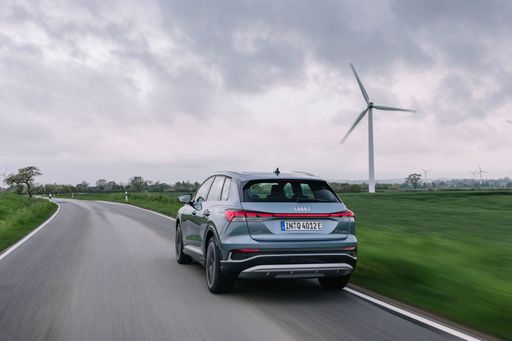
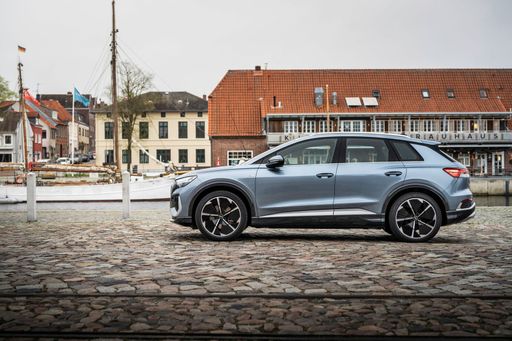
Q4 e-tron

Performance and Powertrain

The Audi Q4 e-tron provides options for both rear-wheel drive and all-wheel drive, with power outputs ranging from 170 to 340 HP. With torque values as high as 679 Nm, this model is designed for both leisurely city drives and more spirited journeys on open roads. The acceleration from 0 to 100 km/h in the Q4 e-tron varies from 9 to a crisp 5.4 seconds, depending on the chosen configuration.

On the other hand, the Tesla Model Y also offers rear-wheel and all-wheel drive setups, featuring more potent power figures ranging from 299 to a remarkable 534 HP. Torque maxes out at 660 Nm, allowing the Model Y to rocket from 0 to 100 km/h in an astonishing 3.7 seconds in its top-tier variant. Clearly, for those who prioritize rapid acceleration, the Model Y holds the edge.

Model Y

Electric Range and Efficiency

Range anxiety is a common concern for prospective electric vehicle drivers, and both models strive to offer substantial coverage. The Audi Q4 e-tron touts an electric range of up to 554 km, with varying consumption between 15.9 and 17.4 kWh/100 km. In contrast, the Tesla Model Y provides an impressive maximum range of 600 km, with even more efficient consumption ranging from 14.9 to 17.3 kWh/100 km. When it comes to maximizing miles between charges, the Model Y takes the lead, particularly in real-world driving scenarios.

Q4 e-tron

Design and Interior Space

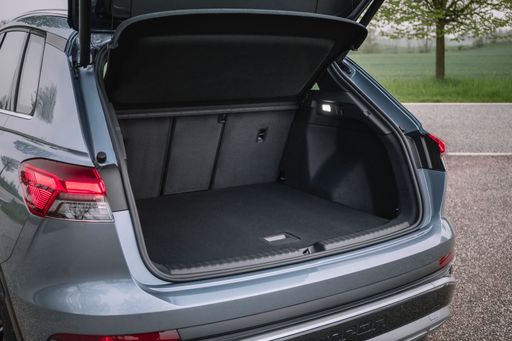
Design-wise, both SUVs present a modern aesthetic with Audi's trademark luxe appeal shining through in the Q4 e-tron. The vehicle measures 4588 mm in length, offering a trunk capacity of 520 to 535 liters, which, though ample, finds a competitor in the Tesla Model Y. With its length reaching 4790 mm and a staggering trunk capacity of up to 854 liters, the Model Y emphasizes utility alongside its electric performance.

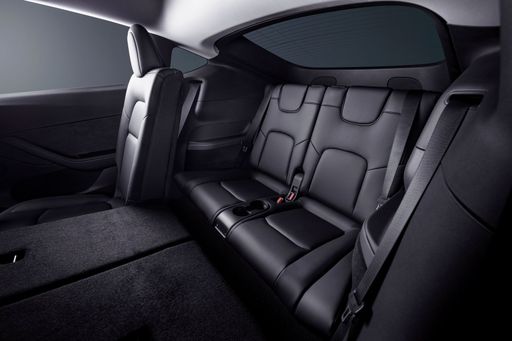
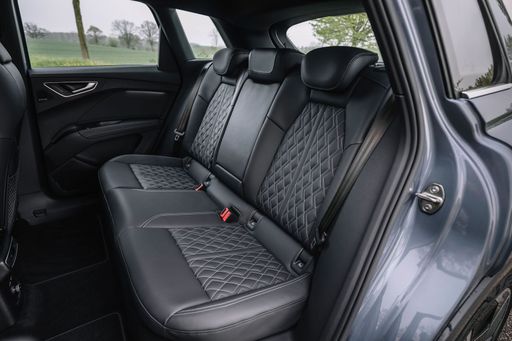
The interior differences also extend to seating options: while the Q4 e-tron comfortably seats five, the Model Y has an optional third row, creating space for up to seven passengers. This extra flexibility can be a decisive factor for families or those requiring more passenger space.

Model Y

Technological Innovations

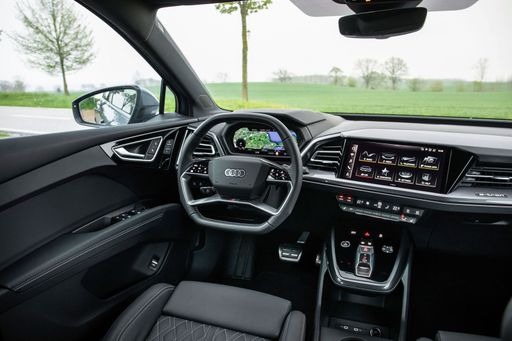
Both the Q4 e-tron and Model Y integrate state-of-the-art technology into their very fabric. The Audi model offers a refined infotainment system along with Audi’s Virtual Cockpit, fostering an intuitive user experience. Advanced driver-assistance systems ensure safety and convenience in equal measure.

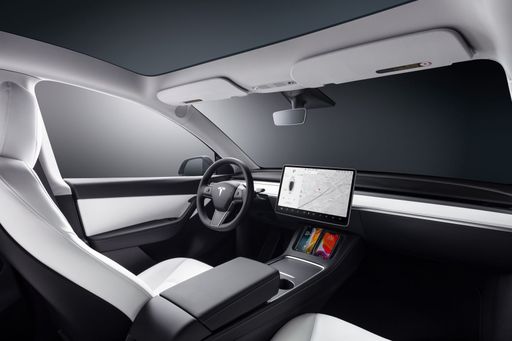
Tesla's emphasis on technology manifests in its famous Autopilot system and regular over-the-air updates that keep the software perpetually current. Its minimalist interior design, featuring a central touchscreen that controls almost all vehicle functions, represents Tesla’s forward-thinking ethos.

Q4 e-tron

Conclusion

The competition between the Audi Q4 e-tron and Tesla Model Y is a testament to how far electric SUVs have come. Where the Q4 e-tron delivers with its luxury and balanced driving experience, the Model Y excels in raw power, range, and innovative technology. Choosing between the two ultimately comes down to personal preference and priorities—be it performance, space, design, or technological prowess. Either choice heralds the future of electric mobility.

Here’s where it gets real: The technical differences in detail

Model Y

Costs and Efficiency:

Price and efficiency are often the first things buyers look at. Here it becomes clear which model has the long-term edge – whether at the pump, the plug, or in purchase price.

Tesla Model Y is a bit cheaper – starting at 34,300 £ , while the Audi Q4 e-tron costs 39,600 £ . That’s a price difference of around 5,280 £.

In terms of energy consumption, the Tesla Model Y is clearly more efficient: consuming 12.7 kWh/100km compared to 15.9 kWh/100km for the Audi Q4 e-tron. That’s a difference of about 3.2 kWh/100km.

As for electric range, the Tesla Model Y offers moderately more range – reaching up to 657 km, about 103 km more than the Audi Q4 e-tron.

Q4 e-tron

Engine and Performance:

Power, torque and acceleration say a lot about how a car feels on the road. This is where you see which model delivers more driving dynamics.

When it comes to engine power, the Tesla Model Y offers markedly more power – delivering 460 HP compared to 340 HP. That’s roughly 120 HP more horsepower.

When accelerating from 0 to 100 km/h, the Tesla Model Y is considerably quicker – completing the sprint in 3.5 s, while the Audi Q4 e-tron takes 5.4 s. That’s about 1.9 s quicker.

Looking at top speed, the Tesla Model Y is slightly faster – reaching 201 km/h, while the Audi Q4 e-tron tops out at 180 km/h. The difference is around 21 km/h.

There’s also a difference in torque: the Audi Q4 e-tron delivers very slightly more torque with 679 Nm compared to 660 Nm. That’s about 19 Nm more.

Model Y

Space and Everyday Use:

Whether family car or daily driver – which one offers more room, flexibility and comfort?

Seats: Tesla Model Y offers more seats – 7 vs 5.

In terms of curb weight, Tesla Model Y is only slightly lighter – 1,953 kg compared to 2,035 kg. The difference is around 82 kg.

Looking at boot space, the Tesla Model Y offers clearly more boot space – 822 L compared to 535 L. That’s a difference of about 287 L.

For maximum load capacity, the Tesla Model Y offers markedly more capacity – up to 2,138 L, about 648 L more than the Audi Q4 e-tron.

When it comes to payload, the Audi Q4 e-tron carries only slightly more – 515 kg compared to 472 kg. That’s a difference of about 43 kg.

Who wins the race in the data check?

The Tesla Model Y is decisively ahead in the objective data comparison.
This result only shows which model scores more points on paper – not which of the two cars feels right for you.

from £34,300
Model Y

Tesla Model Y

  • Engine Type : Electric
  • Transmission : Automatic
  • Drive Type : All-Wheel Drive, Rear-Wheel Drive
  • Power HP : 299 - 460 HP
  • Consumption kWh/100km : 12.7 - 16.2 kWh/100km
  • Electric Range : 534 - 657 km
Tesla Model Y
Audi Q4 e-tron

Costs and Consumption

View detailed analysis

Engine and Performance

View detailed analysis

Dimensions and Body

View detailed analysis

Tesla Model Y

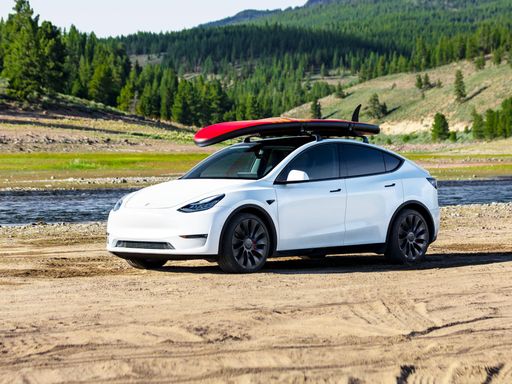
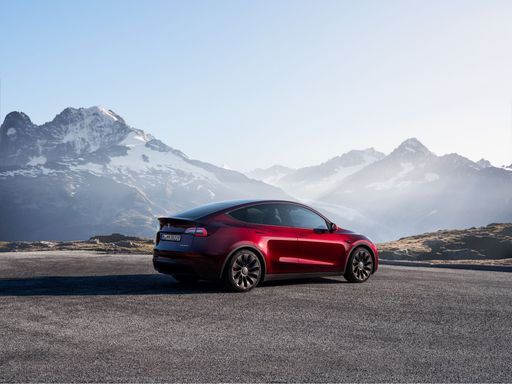
The Tesla Model Y blends SUV practicality with sports-car poke, wrapping a roomy, minimalist cabin and handy hatch into a slick, aerodynamic package that feels more Silicon Valley gadget than garage ornament. It’s an ideal pick for buyers who want effortless electric driving, regular software improvements and access to Tesla’s convenient charging network, though style-conscious shoppers should know it’s more about tech and efficiency than classic luxury.

details

Audi Q4 e-tron

The Audi Q4 e-tron brings Audi polish into the electric crossover scene, pairing a sleek exterior with a refined, airy interior that makes everyday driving feel distinctly premium. It’s an easy-to-live-with EV that balances comfort and real-world usability with intuitive tech, making it a smart choice for buyers who want electric mobility without giving up Audi character — and yes, it still looks good in the driveway.

details
Tesla Model Y
Audi Q4 e-tron

Costs and Consumption

Price
34,300 - 53,100 £
Price
39,600 - 58,800 £
Consumption L/100km
-
Consumption L/100km
-
Consumption kWh/100km
12.7 - 16.2 kWh/100km
Consumption kWh/100km
15.9 - 17.4 kWh/100km
Electric Range
534 - 657 km
Electric Range
406 - 554 km
Battery Capacity
64.5 - 83 kWh
Battery Capacity
77 kWh
co2
0 g/km
co2
0 g/km
Fuel tank capacity
-
Fuel tank capacity
-

Dimensions and Body

Body Type
SUV
Body Type
SUV
Seats
5 - 7
Seats
5
Doors
5
Doors
5
Curb weight
1,953 - 2,108 kg
Curb weight
2,035 - 2,235 kg
Trunk capacity
822 L
Trunk capacity
520 - 535 L
Length
4,790 - 4,797 mm
Length
4,588 mm
Width
1,920 - 1,921 mm
Width
1,865 mm
Height
1,621 - 1,624 mm
Height
1,614 - 1,632 mm
Max trunk capacity
2,118 - 2,138 L
Max trunk capacity
1,460 - 1,490 L
Payload
435 - 472 kg
Payload
505 - 515 kg

Engine and Performance

Engine Type
Electric
Engine Type
Electric
Transmission
Automatic
Transmission
Automatic
Transmission Detail
Reduction Gearbox
Transmission Detail
Reduction Gearbox
Drive Type
All-Wheel Drive, Rear-Wheel Drive
Drive Type
Rear-Wheel Drive, All-Wheel Drive
Power HP
299 - 460 HP
Power HP
204 - 340 HP
Acceleration 0-100km/h
3.5 - 7.2 s
Acceleration 0-100km/h
5.4 - 8.1 s
Max Speed
201 km/h
Max Speed
180 km/h
Torque
420 - 660 Nm
Torque
310 - 679 Nm
Number of Cylinders
-
Number of Cylinders
-
Power kW
220 - 338 kW
Power kW
150 - 250 kW
Engine capacity
-
Engine capacity
-

General

Model Year
2,025 - 2,026
Model Year
2,023 - 2,025
CO2 Efficiency Class
A
CO2 Efficiency Class
A
Brand
Tesla
Brand
Audi
DriveDuel uses data analysis and artificial intelligence to evaluate vehicle data and create content. Content is regularly reviewed and improved. The displayed prices are estimates based on German list prices, adjusted to the respective country’s VAT. Country-specific registration taxes are not included. This information is not legally binding.