VS

Tesla Model Y vs VW ID.4 comparison

Compare performance (460 HP vs 340 HP), boot space and price (34,300 £ vs 34,600 £ ) at a glance. Find out which car is the better choice for you – Tesla Model Y or VW ID.4?

Tesla Model Y vs VW ID.4: Key differences

Tesla Model Y

4.5 (5 Reviews)
rate
  • barely cheaper
  • visibly more power
  • clearly more efficient
  • moderately more electric range
  • significantly quicker 0–100 km/h
  • barely lighter
  • noticeably more trunk space
details

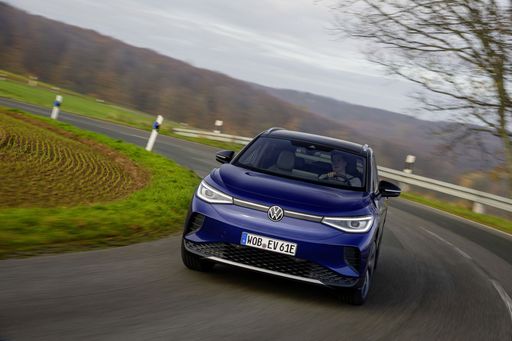
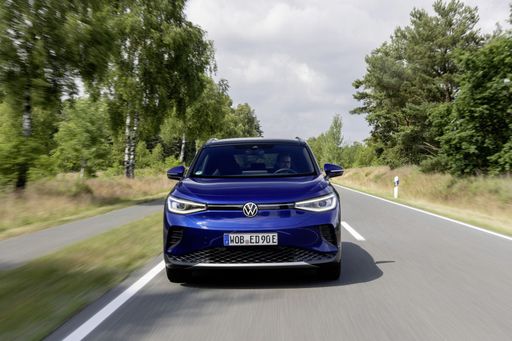
VW ID.4

4.4 (9 Reviews)
rate
details

All details on performance, efficiency, range and trunk space can be found in the technical comparison below – including user reviews for both models.

By Achim Sedelmaier

Model Y

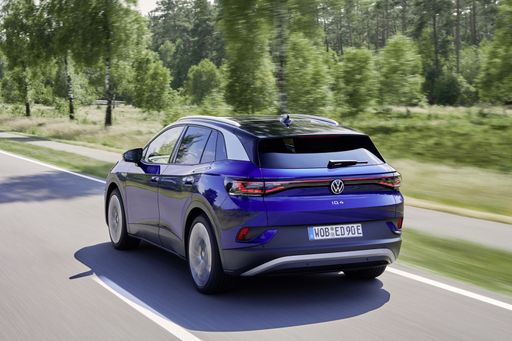
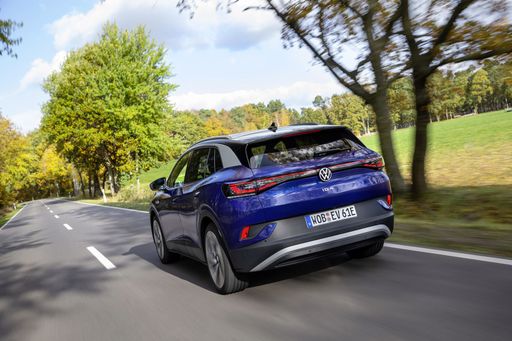
The electric vehicle market has seen a remarkable surge in innovation and competition, particularly in the SUV segment. Two of the most prominent models vying for supremacy are the VW ID.4 and the Tesla Model Y. Both vehicles boast cutting-edge technology, remarkable performance, and eco-friendly credentials. However, how do they compare? In this article, we'll delve into the technical specifications, performance metrics, and innovations of both models to see how they stack up against each other.
ID.4

Electric Performance and Capabilities

When it comes to electric performance, both the VW ID.4 and Tesla Model Y offer compelling options. The VW ID.4 is available in both rear-wheel and all-wheel drive configurations, with power outputs ranging from 170 to 340 HP, depending on the variant. This gives the ID.4 an acceleration time of up to 5.4 seconds for the high-performance variant, while the standard variant offers a respectable 6.7 seconds. The ID.4's impressive torque of 679 Nm further enhances its acceleration and responsiveness.

On the other hand, the Tesla Model Y features an even broader range of power options with outputs up to 534 HP. Its top acceleration time of just 3.7 seconds for the Performance model places it firmly in the sports SUV category, making it one of the quickest in its segment. With a torque figure reaching up to 660 Nm, the Model Y promises a thrilling driving experience.

Model Y

Battery Life and Range

Range anxiety is a common concern among electric vehicle owners, but both the VW ID.4 and Tesla Model Y deliver impressive ranges that should ease those worries. The ID.4 offers a maximum electric range of 572 km for higher variants, while the lower-end model still achieves a solid 357 km. Its battery capacity options include a 77 kWh and a 52 kWh version, making it versatile for different needs.

The Tesla Model Y, on the other hand, can reach an impressive maximum range of 600 km, depending on the battery variant selected. With battery capacities of 62 kWh and 79 kWh, it offers multiple options that cater to both performance and efficiency. The Model Y's lower consumption rates, with figures as low as 14.9 kWh/100km, also give it an edge in efficiency over the ID.4.

ID.4

Interior Comfort and Cargo Space

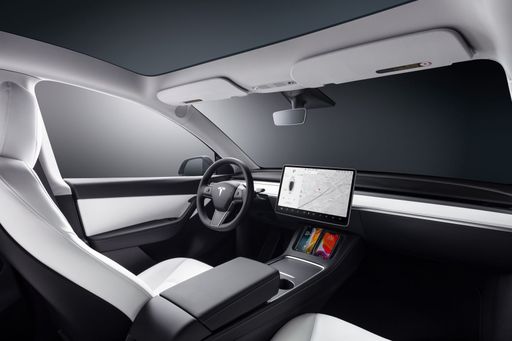
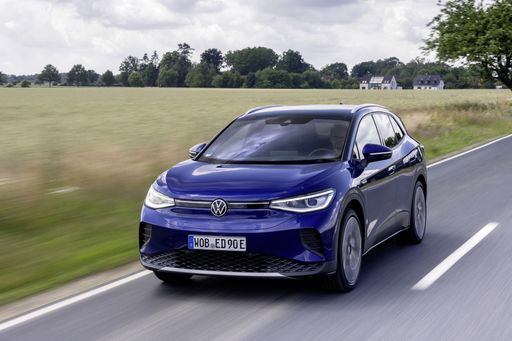
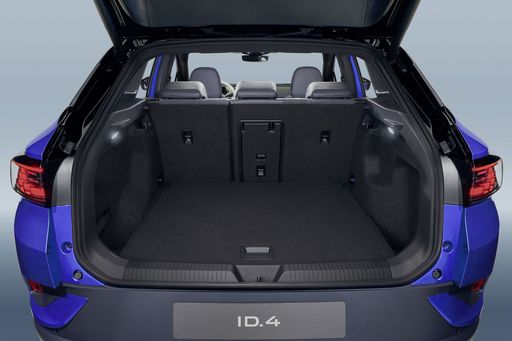
Interior comfort is subjective, but both models provide spacious cabins for passengers. The VW ID.4 seats up to five and offers a trunk capacity of 543 liters, making it practical for families and long trips. The layout embraces simplicity and modern aesthetics, aligning well with contemporary design philosophies.

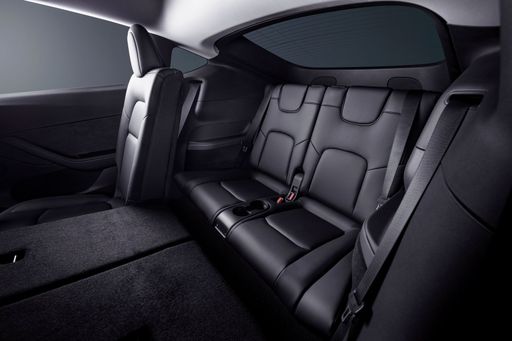
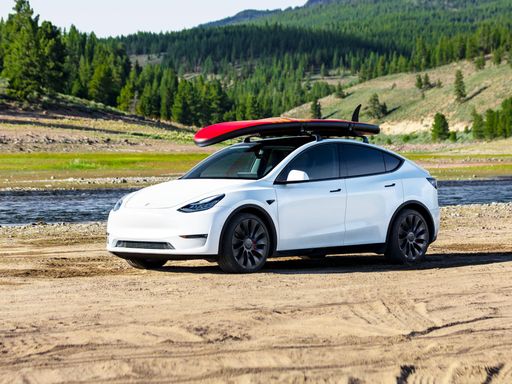
The Tesla Model Y slightly edges out in terms of cargo space, presenting an impressive 854 liters, which is ideal for those who prioritize utility and flexibility. Additionally, the option for a third row allows the Model Y to accommodate up to seven passengers, catering to larger families or groups.

Model Y

Charging Options and Technology

Charging infrastructure is crucial for any electric vehicle, and both the ID.4 and Model Y benefit from a growing network of fast-charging stations. The ID.4 can charge at a rate of up to 125 kW, enabling it to recuperate significant range in under 30 minutes. Meanwhile, the Tesla Model Y takes advantage of the extensive Supercharger network, allowing rapid charging at rates up to 250 kW, ensuring quicker charge times and better long-distance travel capabilities.

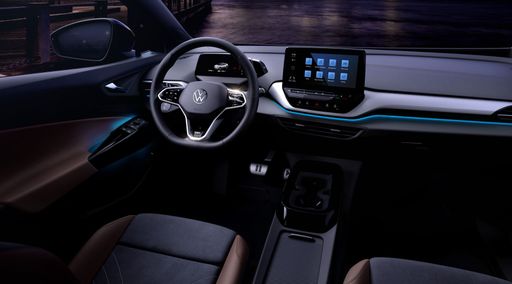
In terms of technology and innovation, the Tesla Model Y is equipped with industry-leading software capabilities, including over-the-air updates, advanced driver-assistance features, and a minimalist interior dominated by a large touchscreen interface. The ID.4 offers a more traditional approach with a digital cockpit, yet still integrates key modern tech elements like a central infotainment display and various driver assistance systems.

ID.4

Conclusion: Which One Should You Choose?

Choosing between the VW ID.4 and Tesla Model Y ultimately depends on individual needs and preferences. The ID.4 delivers a robust and spacious SUV experience, perfect for those who appreciate practicality and comfort. In contrast, the Model Y excels in performance, cutting-edge technology, and range efficiency, appealing to those who value speed and tech prowess.

Both vehicles embody the future of electric mobility, providing compelling options for anyone looking to transition to an eco-friendly driving experience. Whether you opt for the VW ID.4 or the Tesla Model Y, you're guaranteed a step towards sustainable driving without sacrificing performance or comfort.

Video - VW ID.4

Video Thumbnail

Here’s where it gets real: The technical differences in detail

Model Y

Costs and Efficiency:

Price and efficiency are often the first things buyers look at. Here it becomes clear which model has the long-term edge – whether at the pump, the plug, or in purchase price.

Tesla Model Y is barely cheaper – starting at 34,300 £ , while the VW ID.4 costs 34,600 £ . That’s a price difference of around 295 £.

In terms of energy consumption, the Tesla Model Y is clearly more efficient: consuming 12.7 kWh/100km compared to 15.6 kWh/100km for the VW ID.4. That’s a difference of about 2.9 kWh/100km.

As for electric range, the Tesla Model Y offers moderately more range – reaching up to 657 km, about 88 km more than the VW ID.4.

ID.4

Engine and Performance:

Under the bonnet, it becomes clear which model is tuned for sportiness and which one takes the lead when you hit the accelerator.

When it comes to engine power, the Tesla Model Y offers visibly more power – delivering 460 HP compared to 340 HP. That’s roughly 120 HP more horsepower.

When accelerating from 0 to 100 km/h, the Tesla Model Y is significantly quicker – completing the sprint in 3.5 s, while the VW ID.4 takes 5.4 s. That’s about 1.9 s quicker.

Looking at top speed, the Tesla Model Y is a bit faster – reaching 201 km/h, while the VW ID.4 tops out at 180 km/h. The difference is around 21 km/h.

There’s also a difference in torque: the VW ID.4 delivers marginally more torque with 679 Nm compared to 660 Nm. That’s about 19 Nm more.

Model Y

Space and Everyday Use:

Whether family car or daily driver – which one offers more room, flexibility and comfort?

Seats: Tesla Model Y offers more seats – 7 vs 5.

In terms of curb weight, Tesla Model Y is barely lighter – 1,953 kg compared to 1,975 kg. The difference is around 22 kg.

Looking at boot space, the Tesla Model Y offers noticeably more boot space – 822 L compared to 543 L. That’s a difference of about 279 L.

For maximum load capacity, the Tesla Model Y offers clearly more capacity – up to 2,138 L, about 563 L more than the VW ID.4.

When it comes to payload, the VW ID.4 carries slightly more – 551 kg compared to 472 kg. That’s a difference of about 79 kg.

Who wins the race in the data check?

The Tesla Model Y is decisively ahead in the objective data comparison.
This result only shows which model scores more points on paper – not which of the two cars feels right for you.

from £34,300
Model Y

Tesla Model Y

  • Engine Type : Electric
  • Transmission : Automatic
  • Drive Type : All-Wheel Drive, Rear-Wheel Drive
  • Power HP : 299 - 460 HP
  • Consumption kWh/100km : 12.7 - 16.2 kWh/100km
  • Electric Range : 534 - 657 km
Tesla Model Y
VW ID.4

Costs and Consumption

View detailed analysis

Engine and Performance

View detailed analysis

Dimensions and Body

View detailed analysis

Tesla Model Y

The Tesla Model Y is a tech‑forward family SUV that marries blistering efficiency with enormous interior space, calm motorway manners and the obvious convenience of Tesla’s charging ecosystem and over‑the‑air updates. Its minimalist, screen‑centric cabin and rather firm ride — plus limited rear visibility and the absence of Apple CarPlay/Android Auto — are trade‑offs that will bother buyers who prioritise comfort or traditional ergonomics.

details

VW ID.4

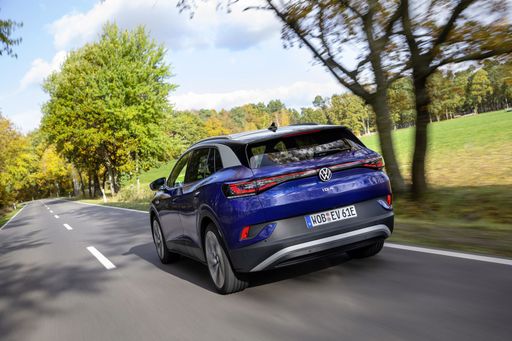
The VW ID.4 is a roomy, comfort‑focused electric SUV that makes family life and daily commuting effortless with a practical interior and a calm, efficient powertrain. It’s reassuring and sensible rather than thrilling — well suited to long stretches thanks to a relaxed ride and useful assistance systems, but the touch‑centric controls, restricted rear visibility and muted steering keep it from exciting drivers who want sportier dynamics.

details
Tesla Model Y
VW ID.4

Costs and Consumption

Price
34,300 - 53,100 £
Price
34,600 - 47,200 £
Consumption L/100km
-
Consumption L/100km
-
Consumption kWh/100km
12.7 - 16.2 kWh/100km
Consumption kWh/100km
15.6 - 17 kWh/100km
Electric Range
534 - 657 km
Electric Range
356 - 569 km
Battery Capacity
64.5 - 83 kWh
Battery Capacity
52 - 77 kWh
co2
0 g/km
co2
0 g/km
Fuel tank capacity
-
Fuel tank capacity
-

Dimensions and Body

Body Type
SUV
Body Type
SUV
Seats
5 - 7
Seats
5
Doors
5
Doors
5
Curb weight
1,953 - 2,108 kg
Curb weight
1,975 - 2,248 kg
Trunk capacity
822 L
Trunk capacity
543 L
Length
4,790 - 4,797 mm
Length
4,582 - 4,584 mm
Width
1,920 - 1,921 mm
Width
1,852 mm
Height
1,621 - 1,624 mm
Height
1,619 - 1,634 mm
Max trunk capacity
2,118 - 2,138 L
Max trunk capacity
1,575 L
Payload
435 - 472 kg
Payload
515 - 551 kg

Engine and Performance

Engine Type
Electric
Engine Type
Electric
Transmission
Automatic
Transmission
Automatic
Transmission Detail
Reduction Gearbox
Transmission Detail
Reduction Gearbox
Drive Type
All-Wheel Drive, Rear-Wheel Drive
Drive Type
Rear-Wheel Drive, All-Wheel Drive
Power HP
299 - 460 HP
Power HP
170 - 340 HP
Acceleration 0-100km/h
3.5 - 7.2 s
Acceleration 0-100km/h
5.4 - 9 s
Max Speed
201 km/h
Max Speed
160 - 180 km/h
Torque
420 - 660 Nm
Torque
310 - 679 Nm
Number of Cylinders
-
Number of Cylinders
-
Power kW
220 - 338 kW
Power kW
125 - 250 kW
Engine capacity
-
Engine capacity
-

General

Model Year
2,025 - 2,026
Model Year
2,023 - 2,025
CO2 Efficiency Class
A
CO2 Efficiency Class
A
Brand
Tesla
Brand
VW
DriveDuel uses data analysis and artificial intelligence to evaluate vehicle data and create content. Content is regularly reviewed and improved. The displayed prices are estimates based on German list prices, adjusted to the respective country’s VAT. Country-specific registration taxes are not included. This information is not legally binding.