VS

Tesla Model Y vs VW Tiguan comparison

Compare performance (460 HP vs 272 HP), boot space and price (34,300 £ vs 33,600 £ ) at a glance. Find out which car is the better choice for you – Tesla Model Y or VW Tiguan?

Tesla Model Y vs VW Tiguan: Key differences

Tesla Model Y

4.5 (4 Reviews)
rate
  • substantially more power
  • clearly more electric range
  • substantially quicker 0–100 km/h
  • clearly more trunk space

VW Tiguan

3.9 (7 Reviews)
rate
  • marginally cheaper
  • clearly lighter

All details on performance, efficiency, range and trunk space can be found in the technical comparison below – including user reviews for both models.

Model Y

Introducing the Contenders: VW Tiguan vs Tesla Model Y

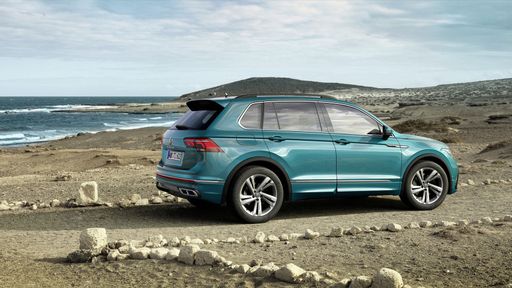
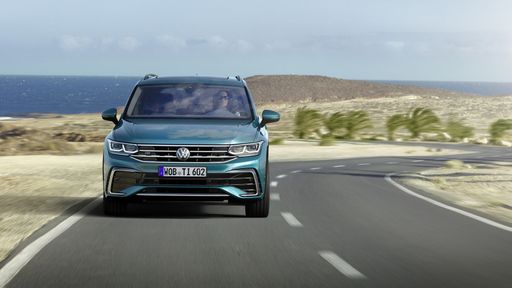
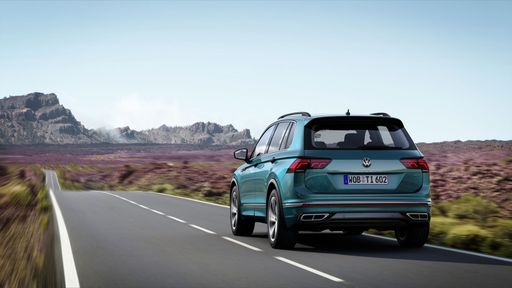
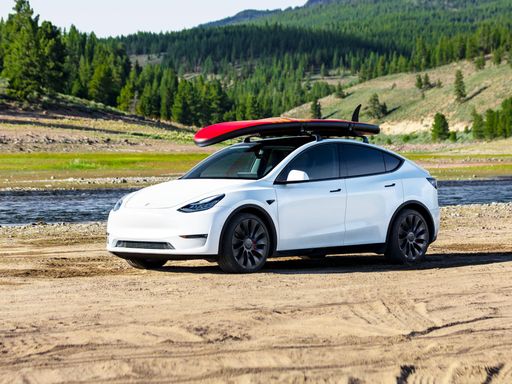
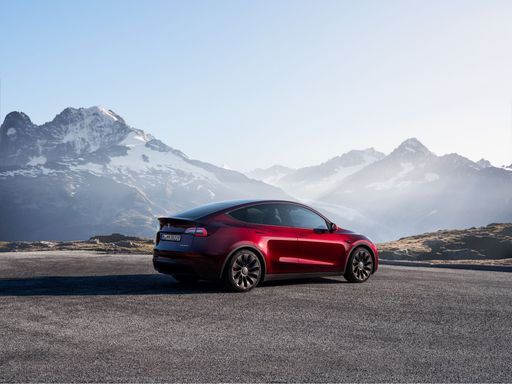
The automotive marketplace is bustling with numerous SUVs, but two models frequently stand out for comparison—the VW Tiguan and Tesla Model Y. Both cater to enthusiastic SUV aficionados and differ substantially in their technical aspects and innovations. Whether you're a fan of traditional engines or innovative electric technology, this comparison will guide you through the decision-making process.
Tiguan

Engine and Performance

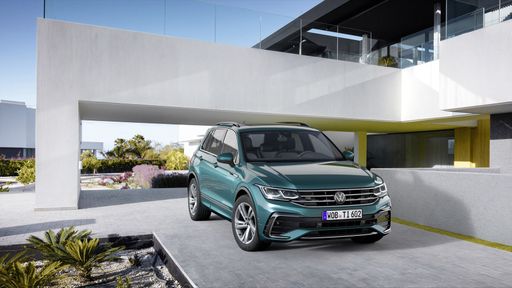
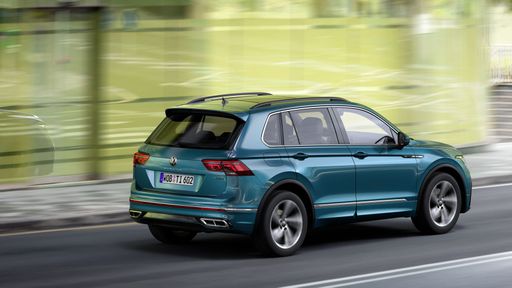
The VW Tiguan enters the arena with a diverse range of engine options, including Petrol MHEV, Plugin Hybrid, Diesel, and Petrol configurations, suitable for varied driving preferences. With power output ranging from 130 to 272 HP, the Tiguan offers a flexible blend of performance and efficiency. Coupled with dual-clutch automatic transmission, it caters to drivers who appreciate smooth gear shifts and responsive driving dynamics. It also offers a top speed of up to 242 km/h.

On the other hand, the Tesla Model Y offers cutting-edge electric powertrains with power outputs between 299 and 534 HP. It boasts instantaneous torque, allowing acceleration from 0 to 100 km/h in a breathtaking 3.7 seconds in some models. With a maximum speed of 250 km/h, the Model Y proves that electric SUVs can offer thrilling performance alongside zero-emissions driving.

Model Y

Range and Efficiency

Although the VW Tiguan presents robust fuel efficiency, the spotlight shines on the Tesla Model Y when it comes to electric range. The Model Y delivers a range of up to 600 km on a single charge, thanks to its larger battery capacity (up to 79 kWh). Conversely, the Tiguan's Plugin Hybrid offers an electric range of up to 113 km, ideal for short urban journeys.

Efficiency-wise, the Model Y stands out with an energy consumption of around 15.7 to 17.3 kWh/100 km, demonstrating Tesla’s prowess in optimizing electric energy usage. Meanwhile, Tiguan's consumption ranges from 5.3 to 8.5 L/100 km, influenced by its fuel type and driving conditions.

Tiguan

Interior and Space

A key deciding factor for many SUV buyers is interior space and cargo capacity. The Tiguan provides a trunk capacity of up to 652 liters, accommodating families' needs for space and practicality. Its design ensures passenger comfort for all five occupants, with ample legroom and advanced infotainment systems enhancing the driving experience.

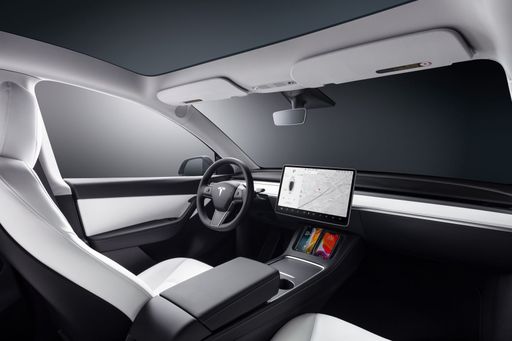
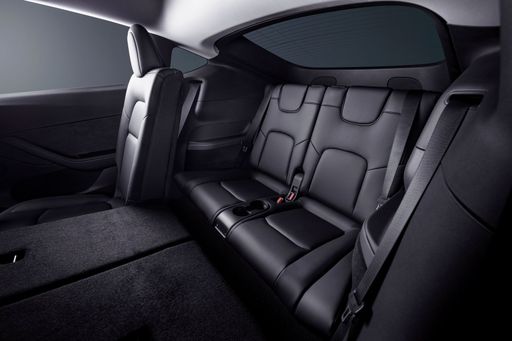
The Model Y advances on the storage front with up to 854 liters of trunk space, exploiting Tesla's design of a front and rear cargo area. Available in 5 or 7-seat configurations, it can cater to larger families or those requiring additional passenger space, coupled with Tesla's iconic minimalist and tech-laden interiors.

Model Y

Innovations and Technology

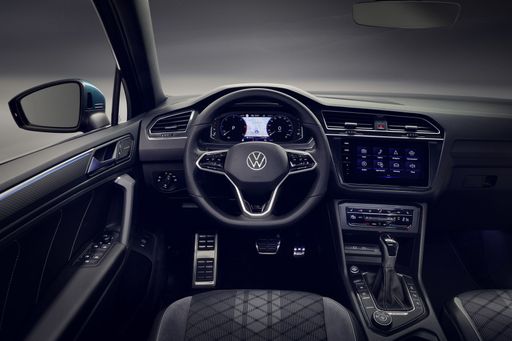
The VW Tiguan impresses with its latest technology in traditional automotive engineering, featuring mild hybrid and plug-in hybrid innovations that improve fuel efficiency and reduce emissions. Drivers benefit from VW's reliable tech features, focusing on connectivity and safety.

Tesla, however, continues to lead in automotive technology. The Model Y integrates seamless software updates, Autopilot capabilities, and a center-mounted touchscreen that controls almost all vehicle functions. It reflects Tesla's philosophy of integrating cutting-edge technology to deliver a futuristic driving experience.

Tiguan

Conclusion: Tradition vs Innovation

Choosing between the VW Tiguan and Tesla Model Y ultimately comes down to traditional versus modern preferences. The Tiguan offers a variety of conventional powertrains with hybrid options, appealing to loyalists of the combustion engine. The Model Y caters to tech-savvy drivers desiring electric efficiency and technological advancements.

Both vehicles signify excellence in their categories, making the choice a matter of personal preference, lifestyle needs, and vision for the future of driving.

Here’s where it gets real: The technical differences in detail

Model Y

Costs and Efficiency:

When it comes to price and running costs, the biggest differences usually appear. This is often where you see which car fits your budget better in the long run.

VW Tiguan is marginally cheaper – starting at 33,600 £ , while the Tesla Model Y costs 34,300 £ . That’s a price difference of around 699 £.

As for electric range, the Tesla Model Y offers clearly more range – reaching up to 657 km, about 531 km more than the VW Tiguan.

Tiguan

Engine and Performance:

Under the bonnet, it becomes clear which model is tuned for sportiness and which one takes the lead when you hit the accelerator.

When it comes to engine power, the Tesla Model Y offers substantially more power – delivering 460 HP compared to 272 HP. That’s roughly 188 HP more horsepower.

When accelerating from 0 to 100 km/h, the Tesla Model Y is substantially quicker – completing the sprint in 3.5 s, while the VW Tiguan takes 5.9 s. That’s about 2.4 s quicker.

Looking at top speed, the VW Tiguan is very slightly faster – reaching 215 km/h, while the Tesla Model Y tops out at 201 km/h. The difference is around 14 km/h.

There’s also a difference in torque: the Tesla Model Y delivers visibly more torque with 660 Nm compared to 400 Nm. That’s about 260 Nm more.

Model Y

Space and Everyday Use:

Whether family car or daily driver – which one offers more room, flexibility and comfort?

Seats: Tesla Model Y offers more seats – 7 vs 5.

In terms of curb weight, VW Tiguan is clearly lighter – 1,599 kg compared to 1,953 kg. The difference is around 354 kg.

Looking at boot space, the Tesla Model Y offers clearly more boot space – 822 L compared to 652 L. That’s a difference of about 170 L.

For maximum load capacity, the Tesla Model Y offers markedly more capacity – up to 2,138 L, about 652 L more than the VW Tiguan.

When it comes to payload, the VW Tiguan carries moderately more – 533 kg compared to 472 kg. That’s a difference of about 61 kg.

Who wins the race in the data check?

The Tesla Model Y is decisively ahead in the objective data comparison.
This result only shows which model scores more points on paper – not which of the two cars feels right for you.

from £34,300
Model Y

Tesla Model Y

  • Engine Type : Electric
  • Transmission : Automatic
  • Drive Type : All-Wheel Drive, Rear-Wheel Drive
  • Power HP : 299 - 460 HP
  • Consumption kWh/100km : 12.7 - 16.2 kWh/100km
  • Electric Range : 534 - 657 km
Tesla Model Y
VW Tiguan

Costs and Consumption

View detailed analysis

Engine and Performance

View detailed analysis

Dimensions and Body

View detailed analysis

Tesla Model Y

The Tesla Model Y blends SUV practicality with sports-car poke, wrapping a roomy, minimalist cabin and handy hatch into a slick, aerodynamic package that feels more Silicon Valley gadget than garage ornament. It’s an ideal pick for buyers who want effortless electric driving, regular software improvements and access to Tesla’s convenient charging network, though style-conscious shoppers should know it’s more about tech and efficiency than classic luxury.

details

VW Tiguan

The VW Tiguan blends sensible family practicality with a dash of German polish, delivering a calm, reassuring ride and a cabin that never feels like an afterthought. For buyers who want an SUV that’s easy to live with yet still nicely dressed, the Tiguan is the grown‑up choice that keeps a cheeky wink in reserve.

details
Tesla Model Y
VW Tiguan

Costs and Consumption

Price
34,300 - 53,100 £
Price
33,600 - 54,600 £
Consumption L/100km
-
Consumption L/100km
1.4 - 8.4 L/100km
Consumption kWh/100km
12.7 - 16.2 kWh/100km
Consumption kWh/100km
-
Electric Range
534 - 657 km
Electric Range
118 - 126 km
Battery Capacity
64.5 - 83 kWh
Battery Capacity
19.7 kWh
co2
0 g/km
co2
32 - 190 g/km
Fuel tank capacity
-
Fuel tank capacity
45 L

Dimensions and Body

Body Type
SUV
Body Type
SUV
Seats
5 - 7
Seats
5
Doors
5
Doors
5
Curb weight
1,953 - 2,108 kg
Curb weight
1,599 - 1,879 kg
Trunk capacity
822 L
Trunk capacity
490 - 652 L
Length
4,790 - 4,797 mm
Length
4,539 mm
Width
1,920 - 1,921 mm
Width
1,842 - 1,859 mm
Height
1,621 - 1,624 mm
Height
1,658 mm
Max trunk capacity
2,118 - 2,138 L
Max trunk capacity
1,486 L
Payload
435 - 472 kg
Payload
460 - 533 kg

Engine and Performance

Engine Type
Electric
Engine Type
Petrol MHEV, Petrol, Diesel, Plugin Hybrid
Transmission
Automatic
Transmission
Automatic
Transmission Detail
Reduction Gearbox
Transmission Detail
Dual-Clutch Automatic
Drive Type
All-Wheel Drive, Rear-Wheel Drive
Drive Type
Front-Wheel Drive, All-Wheel Drive
Power HP
299 - 460 HP
Power HP
130 - 272 HP
Acceleration 0-100km/h
3.5 - 7.2 s
Acceleration 0-100km/h
5.9 - 10.6 s
Max Speed
201 km/h
Max Speed
210 - 215 km/h
Torque
420 - 660 Nm
Torque
220 - 400 Nm
Number of Cylinders
-
Number of Cylinders
4
Power kW
220 - 338 kW
Power kW
96 - 200 kW
Engine capacity
-
Engine capacity
1,498 - 1,984 cm3

General

Model Year
2,025 - 2,026
Model Year
2,024 - 2,026
CO2 Efficiency Class
A
CO2 Efficiency Class
D, E, F, B, G
Brand
Tesla
Brand
VW
DriveDuel uses data analysis and artificial intelligence to evaluate vehicle data and create content. Content is regularly reviewed and improved. The displayed prices are estimates based on German list prices, adjusted to the respective country’s VAT. Country-specific registration taxes are not included. This information is not legally binding.