VS

Toyota C-HR vs Citroen C5 Aircross comparison

Compare performance (223 HP vs 225 HP), boot space and price (29,100 £ vs 29,100 £ ) at a glance. Find out which car is the better choice for you – Toyota C-HR or Citroen C5 Aircross?

Toyota C-HR vs Citroen C5 Aircross: Key differences

Toyota C-HR

4.9 (5 Reviews)
rate
  • only slightly more efficient
  • somewhat quicker 0–100 km/h
  • barely lighter
details

Citroen C5 Aircross

3.9 (5 Reviews)
rate
  • only slightly more power
  • considerably more electric range
  • markedly more trunk space
details

All details on performance, efficiency, range and trunk space can be found in the technical comparison below – including user reviews for both models.

By Achim Sedelmaier

C-HR

Citroen C5 Aircross vs. Toyota C-HR: A Comprehensive SUV Comparison

The automotive market is continuously evolving, with manufacturers innovating to meet the demands of modern drivers. Two SUVs that have recently caught the spotlight are the Citroen C5 Aircross and the Toyota C-HR. While both vehicles offer unique features, performance, and style, each brings something different to the table. In this comparison, we’ll dive into their technical aspects and innovations to determine which SUV stands out in 2024.
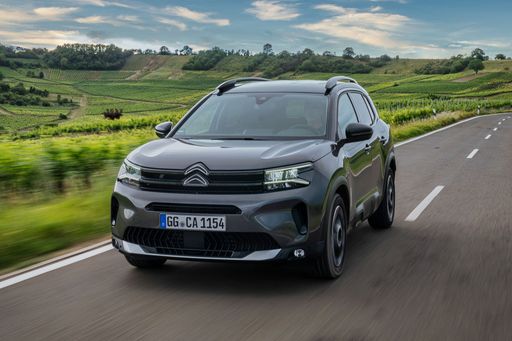
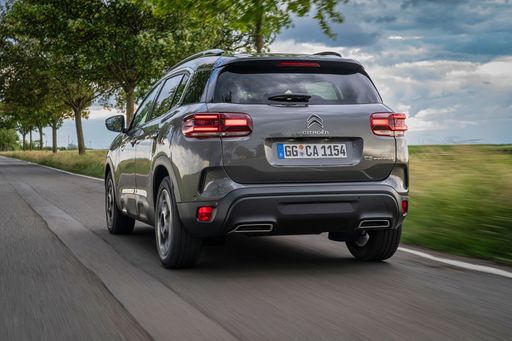
C5 Aircross

Performance and Engine Options

The Citroen C5 Aircross is versatile with a range of engine options. It includes Diesel, Petrol MHEV, and Plugin Hybrid variants, with power outputs ranging from 131 to 224 HP. The diesel engines offer consumption as low as 5.5 L/100 km, while the Plugin Hybrid boasts a remarkable CO2 emission of just 32 g/km. A significant feature is the 58 km electric range provided by its 12.9 kWh battery. Acceleration from 0-100 km/h is also impressive, with the most powerful variant reaching this mark in just 8.9 seconds.

On the other hand, the Toyota C-HR is available in Full Hybrid and Plugin Hybrid configurations, producing a range of 140 to 223 HP. It achieves excellent fuel efficiency, with some variants consuming just 4.7 L/100 km. Its electric range is slightly higher than Citroen's, reaching up to 68 km. The C-HR’s acceleration is noteworthy, with the fastest variant completing the sprint in just 7.4 seconds. Both vehicles utilize automatic transmissions, although the C5 Aircross employs either an automatic gearbox or dual-clutch options, while the C-HR uses a continuously variable transmission (CVT).

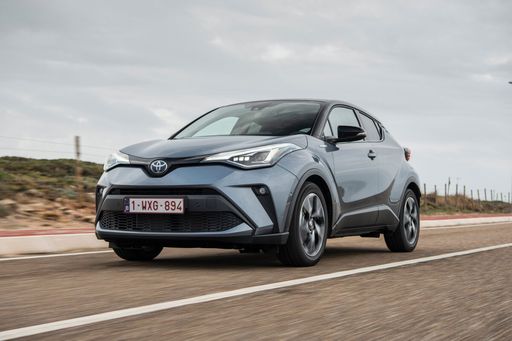
C-HR

Dimensions and Comfort

When it comes to dimensions, the Citroen C5 Aircross is larger, measuring 4500 mm in length, 1859 mm in width, and 1688 mm in height. Its spacious interior can comfortably seat five passengers and boasts a trunk capacity of 580 liters, making it one of the most practical options in the compact SUV segment.

The Toyota C-HR, while more compact at 4362 mm long and 1832 mm wide, also seats five but has a smaller trunk capacity, ranging from 350 to 447 liters, depending on the variant. While both SUVs prioritize passenger comfort, the C5 Aircross’s larger dimensions may offer more space for families and luggage.

C5 Aircross

Safety and Innovations

Safety is a top priority for both manufacturers. The Citroen C5 Aircross is equipped with a range of advanced safety features, including adaptive cruise control, automatic emergency braking, and lane-keeping assist. Its robust structure and high safety ratings make it a reliable choice for family transport.

The Toyota C-HR boasts the Toyota Safety Sense package, which includes features like pre-collision systems, adaptive cruise control, and pedestrian detection. With a solid reputation for reliability and safety, the C-HR remains a competitive choice in its class.

C-HR

Conclusion: Which SUV Is Right for You?

Choosing between the Citroen C5 Aircross and the Toyota C-HR ultimately comes down to individual preferences and needs. The C5 Aircross excels in spaciousness, versatility in powertrains, and impressive electric range. In contrast, the C-HR boasts a modern design, innovative safety features, and excellent fuel efficiency.

For buyers prioritizing space and diverse engine options, the Citroen C5 Aircross is an attractive proposition. However, for those looking for a stylish, compact SUV with a strong emphasis on safety and reliability, the Toyota C-HR stands tall. Both vehicles represent a significant leap forward in the SUV market, making them worthy contenders for your next purchase.

Here’s where it gets real: The technical differences in detail

C-HR

Costs and Efficiency:

Looking at overall running costs, both models reveal some interesting differences in everyday economy.

Both models are evenly matched in price – each starts at 29,100 £ .

Fuel consumption also shows a difference: the Toyota C-HR uses 2.3 L/100km and is only slightly more efficient than the Citroen C5 Aircross with 2.5 L/100km. The difference is about 0.2 L/100km.

As for electric range, the Citroen C5 Aircross offers considerably more range – reaching up to 520 km, about 454 km more than the Toyota C-HR.

C5 Aircross

Engine and Performance:

Power, torque and acceleration are the classic benchmarks for car enthusiasts – and here, some clear differences start to show.

When it comes to engine power, the Citroen C5 Aircross offers only slightly more power – delivering 225 HP compared to 223 HP. That’s roughly 2 HP more horsepower.

When accelerating from 0 to 100 km/h, the Toyota C-HR is somewhat quicker – completing the sprint in 7.4 s, while the Citroen C5 Aircross takes 8.3 s. That’s about 0.9 s quicker.

C-HR

Space and Everyday Use:

Whether family car or daily driver – which one offers more room, flexibility and comfort?

Both vehicles offer seating for 5 people.

In terms of curb weight, Toyota C-HR is barely lighter – 1,505 kg compared to 1,629 kg. The difference is around 124 kg.

Looking at boot space, the Citroen C5 Aircross offers markedly more boot space – 565 L compared to 447 L. That’s a difference of about 118 L.

When it comes to payload, the Citroen C5 Aircross carries barely more – 471 kg compared to 425 kg. That’s a difference of about 46 kg.

Who wins the race in the data check?

The Citroen C5 Aircross stands well ahead of its rival in the objective data comparison.
This result only shows which model scores more points on paper – not which of the two cars feels right for you.

from £29,100
C5 Aircross

Citroen C5 Aircross

  • Engine Type : Petrol MHEV, Electric, Plugin Hybrid
  • Transmission : Automatic
  • Drive Type : Front-Wheel Drive
  • Power HP : 145 - 225 HP
  • Consumption L/100km : 2.5 - 5.4 L/100km
  • Consumption kWh/100km : 17 kWh/100km
  • Electric Range : 81 - 520 km
Toyota C-HR
Citroen C5 Aircross

Costs and Consumption

View detailed analysis

Engine and Performance

View detailed analysis

Dimensions and Body

View detailed analysis

Toyota C-HR

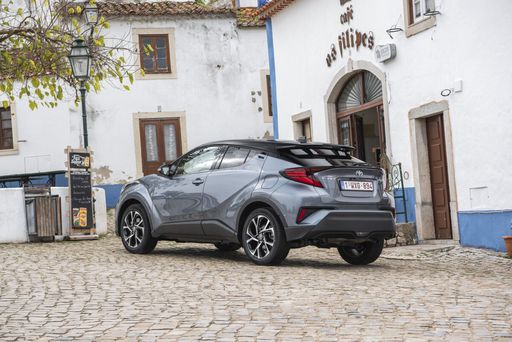
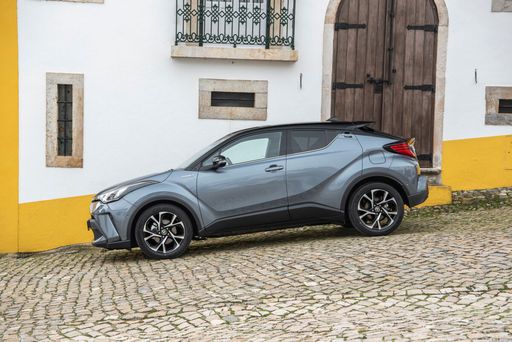
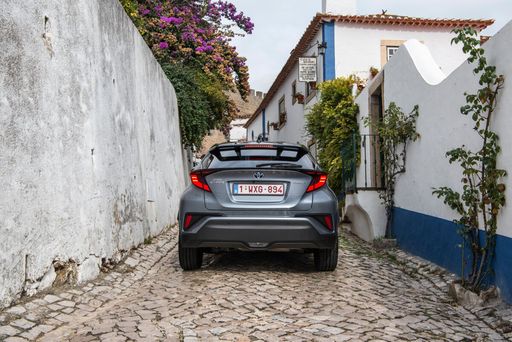
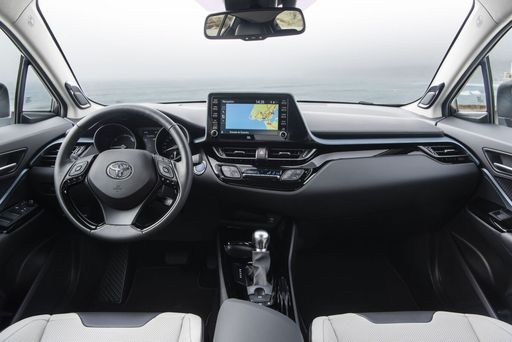
The Toyota C-HR is a bold, coupe-styled crossover that grabs attention with angular lines and a modern interior design. It’s aimed at comfortable urban driving and sensible efficiency, offering practical features and distinctive looks rather than rugged off-road ability.

details

Citroen C5 Aircross

The Citroën C5 Aircross feels like a sofa on wheels, delivering a calm, floaty ride and clever packaging that makes life with luggage and kids noticeably easier. Quirky French styling and a supremely practical, family-focused cabin mean it quietly wins hearts by prioritising comfort over showroom bravado.

details
Toyota C-HR
Citroen C5 Aircross

Costs and Consumption

Price
29,100 - 42,800 £
Price
29,100 - 43,000 £
Consumption L/100km
2.3 - 5.1 L/100km
Consumption L/100km
2.5 - 5.4 L/100km
Consumption kWh/100km
-
Consumption kWh/100km
17 kWh/100km
Electric Range
66 km
Electric Range
81 - 520 km
Battery Capacity
-
Battery Capacity
-
co2
52 - 116 g/km
co2
0 - 121 g/km
Fuel tank capacity
-
Fuel tank capacity
-

Dimensions and Body

Body Type
SUV
Body Type
SUV
Seats
5
Seats
5
Doors
-
Doors
-
Curb weight
1,505 - 1,755 kg
Curb weight
1,629 - 2,184 kg
Trunk capacity
350 - 447 L
Trunk capacity
565 L
Length
-
Length
-
Width
1,832 mm
Width
1,870 mm
Height
-
Height
-
Max trunk capacity
-
Max trunk capacity
-
Payload
375 - 425 kg
Payload
446 - 471 kg

Engine and Performance

Engine Type
Full Hybrid, Plugin Hybrid
Engine Type
Petrol MHEV, Electric, Plugin Hybrid
Transmission
Automatic
Transmission
Automatic
Transmission Detail
CVT
Transmission Detail
Dual-Clutch Automatic, Reduction Gearbox
Drive Type
Front-Wheel Drive, All-Wheel Drive
Drive Type
Front-Wheel Drive
Power HP
140 - 223 HP
Power HP
145 - 225 HP
Acceleration 0-100km/h
7.4 - 9.9 s
Acceleration 0-100km/h
8.3 - 11.2 s
Max Speed
-
Max Speed
-
Torque
-
Torque
230 - 300 Nm
Number of Cylinders
4
Number of Cylinders
3 - 4
Power kW
103 - 164 kW
Power kW
107 - 165 kW
Engine capacity
1,798 - 1,987 cm3
Engine capacity
1,199 - 1,598 cm3

General

Model Year
2026
Model Year
2,025 - 2,026
CO2 Efficiency Class
C, D, B
CO2 Efficiency Class
D, A, B
Brand
Toyota
Brand
Citroen
DriveDuel uses data analysis and artificial intelligence to evaluate vehicle data and create content. Content is regularly reviewed and improved. The displayed prices are estimates based on German list prices, adjusted to the respective country’s VAT. Country-specific registration taxes are not included. This information is not legally binding.