VS

Toyota C-HR vs Kia Niro comparison

Compare performance (223 HP vs 138 HP), boot space and price (29,100 £ vs 29,100 £ ) at a glance. Find out which car is the better choice for you – Toyota C-HR or Kia Niro?

Toyota C-HR vs Kia Niro: Key differences

Toyota C-HR

4.9 (5 Reviews)
rate
  • noticeably more power
  • significantly more efficient
  • considerably quicker 0–100 km/h
details

Kia Niro

4.5 (2 Reviews)
rate
  • barely lighter
details

All details on performance, efficiency, range and trunk space can be found in the technical comparison below – including user reviews for both models.

By Achim Sedelmaier

C-HR

The Compact SUV Battle: Kia Niro vs. Toyota C-HR

In the crowded SUV market, the Kia Niro and Toyota C-HR stand out with their mix of innovation and efficiency. Both are compact SUVs, appealing to eco-conscious drivers with their hybrid offerings. As we delve into the details, let's see how these two contenders match up in terms of performance, economy, and innovation.

Niro

Performance and Powertrain

The Kia Niro comes with two hybrid options: a full hybrid and a plug-in hybrid, both powered by a 1.6-liter four-cylinder engine. The full hybrid produces 129 HP, while the plug-in pushes this to 171 HP. The Niro transmits power through a dual-clutch automatic transmission, offering a smooth driving experience typical of Kia vehicles.

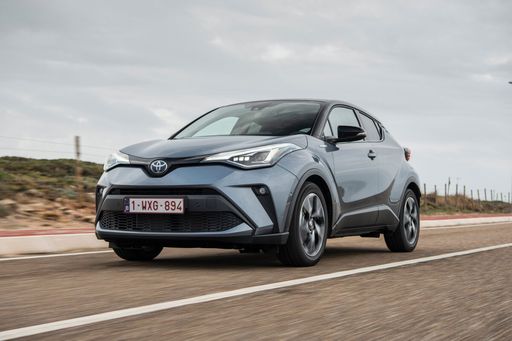
Conversely, the Toyota C-HR presents a more varied lineup. It offers full and plug-in hybrid drivetrains, with power ratings spanning from 140 HP to a robust 223 HP in the more potent plug-in variants. The C-HR’s 1.8-liter and 2.0-liter options utilize a CVT transmission, which adjusts power delivery to optimize efficiency and performance.

C-HR

Fuel Economy and Range

Both models excel in fuel economy, crucial for green-minded drivers. The Kia Niro's consumption varies from an impressive 4.4 L/100 km in the full hybrid to just 0.8 L/100 km for the plug-in hybrid thanks to its 11.1 kWh battery, which provides an all-electric range of up to 65 km.

The Toyota C-HR’s full hybrid version records a combined consumption of 4.7 L/100 km, while the plug-in variant matches the Niro with a mere 0.8 L/100 km. The C-HR holds a slight edge in electric range for the plug-in version, offering up to 68 km, catering to urban commuters looking to maximize electric-only travel.

Niro

Interior and Dimensions

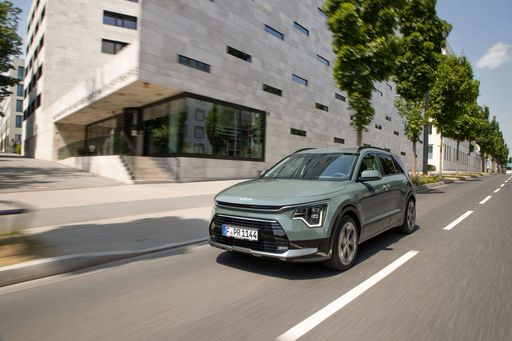
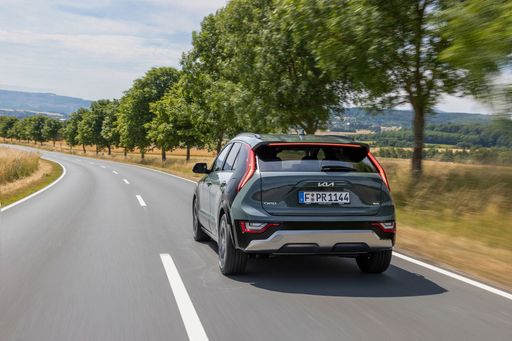
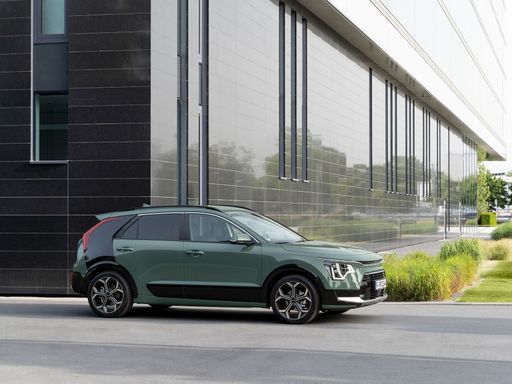
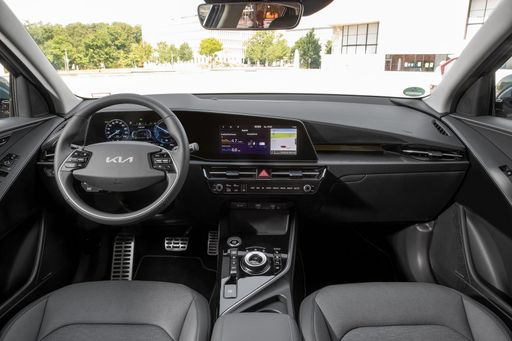
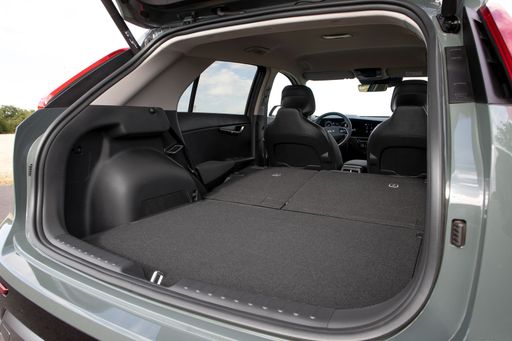
In terms of space, both SUVs accommodate five passengers comfortably. The Kia Niro offers a trunk capacity of 451 liters in the full hybrid, dropping to 348 liters in the plug-in due to the larger battery. Its dimensions (4420 mm in length, 1825 mm in width, and 1545 mm in height) ensure it remains maneuverable in urban settings.

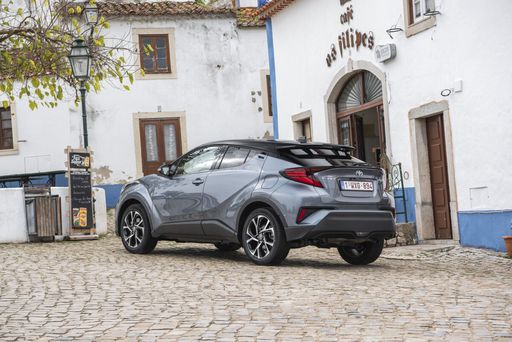
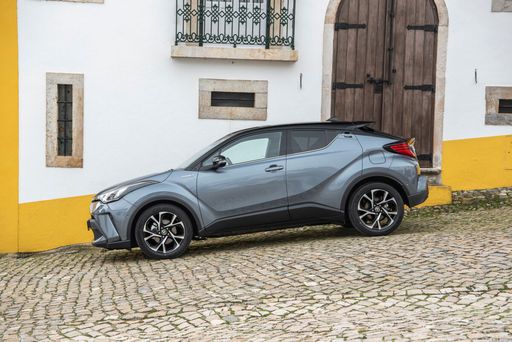
The Toyota C-HR, slightly shorter at 4362 mm but wider and taller, provides a stylish and agile alternative. Trunk space varies slightly among its multiple variants, with a maximum capacity close to 447 liters, ensuring practicality aligns with style.

C-HR

Innovations and Technology

Both vehicles harness hybrid technology effectively, combining eco-friendly credentials with the practicality SUV buyers seek. The Kia Niro boasts a dual-clutch automatic – a technical choice focusing on driving pleasure and efficiency. Its comprehensive safety features and infotainment system cater to tech-savvy consumers seeking modern connectivity.

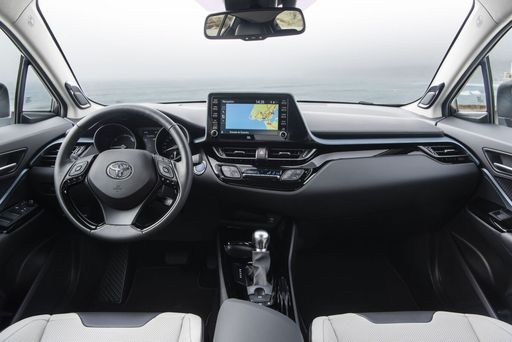
The Toyota C-HR, while using a CVT, impresses with its innovative platform that promises reliability and high fuel efficiency. Technology in the C-HR leans towards a high-end infotainment system and cutting-edge safety features, reflecting Toyota's commitment to passenger security.

Niro

Conclusion: Hybrid Heroes for the Conscious Driver

In this automotive face-off, both the Kia Niro and Toyota C-HR shine as compelling choices for the conscientious driver. Whether prioritizing range, power, or technological finesse, there's a version of these SUVs to meet varied expectations. The Niro's dual-clutch system may appeal to those seeking a sportier edge, while the C-HR’s power variants and all-wheel-drive offer diversity for different driving styles. Regardless of your choice, both represent the future of sustainable driving without compromising on style or functionality.

Here’s where it gets real: The technical differences in detail

C-HR

Costs and Efficiency:

Looking at overall running costs, both models reveal some interesting differences in everyday economy.

Both models are evenly matched in price – each starts at 29,100 £ .

Fuel consumption also shows a difference: the Toyota C-HR uses 2.3 L/100km and is significantly more efficient than the Kia Niro with 4.5 L/100km. The difference is about 2.2 L/100km.

Niro

Engine and Performance:

Power, torque and acceleration say a lot about how a car feels on the road. This is where you see which model delivers more driving dynamics.

When it comes to engine power, the Toyota C-HR offers noticeably more power – delivering 223 HP compared to 138 HP. That’s roughly 85 HP more horsepower.

When accelerating from 0 to 100 km/h, the Toyota C-HR is considerably quicker – completing the sprint in 7.4 s, while the Kia Niro takes 11.1 s. That’s about 3.7 s quicker.

C-HR

Space and Everyday Use:

Beyond pure performance, interior space and usability matter most in daily life. This is where you see which car is more practical and versatile.

Both vehicles offer seating for 5 people.

In terms of curb weight, Kia Niro is barely lighter – 1,474 kg compared to 1,505 kg. The difference is around 31 kg.

When it comes to payload, the Kia Niro carries marginally more – 466 kg compared to 425 kg. That’s a difference of about 41 kg.

Who wins the race in the data check?

The Toyota C-HR holds a decisive overall lead in the objective data comparison.
This result only shows which model scores more points on paper – not which of the two cars feels right for you.

from £29,100
C-HR

Toyota C-HR

  • Engine Type : Full Hybrid, Plugin Hybrid
  • Transmission : Automatic
  • Drive Type : Front-Wheel Drive, All-Wheel Drive
  • Power HP : 140 - 223 HP
  • Consumption L/100km : 2.3 - 5.1 L/100km
  • Electric Range : 66 km
Toyota C-HR
Kia Niro

Costs and Consumption

View detailed analysis

Engine and Performance

View detailed analysis

Dimensions and Body

View detailed analysis

Toyota C-HR

The Toyota C-HR wraps efficient hybrid drivetrains in dramatic, European‑tuned styling and a noticeably upmarket cabin, delivering composed ride quality and easy city manners that suit style‑minded commuters and company drivers. Accept a tighter, dim rear seat, a fiddly high‑lip boot and occasional CVT grumble plus persistent warning chimes, and you get a very economical, confident little crossover that prizes individuality over outright practicality.

details

Kia Niro

The Kia Niro blends clever packaging and modern styling into a compact crossover that’s refreshingly sensible for daily life. It’s comfortable, economical and packed with user‑friendly tech, so if you want a fuss‑free family car with a touch of green credibility, the Niro is worth a test drive.

details
Toyota C-HR
Kia Niro

Costs and Consumption

Price
29,100 - 42,800 £
Price
29,100 - 33,800 £
Consumption L/100km
2.3 - 5.1 L/100km
Consumption L/100km
4.5 - 4.9 L/100km
Consumption kWh/100km
-
Consumption kWh/100km
-
Electric Range
66 km
Electric Range
-
Battery Capacity
-
Battery Capacity
-
co2
52 - 116 g/km
co2
102 - 111 g/km
Fuel tank capacity
-
Fuel tank capacity
-

Dimensions and Body

Body Type
SUV
Body Type
SUV
Seats
5
Seats
5
Doors
-
Doors
-
Curb weight
1,505 - 1,755 kg
Curb weight
1,474 kg
Trunk capacity
350 - 447 L
Trunk capacity
-
Length
-
Length
-
Width
1,832 mm
Width
1,825 mm
Height
-
Height
-
Max trunk capacity
-
Max trunk capacity
-
Payload
375 - 425 kg
Payload
466 kg

Engine and Performance

Engine Type
Full Hybrid, Plugin Hybrid
Engine Type
Full Hybrid
Transmission
Automatic
Transmission
Automatic
Transmission Detail
CVT
Transmission Detail
Dual-Clutch Automatic
Drive Type
Front-Wheel Drive, All-Wheel Drive
Drive Type
Front-Wheel Drive
Power HP
140 - 223 HP
Power HP
138 HP
Acceleration 0-100km/h
7.4 - 9.9 s
Acceleration 0-100km/h
11.1 - 11.4 s
Max Speed
-
Max Speed
-
Torque
-
Torque
265 Nm
Number of Cylinders
4
Number of Cylinders
4
Power kW
103 - 164 kW
Power kW
102 kW
Engine capacity
1,798 - 1,987 cm3
Engine capacity
1,580 cm3

General

Model Year
2026
Model Year
2025
CO2 Efficiency Class
C, D, B
CO2 Efficiency Class
C
Brand
Toyota
Brand
Kia
DriveDuel uses data analysis and artificial intelligence to evaluate vehicle data and create content. Content is regularly reviewed and improved. The displayed prices are estimates based on German list prices, adjusted to the respective country’s VAT. Country-specific registration taxes are not included. This information is not legally binding.