VS

Toyota Yaris Cross vs Dacia Duster comparison

Compare performance (130 HP vs 158 HP), boot space and price (23,700 £ vs 16,300 £ ) at a glance. Find out which car is the better choice for you – Toyota Yaris Cross or Dacia Duster?

Toyota Yaris Cross vs Dacia Duster: Key differences

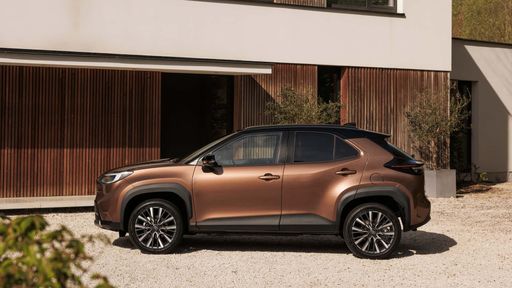
Toyota Yaris Cross

4.1 (9 Reviews)
rate
  • barely more efficient
  • slightly lighter

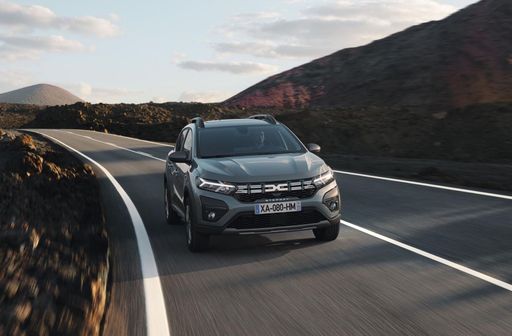
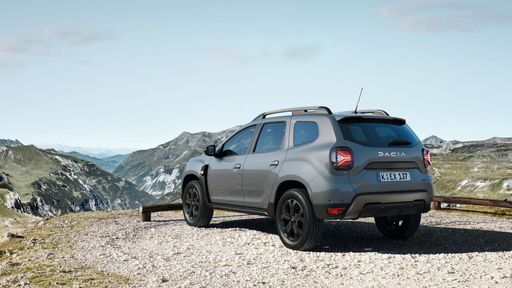
Dacia Duster

5 (2 Reviews)
rate
  • considerably cheaper
  • a bit more power
  • somewhat quicker 0–100 km/h
  • clearly more trunk space

All details on performance, efficiency, range and trunk space can be found in the technical comparison below – including user reviews for both models.

Yaris Cross

Head-to-head: Dacia Duster vs Toyota Yaris Cross — a compact SUV vs a city crossover comparison

The Dacia Duster vs Toyota Yaris Cross comparison puts a rugged compact SUV up against a neat city crossover to help buyers work out the real-world differences and trade-offs. The Dacia Duster arrives with a practical, no-nonsense presence, while the Toyota Yaris Cross pitches itself as a more urbane, efficiency-minded alternative. If you’re searching for a straightforward SUV or a clever city-friendly crossover, this direct comparison shows where they diverge in character and use. Read on to see how the body styles and personalities translate to everyday life and ownership.

Duster

Two different attitudes: rough-and-ready versus polished urbanite

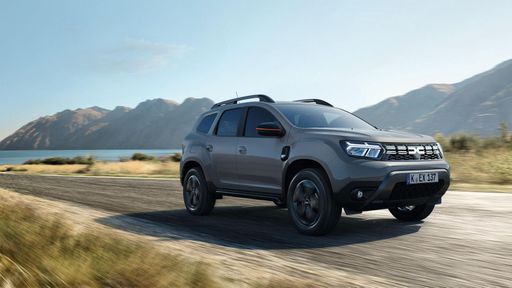
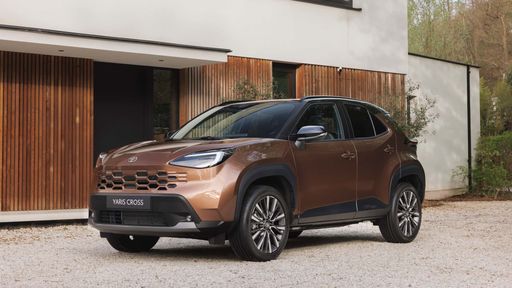
The Dacia Duster feels like a tool you can take off the beaten path — blunt, durable and built around function — whereas the Toyota Yaris Cross plays the role of the polished city companion with an emphasis on refinement and modern manners. Dacia Duster wears its utilitarian streak proudly, visibly aimed at buyers who prize simplicity and robustness. Toyota Yaris Cross leans into subtle details and a more composed ride that suits tight streets and traffic. That difference in attitude defines who will click with each car long before you open the doors.

Yaris Cross

Daily reality: who handles commute, family runs and long trips better?

For family errands and weekend luggage runs the Dacia Duster projects greater practicality with a roomier, more straightforward interior layout, while the Toyota Yaris Cross excels in urban agility and efficiency for daily commuting. The Dacia Duster’s architecture feels tuned to carry people and stuff without fuss, making it the easier choice for longer hauls and rougher roads. The Toyota Yaris Cross, by contrast, rewards city dwellers with lighter steering, easier parking and a calmer, more refined cabin for short trips. Choose the Dacia Duster if space and loadability are a priority, pick the Yaris Cross if you spend most days in town and value comfort and economy.

Duster

Image and justification: what owning each car says about you

Picking the Dacia Duster sends a clear signal: you value straightforward utility, low-cost ownership and a car that won’t mind a muddy weekend. Choosing the Toyota Yaris Cross hints at a preference for modern tech, tidy styling and a slightly more premium, safety-conscious image in traffic. The Dacia Duster is an honest, get-on-with-it choice that appeals to pragmatists; the Yaris Cross aims to reassure with refinement and everyday civility. Both will satisfy different impulses — one shouts rugged common sense, the other whispers efficient competence.

Yaris Cross

Who should seriously consider the Dacia Duster?

If you’re the buyer who prioritises value and practical space, the Dacia Duster is tailored for you: think weekend adventurers, budget-minded families and anyone who prefers substance over frills. The Dacia Duster suits drivers who want a tough, simple SUV that puts usability first and isn’t obsessed with glossy trim or the latest gadgetry. Compared with the Toyota Yaris Cross, the Dacia Duster is the go-to when cargo room and a robust feel matter more than city polish. If your shopping list reads “room, toughness, low fuss,” the Dacia Duster answers the call.

Duster

Who should seriously consider the Toyota Yaris Cross — and how the Dacia Duster compares

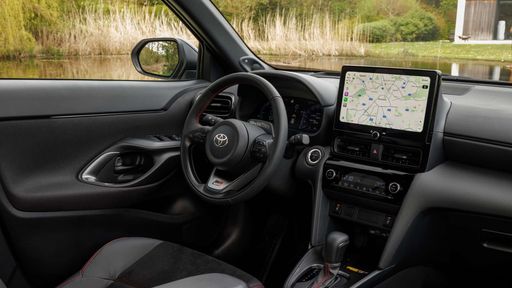
The Toyota Yaris Cross will click with commuters and style-conscious buyers who want an efficient, well-sorted crossover that’s easy to live with in traffic and shopping runs. Toyota Yaris Cross is for those who favour modern cabin tech, a composed urban ride and a slightly more refined ownership story than a basic SUV, whereas the Dacia Duster remains the hard-working alternative for buyers who need more space and simplicity. Neither car is right for everyone, but each has a clear audience: decide whether you want practical clout or polished city manners, then dive into the detailed figures below to settle the trade-offs for yourself.

Here’s where it gets real: The technical differences in detail

Yaris Cross

Costs and Efficiency:

Price and efficiency are often the first things buyers look at. Here it becomes clear which model has the long-term edge – whether at the pump, the plug, or in purchase price.

Dacia Duster is considerably cheaper – starting at 16,300 £ , while the Toyota Yaris Cross costs 23,700 £ . That’s a price difference of around 7,414 £.

Fuel consumption also shows a difference: the Toyota Yaris Cross uses 4.5 L/100km and is barely more efficient than the Dacia Duster with 4.7 L/100km. The difference is about 0.2 L/100km.

Duster

Engine and Performance:

Power, torque and acceleration are the classic benchmarks for car enthusiasts – and here, some clear differences start to show.

When it comes to engine power, the Dacia Duster offers a bit more power – delivering 158 HP compared to 130 HP. That’s roughly 28 HP more horsepower.

When accelerating from 0 to 100 km/h, the Dacia Duster is somewhat quicker – completing the sprint in 9.4 s, while the Toyota Yaris Cross takes 10.7 s. That’s about 1.3 s quicker.

Yaris Cross

Space and Everyday Use:

Cabin size, boot volume and payload all play a role in everyday practicality. Here, comfort and flexibility make the difference.

Both vehicles offer seating for 5 people.

In terms of curb weight, Toyota Yaris Cross is slightly lighter – 1,180 kg compared to 1,377 kg. The difference is around 197 kg.

Looking at boot space, the Dacia Duster offers clearly more boot space – 517 L compared to 397 L. That’s a difference of about 120 L.

When it comes to payload, the Toyota Yaris Cross carries a bit more – 510 kg compared to 453 kg. That’s a difference of about 57 kg.

Who wins the race in the data check?

The Dacia Duster is clearly superior overall in the objective data comparison.
This result only shows which model scores more points on paper – not which of the two cars feels right for you.

from £16,300
Duster

Dacia Duster

  • Engine Type : Petrol MHEV, Full Hybrid, LPG
  • Transmission : Manuel, Automatic
  • Drive Type : Front-Wheel Drive, All-Wheel Drive
  • Power HP : 115 - 158 HP
  • Consumption L/100km : 4.7 - 7.6 L/100km
Toyota Yaris Cross
Dacia Duster

Costs and Consumption

View detailed analysis

Engine and Performance

View detailed analysis

Dimensions and Body

View detailed analysis

Toyota Yaris Cross

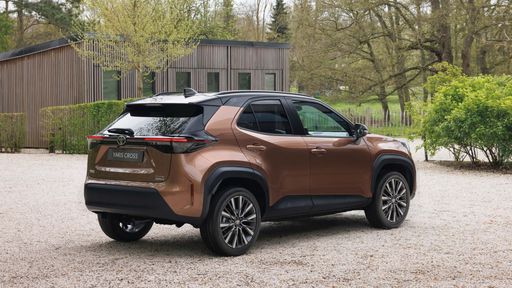
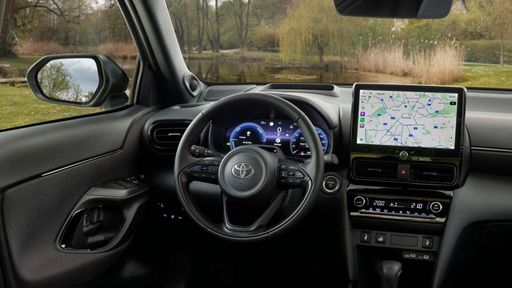
The Toyota Yaris Cross takes the jaunty personality of the Yaris and gives it a taller stance and a bit more practicality, so you get city-friendly agility with added SUV presence. It’s easy to live with, economical on the daily grind, and smartly packaged — a sensible pick for buyers who want fuss-free transport with a touch of character.

details

Dacia Duster

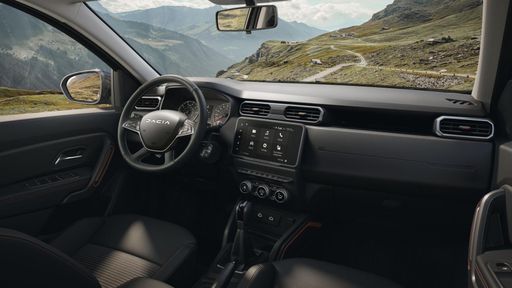
The Dacia Duster is a no-nonsense compact SUV that delivers rugged practicality and surprisingly comfortable everyday driving without fuss. It might not win any beauty contests, but its honest design, easy-to-live-with cabin and tough attitude make it a smart pick for buyers who want reliable transport without luxury frills.

details
Toyota Yaris Cross
Dacia Duster

Costs and Consumption

Price
23,700 - 34,300 £
Price
16,300 - 24,900 £
Consumption L/100km
4.5 - 4.8 L/100km
Consumption L/100km
4.7 - 7.6 L/100km
Consumption kWh/100km
-
Consumption kWh/100km
-
Electric Range
-
Electric Range
-
Battery Capacity
-
Battery Capacity
0.6 kWh
co2
101 - 108 g/km
co2
107 - 140 g/km
Fuel tank capacity
-
Fuel tank capacity
50 L

Dimensions and Body

Body Type
SUV
Body Type
SUV
Seats
5
Seats
5
Doors
-
Doors
5
Curb weight
1,180 - 1,290 kg
Curb weight
1,377 - 1,455 kg
Trunk capacity
320 - 397 L
Trunk capacity
348 - 517 L
Length
-
Length
4,343 mm
Width
1,765 mm
Width
1,813 mm
Height
-
Height
1,656 - 1,659 mm
Max trunk capacity
-
Max trunk capacity
1,414 - 1,609 L
Payload
485 - 510 kg
Payload
402 - 453 kg

Engine and Performance

Engine Type
Full Hybrid
Engine Type
Petrol MHEV, Full Hybrid, LPG
Transmission
Automatic
Transmission
Manuel, Automatic
Transmission Detail
CVT
Transmission Detail
Manual Gearbox, Automated Manual, Dual-Clutch Automatic
Drive Type
Front-Wheel Drive, All-Wheel Drive
Drive Type
Front-Wheel Drive, All-Wheel Drive
Power HP
116 - 130 HP
Power HP
115 - 158 HP
Acceleration 0-100km/h
10.7 - 11.3 s
Acceleration 0-100km/h
9.4 - 11.7 s
Max Speed
-
Max Speed
180 km/h
Torque
-
Torque
190 - 230 Nm
Number of Cylinders
3
Number of Cylinders
3 - 4
Power kW
85 - 96 kW
Power kW
84 - 116 kW
Engine capacity
1,490 cm3
Engine capacity
1,199 - 1,789 cm3

General

Model Year
2,026
Model Year
2,025 - 2,026
CO2 Efficiency Class
C
CO2 Efficiency Class
D, C
Brand
Toyota
Brand
Dacia
DriveDuel uses data analysis and artificial intelligence to evaluate vehicle data and create content. Content is regularly reviewed and improved. The displayed prices are estimates based on German list prices, adjusted to the respective country’s VAT. Country-specific registration taxes are not included. This information is not legally binding.