VS

Toyota Yaris Cross vs Ford Kuga comparison

Compare performance (130 HP vs 243 HP), boot space and price (23,700 £ vs 34,200 £ ) at a glance. Find out which car is the better choice for you – Toyota Yaris Cross or Ford Kuga?

Toyota Yaris Cross vs Ford Kuga: Key differences

Toyota Yaris Cross

4.3 (14 Reviews)
rate
  • considerably cheaper
  • clearly lighter
details

Ford Kuga

4.2 (6 Reviews)
rate
  • significantly more power
  • substantially more efficient
  • substantially quicker 0–100 km/h
details

All details on performance, efficiency, range and trunk space can be found in the technical comparison below – including user reviews for both models.

By Achim Sedelmaier

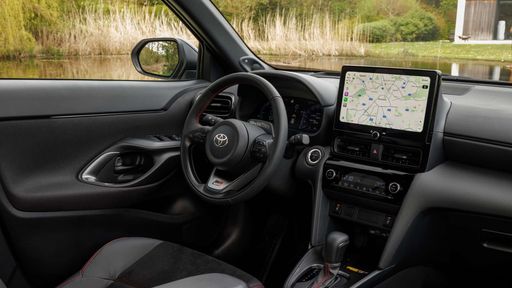
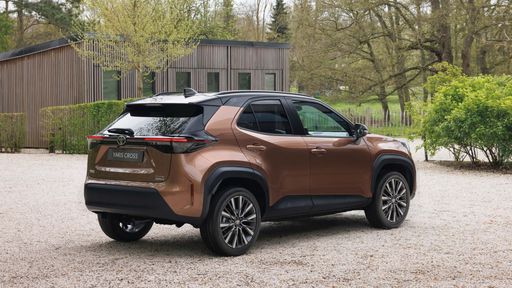
Yaris Cross

Introduction: A Clash of SUVs

In the rapidly evolving automotive landscape, the demand for versatile and efficient SUVs is at an all-time high. In this comparison, we take a closer look at the Ford Kuga and Toyota Yaris Cross, two prominent contenders vying for attention in the compact SUV segment. Both models offer a blend of innovation, performance, and practicality, but how do they stack up against each other in terms of technical specifications and innovative features? Let’s dive in.
Kuga

Performance and Engine Options

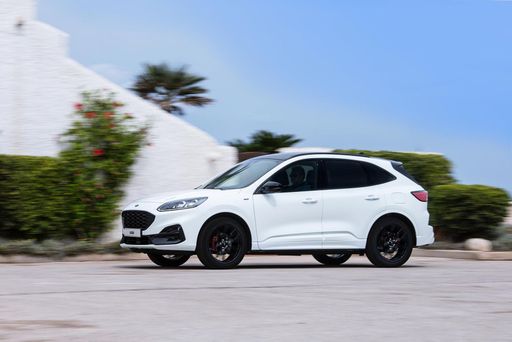
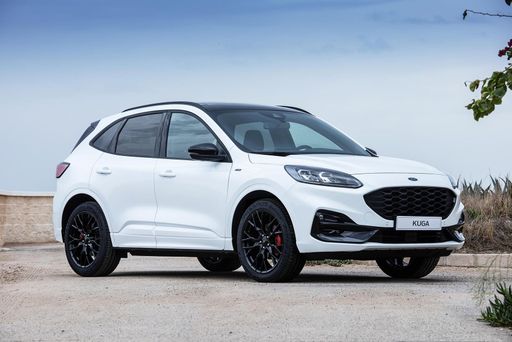
The Ford Kuga is available with a diverse range of powertrain options, which include petrol, full hybrid, and plug-in hybrid engines. The petrol engines deliver power outputs ranging from 150 HP to a robust 243 HP, providing ample performance for various driving needs. With options for both manual and automatic transmissions, including a Continuously Variable Transmission (CVT), drivers can choose the setup that best suits their driving style.

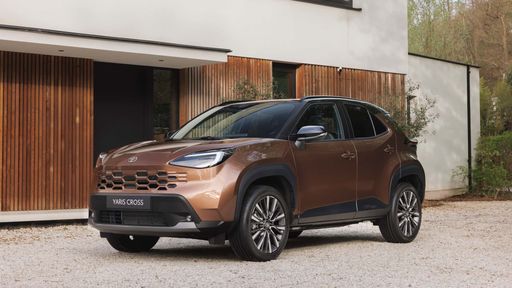
In contrast, the Toyota Yaris Cross is exclusively equipped with a full hybrid engine. It offers a more modest power output of 116 HP to 130 HP, accompanied by a single automatic transmission featuring CVT technology. While the Yaris Cross may not have as much horsepower as the Kuga, its hybrid efficiency claims a notable edge in fuel consumption, with figures ranging from 4.5 L/100km to 4.8 L/100km.

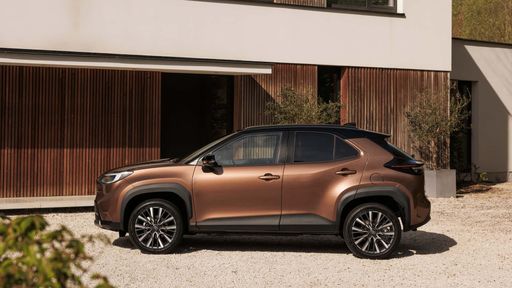
Yaris Cross

Fuel Efficiency: Going the Extra Mile

When it comes to fuel efficiency, the Ford Kuga also offers impressive figures, particularly in its hybrid variants, with consumption as low as 0.9 L/100km in electric mode. The electric range of up to 69 km positions it as a strong contender in urban commuting scenarios. The petrol models, while slightly less efficient, still maintain reasonable consumption rates.

The Yaris Cross, on the other hand, stands out as a champion of fuel economy with efficient hybrid technology. Its combined figures make it an attractive option for eco-conscious buyers looking to minimize their carbon footprint, notably achieving a CO2 emissions rating of 101-108 g/km.

Kuga

Interior Space and Comfort

Both models provide generous seating for five, but the Ford Kuga offers a more spacious experience overall. With a trunk capacity of up to 412 liters, it ensures ample space for luggage and gear. Additionally, its curb weight variations from 1526 kg to 1859 kg imply a robust structure that enhances road stability.

The Toyota Yaris Cross features a slightly smaller trunk capacity, ranging from 320 to 397 liters, which might be limiting for some users. Nevertheless, its compact dimensions (4180 mm in length and 1765 mm in width) make it agile in urban settings. When it comes to passenger space, both SUV models offer adequate legroom and headroom, making them comfortable rides for daily commutes or longer trips.

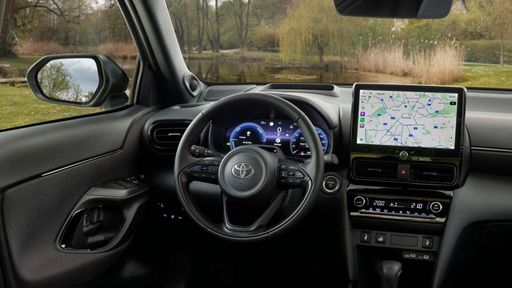
Yaris Cross

Safety and Technology Innovations

Safety features are paramount for modern SUVs, and both models come equipped with a host of advanced safety technologies. The Ford Kuga boasts a variety of driver-assist features, including adaptive cruise control, lane-keeping assistance, and automated emergency braking, all designed to enhance overall driving security.

The Toyota Yaris Cross counters with its robust suite of Toyota Safety Sense technologies, which includes pre-collision systems, adaptive cruise control, and lane-tracing assist. Both vehicles prioritize safety, giving drivers peace of mind on the road.

Kuga

Conclusion: Which SUV Reigns Supreme?

Ultimately, the choice between the Ford Kuga and Toyota Yaris Cross depends on individual preferences and needs. The Kuga offers a broader range of powertrains and larger cargo capacity, while the Yaris Cross excels in fuel efficiency and advanced safety features. For drivers seeking power and versatility, the Kuga is an excellent pick. In contrast, those prioritizing eco-friendliness and nimbleness may find the Yaris Cross to be the ideal companion.

In this head-to-head matchup, both SUVs certainly have something to offer, ensuring a competitive market that benefits the consumer. The decision may well come down to personal style and specific requirements, making this a fascinating segment to watch in the coming years.

Here’s where it gets real: The technical differences in detail

Yaris Cross

Costs and Efficiency:

When it comes to price and running costs, the biggest differences usually appear. This is often where you see which car fits your budget better in the long run.

Toyota Yaris Cross is considerably cheaper – starting at 23,700 £ , while the Ford Kuga costs 34,200 £ . That’s a price difference of around 10,551 £.

Fuel consumption also shows a difference: the Ford Kuga uses 2.8 L/100km and is substantially more efficient than the Toyota Yaris Cross with 4.5 L/100km. The difference is about 1.7 L/100km.

Kuga

Engine and Performance:

Power, torque and acceleration say a lot about how a car feels on the road. This is where you see which model delivers more driving dynamics.

When it comes to engine power, the Ford Kuga offers significantly more power – delivering 243 HP compared to 130 HP. That’s roughly 113 HP more horsepower.

When accelerating from 0 to 100 km/h, the Ford Kuga is substantially quicker – completing the sprint in 7.3 s, while the Toyota Yaris Cross takes 10.7 s. That’s about 3.4 s quicker.

Yaris Cross

Space and Everyday Use:

Beyond pure performance, interior space and usability matter most in daily life. This is where you see which car is more practical and versatile.

Both vehicles offer seating for 5 people.

In terms of curb weight, Toyota Yaris Cross is clearly lighter – 1,180 kg compared to 1,526 kg. The difference is around 346 kg.

When it comes to payload, the Ford Kuga carries marginally more – 550 kg compared to 510 kg. That’s a difference of about 40 kg.

Who wins the race in the data check?

The Ford Kuga is far ahead overall in the objective data comparison.
This result only shows which model scores more points on paper – not which of the two cars feels right for you.

from £34,200
Kuga

Ford Kuga

  • Engine Type : Petrol, Full Hybrid, Plugin Hybrid
  • Transmission : Manuel, Automatic
  • Drive Type : Front-Wheel Drive, All-Wheel Drive
  • Power HP : 150 - 243 HP
  • Consumption L/100km : 2.8 - 6.8 L/100km
  • Electric Range : 68 km
Toyota Yaris Cross
Ford Kuga

Costs and Consumption

View detailed analysis

Engine and Performance

View detailed analysis

Dimensions and Body

View detailed analysis

Toyota Yaris Cross

The Toyota Yaris Cross takes the jaunty personality of the Yaris and gives it a taller stance and a bit more practicality, so you get city-friendly agility with added SUV presence. It’s easy to live with, economical on the daily grind, and smartly packaged — a sensible pick for buyers who want fuss-free transport with a touch of character.

details

Ford Kuga

The Kuga is Ford’s adaptable family SUV that blends usable space with a surprisingly lively driving character, making daily commutes and weekend escapes equally enjoyable. With smart interior packaging, an easy-to-use infotainment setup and composed road manners, it’s a sensible choice for buyers who want a bit of fun without the fuss.

details
Toyota Yaris Cross
Ford Kuga

Costs and Consumption

Price
23,700 - 34,300 £
Price
34,200 - 46,300 £
Consumption L/100km
4.5 - 4.8 L/100km
Consumption L/100km
2.8 - 6.8 L/100km
Consumption kWh/100km
-
Consumption kWh/100km
-
Electric Range
-
Electric Range
68 km
Battery Capacity
-
Battery Capacity
-
co2
101 - 108 g/km
co2
55 - 154 g/km
Fuel tank capacity
-
Fuel tank capacity
-

Dimensions and Body

Body Type
SUV
Body Type
SUV
Seats
5
Seats
5
Doors
-
Doors
-
Curb weight
1,180 - 1,290 kg
Curb weight
1,526 - 1,859 kg
Trunk capacity
320 - 397 L
Trunk capacity
-
Length
-
Length
-
Width
1,765 mm
Width
1,882 mm
Height
-
Height
-
Max trunk capacity
-
Max trunk capacity
-
Payload
485 - 510 kg
Payload
541 - 550 kg

Engine and Performance

Engine Type
Full Hybrid
Engine Type
Petrol, Full Hybrid, Plugin Hybrid
Transmission
Automatic
Transmission
Manuel, Automatic
Transmission Detail
CVT
Transmission Detail
Manual Gearbox, CVT, Automatic Gearbox
Drive Type
Front-Wheel Drive, All-Wheel Drive
Drive Type
Front-Wheel Drive, All-Wheel Drive
Power HP
116 - 130 HP
Power HP
150 - 243 HP
Acceleration 0-100km/h
10.7 - 11.3 s
Acceleration 0-100km/h
7.3 - 9.9 s
Max Speed
-
Max Speed
-
Torque
-
Torque
240 Nm
Number of Cylinders
3
Number of Cylinders
3 - 4
Power kW
85 - 96 kW
Power kW
111 - 178 kW
Engine capacity
1,490 cm3
Engine capacity
1,496 - 2,488 cm3

General

Model Year
2026
Model Year
2025
CO2 Efficiency Class
C
CO2 Efficiency Class
E, D, B
Brand
Toyota
Brand
Ford
DriveDuel uses data analysis and artificial intelligence to evaluate vehicle data and create content. Content is regularly reviewed and improved. The displayed prices are estimates based on German list prices, adjusted to the respective country’s VAT. Country-specific registration taxes are not included. This information is not legally binding.