VS

Toyota Yaris Cross vs Honda Jazz comparison

Compare performance (130 HP vs 122 HP), boot space and price (23,700 £ vs 23,100 £ ) at a glance. Find out which car is the better choice for you – Toyota Yaris Cross or Honda Jazz?

Toyota Yaris Cross vs Honda Jazz: Key differences

Toyota Yaris Cross

4 (8 Reviews)
rate
  • very slightly more power
  • moderately lighter
  • markedly more trunk space

Honda Jazz

4.8 (3 Reviews)
rate
  • barely cheaper
  • moderately quicker 0–100 km/h

All details on performance, efficiency, range and trunk space can be found in the technical comparison below – including user reviews for both models.

Yaris Cross

City Smarts and Daily Driving

Both cars feel built for the daily grind, but they approach it from different angles: one is all about nimble city manners and easy parking, the other trades a bit of compactness for a more upright, SUV-like presence that reassures in traffic. Steering is communicative in one and reassuringly composed in the other, so your choice will depend on whether you enjoy flicking through lanes or prefer to sit a little higher and see the world. Controls and visibility are friendly in both, making rush-hour survival less stressful than it often feels.

Jazz

Living with It: Space and Flexibility

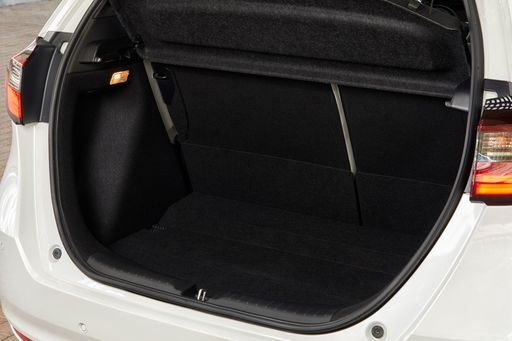
Practicality is where these two really show their personalities — one delights with clever, flexible rear seating that adapts to odd-shaped loads, while the other gives you a more conventional but capacious load bay that makes grocery runs and luggage shuffling effortless. Both manage everyday family tasks with ease, but their strengths differ: one prioritises imaginative use of space, the other a straightforward, easy-to-load cargo area. If you value boxy practicality or configurability, each car offers a distinct solution.

Yaris Cross

On the Road: Character and Handling

On winding backroads the sharper car rewards you with a playful, eager demeanor that invites brisk driving, whereas the more SUV-styled rival soaks up imperfections and rewards with composure that suits longer stints behind the wheel. Neither is a sports car, but one is more about driver engagement and the other about calm, predictable behaviour — pick the mood you want on your commute. Both balance ride and poise well for their classes, so neither will feel out of place on a longer tour.

Jazz

Cabin Comfort and Daily Usability

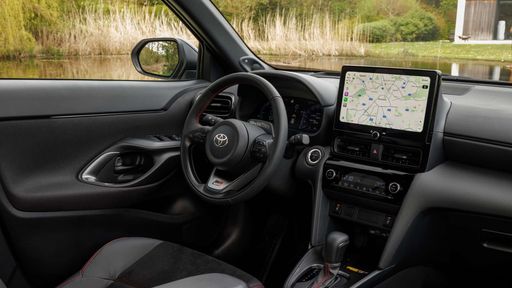
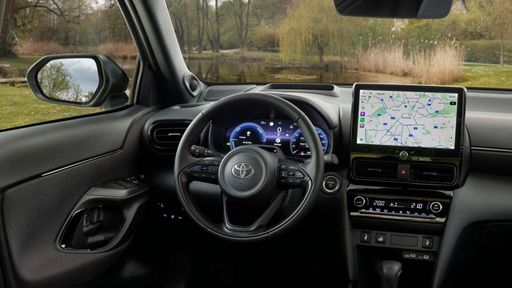
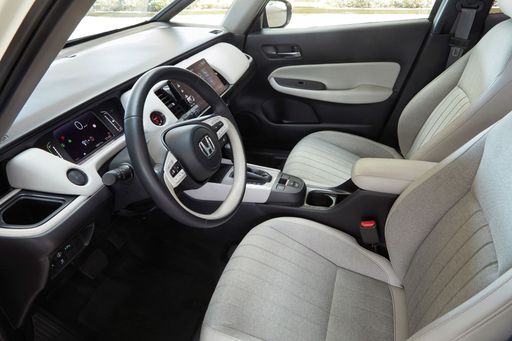
Inside, materials and ergonomics lean towards practicality and user-friendliness rather than flashy luxury; switches and touchscreens are placed for straightforward use and both cabins feel airy in different ways. One interior leans more towards playful functionality with inventive storage nooks, while the other presents a slightly more restrained, SUV-like layout that feels grown-up and reassuring. Comfort over hours of driving is broadly similar, though their seats and packaging reflect each brand’s view of what daily comfort means.

Yaris Cross

Style and Street Presence

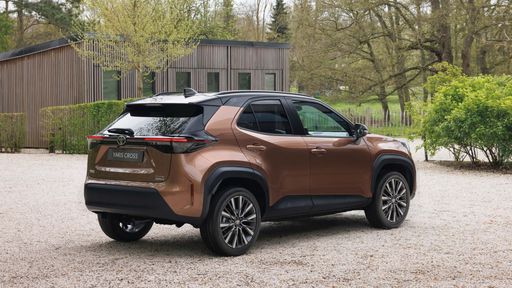
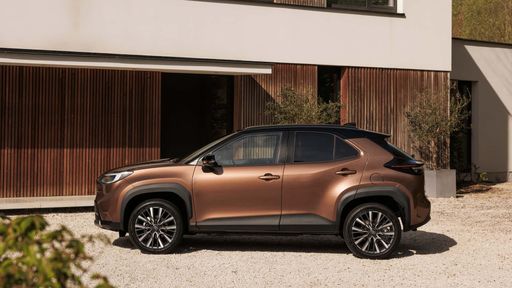
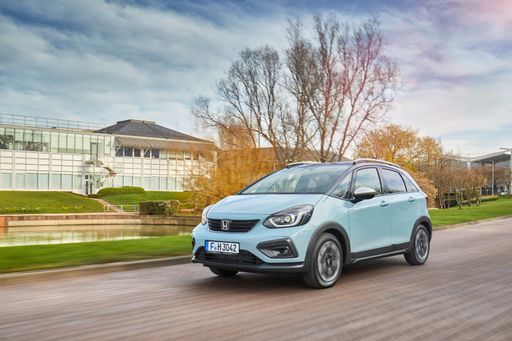
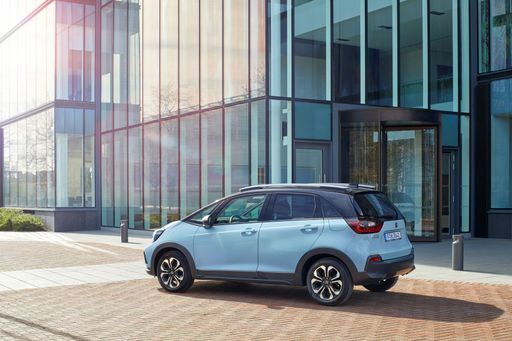
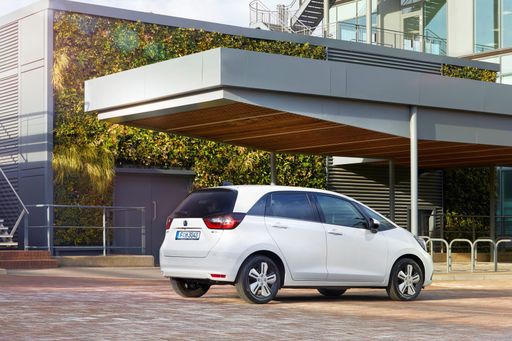
Styling is a clear personality signpost here: one car embraces compact, friendly proportions with a hint of cheekiness, the other channels a tougher, crossover stance that makes it look more ready for weekend adventures. Which you prefer will tell you a lot about your priorities — do you want to blend into city life with charm, or make a more rugged, practical statement at the school run? Both have character, so style comes down to personal taste rather than clear superiority.

Jazz

Who Should Choose Which

If you’re a city commuter who values agility, clever packaging and a car that feels light on its feet, the more compact, flexible option will likely suit you best; families who prioritise a sitting position with a bit more presence and a straightforward loadspace might prefer the SUV-minded alternative. Urban singles and apartment owners will appreciate the tight-footprint charm, while those who ferry kids, gear or like a slightly loftier view of the road will find the other car a compelling companion. Think about your daily routes, the kinds of cargo you carry and whether you prefer playful or poised driving.

Yaris Cross

Costs, Comfort and Everyday Sense

Ownership should feel reasonably straightforward with both, as they were designed for economical, fuss-free use rather than high-maintenance ownership. Insurance, servicing and day-to-day running will be familiar territory if you’ve owned small cars before, and practicality trumps gimmicks in both cabins. Ultimately the smart money is on whichever matches your lifestyle rather than pure headline value.

Jazz

Keep Reading — the DriveDuel Champion will be revealed afterwards

Stick around for the full breakdown and final verdict: we’ll explain which car wins the DriveDuel crown and why, so you can make a decision that suits how you live, drive and roll through your day. The champion choice will help you know not just which is cleverer on paper, but which will genuinely make life easier and more enjoyable. Read on to find which of these two deserves a spot in your driveway.

Here’s where it gets real: The technical differences in detail

Yaris Cross

Costs and Efficiency:

Price and efficiency are key factors when choosing a car – and this is often where the real differences emerge.

Honda Jazz is barely cheaper – starting at 23,100 £ , while the Toyota Yaris Cross costs 23,700 £ . That’s a price difference of around 591 £.

Both cars consume an average of 4.5 L/100km – no difference here.

Jazz

Engine and Performance:

Power, torque and acceleration are the classic benchmarks for car enthusiasts – and here, some clear differences start to show.

When it comes to engine power, the Toyota Yaris Cross offers very slightly more power – delivering 130 HP compared to 122 HP. That’s roughly 8 HP more horsepower.

When accelerating from 0 to 100 km/h, the Honda Jazz is moderately quicker – completing the sprint in 9.4 s, while the Toyota Yaris Cross takes 10.7 s. That’s about 1.3 s quicker.

Yaris Cross

Space and Everyday Use:

Cabin size, boot volume and payload all play a role in everyday practicality. Here, comfort and flexibility make the difference.

Both vehicles offer seating for 5 people.

In terms of curb weight, Toyota Yaris Cross is moderately lighter – 1,180 kg compared to 1,302 kg. The difference is around 122 kg.

Looking at boot space, the Toyota Yaris Cross offers markedly more boot space – 397 L compared to 304 L. That’s a difference of about 93 L.

When it comes to payload, the Toyota Yaris Cross carries noticeably more – 510 kg compared to 388 kg. That’s a difference of about 122 kg.

Who wins the race in the data check?

The Toyota Yaris Cross holds a narrow overall lead in the objective data comparison.
This result only shows which model scores more points on paper – not which of the two cars feels right for you.

from £23,700
Yaris Cross

Toyota Yaris Cross

  • Engine Type : Full Hybrid
  • Transmission : Automatic
  • Drive Type : Front-Wheel Drive, All-Wheel Drive
  • Power HP : 116 - 130 HP
  • Consumption L/100km : 4.5 - 4.8 L/100km
Toyota Yaris Cross
Honda Jazz

Costs and Consumption

View detailed analysis

Engine and Performance

View detailed analysis

Dimensions and Body

View detailed analysis

Toyota Yaris Cross

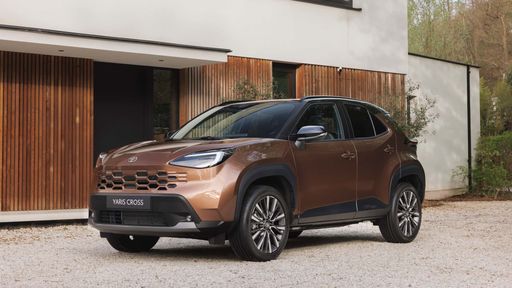
The Toyota Yaris Cross takes the jaunty personality of the Yaris and gives it a taller stance and a bit more practicality, so you get city-friendly agility with added SUV presence. It’s easy to live with, economical on the daily grind, and smartly packaged — a sensible pick for buyers who want fuss-free transport with a touch of character.

details

Honda Jazz

The Honda Jazz is a supremely practical small hatch that hides clever packaging and more usable space than it lets on, with friendly styling and an unfussy charm. It’s economical to run, easy to park and perfect for buyers who want reliable, versatile daily motoring without the hassle.

details
Toyota Yaris Cross
Honda Jazz

Costs and Consumption

Price
23,700 - 34,300 £
Price
23,100 - 26,700 £
Consumption L/100km
4.5 - 4.8 L/100km
Consumption L/100km
4.5 - 4.8 L/100km
Consumption kWh/100km
-
Consumption kWh/100km
-
Electric Range
-
Electric Range
-
Battery Capacity
-
Battery Capacity
-
co2
101 - 108 g/km
co2
102 - 108 g/km
Fuel tank capacity
-
Fuel tank capacity
-

Dimensions and Body

Body Type
SUV
Body Type
Hatchback
Seats
5
Seats
5
Doors
-
Doors
-
Curb weight
1,180 - 1,290 kg
Curb weight
1,302 - 1,321 kg
Trunk capacity
320 - 397 L
Trunk capacity
304 L
Length
-
Length
-
Width
1,765 mm
Width
-
Height
-
Height
-
Max trunk capacity
-
Max trunk capacity
-
Payload
485 - 510 kg
Payload
369 - 388 kg

Engine and Performance

Engine Type
Full Hybrid
Engine Type
Full Hybrid
Transmission
Automatic
Transmission
Automatic
Transmission Detail
CVT
Transmission Detail
CVT
Drive Type
Front-Wheel Drive, All-Wheel Drive
Drive Type
Front-Wheel Drive
Power HP
116 - 130 HP
Power HP
122 HP
Acceleration 0-100km/h
10.7 - 11.3 s
Acceleration 0-100km/h
9.4 - 9.7 s
Max Speed
-
Max Speed
-
Torque
-
Torque
253 Nm
Number of Cylinders
3
Number of Cylinders
4
Power kW
85 - 96 kW
Power kW
90 kW
Engine capacity
1,490 cm3
Engine capacity
1,498 cm3

General

Model Year
2,026
Model Year
2,025
CO2 Efficiency Class
C
CO2 Efficiency Class
C
Brand
Toyota
Brand
Honda
DriveDuel uses data analysis and artificial intelligence to evaluate vehicle data and create content. Content is regularly reviewed and improved. The displayed prices are estimates based on German list prices, adjusted to the respective country’s VAT. Country-specific registration taxes are not included. This information is not legally binding.