VS

Toyota Yaris Cross vs Kia Niro comparison

Compare performance (130 HP vs 138 HP), boot space and price (23,700 £ vs 29,100 £ ) at a glance. Find out which car is the better choice for you – Toyota Yaris Cross or Kia Niro?

Toyota Yaris Cross vs Kia Niro: Key differences

Toyota Yaris Cross

4.2 (19 Reviews)
rate
  • markedly cheaper
  • marginally quicker 0–100 km/h
  • visibly lighter
details

Kia Niro

4.6 (4 Reviews)
rate
  • marginally more power
  • moderately more trunk space
details

All details on performance, efficiency, range and trunk space can be found in the technical comparison below – including user reviews for both models.

By Achim Sedelmaier

Yaris Cross

Morning Commute Mojo

The Kia Niro and the Toyota Yaris Cross approach rush-hour differently: one leans toward composed confidence while the other feels eager and light-footed. In traffic the Niro settles into a relaxed rhythm that soaks up lumps and blunts motorway monotony, making long stints less fatiguing. The Yaris Cross rewards quick city hops with nimble direction changes and an upright view that keeps intersections and parking entrances in check. Pick the Niro if you prize a serenely sorted ride, or the Yaris Cross if you like a car that feels sprightly and orchestrated in tight traffic.
Niro

Urban Tightrope

Navigating narrow streets and jam-packed bays exposes what each package was built to do: the Yaris Cross plays the nimble urbanist with a compact footprint and easy turn-in, while the Niro feels more grown-up and composed when the road opens up. Both manage suburban chores with user-friendly controls and good visibility, but their characters shift when you ask for brisk cornering versus cushioned cruising. Infotainment and ergonomics are approachable in either cabin, though you’ll notice different priorities in switchgear layout and seat positioning. If city life is dominant, the Yaris Cross makes the sharper first impression; if you spend equal time on longer runs, the Niro’s manners keep you comfortable.

Yaris Cross

Family Life and Errands

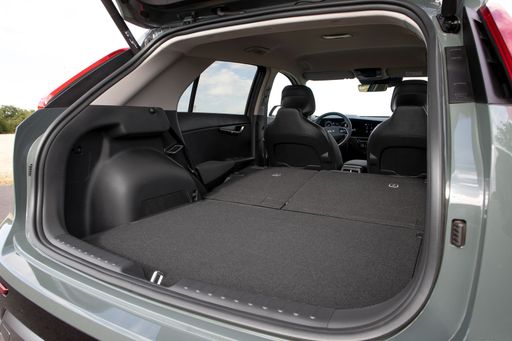
On weekend runs, supermarket hauls and the school run, practicality matters more than peak performance, and both cars bring sensible layouts to the table. The Niro tends to offer a slightly more versatile cargo area and user-friendly loading shapes that make stowing pushchairs and sports gear less fiddly, while the Yaris Cross makes up for it with light, effortless access and a cabin that feels thoughtfully arranged for daily use. Rear-seat space and child-seat fitment are manageable in both, though your choice will come down to how often you carry adults rearwards versus luggage forward. Families who value straightforward usability will find solid arguments in either corner.

Niro

Personality and Presence

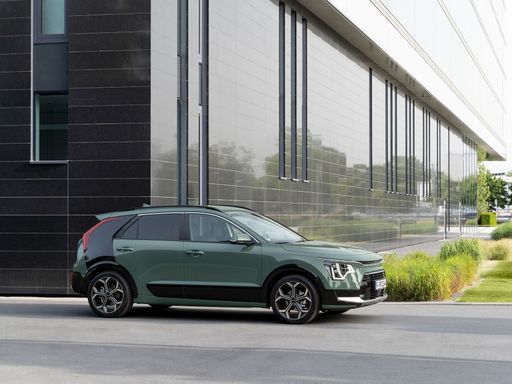
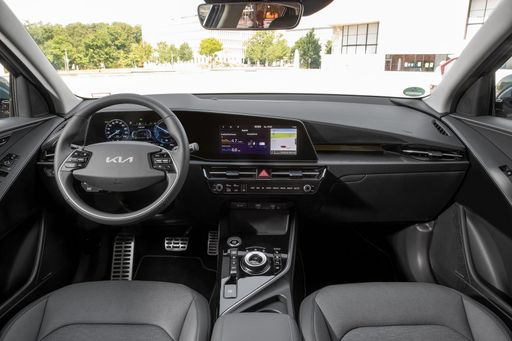
Styling is where tastes diverge: the Niro projects a confident, mature look that signals practicality with a subtle flair, while the Yaris Cross trades on cheeky compactness and a fresh, youthful silhouette. Inside, the Niro’s cabin skews toward a restrained, functional aesthetic with durable finishes, whereas the Yaris Cross favours bright, ergonomic touches and an interior that feels tuned for city life. Both manage to be characterful without shouting, so your pick will depend on whether you want understated competence or a pepier, more extroverted companion. Buyers who care about curb appeal should sit in both and decide which attitude fits their driveway.

Yaris Cross

Everyday Sense and Ownership

Beyond first impressions, cost of ownership and day-to-day running influence the long game, and both cars offer sensible, low-stress ownership propositions geared to different priorities. The Niro presents itself as a more versatile, do-it-all companion that rewards steady use and longer stretches between stops, while the Yaris Cross feels like the economical, no-nonsense option for tight budgets and urban stewardship. Servicing, warranty and dealer experience will shape long-term happiness just as much as the cars themselves, so factor in local support when choosing. In short, buy for the life you lead rather than the headline figures.

Niro

Which one fits your life?

At the end of the test loop the differences are clear in temperament rather than headline stats: one offers calm, all-round competence and the other brings lightness and city-ready agility, each appealing to distinct kinds of daily drivers. Commuters who crave composure, families needing flexible practicality, and style-conscious buyers all have reasons to consider both, depending on which traits matter most in the driveway. Take a proper test drive and imagine real days with either car before deciding—context beats spec sheets every time. Read on to discover which model takes the DriveDuel crown; the Champion will be revealed afterwards.

Here’s where it gets real: The technical differences in detail

Yaris Cross

Costs and Efficiency:

Looking at overall running costs, both models reveal some interesting differences in everyday economy.

Toyota Yaris Cross is markedly cheaper – starting at 23,700 £ , while the Kia Niro costs 29,100 £ . That’s a price difference of around 5,443 £.

Both cars consume an average of 4.5 L/100km – no difference here.

Niro

Engine and Performance:

Power, torque and acceleration are the classic benchmarks for car enthusiasts – and here, some clear differences start to show.

When it comes to engine power, the Kia Niro offers marginally more power – delivering 138 HP compared to 130 HP. That’s roughly 8 HP more horsepower.

When accelerating from 0 to 100 km/h, the Toyota Yaris Cross is marginally quicker – completing the sprint in 10.7 s, while the Kia Niro takes 11.1 s. That’s about 0.4 s quicker.

Yaris Cross

Space and Everyday Use:

Cabin size, boot volume and payload all play a role in everyday practicality. Here, comfort and flexibility make the difference.

Both vehicles offer seating for 5 people.

In terms of curb weight, Toyota Yaris Cross is visibly lighter – 1,180 kg compared to 1,474 kg. The difference is around 294 kg.

Looking at boot space, the Kia Niro offers moderately more boot space – 451 L compared to 397 L. That’s a difference of about 54 L.

When it comes to payload, the Toyota Yaris Cross carries only slightly more – 510 kg compared to 466 kg. That’s a difference of about 44 kg.

Who wins the race in the data check?

The Toyota Yaris Cross holds a slight edge in the objective data comparison.
This result only shows which model scores more points on paper – not which of the two cars feels right for you.

from £23,700
Yaris Cross

Toyota Yaris Cross

  • Engine Type Full Hybrid
  • Transmission Automatic
  • Drive Type Front-Wheel Drive, All-Wheel Drive
  • Power HP 116 - 130 HP
  • Consumption L/100km 4.5 - 4.8 L/100km
Toyota Yaris Cross
Kia Niro

Costs and Consumption

View detailed analysis

Engine and Performance

View detailed analysis

Dimensions and Body

View detailed analysis

Toyota Yaris Cross

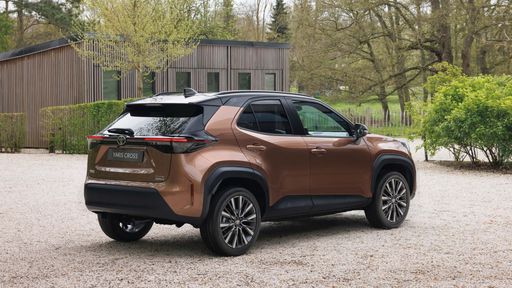
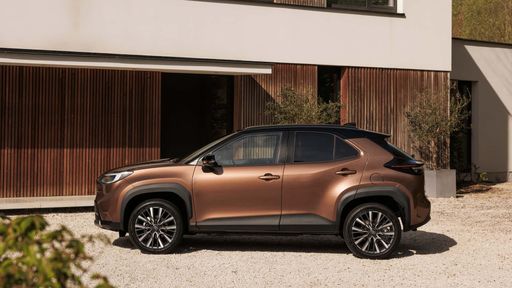
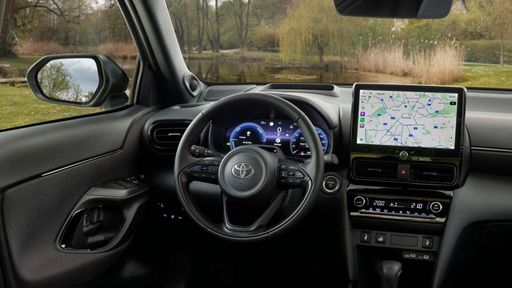
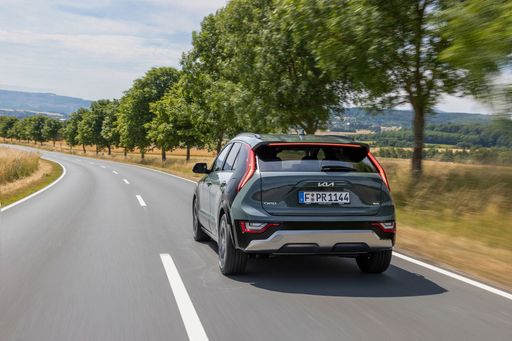
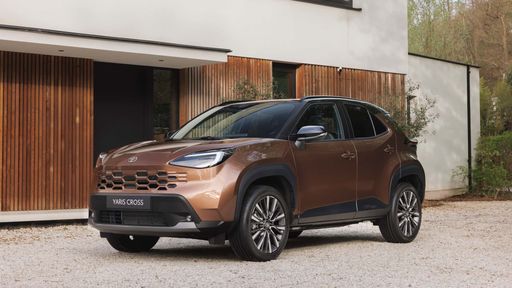
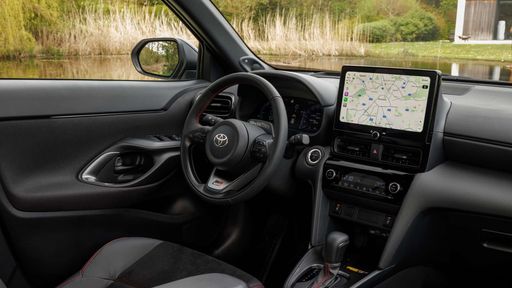
The Toyota Yaris Cross blends the maneuverability of a small hatch with the higher driving position and practicality of a crossover, wrapped in Toyota's dependable build quality. It suits urban buyers who need easy parking, flexible cargo space and a comfortable, economical daily driver.

details

Kia Niro

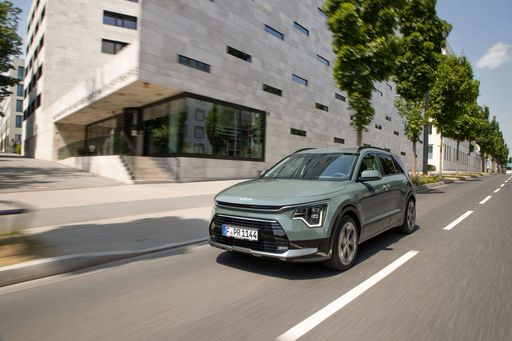
The Kia Niro is a practical crossover that blends economy and everyday versatility without sacrificing comfort. With a roomy, well-laid-out cabin and calm, composed handling, it’s an easy-to-live-with choice for commuters and families.

details
Toyota Yaris Cross
Kia Niro

Costs and Consumption

Price
23,700 - 34,300 £
Price
29,100 - 33,800 £
Consumption L/100km
4.5 - 4.8 L/100km
Consumption L/100km
4.5 - 4.9 L/100km
Consumption kWh/100km
-
Consumption kWh/100km
-
Electric Range
-
Electric Range
-
Battery Capacity
-
Battery Capacity
-
co2
101 - 108 g/km
co2
102 - 111 g/km
Fuel tank capacity
-
Fuel tank capacity
-

Dimensions and Body

Body Type
SUV
Body Type
SUV
Seats
5
Seats
5
Doors
-
Doors
-
Curb weight
1,180 - 1,290 kg
Curb weight
1,474 kg
Trunk capacity
320 - 397 L
Trunk capacity
451 L
Length
-
Length
-
Width
1,765 mm
Width
1,825 mm
Height
-
Height
-
Max trunk capacity
-
Max trunk capacity
-
Payload
485 - 510 kg
Payload
466 kg

Engine and Performance

Engine Type
Full Hybrid
Engine Type
Full Hybrid
Transmission
Automatic
Transmission
Automatic
Transmission Detail
CVT
Transmission Detail
Dual-Clutch Automatic
Drive Type
Front-Wheel Drive, All-Wheel Drive
Drive Type
Front-Wheel Drive
Power HP
116 - 130 HP
Power HP
138 HP
Acceleration 0-100km/h
10.7 - 11.3 s
Acceleration 0-100km/h
11.1 - 11.4 s
Max Speed
-
Max Speed
-
Torque
-
Torque
265 Nm
Number of Cylinders
3
Number of Cylinders
4
Power kW
85 - 96 kW
Power kW
102 kW
Engine capacity
1,490 cm3
Engine capacity
1,580 cm3

General

Model Year
2026
Model Year
2025
CO2 Efficiency Class
C
CO2 Efficiency Class
C
Brand
Toyota
Brand
Kia
DriveDuel uses data analysis and artificial intelligence to evaluate vehicle data and create content. Content is regularly reviewed and improved. The displayed prices are estimates based on German list prices, adjusted to the respective country’s VAT. Country-specific registration taxes are not included. This information is not legally binding.