VS

Toyota Yaris Cross vs Mitsubishi ASX comparison

Compare performance (130 HP vs 158 HP), boot space and price (23,700 £ vs 21,800 £ ) at a glance. Find out which car is the better choice for you – Toyota Yaris Cross or Mitsubishi ASX?

Toyota Yaris Cross vs Mitsubishi ASX: Key differences

Toyota Yaris Cross

4.2 (15 Reviews)
rate
  • very slightly lighter
details

Mitsubishi ASX

4.9 (2 Reviews)
rate
  • only slightly cheaper
  • moderately more power
  • very slightly more efficient
  • markedly quicker 0–100 km/h
  • moderately more trunk space
details

All details on performance, efficiency, range and trunk space can be found in the technical comparison below – including user reviews for both models.

By Achim Sedelmaier

Yaris Cross

Introducing the Contenders: Mitsubishi ASX vs. Toyota Yaris Cross

The automotive market is bustling with new entrants and captivating models, but the competition between the Mitsubishi ASX and the Toyota Yaris Cross stands out. Both SUVs provide a blend of style, efficiency, and modern technology, appealing to the adventurous and eco-conscious driver alike. In this comparison, we will delve into their technical specifications and innovations that set these two models apart.
ASX

Engine and Performance Overview

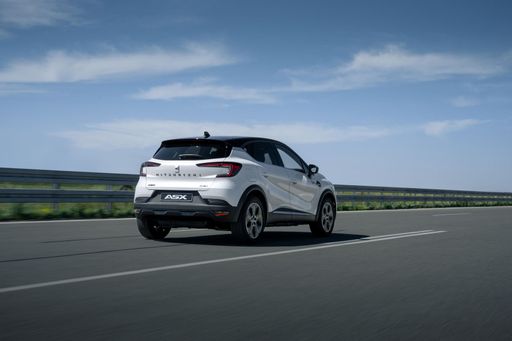
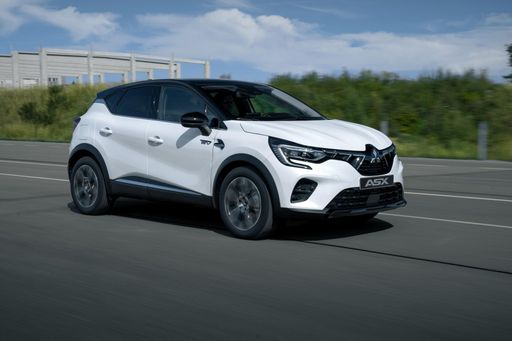
The Mitsubishi ASX offers a range of engines including petrol, hybrid, and mild hybrid options. The available power outputs range from 91 HP in entry-level variants to as much as 158 HP for the more powerful variants, paired with either a manual gearbox or an automatic transmission. With 0-100 km/h acceleration times ranging from 8.5 seconds to over 14 seconds, performance varies significantly based on the chosen engine. The ASX boasts a top speed of up to 180 km/h and offers a maximum torque of 270 Nm with a curb weight between 1296 kg and 1501 kg depending on the variant.

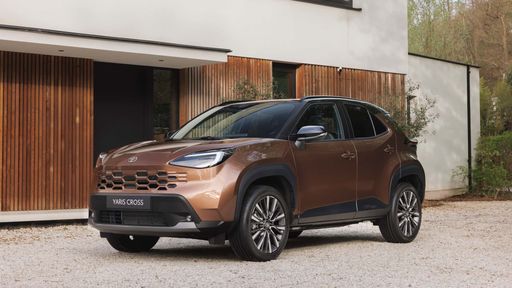
On the other hand, the Toyota Yaris Cross is exclusively equipped with a full hybrid system generating up to 130 HP. This SUV reaches 0-100 km/h in a respectable 10.7 seconds, equipped with a CVT automatic transmission. It is lighter than its rival, with curb weights ranging from 1180 kg to 1290 kg, contributing to its nimbleness on the road. With a maximum speed of 170 km/h, the Yaris Cross may not be the fastest contender, but its efficiency and innovation make it an impressive option.

Yaris Cross

Fuel Efficiency and Emissions

When it comes to fuel efficiency, the Mitsubishi ASX demonstrates commendable figures, achieving consumption rates between 4.7 to 6 L/100km. Its CO2 emission rates range from 107 to 135 g/km, depending on engine choice, placing it in a competitive position in terms of environmental friendliness.

In contrast, the Toyota Yaris Cross shines in this category, emphasizing its hybrid technology. It boasts impressive fuel consumption figures ranging from 4.5 to 4.8 L/100km and even lower CO2 emissions of 101 to 108 g/km. For environmentally conscious consumers, the Yaris Cross presents a clear advantage, promising reduced fuel costs and a smaller carbon footprint.

ASX

Interior Space and Comfort

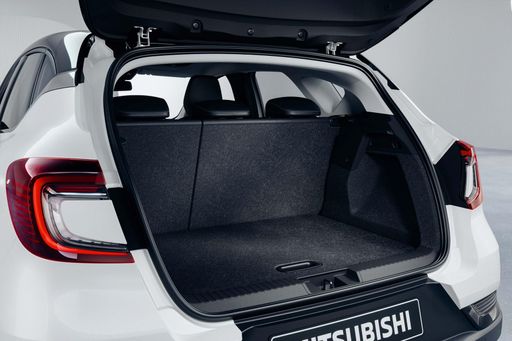
Both SUVs offer comfortable interiors with seating for five, but they differ significantly in trunk capacity. The Mitsubishi ASX provides a generous trunk space of 484 liters, making it suitable for family outings or road trips. Conversely, the Yaris Cross, while slightly less spacious, still offers respectable trunk volumes of 320 to 397 liters depending on the variant.

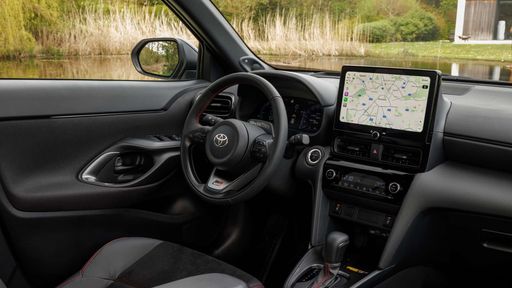
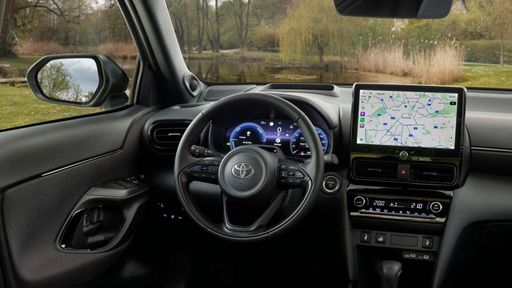
Interior material quality and technology features also play crucial roles in the driving experience. The ASX, being a more traditional SUV, provides a well-rounded cabin experience; however, its technology might feel slightly less advanced when compared to the Yaris Cross’s modern infotainment system and hybrid-specific features.

Yaris Cross

Safety and Innovations

Both models come equipped with a range of safety features, including advanced driver-assistance systems (ADAS). Mitsubishi incorporates its own safety technology, emphasizing a blend of pre-collision systems and lane-keeping assist. The Yaris Cross, however, excels with Toyota's Safety Sense technology, offering features such as adaptive cruise control, lane departure alert, and automatic high beams, setting a high benchmark in vehicle safety.

ASX

Final Thoughts: Which One to Choose?

Choosing between the Mitsubishi ASX and Toyota Yaris Cross ultimately depends on the buyer's priorities. For those seeking versatility, ample cargo space, and multiple engine options, the ASX holds appeal. Conversely, the Yaris Cross's hybrid efficiency, lower emissions, and innovative safety technologies make it the ideal choice for environmentally conscious drivers.

In this face-off between two exceptional SUVs, both models hold their unique strengths. As both brands continue to innovate, the competition is only expected to heat up, promising exciting options for consumers in the future.

Here’s where it gets real: The technical differences in detail

Yaris Cross

Costs and Efficiency:

Price and efficiency are often the first things buyers look at. Here it becomes clear which model has the long-term edge – whether at the pump, the plug, or in purchase price.

Mitsubishi ASX is only slightly cheaper – starting at 21,800 £ , while the Toyota Yaris Cross costs 23,700 £ . That’s a price difference of around 1,929 £.

Fuel consumption also shows a difference: the Mitsubishi ASX uses 4.3 L/100km and is very slightly more efficient than the Toyota Yaris Cross with 4.5 L/100km. The difference is about 0.2 L/100km.

ASX

Engine and Performance:

Under the bonnet, it becomes clear which model is tuned for sportiness and which one takes the lead when you hit the accelerator.

When it comes to engine power, the Mitsubishi ASX offers moderately more power – delivering 158 HP compared to 130 HP. That’s roughly 28 HP more horsepower.

When accelerating from 0 to 100 km/h, the Mitsubishi ASX is markedly quicker – completing the sprint in 8.9 s, while the Toyota Yaris Cross takes 10.7 s. That’s about 1.8 s quicker.

Yaris Cross

Space and Everyday Use:

Beyond pure performance, interior space and usability matter most in daily life. This is where you see which car is more practical and versatile.

Both vehicles offer seating for 5 people.

In terms of curb weight, Toyota Yaris Cross is very slightly lighter – 1,180 kg compared to 1,296 kg. The difference is around 116 kg.

Looking at boot space, the Mitsubishi ASX offers moderately more boot space – 484 L compared to 397 L. That’s a difference of about 87 L.

When it comes to payload, the Toyota Yaris Cross carries slightly more – 510 kg compared to 445 kg. That’s a difference of about 65 kg.

Who wins the race in the data check?

The Mitsubishi ASX stands well ahead of its rival in the objective data comparison.
This result only shows which model scores more points on paper – not which of the two cars feels right for you.

from £21,800
ASX

Mitsubishi ASX

  • Engine Type : Petrol, Petrol MHEV, Full Hybrid
  • Transmission : Manuel, Automatic
  • Drive Type : Front-Wheel Drive
  • Power HP : 115 - 158 HP
  • Consumption L/100km : 4.3 - 6 L/100km
Toyota Yaris Cross
Mitsubishi ASX

Costs and Consumption

View detailed analysis

Engine and Performance

View detailed analysis

Dimensions and Body

View detailed analysis

Toyota Yaris Cross

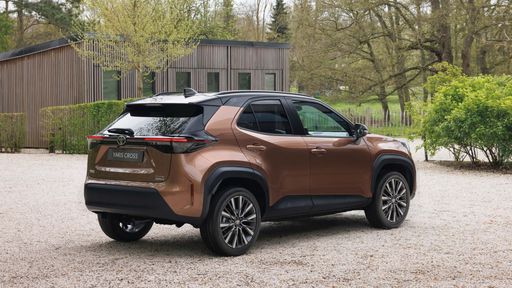
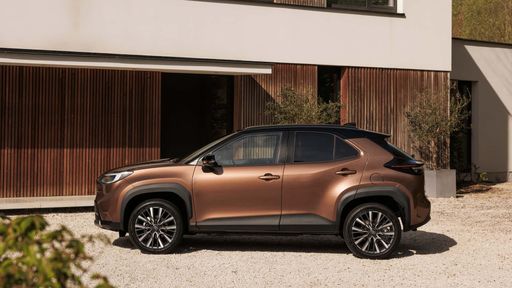
The Toyota Yaris Cross blends the maneuverability of a small hatch with the higher driving position and practicality of a crossover, wrapped in Toyota's dependable build quality. It suits urban buyers who need easy parking, flexible cargo space and a comfortable, economical daily driver.

details

Mitsubishi ASX

The Mitsubishi ASX is a compact crossover that mixes practicality with a no-nonsense personality, making it an easy choice for buyers who want sensible space without the showroom theatrics. It won't set your pulse racing, but its composed ride and user-friendly kit make it a dependable companion for daily errands and weekend escapes — reliable rather than flashy.

details
Toyota Yaris Cross
Mitsubishi ASX

Costs and Consumption

Price
23,700 - 34,300 £
Price
21,800 - 32,700 £
Consumption L/100km
4.5 - 4.8 L/100km
Consumption L/100km
4.3 - 6 L/100km
Consumption kWh/100km
-
Consumption kWh/100km
-
Electric Range
-
Electric Range
-
Battery Capacity
-
Battery Capacity
-
co2
101 - 108 g/km
co2
99 - 136 g/km
Fuel tank capacity
-
Fuel tank capacity
-

Dimensions and Body

Body Type
SUV
Body Type
SUV
Seats
5
Seats
5
Doors
-
Doors
-
Curb weight
1,180 - 1,290 kg
Curb weight
1,296 - 1,493 kg
Trunk capacity
320 - 397 L
Trunk capacity
348 - 484 L
Length
-
Length
-
Width
1,765 mm
Width
1,797 mm
Height
-
Height
-
Max trunk capacity
-
Max trunk capacity
-
Payload
485 - 510 kg
Payload
397 - 445 kg

Engine and Performance

Engine Type
Full Hybrid
Engine Type
Petrol, Petrol MHEV, Full Hybrid
Transmission
Automatic
Transmission
Manuel, Automatic
Transmission Detail
CVT
Transmission Detail
Manual Gearbox, Dual-Clutch Automatic, Automatic Gearbox
Drive Type
Front-Wheel Drive, All-Wheel Drive
Drive Type
Front-Wheel Drive
Power HP
116 - 130 HP
Power HP
115 - 158 HP
Acceleration 0-100km/h
10.7 - 11.3 s
Acceleration 0-100km/h
8.9 - 12.3 s
Max Speed
-
Max Speed
-
Torque
-
Torque
190 - 245 Nm
Number of Cylinders
3
Number of Cylinders
3 - 4
Power kW
85 - 96 kW
Power kW
84 - 116 kW
Engine capacity
1,490 cm3
Engine capacity
1,199 - 1,789 cm3

General

Model Year
2026
Model Year
2,025 - 2,026
CO2 Efficiency Class
C
CO2 Efficiency Class
D, E, C
Brand
Toyota
Brand
Mitsubishi
DriveDuel uses data analysis and artificial intelligence to evaluate vehicle data and create content. Content is regularly reviewed and improved. The displayed prices are estimates based on German list prices, adjusted to the respective country’s VAT. Country-specific registration taxes are not included. This information is not legally binding.