VS

Toyota Yaris vs Toyota Yaris Cross comparison

Compare performance (280 HP vs 130 HP), boot space and price (21,900 £ vs 23,700 £ ) at a glance. Find out which car is the better choice for you – Toyota Yaris or Toyota Yaris Cross?

Toyota Yaris vs Toyota Yaris Cross: Key differences

Toyota Yaris

4.1 (4 Reviews)
rate
  • barely cheaper
  • considerably more power
  • a bit more efficient
  • substantially quicker 0–100 km/h
  • only slightly lighter
details

Toyota Yaris Cross

4.3 (14 Reviews)
rate
  • markedly more trunk space
details

All details on performance, efficiency, range and trunk space can be found in the technical comparison below – including user reviews for both models.

By Achim Sedelmaier

Yaris

Toyota Yaris Cross VS Toyota Yaris: the right Toyota for your everyday

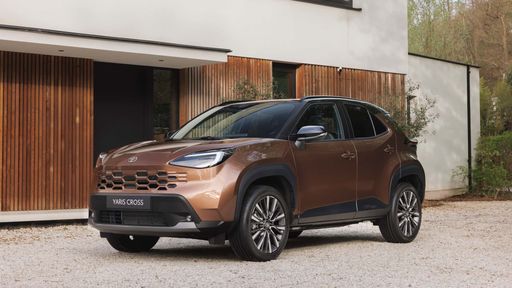
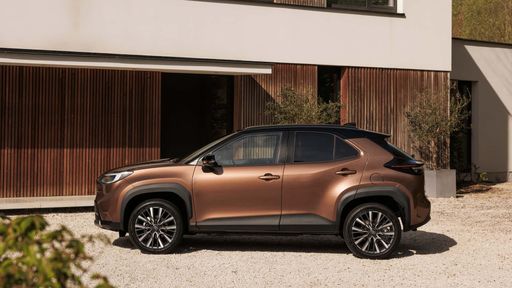
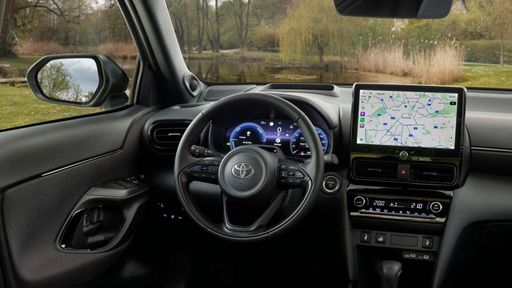
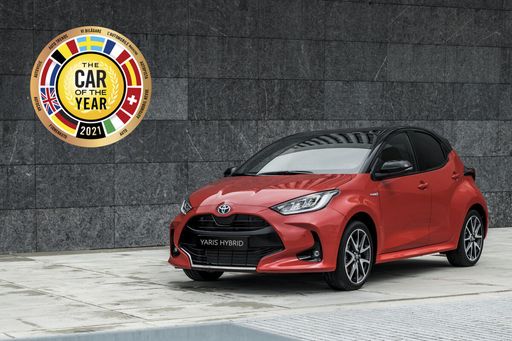
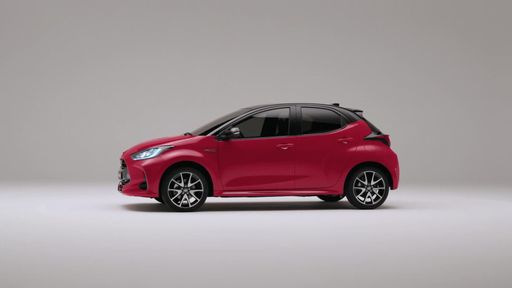
The Toyota Yaris Cross and Toyota Yaris share the same hybrid DNA, but they serve different daily lives. The Yaris Cross brings a small-SUV stance with a higher seating position and a far more useful cargo area, making it feel like a shrunken family car. The Yaris sticks to classic hatchback virtues: tidier footprint, keener feel in traffic, and an easier entry price with a slight efficiency edge. Both deliver calm, low-effort commuting thanks to the hybrid system and generous driver assistance, but the way they fit your routine couldn’t be more distinct.
Yaris Cross

Comfort and long‑distance manners

The Toyota Yaris Cross rides with that elevated, confident view you expect from a small SUV, though it can feel busy over sharp bumps if you pick larger wheels. The Toyota Yaris feels lighter and more tied down, which many will find a touch more settled on a long run. Under hard acceleration both raise their voices in that familiar hybrid way, but at a steady cruise they settle into an easy rhythm. If regular motorway miles matter, the Yaris’ lower stance makes it the slightly calmer companion, while the Yaris Cross trades a bit of hushed refinement for that commanding driving position.

Yaris

Cabin space and feel

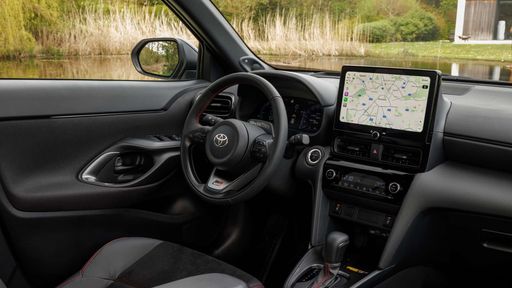
Up front, both Toyotas are straightforward and well laid out, with quick, modern infotainment and easy smartphone pairing. The Yaris Cross offers an easier step‑in and airier impression, while the Yaris puts you lower and more cocooned in a traditional hatchback driving posture. Rear space is tight in both, and taller adults won’t thank you on long trips; the Yaris Cross feels marginally less cramped to climb into, but it’s no limo. Materials are solid and hard‑wearing rather than plush, prioritizing durability and simple controls over flashiness.

Yaris Cross

Boot and everyday practicality

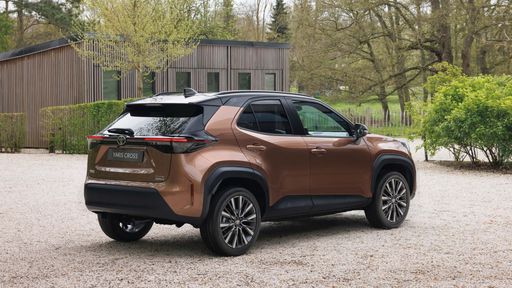
This is where the Toyota Yaris Cross pulls clear: the load bay is notably larger, the opening is squarer, and a configurable floor makes daily chores simpler. It swallows a stroller and a weekly shop without drama, and bulky items are just easier to angle in. Opting for all‑wheel drive trims does nibble into that advantage, but even then it remains the more flexible hauler. The Toyota Yaris’ boot is fine for gym bags and light luggage, yet its shape and lack of securing points mean longer weekends demand more planning and a rear‑seat fold.

City ease and winter confidence

In town, the Toyota Yaris is the one you thread through gaps without thinking, its smaller body feeling instantly at home in tight streets and multistory car parks. The Toyota Yaris Cross counters with better forward visibility and a more relaxed, upright seating position that many drivers find less tiring in stop‑and‑go. Both hybrids glide around with frequent electric running, making dense traffic surprisingly serene. If you live where roads turn slick, the Yaris Cross’ available AWD‑i adds useful traction the Yaris simply doesn’t offer.

Costs, efficiency and who each suits

The Toyota Yaris typically undercuts the Yaris Cross to buy and tends to sip a little less fuel, making it the sensible pick for solo commuters or couples who pack light. The Toyota Yaris Cross asks more upfront but pays you back with space, easier loading, and that small‑SUV ease of access—plus the option of AWD for mountain or rural life. Both carry Toyota’s reputation for low running hassle, and both are exceptionally frugal for a hybrid without plugs. If your days revolve around parking, short hops and low costs, the Yaris fits; if your life mixes city with gear, pets or winter roads, the Yaris Cross feels right—now let’s dive into the details to see how the numbers underpin those choices.

Here’s where it gets real: The technical differences in detail

Yaris

Costs and Efficiency:

Looking at overall running costs, both models reveal some interesting differences in everyday economy.

Toyota Yaris is barely cheaper – starting at 21,900 £ , while the Toyota Yaris Cross costs 23,700 £ . That’s a price difference of around 1,834 £.

Fuel consumption also shows a difference: the Toyota Yaris uses 3.8 L/100km and is a bit more efficient than the Toyota Yaris Cross with 4.5 L/100km. The difference is about 0.7 L/100km.

Yaris Cross

Engine and Performance:

Under the bonnet, it becomes clear which model is tuned for sportiness and which one takes the lead when you hit the accelerator.

When it comes to engine power, the Toyota Yaris offers considerably more power – delivering 280 HP compared to 130 HP. That’s roughly 150 HP more horsepower.

When accelerating from 0 to 100 km/h, the Toyota Yaris is substantially quicker – completing the sprint in 5.5 s, while the Toyota Yaris Cross takes 10.7 s. That’s about 5.2 s quicker.

Yaris

Space and Everyday Use:

Whether family car or daily driver – which one offers more room, flexibility and comfort?

Both vehicles offer seating for 5 people.

In terms of curb weight, Toyota Yaris is only slightly lighter – 1,090 kg compared to 1,180 kg. The difference is around 90 kg.

Looking at boot space, the Toyota Yaris Cross offers markedly more boot space – 397 L compared to 286 L. That’s a difference of about 111 L.

When it comes to payload, the Toyota Yaris carries only slightly more – 525 kg compared to 510 kg. That’s a difference of about 15 kg.

Who wins the race in the data check?

The Toyota Yaris is far ahead overall in the objective data comparison.
This result only shows which model scores more points on paper – not which of the two cars feels right for you.

from £21,900
Yaris

Toyota Yaris

  • Engine Type : Full Hybrid, Petrol
  • Transmission : Automatic, Manuel
  • Drive Type : Front-Wheel Drive, All-Wheel Drive
  • Power HP : 116 - 280 HP
  • Consumption L/100km : 3.8 - 8.7 L/100km
Toyota Yaris
Toyota Yaris Cross

Costs and Consumption

View detailed analysis

Engine and Performance

View detailed analysis

Dimensions and Body

View detailed analysis

Toyota Yaris

The Yaris is a compact hatchback that blends everyday practicality with Toyota’s long-standing reputation for reliability, making it easy to live with in city traffic. Its nimble handling and sensible interior make the Yaris a smart choice for drivers who want straightforward, fuss-free transport.

details

Toyota Yaris Cross

The Toyota Yaris Cross blends the maneuverability of a small hatch with the higher driving position and practicality of a crossover, wrapped in Toyota's dependable build quality. It suits urban buyers who need easy parking, flexible cargo space and a comfortable, economical daily driver.

details
Toyota Yaris
Toyota Yaris Cross

Costs and Consumption

Price
21,900 - 40,800 £
Price
23,700 - 34,300 £
Consumption L/100km
3.8 - 8.7 L/100km
Consumption L/100km
4.5 - 4.8 L/100km
Consumption kWh/100km
-
Consumption kWh/100km
-
Electric Range
-
Electric Range
-
Battery Capacity
-
Battery Capacity
-
co2
87 - 197 g/km
co2
101 - 108 g/km
Fuel tank capacity
-
Fuel tank capacity
-

Dimensions and Body

Body Type
Hatchback
Body Type
SUV
Seats
4 - 5
Seats
5
Doors
-
Doors
-
Curb weight
1,090 - 1,356 kg
Curb weight
1,180 - 1,290 kg
Trunk capacity
141 - 286 L
Trunk capacity
320 - 397 L
Length
-
Length
-
Width
1,745 - 1,805 mm
Width
1,765 mm
Height
-
Height
-
Max trunk capacity
-
Max trunk capacity
-
Payload
289 - 525 kg
Payload
485 - 510 kg

Engine and Performance

Engine Type
Full Hybrid, Petrol
Engine Type
Full Hybrid
Transmission
Automatic, Manuel
Transmission
Automatic
Transmission Detail
CVT, Manual Gearbox
Transmission Detail
CVT
Drive Type
Front-Wheel Drive, All-Wheel Drive
Drive Type
Front-Wheel Drive, All-Wheel Drive
Power HP
116 - 280 HP
Power HP
116 - 130 HP
Acceleration 0-100km/h
5.5 - 9.7 s
Acceleration 0-100km/h
10.7 - 11.3 s
Max Speed
-
Max Speed
-
Torque
390 Nm
Torque
-
Number of Cylinders
3
Number of Cylinders
3
Power kW
85 - 206 kW
Power kW
85 - 96 kW
Engine capacity
1,490 - 1,618 cm3
Engine capacity
1,490 cm3

General

Model Year
2026
Model Year
2026
CO2 Efficiency Class
B, G
CO2 Efficiency Class
C
Brand
Toyota
Brand
Toyota
DriveDuel uses data analysis and artificial intelligence to evaluate vehicle data and create content. Content is regularly reviewed and improved. The displayed prices are estimates based on German list prices, adjusted to the respective country’s VAT. Country-specific registration taxes are not included. This information is not legally binding.