
 Deutschland
 France
 Nederland
 Great Britain
 Sverige
 Danmark
 Suomi
Suomi Italia
 Polska
 España
VS
Volvo EX30 vs Renault Scénic comparison
Compare performance (428 HP vs 218 HP), boot space and price (33,000 £ vs 34,600 £ ) at a glance. Find out which car is the better choice for you – Volvo EX30 or Renault Scénic?
EX30
Costs and Efficiency:
When it comes to price and running costs, the biggest differences usually appear. This is often where you see which car fits your budget better in the long run.
Volvo EX30 is very slightly cheaper – starting at 33,000 £ , while the Renault Scénic costs 34,600 £ . That’s a price difference of around 1,637 £.
In terms of energy consumption, the Renault Scénic is very slightly more efficient: consuming 16.6 kWh/100km compared to 17 kWh/100km for the Volvo EX30. That’s a difference of about 0.4 kWh/100km.
As for electric range, the Renault Scénic offers clearly more range – reaching up to 598 km, about 122 km more than the Volvo EX30.
Scénic
Engine and Performance:
Power, torque and acceleration say a lot about how a car feels on the road. This is where you see which model delivers more driving dynamics.
When it comes to engine power, the Volvo EX30 offers clearly more power – delivering 428 HP compared to 218 HP. That’s roughly 210 HP more horsepower.
When accelerating from 0 to 100 km/h, the Volvo EX30 is significantly quicker – completing the sprint in 3.6 s, while the Renault Scénic takes 7.9 s. That’s about 4.3 s quicker.
Looking at top speed, the Volvo EX30 is marginally faster – reaching 180 km/h, while the Renault Scénic tops out at 170 km/h. The difference is around 10 km/h.
There’s also a difference in torque: the Volvo EX30 delivers clearly more torque with 543 Nm compared to 300 Nm. That’s about 243 Nm more.
EX30
Space and Everyday Use:
Beyond pure performance, interior space and usability matter most in daily life. This is where you see which car is more practical and versatile.
Both vehicles offer seating for 5 people.
In terms of curb weight, Renault Scénic is barely lighter – 1,822 kg compared to 1,840 kg. The difference is around 18 kg.
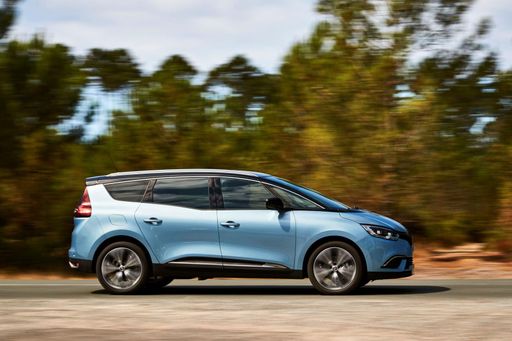
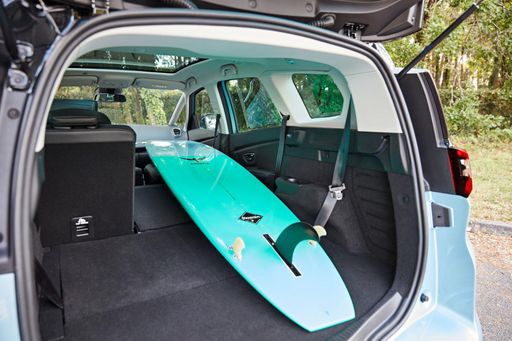
Looking at boot space, the Renault Scénic offers significantly more boot space – 545 L compared to 318 L. That’s a difference of about 227 L.
For maximum load capacity, the Renault Scénic offers substantially more capacity – up to 1,670 L, about 670 L more than the Volvo EX30.
When it comes to payload, the Renault Scénic carries clearly more – 518 kg compared to 390 kg. That’s a difference of about 128 kg.
Who wins the race in the data check?
The Volvo EX30 is clearly superior overall in the objective data comparison.
This result only shows which model scores more points on paper – not which of the two cars feels right for you.
from £33,000
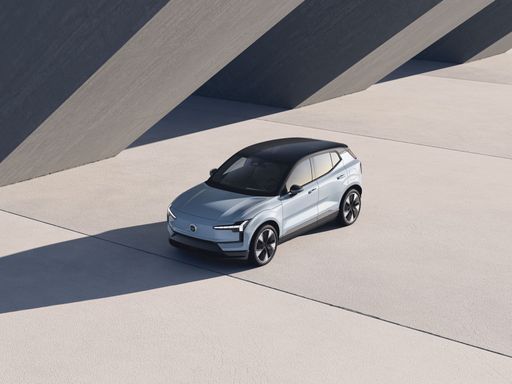
Volvo EX30
Volvo EX30
Renault Scénic
Costs and Consumption
View detailed analysis
View detailed analysis
Engine and Performance
View detailed analysis
View detailed analysis
Dimensions and Body
View detailed analysis
View detailed analysis
Volvo EX30
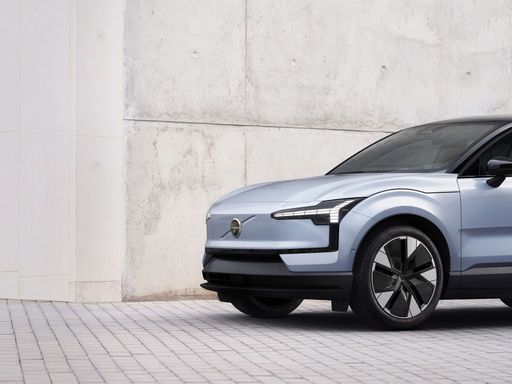
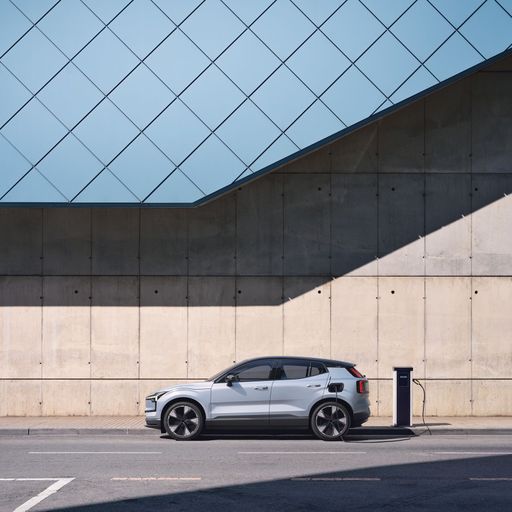
The Volvo EX30 arrives as a compact electric with crisp Scandinavian design and a cheeky personality, proving you can be serious about safety and still enjoy a grin on your commute. Its cabin is cleverly packaged and delightfully easy to live with, offering smart tech and practical touches that make it feel like a grown-up's city car with a sense of fun.
details


Renault Scénic
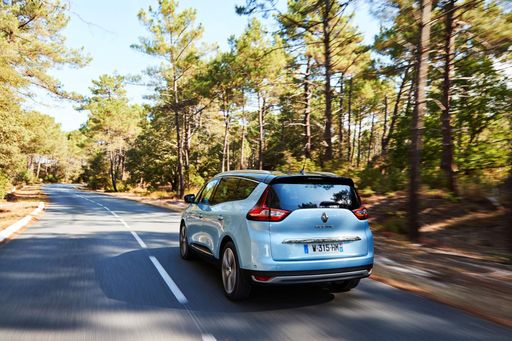
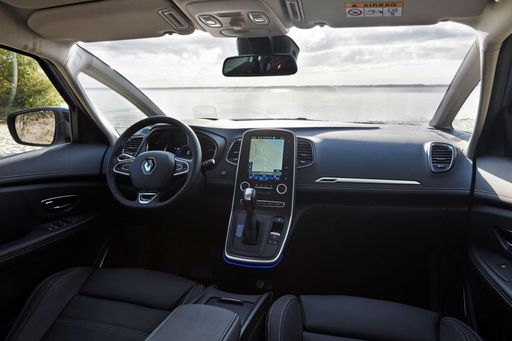
The Renault Scénic is a quietly clever family MPV that balances everyday practicality with unexpected flair, offering a roomy, flexible cabin that makes school runs and weekend escapes less of a chore. It won't dazzle like a sports car, but its composed ride, sensible tech and thoughtful storage solutions make it a superbly pragmatic choice for buyers who prefer substance with a wink.
details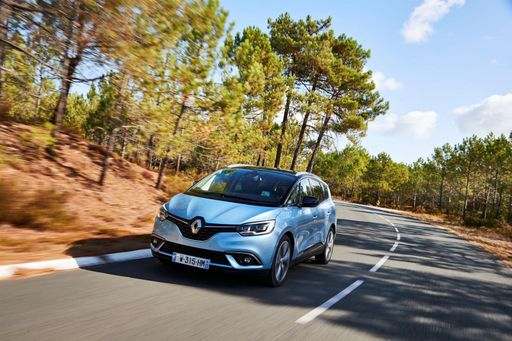
Volvo EX30
Renault Scénic
Costs and Consumption |
|
|---|---|
|
Price
33,000 - 49,100 £
|
Price
34,600 - 44,000 £
|
|
Consumption L/100km
-
|
Consumption L/100km
-
|
|
Consumption kWh/100km
17 - 18.3 kWh/100km
|
Consumption kWh/100km
16.6 - 17.5 kWh/100km
|
|
Electric Range
339 - 476 km
|
Electric Range
420 - 598 km
|
|
Battery Capacity
49 - 65 kWh
|
Battery Capacity
-
|
|
co2
0 g/km
|
co2
0 g/km
|
|
Fuel tank capacity
-
|
Fuel tank capacity
-
|
Dimensions and Body |
|
|---|---|
|
Body Type
SUV
|
Body Type
SUV
|
|
Seats
5
|
Seats
5
|
|
Doors
5
|
Doors
5
|
|
Curb weight
1,840 - 1,960 kg
|
Curb weight
1,822 - 1,927 kg
|
|
Trunk capacity
318 L
|
Trunk capacity
545 L
|
|
Length
4,233 mm
|
Length
4,470 mm
|
|
Width
1,838 mm
|
Width
1,864 mm
|
|
Height
1,550 mm
|
Height
1,571 mm
|
|
Max trunk capacity
1,000 L
|
Max trunk capacity
1,670 L
|
|
Payload
370 - 390 kg
|
Payload
514 - 518 kg
|
Engine and Performance |
|
|---|---|
|
Engine Type
Electric
|
Engine Type
Electric
|
|
Transmission
Automatic
|
Transmission
Automatic
|
|
Transmission Detail
Reduction Gearbox
|
Transmission Detail
Reduction Gearbox
|
|
Drive Type
Rear-Wheel Drive, All-Wheel Drive
|
Drive Type
Front-Wheel Drive
|
|
Power HP
272 - 428 HP
|
Power HP
170 - 218 HP
|
|
Acceleration 0-100km/h
3.6 - 5.7 s
|
Acceleration 0-100km/h
7.9 - 8.6 s
|
|
Max Speed
180 km/h
|
Max Speed
150 - 170 km/h
|
|
Torque
343 - 543 Nm
|
Torque
280 - 300 Nm
|
|
Number of Cylinders
-
|
Number of Cylinders
-
|
|
Power kW
200 - 315 kW
|
Power kW
125 - 160 kW
|
|
Engine capacity
-
|
Engine capacity
-
|
General |
|
|---|---|
|
Model Year
2,024 - 2,025
|
Model Year
2,025
|
|
CO2 Efficiency Class
A
|
CO2 Efficiency Class
A
|
|
Brand
Volvo
|
Brand
Renault
|
DriveDuel uses data analysis and artificial intelligence to evaluate vehicle data and create content. Content is regularly reviewed and improved.
The displayed prices are estimates based on German list prices, adjusted to the respective country’s VAT. Country-specific registration taxes are not included. This information is not legally binding.