VS

Volvo EX40 vs VW Golf comparison

Compare performance (442 HP vs 325 HP), boot space and price (45,200 £ vs 28,300 £ ) at a glance. Find out which car is the better choice for you – Volvo EX40 or VW Golf?

Volvo EX40 vs VW Golf: Key differences

Volvo EX40

4.5 (3 Reviews)
rate
  • noticeably more power
  • clearly more electric range
  • somewhat quicker 0–100 km/h
  • only slightly more trunk space
details

VW Golf

4.6 (1 Reviews)
rate
  • considerably cheaper
  • substantially lighter
details

All details on performance, efficiency, range and trunk space can be found in the technical comparison below – including user reviews for both models.

By Achim Sedelmaier

EX40

Electric Power Meets Classic Versatility: Volvo EX40 vs. VW Golf

The automotive landscape is ever-evolving, and the emergence of electric vehicles has challenged traditional concepts of performance and efficiency. In this article, we pit two notable contenders against each other: the Volvo EX40, a fully electric SUV, and the VW Golf, a versatile hatchback available with a range of powertrains. Both represent the ethos of their brands but in radically different ways.
Golf

Design and Body Type

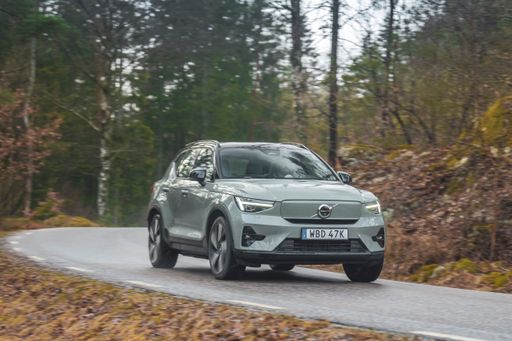
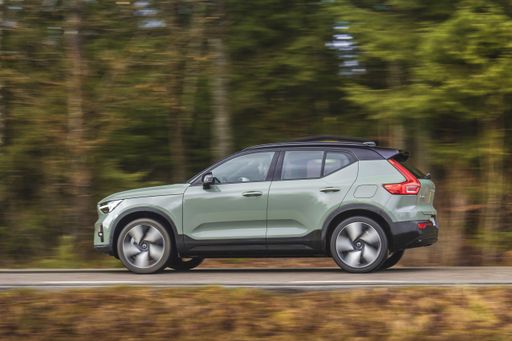
The Volvo EX40 is an SUV through and through, reflecting a sleek yet robust design, typical of the modern electric lineup. Measuring 4440 mm in length, with a width of 1863 mm and a height of 1647 mm, the EX40 exudes a commanding road presence. Its spacious interior offers ample room with a trunk capacity of 410 L.

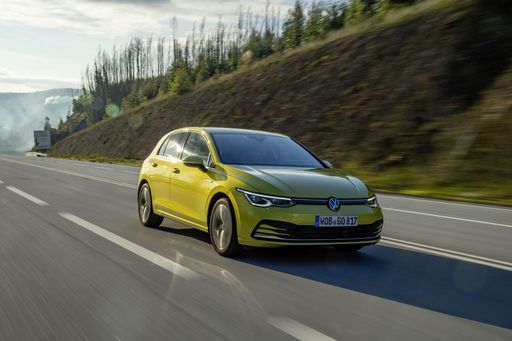
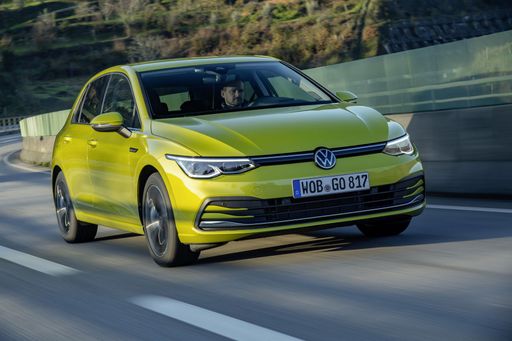
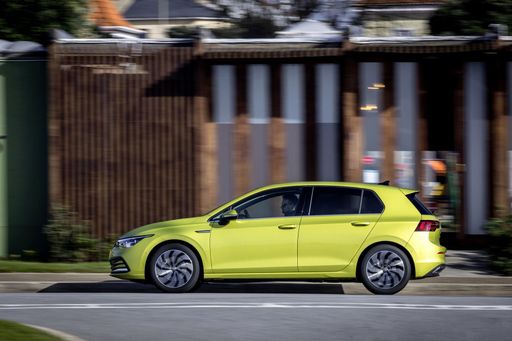
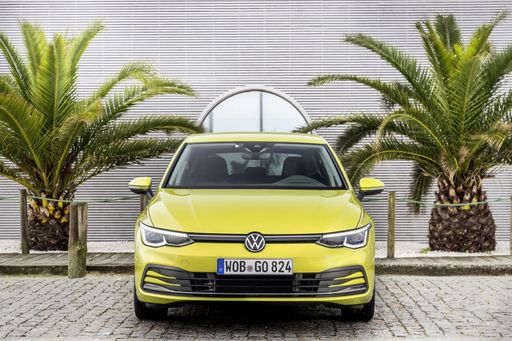
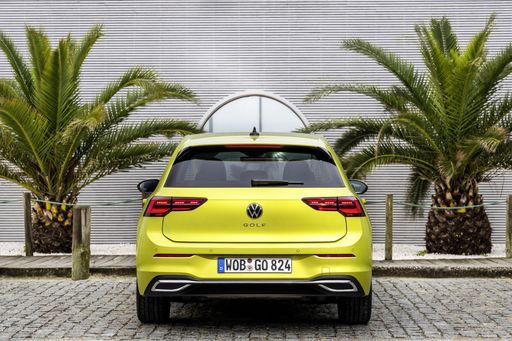
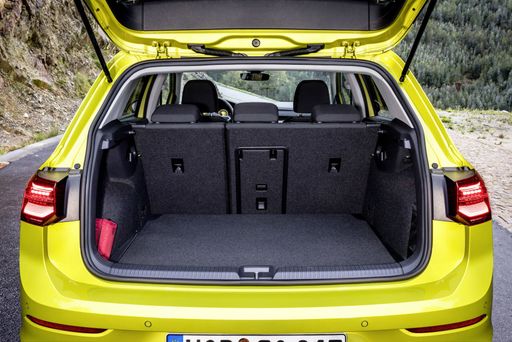
In contrast, the VW Golf is a compact hatchback with a refined design. Its dimensions—4289 mm in length, 1789 mm in width, and a height of 1471 mm—highlight its compactness and maneuverability, perfect for city driving. When it comes to trunk space, the Golf offers between 273 L and 381 L, depending on the variant, balancing practicality and style.

EX40

Power and Performance

Volvo's EX40 is an all-electric powerhouse, available in both rear-wheel and all-wheel-drive options. Depending on the variant, the EX40 delivers between 238 to 408 HP with torque reaching up to 670 Nm. It can accelerate from 0 to 100 km/h in as little as 4.6 seconds, with a top speed capped at 180 km/h. With a remarkable electric range of up to 576 km, it redefines efficiency in the SUV category.

The VW Golf, a stalwart in the hatchback segment, offers a diverse range of engine options, from petrol MHEV to plugin hybrids. Its power spans from 116 HP to 333 HP in its performance variant, with acceleration capabilities ranging from 4.6 to 10.2 seconds for a 0 to 100 km/h dash. The Golf's top speed can reach an exhilarating 270 km/h, depending on the engine choice. It's a hallmark of versatility and performance.

Golf

Efficiency and Eco-Friendliness

As a fully electric vehicle, the Volvo EX40 boasts zero CO2 emissions, placing it in the top-level CO2 efficiency class A. It consumes between 16.6 to 17.6 kWh/100 km, reflecting the cutting-edge efficiency of Volvo's electric powertrain technology.

On the other hand, the Golf's eco-credentials vary with its engine options. While its hybrid versions offer a low CO2 footprint, the petrol and diesel engines range from efficiency classes B to F. The plugin hybrid version boasts an electric range of up to 143 km, showcasing Volkswagen's commitment to reducing emissions.

EX40

Technological Innovations

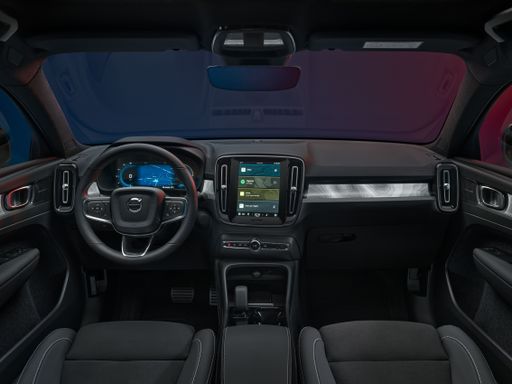
Volvo equips the EX40 with state-of-the-art technology, including advanced driver assistance systems, seamless infotainment, and connectivity features. It's designed for a modern, high-tech lifestyle, ensuring passengers enjoy a premium driving experience.

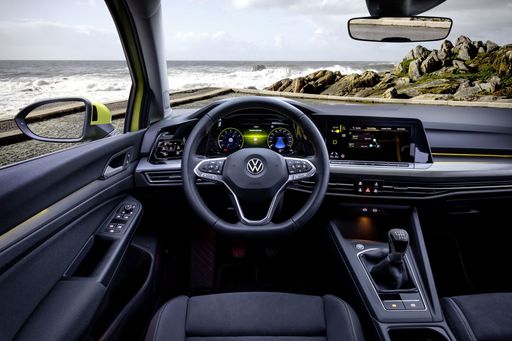
The VW Golf, with its rich legacy, continues to innovate with adaptive cruise control, park assist, and a digital cockpit. Its infotainment system is intuitive and keeps drivers connected, maintaining its status as a staple in practical technology.

Golf

Conclusion

Both the Volvo EX40 and VW Golf captivate with their unique strengths. The EX40 is a beacon of electric luxury and performance, ideal for those seeking a sustainable yet powerful drive. Meanwhile, the VW Golf remains an emblem of versatile engineering and timeless appeal. Your choice will depend on whether you prioritize cutting-edge electric mobility or the tried-and-true versatility of a classic hatchback.

Here’s where it gets real: The technical differences in detail

EX40

Costs and Efficiency:

When it comes to price and running costs, the biggest differences usually appear. This is often where you see which car fits your budget better in the long run.

VW Golf is considerably cheaper – starting at 28,300 £ , while the Volvo EX40 costs 45,200 £ . That’s a price difference of around 16,967 £.

As for electric range, the Volvo EX40 offers clearly more range – reaching up to 576 km, about 433 km more than the VW Golf.

Golf

Engine and Performance:

Under the bonnet, it becomes clear which model is tuned for sportiness and which one takes the lead when you hit the accelerator.

When it comes to engine power, the Volvo EX40 offers noticeably more power – delivering 442 HP compared to 325 HP. That’s roughly 117 HP more horsepower.

When accelerating from 0 to 100 km/h, the Volvo EX40 is somewhat quicker – completing the sprint in 4.6 s, while the VW Golf takes 5.3 s. That’s about 0.7 s quicker.

There’s also a difference in torque: the Volvo EX40 delivers clearly more torque with 670 Nm compared to 420 Nm. That’s about 250 Nm more.

EX40

Space and Everyday Use:

Cabin size, boot volume and payload all play a role in everyday practicality. Here, comfort and flexibility make the difference.

Both vehicles offer seating for 5 people.

In terms of curb weight, VW Golf is substantially lighter – 1,307 kg compared to 2,040 kg. The difference is around 733 kg.

Looking at boot space, the Volvo EX40 offers only slightly more boot space – 410 L compared to 381 L. That’s a difference of about 29 L.

When it comes to payload, the VW Golf carries barely more – 508 kg compared to 480 kg. That’s a difference of about 28 kg.

Who wins the race in the data check?

The Volvo EX40 is far ahead overall in the objective data comparison.
This result only shows which model scores more points on paper – not which of the two cars feels right for you.

from £45,200
EX40

Volvo EX40

  • Engine Type Electric
  • Transmission Automatic
  • Drive Type Rear-Wheel Drive, All-Wheel Drive
  • Power HP 238 - 442 HP
  • Consumption kWh/100km 16.6 - 17.6 kWh/100km
  • Electric Range 477 - 576 km
Volvo EX40
VW Golf

Costs and Consumption

View detailed analysis

Engine and Performance

View detailed analysis

Dimensions and Body

View detailed analysis

Volvo EX40

The Volvo EX40 is a compact electric SUV that blends Scandinavian minimalism with a comfortable, high-quality interior suited to daily driving and longer trips. It prioritizes safety and intuitive technology, delivering a calm, refined experience that feels mature and easy to live with.

details

VW Golf

The Golf is a quietly accomplished compact that blends practicality, refinement and approachable driving manners into a very usable everyday package. It’s well built, comfortable and versatile, making it a smart choice whether you want sensible family transport or an enjoyable commuter.

details
Volvo EX40
VW Golf

Costs and Consumption

Price
45,200 - 56,000 £
Price
28,300 - 46,700 £
Consumption L/100km
-
Consumption L/100km
1.1 - 7.6 L/100km
Consumption kWh/100km
16.6 - 17.6 kWh/100km
Consumption kWh/100km
-
Electric Range
477 - 576 km
Electric Range
131 - 143 km
Battery Capacity
-
Battery Capacity
-
co2
0 g/km
co2
25 - 173 g/km
Fuel tank capacity
-
Fuel tank capacity
-

Dimensions and Body

Body Type
SUV
Body Type
Hatchback
Seats
5
Seats
5
Doors
-
Doors
-
Curb weight
2,040 - 2,170 kg
Curb weight
1,307 - 1,662 kg
Trunk capacity
410 L
Trunk capacity
273 - 381 L
Length
-
Length
-
Width
1,863 mm
Width
1,789 mm
Height
-
Height
-
Max trunk capacity
-
Max trunk capacity
-
Payload
430 - 480 kg
Payload
438 - 508 kg

Engine and Performance

Engine Type
Electric
Engine Type
Petrol, Petrol MHEV, Diesel, Plugin Hybrid
Transmission
Automatic
Transmission
Manuel, Automatic
Transmission Detail
Reduction Gearbox
Transmission Detail
Manual Gearbox, Dual-Clutch Automatic
Drive Type
Rear-Wheel Drive, All-Wheel Drive
Drive Type
Front-Wheel Drive, All-Wheel Drive
Power HP
238 - 442 HP
Power HP
116 - 325 HP
Acceleration 0-100km/h
4.6 - 7.3 s
Acceleration 0-100km/h
5.3 - 10.2 s
Max Speed
-
Max Speed
-
Torque
420 - 670 Nm
Torque
220 - 420 Nm
Number of Cylinders
-
Number of Cylinders
4
Power kW
175 - 325 kW
Power kW
85 - 239 kW
Engine capacity
-
Engine capacity
1,498 - 1,984 cm3

General

Model Year
2,024 - 2,026
Model Year
2025
CO2 Efficiency Class
A
CO2 Efficiency Class
D, C, F, B
Brand
Volvo
Brand
VW
DriveDuel uses data analysis and artificial intelligence to evaluate vehicle data and create content. Content is regularly reviewed and improved. The displayed prices are estimates based on German list prices, adjusted to the respective country’s VAT. Country-specific registration taxes are not included. This information is not legally binding.