VS

Volvo XC90 vs Skoda Kodiaq comparison

Compare performance (455 HP vs 265 HP), boot space and price (69,800 £ vs 37,900 £ ) at a glance. Find out which car is the better choice for you – Volvo XC90 or Skoda Kodiaq?

Volvo XC90 vs Skoda Kodiaq: Key differences

Volvo XC90

5 (1 Reviews)
rate
  • substantially more power
  • somewhat quicker 0–100 km/h

Skoda Kodiaq

5 (4 Reviews)
rate
  • clearly cheaper
  • clearly more efficient
  • considerably more electric range
  • clearly lighter
  • clearly more trunk space

All details on performance, efficiency, range and trunk space can be found in the technical comparison below – including user reviews for both models.

XC90

Street Presence and Design Character

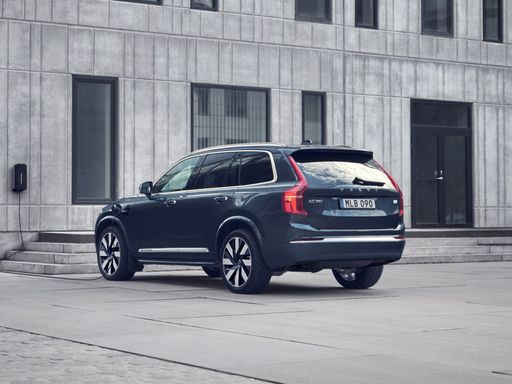
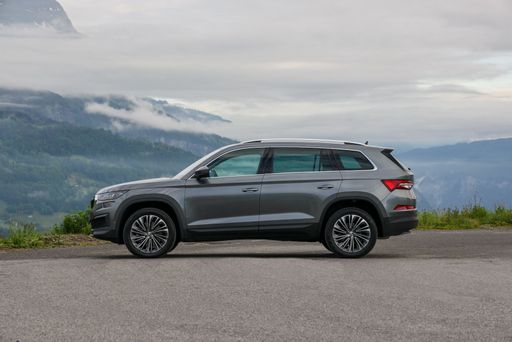
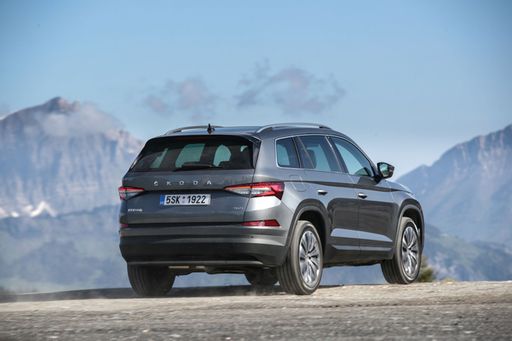
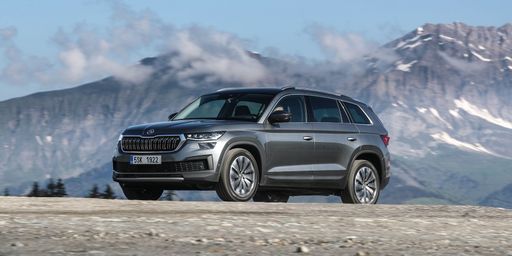
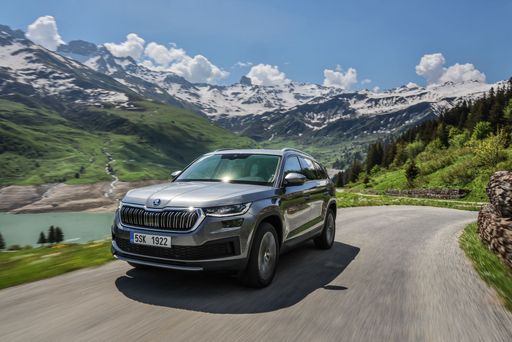
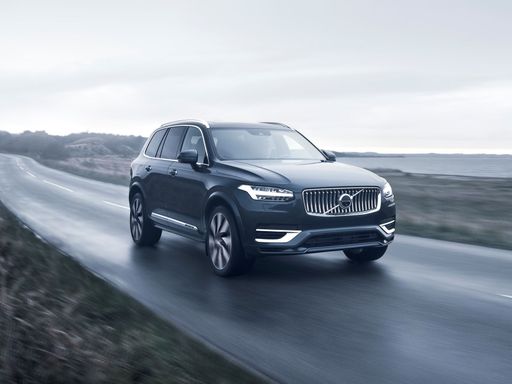
The Skoda arrives with a pragmatic, honest look that telegraphs usefulness and a certain understated charm, while the Volvo wears elegance like a tailored overcoat — softer lines, more presence. From different angles they send different messages: one says “ready for family life,” the other says “quiet confidence.” Both manage to be handsome in their own ways, so your choice will hinge on whether you prefer practical poise or Scandinavian sophistication.
Kodiaq

Cabin Comfort: Daily Life Inside

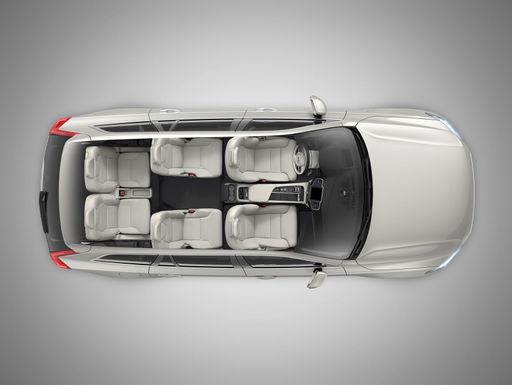
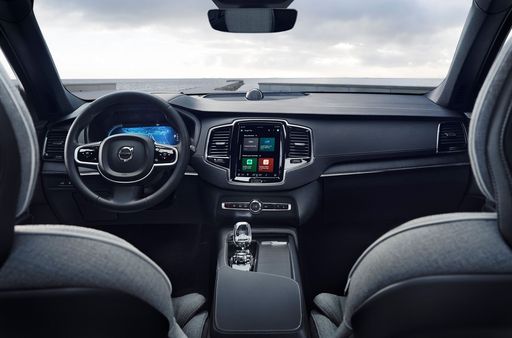
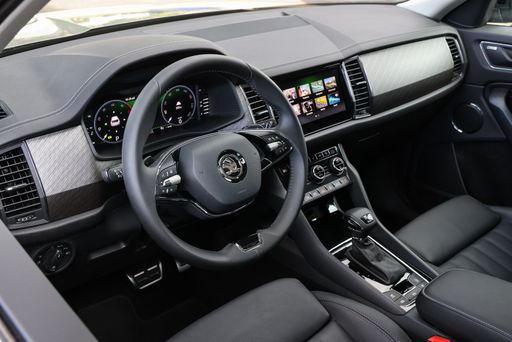
Step inside the Kodiaq and you’ll find a sensible, roomy layout that puts user-friendliness first; everything is where you instinctively expect it to be. The XC90 trades a bit of that straightforwardness for premium materials and a calmer, more luxurious ambience that soothes long-distance miles. Neither feels like a compromise — it’s simply a question of whether you want functional space or a quieter, more refined cocoon.

XC90

How They Drive: City Nips and Open Roads

The Kodiaq feels agile enough for urban maneuvering and honest on sweeping country lanes, rewarding drivers who value predictability and ease of use. The XC90 leans into serenity and composure, isolating occupants from road imperfections and offering a more indulgent driving experience. Both are comfortable on the highway, but they deliver it with different personalities: one practical and engaging, the other composed and comforting.

Kodiaq

Family Life and Practicality

When it comes to real-world family duties — school runs, groceries, and weekend adventures — the Kodiaq is brilliantly pragmatic, engineered around usability and flexible space. The Volvo also covers family needs but wraps them in a more considered, upmarket package that emphasizes comfort and safety. Buyers choosing between them will be weighing unvarnished utility against an extra measure of comfort and refinement.

XC90

Tech and Everyday Usability

Both cars bring modern tech, but the Kodiaq keeps interfaces straightforward and easy to live with, which is a big plus for busy households. Volvo’s set-up feels sleeker and more premium, with features that aim to elevate the experience rather than simplify it. In short, one prioritizes clarity and quick access, the other prioritizes sophistication and a quieter digital life.

Kodiaq

Ownership Feel: Value and Long-Term Use

Perceived value plays a big role here: the Kodiaq sells itself as a sensible, cost-aware companion that gives a lot for the money and doesn’t fuss about frills. The XC90 positions itself as an investment in comfort, prestige and a calmer ownership experience, which will appeal to those who appreciate the finer things in daily driving. Both project reliability and solid build quality, but they target different types of buyer priorities.

XC90

Which Driver Will Each Suit?

If you’re a pragmatic family buyer or someone who wants maximum usability without fuss, the Kodiaq fits like a glove and keeps life uncomplicated. If you’re drawn to refined materials, a tranquil cabin and a sense of premium ownership, the XC90 is geared to satisfy those sensibilities. Commuters, weekend explorers and style-conscious families will all find a clear reason to pick either car depending on which traits matter most.

Kodiaq

Curious for the Final Call?

Keep reading — the DriveDuel Champion will be revealed afterwards, and the decision will hinge on which qualities you value most in everyday life behind the wheel.

Here’s where it gets real: The technical differences in detail

XC90

Costs and Efficiency:

Price and efficiency are key factors when choosing a car – and this is often where the real differences emerge.

Skoda Kodiaq is clearly cheaper – starting at 37,900 £ , while the Volvo XC90 costs 69,800 £ . That’s a price difference of around 31,885 £.

Fuel consumption also shows a difference: the Skoda Kodiaq uses 1.5 L/100km and is clearly more efficient than the Volvo XC90 with 3.5 L/100km. The difference is about 2 L/100km.

As for electric range, the Skoda Kodiaq offers considerably more range – reaching up to 122 km, about 51 km more than the Volvo XC90.

Kodiaq

Engine and Performance:

Power, torque and acceleration say a lot about how a car feels on the road. This is where you see which model delivers more driving dynamics.

When it comes to engine power, the Volvo XC90 offers substantially more power – delivering 455 HP compared to 265 HP. That’s roughly 190 HP more horsepower.

When accelerating from 0 to 100 km/h, the Volvo XC90 is somewhat quicker – completing the sprint in 5.4 s, while the Skoda Kodiaq takes 6.3 s. That’s about 0.9 s quicker.

Looking at top speed, the Skoda Kodiaq is noticeably faster – reaching 226 km/h, while the Volvo XC90 tops out at 180 km/h. The difference is around 46 km/h.

There’s also a difference in torque: the Volvo XC90 delivers considerably more torque with 709 Nm compared to 400 Nm. That’s about 309 Nm more.

XC90

Space and Everyday Use:

Cabin size, boot volume and payload all play a role in everyday practicality. Here, comfort and flexibility make the difference.

Seats: Volvo XC90 offers more seats – 7 vs 5.

In terms of curb weight, Skoda Kodiaq is clearly lighter – 1,684 kg compared to 2,080 kg. The difference is around 396 kg.

Looking at boot space, the Skoda Kodiaq offers clearly more boot space – 910 L compared to 302 L. That’s a difference of about 608 L.

For maximum load capacity, the Skoda Kodiaq offers slightly more capacity – up to 2,105 L, about 249 L more than the Volvo XC90.

When it comes to payload, the Volvo XC90 carries clearly more – 710 kg compared to 563 kg. That’s a difference of about 147 kg.

Who wins the race in the data check?

The Skoda Kodiaq stands well ahead of its rival in the objective data comparison.
This result only shows which model scores more points on paper – not which of the two cars feels right for you.

from £37,900
Kodiaq

Skoda Kodiaq

  • Engine Type : Petrol, Petrol MHEV, Diesel, Plugin Hybrid
  • Transmission : Automatic
  • Drive Type : All-Wheel Drive, Front-Wheel Drive
  • Power HP : 150 - 265 HP
  • Consumption L/100km : 1.5 - 8.2 L/100km
  • Electric Range : 119 - 122 km
Volvo XC90
Skoda Kodiaq

Costs and Consumption

View detailed analysis

Engine and Performance

View detailed analysis

Dimensions and Body

View detailed analysis

Volvo XC90

The Volvo XC90 is a serene Scandinavian SUV that mixes minimalist luxury with a composed, confidence-inspiring presence — ideal for buyers who want family practicality without sacrificing style. Inside it serves up a calm, well-crafted cabin and user-friendly tech that keeps long journeys pleasant and tantrums to a minimum, making the XC90 a smart, stylish pick for sensible drivers.

details

Skoda Kodiaq

The Skoda Kodiaq blends sensible practicality with surprising style, so families and weekend adventurers get roomy comfort without looking like a moving van. It feels calm and composed on the road, packs clever storage and user-friendly tech, and manages to deliver a near-premium vibe without the pretension.

details
Volvo XC90
Skoda Kodiaq

Costs and Consumption

Price
69,800 - 84,600 £
Price
37,900 - 50,600 £
Consumption L/100km
3.5 - 8.5 L/100km
Consumption L/100km
1.5 - 8.2 L/100km
Consumption kWh/100km
-
Consumption kWh/100km
-
Electric Range
71 km
Electric Range
119 - 122 km
Battery Capacity
-
Battery Capacity
-
co2
79 - 191 g/km
co2
35 - 186 g/km
Fuel tank capacity
71 L
Fuel tank capacity
58 L

Dimensions and Body

Body Type
SUV
Body Type
SUV
Seats
7
Seats
5
Doors
5
Doors
5
Curb weight
2,080 - 2,297 kg
Curb weight
1,684 - 1,970 kg
Trunk capacity
262 - 302 L
Trunk capacity
745 - 910 L
Length
4,953 mm
Length
4,758 mm
Width
1,923 mm
Width
1,864 mm
Height
1,771 mm
Height
1,679 - 1,683 mm
Max trunk capacity
1,856 L
Max trunk capacity
2,105 L
Payload
653 - 710 kg
Payload
460 - 563 kg

Engine and Performance

Engine Type
Petrol MHEV, Plugin Hybrid
Engine Type
Petrol, Petrol MHEV, Diesel, Plugin Hybrid
Transmission
Automatic
Transmission
Automatic
Transmission Detail
Automatic Gearbox
Transmission Detail
Dual-Clutch Automatic
Drive Type
All-Wheel Drive
Drive Type
All-Wheel Drive, Front-Wheel Drive
Power HP
250 - 455 HP
Power HP
150 - 265 HP
Acceleration 0-100km/h
5.4 - 7.7 s
Acceleration 0-100km/h
6.3 - 9.7 s
Max Speed
180 km/h
Max Speed
226 km/h
Torque
360 - 709 Nm
Torque
250 - 400 Nm
Number of Cylinders
4
Number of Cylinders
4
Power kW
184 - 335 kW
Power kW
110 - 195 kW
Engine capacity
1,969 cm3
Engine capacity
1,498 - 1,984 cm3

General

Model Year
2,024 - 2,025
Model Year
2,024 - 2,025
CO2 Efficiency Class
G, B
CO2 Efficiency Class
F, G, E, B
Brand
Volvo
Brand
Skoda
DriveDuel uses data analysis and artificial intelligence to evaluate vehicle data and create content. Content is regularly reviewed and improved. The displayed prices are estimates based on German list prices, adjusted to the respective country’s VAT. Country-specific registration taxes are not included. This information is not legally binding.