VS

VW ID.5 vs Audi Q6 e-tron comparison

Compare performance (340 HP vs 490 HP), boot space and price (36,800 £ vs 54,400 £ ) at a glance. Find out which car is the better choice for you – VW ID.5 or Audi Q6 e-tron?

VW ID.5 vs Audi Q6 e-tron: Key differences

VW ID.5

2.9 (2 Reviews)
rate
  • considerably cheaper
  • somewhat lighter
  • marginally more trunk space

Audi Q6 e-tron

4.9 (3 Reviews)
rate
  • markedly more power
  • barely more efficient
  • a bit more electric range
  • noticeably quicker 0–100 km/h

All details on performance, efficiency, range and trunk space can be found in the technical comparison below – including user reviews for both models.

ID.5

Head-to-Head: Audi Q6 e-tron vs VW ID.5 - Electrifying Excellence

As the automotive world shifts gears towards electrification, two distinguished contenders emerge in the SUV segment: the Audi Q6 e-tron and the VW ID.5. Both vehicles embody the pinnacle of innovation, efficiency, and design, promising a sustainable driving future. This comparative review delves into their technical prowess and unique features to determine which stands out in this electrified race.
Q6 e-tron

Power Performance and Dynamics

The Audi Q6 e-tron offers a formidable range of power options, starting from 292 HP and climbing all the way to an impressive 516 HP, thanks to its cutting-edge electric motors. The Q6 is available in both rear-wheel and all-wheel drive configurations, accommodating varied driving preferences. Acceleration in the Q6 e-tron is swift, with the top model achieving 0-100 km/h in a breathtaking 4.3 seconds.

Comparatively, the VW ID.5 provides a slightly more modest power spectrum, ranging from 170 HP to 340 HP. Although slightly less powerful, the ID.5 doesn't compromise on agility, offering a commendable acceleration from 0-100 km/h in just 5.4 seconds in its high-end variant. Both SUVs feature a reduction gearbox transmission, ensuring seamless and efficient power delivery.

ID.5

Efficiency and Range

Efficiency is at the forefront for both vehicles, with the Audi Q6 e-tron boasting an electric consumption as low as 15.6 kWh/100km. Its vast battery options yield a remarkable electric range, peaking at 656 km, ideal for long, uninterrupted journeys.

The VW ID.5 impresses with its equally efficient power consumption starting from 15.6 kWh/100km. While its range maxes out at 563 km, this still places it comfortably within competitive bounds for long-distance travels, thanks to its robust 79 kWh battery option.

Q6 e-tron

Design and Space

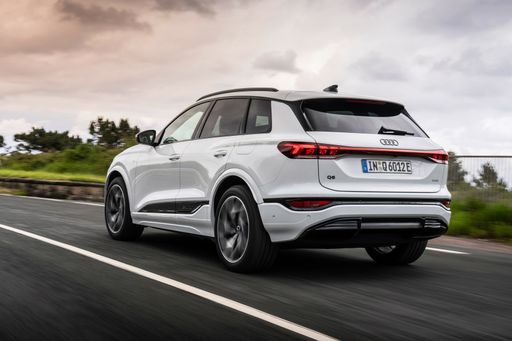
The Audi Q6 e-tron, measuring 4771 mm in length, 1965 mm in width, and up to 1685 mm in height, offers a spacious and premium interior, comfortably seating five passengers. A trunk capacity reaching up to 526 liters ensures practicality isn't compromised by its luxurious design.

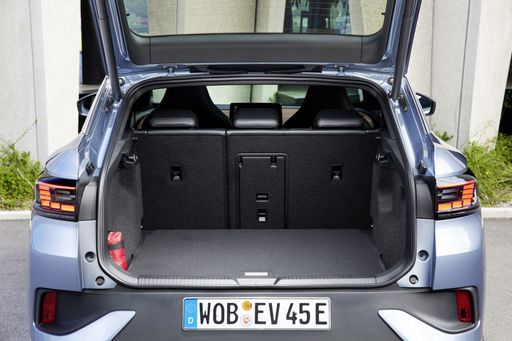
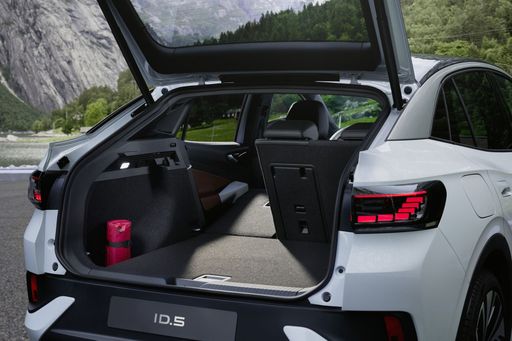
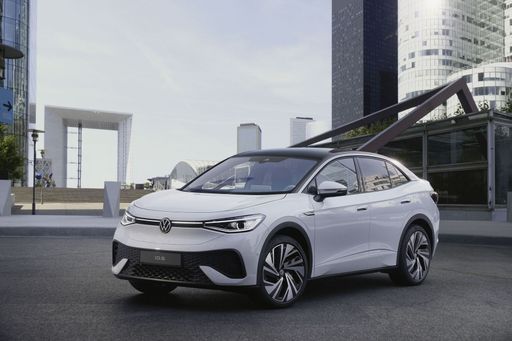
On the other hand, the VW ID.5, with a length of up to 4599 mm and a width of 1852 mm, prioritizes aerodynamics and futuristic aesthetics. It also provides ample space for five, with a trunk capacity of 549 liters, offering impeccable utility for daily and recreational needs.

ID.5

Innovative Features and Technology

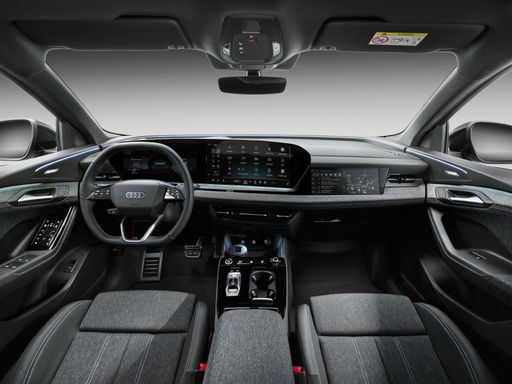
Both SUVs come integrated with state-of-the-art technology. Audi ensures a tech-savvy experience with its latest infotainment and driver-assistance systems, fostering a safe and engaging drive. Innovations like adaptive air suspension and LED matrix headlights accentuate the Q6 e-tron's appeal.

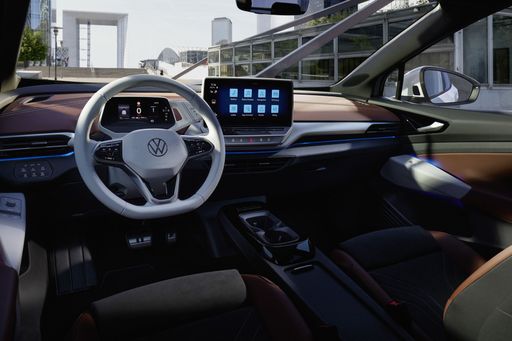
VW's ID.5 integrates intuitive touch controls coupled with its MEB platform benefits, establishing an ergonomic and futuristic cockpit. Features such as voice control and augmented reality head-up display enrich the driving experience, maintaining VW's commitment to innovation and user-friendly technologies.

Q6 e-tron

Conclusion: The Electric Verdict

While both the Audi Q6 e-tron and VW ID.5 set high standards in the electric SUV market, choosing between them hinges on specific preferences regarding power, range, and technological inclusions. The Audi Q6 e-tron emerges as the powerhouse choice for those seeking unrivaled performance and luxury, whereas the VW ID.5 offers an eclectic blend of efficiency, practical design, and advanced technology, making it a worthy contender in the electric SUV arena.

Here’s where it gets real: The technical differences in detail

ID.5

Costs and Efficiency:

Price and efficiency are key factors when choosing a car – and this is often where the real differences emerge.

VW ID.5 is considerably cheaper – starting at 36,800 £ , while the Audi Q6 e-tron costs 54,400 £ . That’s a price difference of around 17,597 £.

In terms of energy consumption, the Audi Q6 e-tron is barely more efficient: consuming 15.6 kWh/100km compared to 15.7 kWh/100km for the VW ID.5. That’s a difference of about 0.1 kWh/100km.

As for electric range, the Audi Q6 e-tron offers a bit more range – reaching up to 656 km, about 97 km more than the VW ID.5.

Q6 e-tron

Engine and Performance:

Power, torque and acceleration say a lot about how a car feels on the road. This is where you see which model delivers more driving dynamics.

When it comes to engine power, the Audi Q6 e-tron offers markedly more power – delivering 490 HP compared to 340 HP. That’s roughly 150 HP more horsepower.

When accelerating from 0 to 100 km/h, the Audi Q6 e-tron is noticeably quicker – completing the sprint in 4.4 s, while the VW ID.5 takes 5.4 s. That’s about 1 s quicker.

Looking at top speed, the Audi Q6 e-tron is clearly faster – reaching 230 km/h, while the VW ID.5 tops out at 180 km/h. The difference is around 50 km/h.

There’s also a difference in torque: the Audi Q6 e-tron delivers visibly more torque with 855 Nm compared to 679 Nm. That’s about 176 Nm more.

ID.5

Space and Everyday Use:

Whether family car or daily driver – which one offers more room, flexibility and comfort?

Both vehicles offer seating for 5 people.

In terms of curb weight, VW ID.5 is somewhat lighter – 1,963 kg compared to 2,200 kg. The difference is around 237 kg.

Looking at boot space, the VW ID.5 offers marginally more boot space – 549 L compared to 526 L. That’s a difference of about 23 L.

For maximum load capacity, the VW ID.5 offers very slightly more capacity – up to 1,561 L, about 32 L more than the Audi Q6 e-tron.

When it comes to payload, the VW ID.5 carries only slightly more – 549 kg compared to 540 kg. That’s a difference of about 9 kg.

Who wins the race in the data check?

The Audi Q6 e-tron stands well ahead of its rival in the objective data comparison.
This result only shows which model scores more points on paper – not which of the two cars feels right for you.

from £54,400
Q6 e-tron

Audi Q6 e-tron

  • Engine Type : Electric
  • Transmission : Automatic
  • Drive Type : Rear-Wheel Drive, All-Wheel Drive
  • Power HP : 252 - 490 HP
  • Consumption kWh/100km : 15.6 - 18.4 kWh/100km
  • Electric Range : 529 - 656 km
VW ID.5
Audi Q6 e-tron

Costs and Consumption

View detailed analysis

Engine and Performance

View detailed analysis

Dimensions and Body

View detailed analysis

VW ID.5

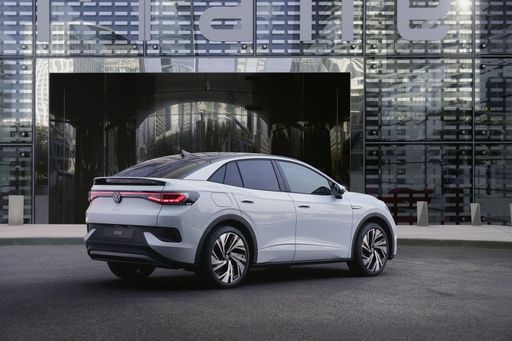
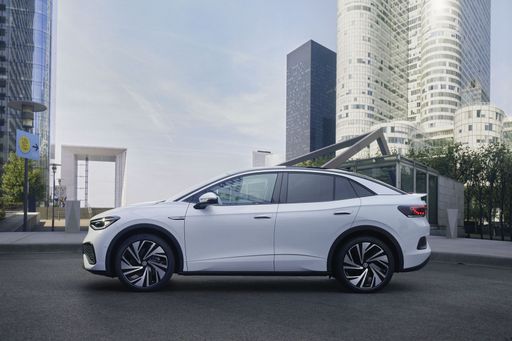
VW ID.5 dresses electric power in a sleek, coupe-like profile that turns sensible motoring into something a touch more stylish and smug. Inside it’s spacious and user-friendly, with calm, confidence-inspiring driving that suits buyers who want EV simplicity without the sci‑fi theatrics.

details

Audi Q6 e-tron

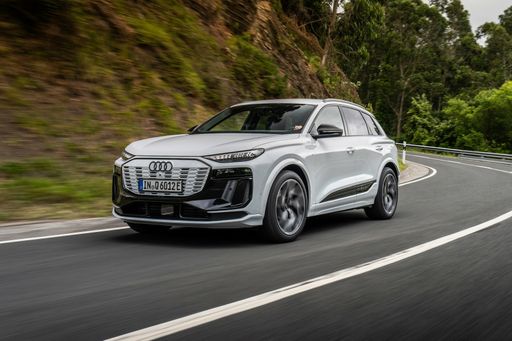
The Audi Q6 e-tron balances sleek, coupe-like styling with a roomy, upscale interior that feels modern without being showy. It delivers refined electric performance and smart tech that make daily driving effortless — the sort of EV that might make petrolheads grudgingly admit they fancy the future.

details
VW ID.5
Audi Q6 e-tron

Costs and Consumption

Price
36,800 - 48,400 £
Price
54,400 - 82,500 £
Consumption L/100km
-
Consumption L/100km
-
Consumption kWh/100km
15.7 - 16.6 kWh/100km
Consumption kWh/100km
15.6 - 18.4 kWh/100km
Electric Range
363 - 559 km
Electric Range
529 - 656 km
Battery Capacity
52 - 79 kWh
Battery Capacity
75.8 - 94.9 kWh
co2
0 g/km
co2
0 g/km
Fuel tank capacity
-
Fuel tank capacity
-

Dimensions and Body

Body Type
SUV
Body Type
SUV
Seats
5
Seats
5
Doors
5
Doors
5
Curb weight
1,963 - 2,233 kg
Curb weight
2,200 - 2,425 kg
Trunk capacity
549 L
Trunk capacity
499 - 526 L
Length
4,582 - 4,599 mm
Length
4,771 mm
Width
1,852 mm
Width
1,939 - 1,965 mm
Height
1,601 - 1,618 mm
Height
1,665 - 1,685 mm
Max trunk capacity
1,561 L
Max trunk capacity
1,361 - 1,529 L
Payload
517 - 549 kg
Payload
540 kg

Engine and Performance

Engine Type
Electric
Engine Type
Electric
Transmission
Automatic
Transmission
Automatic
Transmission Detail
Reduction Gearbox
Transmission Detail
Reduction Gearbox
Drive Type
Rear-Wheel Drive, All-Wheel Drive
Drive Type
Rear-Wheel Drive, All-Wheel Drive
Power HP
170 - 340 HP
Power HP
252 - 490 HP
Acceleration 0-100km/h
5.4 - 8.9 s
Acceleration 0-100km/h
4.4 - 7.6 s
Max Speed
160 - 180 km/h
Max Speed
210 - 230 km/h
Torque
310 - 679 Nm
Torque
450 - 855 Nm
Number of Cylinders
-
Number of Cylinders
-
Power kW
125 - 250 kW
Power kW
185 - 360 kW
Engine capacity
-
Engine capacity
-

General

Model Year
2,024 - 2,025
Model Year
2,024 - 2,025
CO2 Efficiency Class
A
CO2 Efficiency Class
A
Brand
VW
Brand
Audi
DriveDuel uses data analysis and artificial intelligence to evaluate vehicle data and create content. Content is regularly reviewed and improved. The displayed prices are estimates based on German list prices, adjusted to the respective country’s VAT. Country-specific registration taxes are not included. This information is not legally binding.