VS

VW T-Cross vs Mazda CX-30 comparison

Compare performance (150 HP vs 186 HP), boot space and price (21,400 £ vs 25,200 £ ) at a glance. Find out which car is the better choice for you – VW T-Cross or Mazda CX-30?

VW T-Cross vs Mazda CX-30: Key differences

VW T-Cross

4.5 (2 Reviews)
rate
  • a bit cheaper
  • barely more efficient
  • moderately lighter
  • marginally more trunk space

Mazda CX-30

4.6 (3 Reviews)
rate
  • slightly more power
  • marginally quicker 0–100 km/h

All details on performance, efficiency, range and trunk space can be found in the technical comparison below – including user reviews for both models.

T-Cross

Introduction to the Compact SUV Showdown

The compact SUV segment has gained immense popularity in recent years, combining practicality with style and performance. Two of the standout contenders in this category are the Mazda CX-30 and the Volkswagen T-Cross. Each vehicle offers unique strengths, innovative technology, and a driving experience that appeals to various types of drivers. In this article, we delve into the technical aspects and innovations that set these two models apart, giving you a clearer picture of which SUV redefines the compact category for 2024.
CX-30

Design and Dimensions

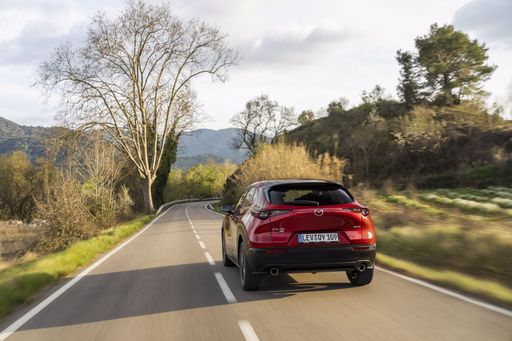
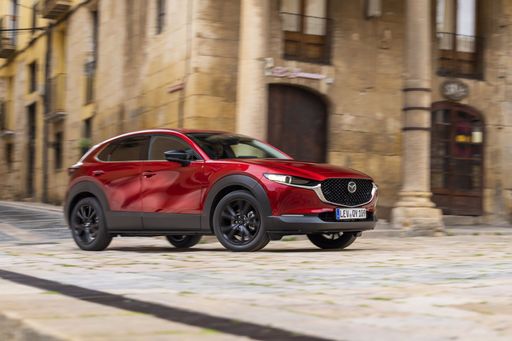
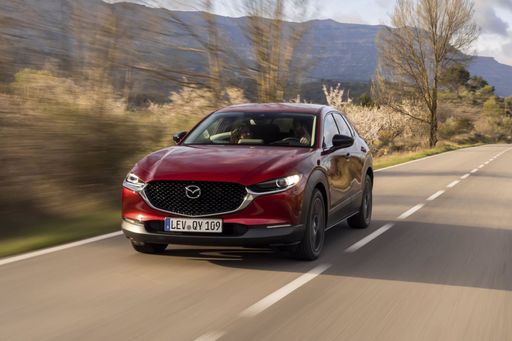
The Mazda CX-30 boasts a sleek, dynamic design, measuring 4395 mm in length, 1795 mm in width, and 1540 mm in height. This design emphasizes an athletic stance while ensuring comfort for passengers with its spacious 5-seat interior. The CX-30 also features an impressive trunk capacity of 430 liters, which expands versatility when packing for road trips or daily errands.

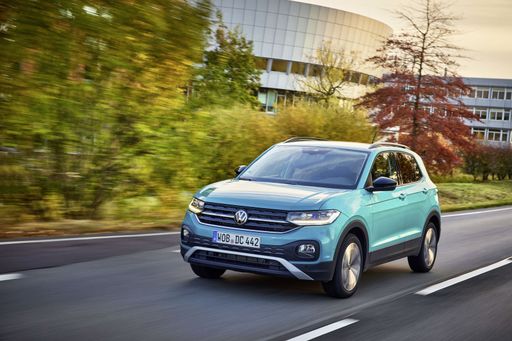
On the other hand, the Volkswagen T-Cross is slightly smaller, with dimensions of 4127 mm in length, 1784 mm in width, and 1573 mm in height. Despite its smaller size, the T-Cross does provide a respectable trunk capacity of 455 liters. Both vehicles have a 5-door layout, making them practical for families and urban drivers alike.

T-Cross

Engine and Performance

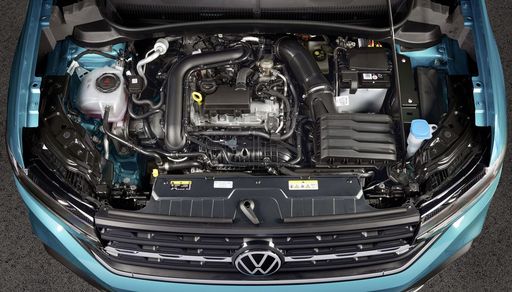
Under the hood, the Mazda CX-30 offers a choice of petrol engines with hybrid technology, providing an option that delivers up to 186 HP and torque of 240 Nm. Whether you prefer the manual gearbox or the smooth automatic transmission, the CX-30 achieves acceleration from 0 to 100 km/h in an impressive 8.3 seconds. The fuel consumption averages between 5.7 to 6.6 L/100 km, making it an economical choice for driving enthusiasts.

Meanwhile, the VW T-Cross presents an array of petrol engines, ranging from 95 HP to a robust 150 HP, offering torque figures that peak at 250 Nm. The best performance of the T-Cross can achieve a 0 to 100 km/h time of 8.4 seconds, thanks to its effective dual-clutch automatic transmission. Its fuel consumption averages around 5.6 to 6 L/100 km, which is commendable for its class.

CX-30

Driving Dynamics and Comfort

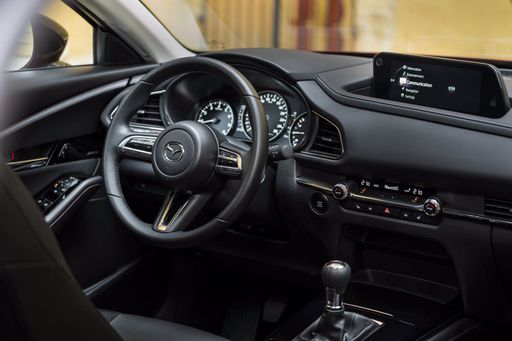
The CX-30 is equipped with both front-wheel and all-wheel drive options, enhancing traction and handling, particularly in adverse weather conditions. The suspension system is tuned for both comfort and agility, providing a driver-focused experience that remains smooth over various terrains. Additionally, the cabin is crafted with high-quality materials and a modern infotainment system, including a large display, smartphone connectivity, and advanced audio features.

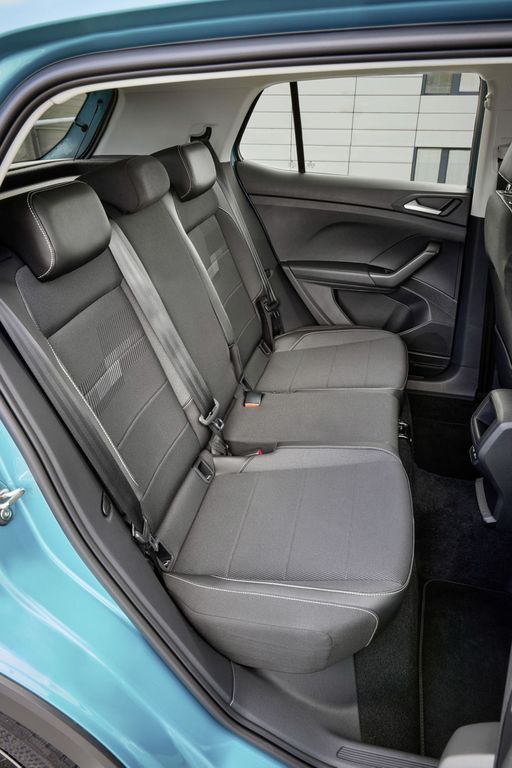
In contrast, the T-Cross focuses on delivering a balanced ride with front-wheel drive. Its design includes a user-friendly infotainment system that integrates seamlessly with smartphones, ensuring connectivity on the road. While its ride may lean slightly more towards comfort than sportiness compared to the CX-30, the T-Cross provides ample headroom and legroom for all passengers, making it great for longer journeys.

T-Cross

Safety Features and Innovations

Both SUVs come equipped with a suite of advanced safety features designed to protect occupants and assist drivers. The Mazda CX-30 offers the i-Activsense safety package, which includes adaptive cruise control, lane-keeping assist, and smart city brake support, all contributing to a secure driving experience.

The T-Cross also does not fall short in the safety department, featuring adaptive cruise control and emergency braking, among other driver assistance systems. The inclusion of these features in both vehicles highlights the car manufacturers' commitment to making the driving experience as safe as possible for everyone on the road.

CX-30

Conclusion: Which SUV Wins?

Choosing between the Mazda CX-30 and the Volkswagen T-Cross ultimately boils down to individual preferences and priorities. If you seek a vehicle that offers sporty dynamics, robust engine options, and an upscale interior, the Mazda CX-30 is the way to go. However, if you prefer a more compact size with excellent trunk space and family-friendly features, the VW T-Cross would be a commendable choice.

Both vehicles represent their brands well in the compact SUV market, but the decision will rely on what aspects of an SUV matter most to the buyer. As these models continue to evolve with the times, they remain iconic representations of their manufacturers' innovative spirit and commitment to quality.

Here’s where it gets real: The technical differences in detail

T-Cross

Costs and Efficiency:

When it comes to price and running costs, the biggest differences usually appear. This is often where you see which car fits your budget better in the long run.

VW T-Cross is a bit cheaper – starting at 21,400 £ , while the Mazda CX-30 costs 25,200 £ . That’s a price difference of around 3,840 £.

Fuel consumption also shows a difference: the VW T-Cross uses 5.4 L/100km and is barely more efficient than the Mazda CX-30 with 5.7 L/100km. The difference is about 0.3 L/100km.

CX-30

Engine and Performance:

Under the bonnet, it becomes clear which model is tuned for sportiness and which one takes the lead when you hit the accelerator.

When it comes to engine power, the Mazda CX-30 offers slightly more power – delivering 186 HP compared to 150 HP. That’s roughly 36 HP more horsepower.

When accelerating from 0 to 100 km/h, the Mazda CX-30 is marginally quicker – completing the sprint in 8.3 s, while the VW T-Cross takes 8.4 s. That’s about 0.1 s quicker.

There’s also a difference in torque: the VW T-Cross delivers barely more torque with 250 Nm compared to 240 Nm. That’s about 10 Nm more.

T-Cross

Space and Everyday Use:

Cabin size, boot volume and payload all play a role in everyday practicality. Here, comfort and flexibility make the difference.

Both vehicles offer seating for 5 people.

In terms of curb weight, VW T-Cross is moderately lighter – 1,267 kg compared to 1,455 kg. The difference is around 188 kg.

Looking at boot space, the VW T-Cross offers marginally more boot space – 455 L compared to 430 L. That’s a difference of about 25 L.

When it comes to payload, the Mazda CX-30 carries barely more – 496 kg compared to 480 kg. That’s a difference of about 16 kg.

Who wins the race in the data check?

The Mazda CX-30 has the upper hand in the objective data comparison.
This result only shows which model scores more points on paper – not which of the two cars feels right for you.

from £25,200
CX-30

Mazda CX-30

  • Engine Type : Petrol MHEV
  • Transmission : Manuel, Automatic
  • Drive Type : Front-Wheel Drive, All-Wheel Drive
  • Power HP : 140 - 186 HP
  • Consumption L/100km : 5.7 - 6.6 L/100km
VW T-Cross
Mazda CX-30

Costs and Consumption

View detailed analysis

Engine and Performance

View detailed analysis

Dimensions and Body

View detailed analysis

VW T-Cross

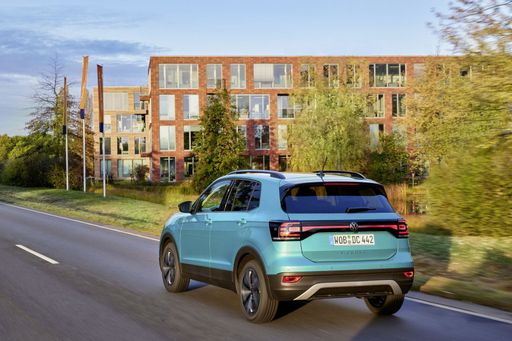
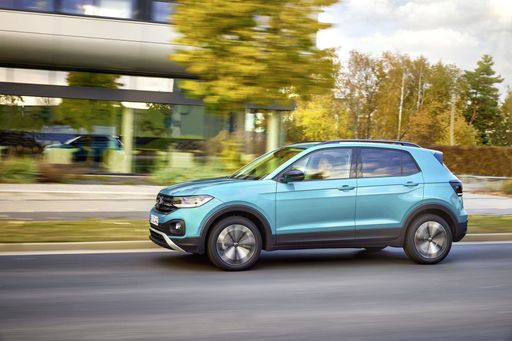
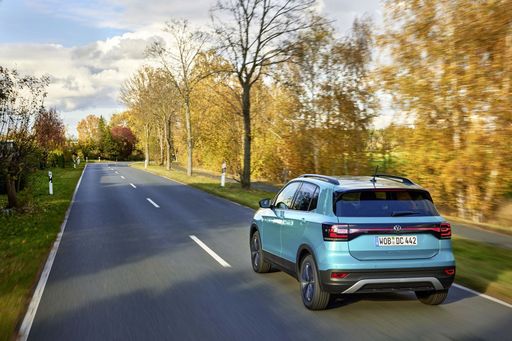
The VW T-Cross turns everyday practicality into a style statement, offering a roomy-feeling cabin, clever storage and playful design that suits town life and family duties alike. On the road it's composed and relaxed, rewarding buyers who want the raised seating and confident presence of an SUV without the weighty compromises.

details

Mazda CX-30

The Mazda CX-30 blends sleek coupe-like lines with the practicality of a compact crossover, feeling more premium than its price tag suggests. It’s a joy to drive for anyone who likes a taut chassis and an interior that treats daily commutes like a small luxury escape.

details
VW T-Cross
Mazda CX-30

Costs and Consumption

Price
21,400 - 32,000 £
Price
25,200 - 36,800 £
Consumption L/100km
5.4 - 6 L/100km
Consumption L/100km
5.7 - 6.6 L/100km
Consumption kWh/100km
-
Consumption kWh/100km
-
Electric Range
-
Electric Range
-
Battery Capacity
-
Battery Capacity
-
co2
124 - 136 g/km
co2
129 - 148 g/km
Fuel tank capacity
-
Fuel tank capacity
-

Dimensions and Body

Body Type
SUV
Body Type
SUV
Seats
5
Seats
5
Doors
-
Doors
-
Curb weight
1,267 - 1,338 kg
Curb weight
1,455 - 1,587 kg
Trunk capacity
455 L
Trunk capacity
422 - 430 L
Length
-
Length
-
Width
1,784 mm
Width
1,795 mm
Height
-
Height
-
Max trunk capacity
-
Max trunk capacity
-
Payload
463 - 480 kg
Payload
458 - 496 kg

Engine and Performance

Engine Type
Petrol
Engine Type
Petrol MHEV
Transmission
Manuel, Automatic
Transmission
Manuel, Automatic
Transmission Detail
Manual Gearbox, Dual-Clutch Automatic
Transmission Detail
Manual Gearbox, Automatic Gearbox
Drive Type
Front-Wheel Drive
Drive Type
Front-Wheel Drive, All-Wheel Drive
Power HP
95 - 150 HP
Power HP
140 - 186 HP
Acceleration 0-100km/h
8.4 - 11.3 s
Acceleration 0-100km/h
8.3 - 10.3 s
Max Speed
-
Max Speed
-
Torque
175 - 250 Nm
Torque
238 - 240 Nm
Number of Cylinders
3 - 4
Number of Cylinders
4
Power kW
70 - 110 kW
Power kW
103 - 137 kW
Engine capacity
999 - 1,498 cm3
Engine capacity
1,998 - 2,488 cm3

General

Model Year
2,024 - 2,025
Model Year
2,025
CO2 Efficiency Class
D, E
CO2 Efficiency Class
D, E
Brand
VW
Brand
Mazda
DriveDuel uses data analysis and artificial intelligence to evaluate vehicle data and create content. Content is regularly reviewed and improved. The displayed prices are estimates based on German list prices, adjusted to the respective country’s VAT. Country-specific registration taxes are not included. This information is not legally binding.