
 Deutschland
 France
 Nederland
 Great Britain
 Sverige
 Danmark
 Suomi
Suomi Italia
 Polska
 Česko
Česko España
T-Roc
VS
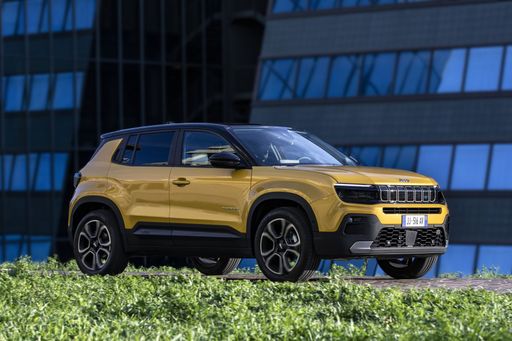
VW T-Roc vs Jeep Avenger comparison
Compare performance (150 HP vs 156 HP), boot space and price (26,400 £ vs 22,500 £ ) at a glance. Find out which car is the better choice for you – VW T-Roc or Jeep Avenger?
VW T-Roc vs Jeep Avenger: Key differences
All details on performance, efficiency, range and trunk space can be found in the technical comparison below – including user reviews for both models.
Avenger
An Overview of the Compact SUV Segment
The compact SUV segment has been continuously growing, and two noteworthy contenders for potential buyers are the Jeep Avenger and the VW T-Roc. Both vehicles promise style, versatility, and the performance expected from their respective brands. In this comparison, we will delve into their technical specifications, innovations, and what they bring to the table.
T-Roc
Powertrain and Performance
The Jeep Avenger offers a range of powertrains, including electric and petrol options. It provides three engine variants, with the electric version boasting 156 horsepower, paired with a 51 kWh battery that offers up to 400 km of range. The Avenger performs impressively, accelerating from 0 to 100 km/h in just 9 seconds.
In comparison, the VW T-Roc provides a broader spectrum of choices, ranging from efficient petrol and diesel engines. Its engine lineup includes options delivering between 115 to 300 horsepower, ensuring a performance-oriented option for a variety of driving styles. The T-Roc’s performance is highlighted by its top-of-the-line variant, which can achieve 0-100 km/h in just 4.9 seconds.
Avenger
Fuel Efficiency and Consumption
When considering fuel efficiency, the Jeep Avenger leads in the electric segment with a consumption rate of 15.4 kWh/100 km, making it a great option for eco-conscious buyers. Its petrol variant, however, offers a reasonable consumption of 5.7 L/100 km.
The T-Roc showcases impressive fuel consumption figures as well, with its most efficient diesel engine consuming as low as 4.7 L/100 km. The petrol options range from 5.6 to 7.3 L/100 km, which is competitive within the segment.
T-Roc
Interior Space and Comfort
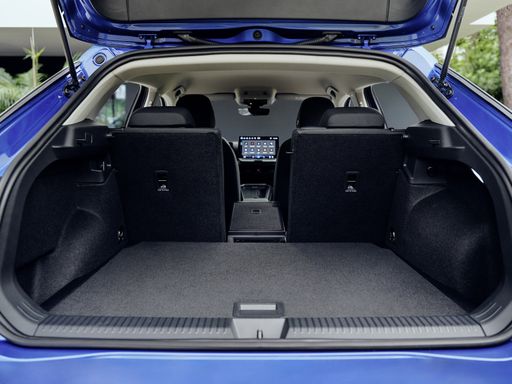
Both the Jeep Avenger and VW T-Roc are designed with passenger comfort in mind. The Avenger offers a spacious interior, accommodating up to 5 passengers with a trunk capacity of 355 liters. However, the T-Roc shines with its trunk capacity ranging from 392 to 445 liters, providing additional utility for luggage and gear.
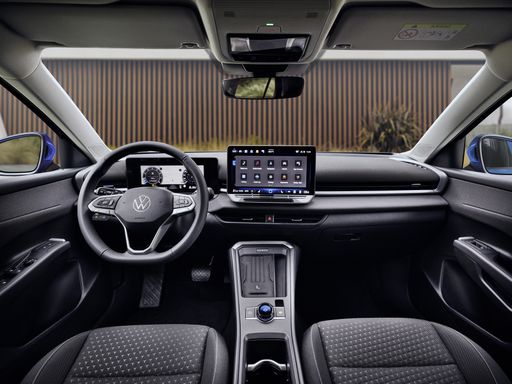
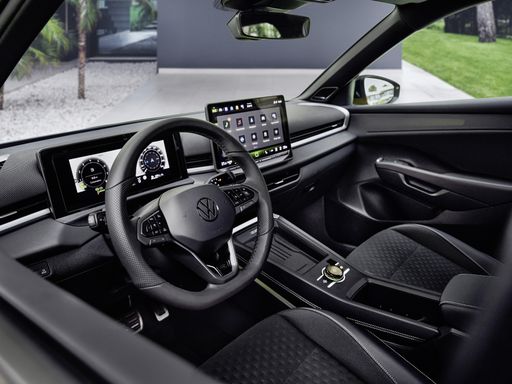
The T-Roc also provides a range of upscale options for interior materials and technology, creating an inviting atmosphere for both driver and passengers. The Avenger’s interior focuses on practicality and rugged design, which is characteristic of the Jeep brand.
Avenger
Safety and Technology Innovations
Safety is paramount in both models. The Jeep Avenger is equipped with multiple advanced driver-assistance systems, including lane departure warning, adaptive cruise control, and automated emergency braking, which enhance overall safety and driving convenience.
The T-Roc stands out with its advanced infotainment system integrated with modern connectivity features. Its digital cockpit provides real-time driving data and media control, elevating the driving experience further.
T-Roc
Driving Dynamics
In terms of driving dynamics, the Jeep Avenger, being a front-wheel-drive SUV, is crafted for a smooth and comfortable ride, ideal for urban driving and light off-road adventures. Its compact dimensions also contribute to its agility in navigating through city streets.
The VW T-Roc, available in both front and all-wheel drive, offers a sportier driving experience with an emphasis on handling and stability. Its precise steering and suspension setup allow for confident cornering and highway cruising.
Avenger
Final Thoughts
Choosing between the Jeep Avenger and VW T-Roc ultimately comes down to personal preference and intended use. If eco-friendliness and electric performance are priorities, the Avenger is an excellent choice. Conversely, if performance versatility, trunk space, and advanced technology are more critical, the T-Roc emerges as a stronger contender.
Both vehicles are impressive in their own right, offering unique advantages that cater to different segments of the market. Whether you seek an electric adventure or a sporty everyday SUV, either model promises a compelling driving experience.
Here’s where it gets real: The technical differences in detail
T-Roc
Costs and Efficiency:
Looking at overall running costs, both models reveal some interesting differences in everyday economy.
Jeep Avenger is a bit cheaper – starting at 22,500 £ , while the VW T-Roc costs 26,400 £ . That’s a price difference of around 3,896 £.
Fuel consumption also shows a difference: the Jeep Avenger uses 4.9 L/100km and is a bit more efficient than the VW T-Roc with 5.5 L/100km. The difference is about 0.6 L/100km.
Avenger
Engine and Performance:
Power, torque and acceleration are the classic benchmarks for car enthusiasts – and here, some clear differences start to show.
When it comes to engine power, the Jeep Avenger offers only slightly more power – delivering 156 HP compared to 150 HP. That’s roughly 6 HP more horsepower.
When accelerating from 0 to 100 km/h, the VW T-Roc is barely quicker – completing the sprint in 8.9 s, while the Jeep Avenger takes 9 s. That’s about 0.1 s quicker.
There’s also a difference in torque: the Jeep Avenger delivers only slightly more torque with 260 Nm compared to 250 Nm. That’s about 10 Nm more.
T-Roc
Space and Everyday Use:
Whether family car or daily driver – which one offers more room, flexibility and comfort?
Both vehicles offer seating for 5 people.
In terms of curb weight, Jeep Avenger is markedly lighter – 1,180 kg compared to 1,465 kg. The difference is around 285 kg.
Looking at boot space, the VW T-Roc offers somewhat more boot space – 475 L compared to 380 L. That’s a difference of about 95 L.
When it comes to payload, the VW T-Roc carries very slightly more – 515 kg compared to 502 kg. That’s a difference of about 13 kg.
Who wins the race in the data check?
The Jeep Avenger is far ahead overall in the objective data comparison.
This result only shows which model scores more points on paper – not which of the two cars feels right for you.
from £22,500
Jeep Avenger
VW T-Roc
Jeep Avenger
Costs and Consumption
View detailed analysis
View detailed analysis
Engine and Performance
View detailed analysis
View detailed analysis
Dimensions and Body
View detailed analysis
View detailed analysis
VW T-Roc
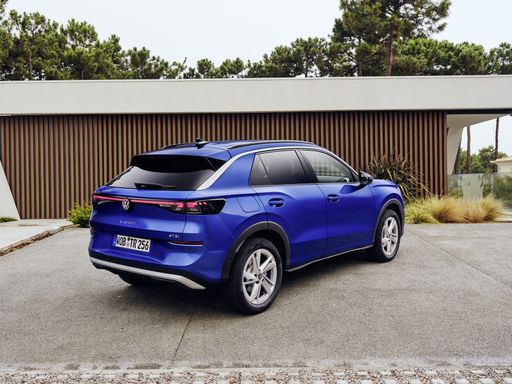
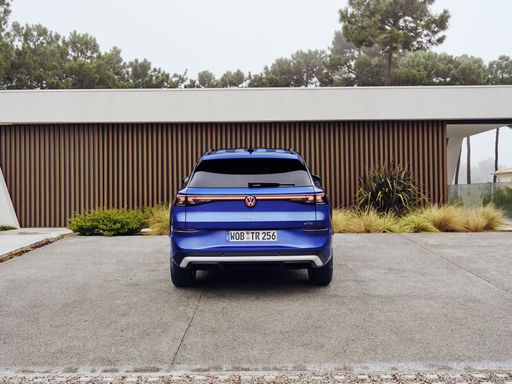
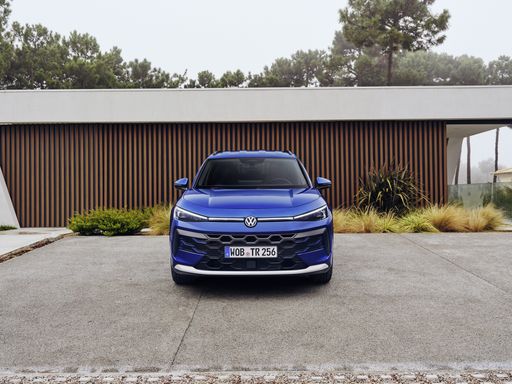
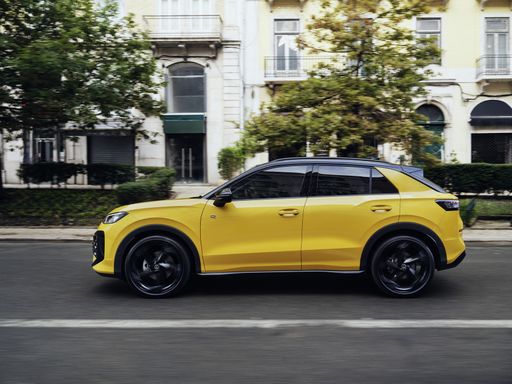
The Volkswagen T‑Roc is a stylish, well-proportioned crossover that blends hatchback agility with SUV presence. It delivers a comfortable cabin, user-friendly tech and a composed ride, making it a sensible choice for buyers who want practicality with a bit of character.
details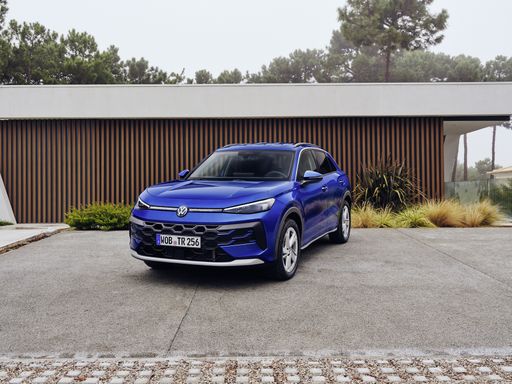
Jeep Avenger
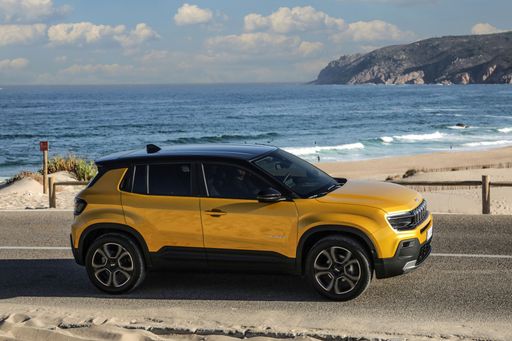
The Jeep Avenger mixes rugged styling with a compact, city‑friendly footprint that makes it easy to maneuver while keeping Jeep’s adventurous character. Inside it offers a practical, modern cabin with sensible tech and comfort aimed at everyday driving and light weekend getaways.
details


VW T-Roc
Jeep Avenger
Costs and Consumption |
|
|---|---|
|
Price
26,400 - 38,600 £
|
Price
22,500 - 36,800 £
|
|
Consumption L/100km
5.5 - 6.3 L/100km
|
Consumption L/100km
4.9 - 5.7 L/100km
|
|
Consumption kWh/100km
-
|
Consumption kWh/100km
15.5 kWh/100km
|
|
Electric Range
-
|
Electric Range
400 km
|
|
Battery Capacity
-
|
Battery Capacity
-
|
|
co2
126 - 143 g/km
|
co2
0 - 129 g/km
|
|
Fuel tank capacity
-
|
Fuel tank capacity
-
|
Dimensions and Body |
|
|---|---|
|
Body Type
SUV
|
Body Type
SUV
|
|
Seats
4 - 5
|
Seats
5
|
|
Doors
-
|
Doors
-
|
|
Curb weight
1,465 - 1,539 kg
|
Curb weight
1,180 - 1,520 kg
|
|
Trunk capacity
284 - 475 L
|
Trunk capacity
325 - 380 L
|
|
Length
-
|
Length
-
|
|
Width
1,811 - 1,828 mm
|
Width
1,776 mm
|
|
Height
-
|
Height
-
|
|
Max trunk capacity
-
|
Max trunk capacity
-
|
|
Payload
368 - 515 kg
|
Payload
490 - 502 kg
|
Engine and Performance |
|
|---|---|
|
Engine Type
Petrol, Petrol MHEV
|
Engine Type
Petrol MHEV, Electric, Petrol
|
|
Transmission
Manuel, Automatic
|
Transmission
Automatic, Manuel
|
|
Transmission Detail
Manual Gearbox, Dual-Clutch Automatic
|
Transmission Detail
Dual-Clutch Automatic, Reduction Gearbox, Manual Gearbox
|
|
Drive Type
Front-Wheel Drive
|
Drive Type
Front-Wheel Drive, All-Wheel Drive
|
|
Power HP
115 - 150 HP
|
Power HP
100 - 156 HP
|
|
Acceleration 0-100km/h
8.9 - 12.3 s
|
Acceleration 0-100km/h
9 - 10.6 s
|
|
Max Speed
-
|
Max Speed
-
|
|
Torque
200 - 250 Nm
|
Torque
205 - 260 Nm
|
|
Number of Cylinders
3 - 4
|
Number of Cylinders
3
|
|
Power kW
85 - 110 kW
|
Power kW
74 - 115 kW
|
|
Engine capacity
999 - 1,498 cm3
|
Engine capacity
1,199 cm3
|
General |
|
|---|---|
|
Model Year
2,024 - 2,025
|
Model Year
2026
|
|
CO2 Efficiency Class
E, D
|
CO2 Efficiency Class
C, A, D
|
|
Brand
VW
|
Brand
Jeep
|
DriveDuel uses data analysis and artificial intelligence to evaluate vehicle data and create content. Content is regularly reviewed and improved.
The displayed prices are estimates based on German list prices, adjusted to the respective country’s VAT. Country-specific registration taxes are not included. This information is not legally binding.