VS

VW T-Roc vs Lynk & Co 01 comparison

Compare performance (150 HP vs 280 HP), boot space and price (26,400 £ vs 36,900 £ ) at a glance. Find out which car is the better choice for you – VW T-Roc or Lynk & Co 01?

VW T-Roc vs Lynk & Co 01: Key differences

VW T-Roc

4.8 (6 Reviews)
rate
  • visibly cheaper
  • visibly lighter
details

Lynk & Co 01

4.8 (4 Reviews)
rate
  • significantly more power
  • substantially more efficient
  • moderately quicker 0–100 km/h
  • visibly more trunk space
details

All details on performance, efficiency, range and trunk space can be found in the technical comparison below – including user reviews for both models.

By Achim Sedelmaier

T-Roc

Exploring the Contenders: VW T-Roc vs. Lynk & Co 01

In the ever-growing world of compact SUVs, the VW T-Roc and the Lynk & Co 01 stand out as compelling choices for contemporary drivers. Both models offer a blend of style, technology, and performance, putting them high on the list for those seeking versatility and modern innovation. Let's delve into a detailed comparison of these two automotive contenders, examining their technical features, innovations, and what makes each unique.
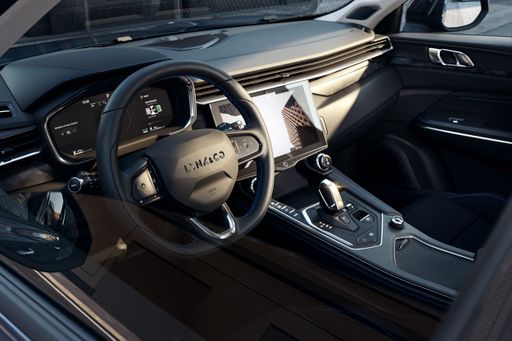
01

Power and Performance

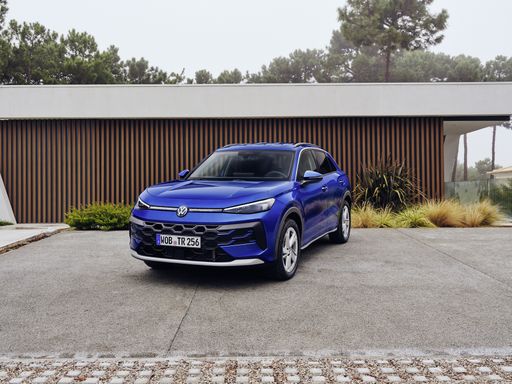
The VW T-Roc, a popular choice among petrol and diesel enthusiasts, offers a range of engine options. With power outputs ranging from 115 HP to 300 HP, and torque between 200 Nm and 400 Nm, the T-Roc promises a responsive drive suitable for urban commutes and highway cruising alike. The top-of-the-line model accelerates from 0 to 100 km/h in an impressive 4.9 seconds, reaching a maximum speed of 250 km/h.

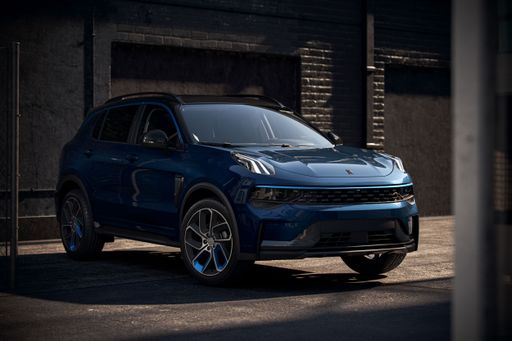
In contrast, the Lynk & Co 01 focuses on sustainability with its plug-in hybrid technology, delivering power outputs of up to 276 HP and torque reaching 535 Nm. The 01 propels from 0 to 100 km/h as swiftly as 7.7 seconds, with a maximum speed of 210 km/h. Its electric range of 75 km and fuel consumption of just 0.9 L/100km make it an alluring choice for eco-conscious drivers.

T-Roc

Dimensions and Design

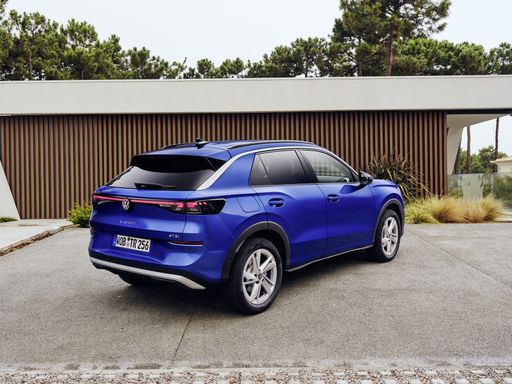
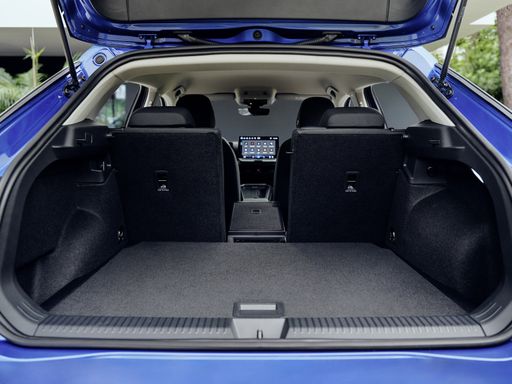
Both SUVs boast robust designs, but differ in their dimensions and aesthetics. The T-Roc, measuring between 4236 mm to 4271 mm in length, 1811 mm in width, and up to 1584 mm in height, presents a compact yet muscular posture, embodying VW's signature style and practicality. It offers a trunk capacity of up to 445 liters, making it a practical choice for everyday needs.

The Lynk & Co 01 stretches to approximately 4545 mm in length with a slightly broader stance of 1860 mm in width and a towering height of 1694 mm, giving it a more commanding road presence. It provides a larger trunk capacity of 466 liters, ideal for those with a penchant for road trips and outdoor adventures.

01

Innovation and Technology

Both vehicles are equipped with modern transmission systems. The T-Roc offers both manual and dual-clutch automatic gearboxes, providing flexibility depending on driving preference. Meanwhile, the 01 employs a seamless automatic transmission that pairs well with its hybrid powertrain.

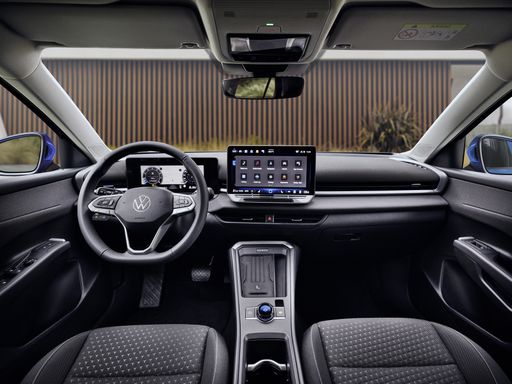
Innovative features are plentiful in both models. The VW T-Roc is equipped with advanced driver-assistance systems and connectivity options that emphasize safety and infotainment. On the other hand, the Lynk & Co 01 emphasizes a connected driving experience with its focus on shared usage and app-based accessibility, appealing to tech-savvy consumers.

T-Roc

Eco-Friendliness and Efficiency

When it comes to environmental impact, the Lynk & Co 01 takes a clear lead, boasting CO2 emissions as low as 20 g/km, thanks in large part to its hybrid engine. Its efficiency is underscored by the B-class CO2 efficiency rating. In comparison, the T-Roc's CO2 emissions range from 128 to 194 g/km, reflecting a more traditional engine setup.

01

Final Thoughts

The VW T-Roc and Lynk & Co 01 each bring unique propositions to the SUV segment. The T-Roc dazzles with its varied engine options, robust performance metrics, and quintessentially German engineering. The Lynk & Co 01, however, appeals to those prioritizing environmental impact and the latest in connectivity and shared mobility concepts.

Ultimately, the choice between the two will hinge on the driver's priorities: the thrill of traditional power versus the allure of sustainable innovation. Both vehicles, however, testify to the dynamic innovations shaping today’s automotive landscape.

Here’s where it gets real: The technical differences in detail

T-Roc

Costs and Efficiency:

When it comes to price and running costs, the biggest differences usually appear. This is often where you see which car fits your budget better in the long run.

VW T-Roc is visibly cheaper – starting at 26,400 £ , while the Lynk & Co 01 costs 36,900 £ . That’s a price difference of around 10,414 £.

Fuel consumption also shows a difference: the Lynk & Co 01 uses 0.9 L/100km and is substantially more efficient than the VW T-Roc with 5.5 L/100km. The difference is about 4.6 L/100km.

01

Engine and Performance:

Power, torque and acceleration are the classic benchmarks for car enthusiasts – and here, some clear differences start to show.

When it comes to engine power, the Lynk & Co 01 offers significantly more power – delivering 280 HP compared to 150 HP. That’s roughly 130 HP more horsepower.

When accelerating from 0 to 100 km/h, the Lynk & Co 01 is moderately quicker – completing the sprint in 7.7 s, while the VW T-Roc takes 8.9 s. That’s about 1.2 s quicker.

There’s also a difference in torque: the Lynk & Co 01 delivers clearly more torque with 535 Nm compared to 250 Nm. That’s about 285 Nm more.

T-Roc

Space and Everyday Use:

Cabin size, boot volume and payload all play a role in everyday practicality. Here, comfort and flexibility make the difference.

Both vehicles offer seating for 5 people.

In terms of curb weight, VW T-Roc is visibly lighter – 1,465 kg compared to 1,935 kg. The difference is around 470 kg.

Looking at boot space, the Lynk & Co 01 offers visibly more boot space – 466 L compared to 284 L. That’s a difference of about 182 L.

When it comes to payload, the VW T-Roc carries moderately more – 515 kg compared to 415 kg. That’s a difference of about 100 kg.

Who wins the race in the data check?

The Lynk & Co 01 is decisively ahead in the objective data comparison.
This result only shows which model scores more points on paper – not which of the two cars feels right for you.

from £36,900
01

Lynk & Co 01

  • Engine Type : Plugin Hybrid
  • Transmission : Automatic
  • Drive Type : Front-Wheel Drive
  • Power HP : 280 HP
  • Consumption L/100km : 0.9 L/100km
  • Electric Range : 75 km
VW T-Roc
Lynk & Co 01

Costs and Consumption

View detailed analysis

Engine and Performance

View detailed analysis

Dimensions and Body

View detailed analysis

VW T-Roc

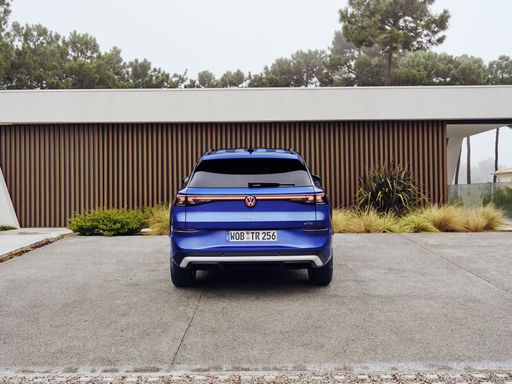
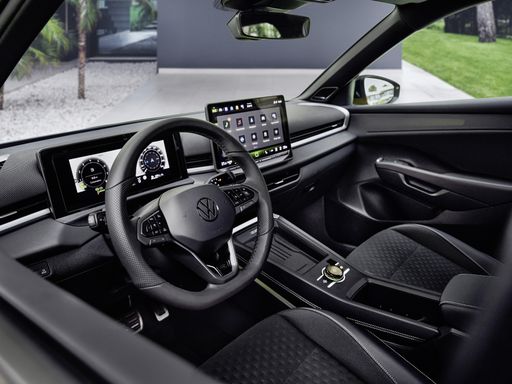
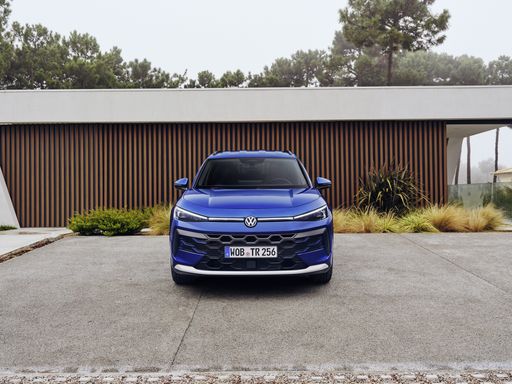
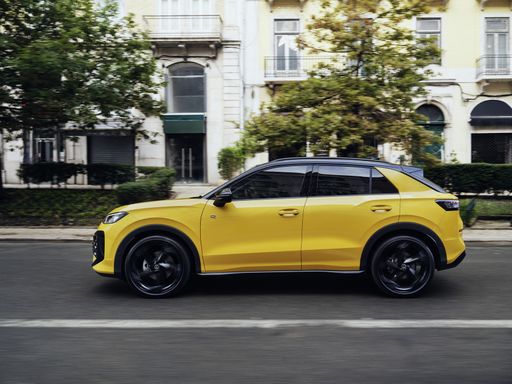
The Volkswagen T‑Roc is a stylish, well-proportioned crossover that blends hatchback agility with SUV presence. It delivers a comfortable cabin, user-friendly tech and a composed ride, making it a sensible choice for buyers who want practicality with a bit of character.

details

Lynk & Co 01

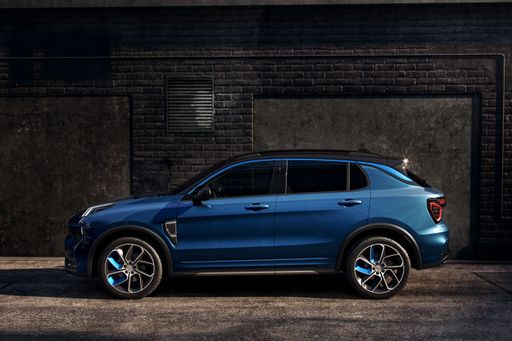
The Lynk & Co 01 marries bold, contemporary styling with a roomy, well-appointed cabin, striking a rare balance between fashionable flair and everyday practicality. With intuitive tech, flexible ownership ideas and a playful driving character, it’s the kind of crossover that turns heads at the lights and keeps owners grinning on the commute.

details
VW T-Roc
Lynk & Co 01

Costs and Consumption

Price
26,400 - 38,600 £
Price
36,900 - 40,300 £
Consumption L/100km
5.5 - 6.3 L/100km
Consumption L/100km
0.9 L/100km
Consumption kWh/100km
-
Consumption kWh/100km
-
Electric Range
-
Electric Range
75 km
Battery Capacity
-
Battery Capacity
-
co2
126 - 143 g/km
co2
20 g/km
Fuel tank capacity
-
Fuel tank capacity
-

Dimensions and Body

Body Type
SUV
Body Type
SUV
Seats
4 - 5
Seats
5
Doors
-
Doors
-
Curb weight
1,465 - 1,539 kg
Curb weight
1,935 kg
Trunk capacity
284 L
Trunk capacity
466 L
Length
-
Length
-
Width
1,811 - 1,828 mm
Width
1,860 mm
Height
-
Height
-
Max trunk capacity
-
Max trunk capacity
-
Payload
368 - 515 kg
Payload
415 kg

Engine and Performance

Engine Type
Petrol, Petrol MHEV
Engine Type
Plugin Hybrid
Transmission
Manuel, Automatic
Transmission
Automatic
Transmission Detail
Manual Gearbox, Dual-Clutch Automatic
Transmission Detail
Automatic Gearbox
Drive Type
Front-Wheel Drive
Drive Type
Front-Wheel Drive
Power HP
115 - 150 HP
Power HP
280 HP
Acceleration 0-100km/h
8.9 - 12.3 s
Acceleration 0-100km/h
7.7 s
Max Speed
-
Max Speed
-
Torque
200 - 250 Nm
Torque
535 Nm
Number of Cylinders
3 - 4
Number of Cylinders
4
Power kW
85 - 110 kW
Power kW
206 kW
Engine capacity
999 - 1,498 cm3
Engine capacity
1,499 cm3

General

Model Year
2,024 - 2,025
Model Year
2024
CO2 Efficiency Class
E, D
CO2 Efficiency Class
B
Brand
VW
Brand
Lynk & Co
DriveDuel uses data analysis and artificial intelligence to evaluate vehicle data and create content. Content is regularly reviewed and improved. The displayed prices are estimates based on German list prices, adjusted to the respective country’s VAT. Country-specific registration taxes are not included. This information is not legally binding.