VS

VW T-Roc vs Mazda CX-30 comparison

Compare performance (150 HP vs 186 HP), boot space and price (26,400 £ vs 25,200 £ ) at a glance. Find out which car is the better choice for you – VW T-Roc or Mazda CX-30?

VW T-Roc vs Mazda CX-30: Key differences

VW T-Roc

4.7 (4 Reviews)
rate
  • marginally more efficient

Mazda CX-30

4.6 (3 Reviews)
rate
  • only slightly cheaper
  • a bit more power
  • marginally quicker 0–100 km/h
  • barely lighter
  • markedly more trunk space

All details on performance, efficiency, range and trunk space can be found in the technical comparison below – including user reviews for both models.

T-Roc

Elegant Compact Crossovers: Mazda CX-30 vs. VW T-Roc

The compact SUV market has exploded in recent years, offering customers an attractive combination of style, performance, and utility. In this segment, the Mazda CX-30 and Volkswagen T-Roc stand out as two prominent contenders. Both vehicles deliver a compelling package; however, they come with their distinct personalities and technical specifications.

CX-30

Engine and Performance

The Mazda CX-30 is equipped with a robust petrol MHEV engine. Available with both manual and automatic gearboxes, it offers a choice between Front-Wheel and All-Wheel Drive, producing either 186 HP or 140 HP. This SUV accelerates from 0 to 100 km/h in a range of 8.3 to 10.3 seconds, topped off with a maximum speed between 191 and 204 km/h. Its efficient design allows for a consumption rate between 5.7 and 6.6 L/100km, depending on the configuration.

In contrast, the Volkswagen T-Roc offers diversity with both petrol and diesel engine types. With power options ranging from 115 HP up to a sporty 300 HP, the T-Roc can suit a variety of driving styles. The 0 to 100 km/h acceleration varies from a moderate 12.3 seconds in the lower models to a zippy 4.9 seconds in the top-performance variant. Like the CX-30, it offers front-wheel and all-wheel drive options, consuming between 4.7 and 8.5 L/100km.

T-Roc

Design and Dimensions

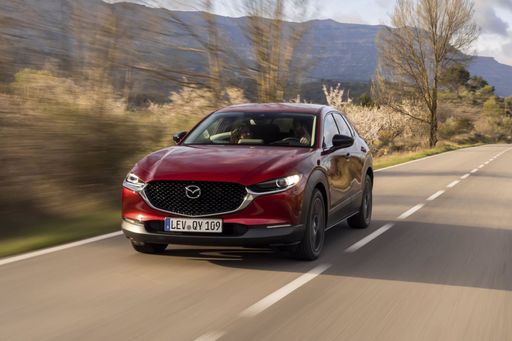
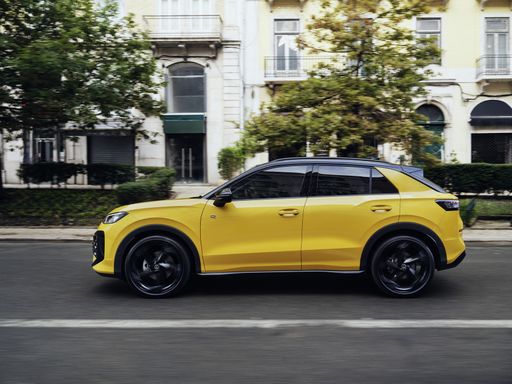
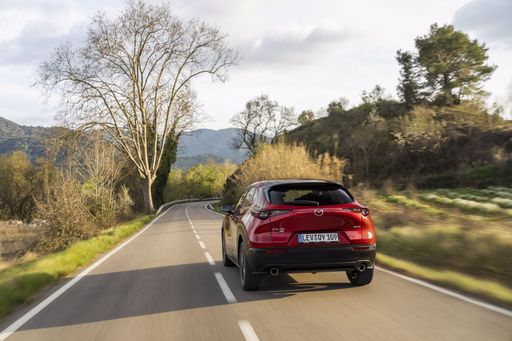
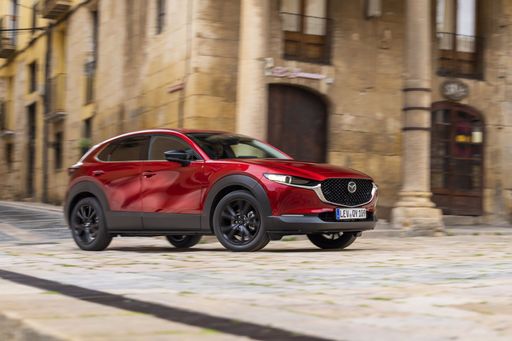
The Mazda CX-30, measuring 4395 mm in length, 1795 mm wide, and standing 1540 mm high, provides a sleek and assertive presence on the road. It embraces Mazda’s signature design language with a beautifully sculpted body that stands out among its peers.

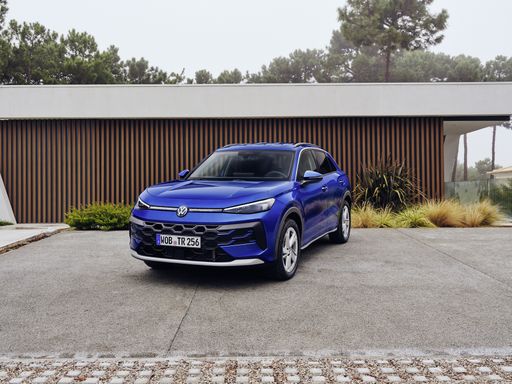
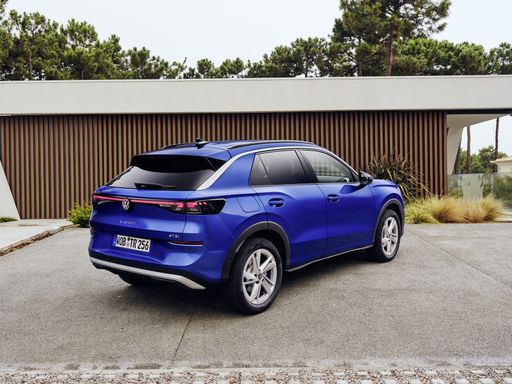
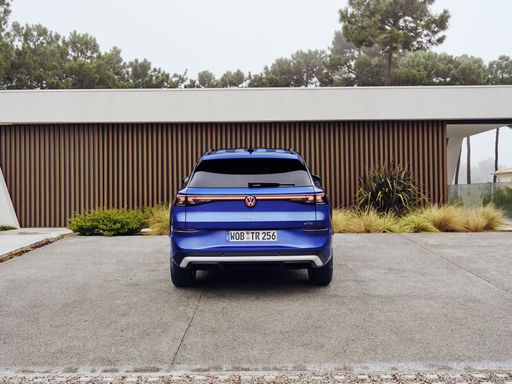
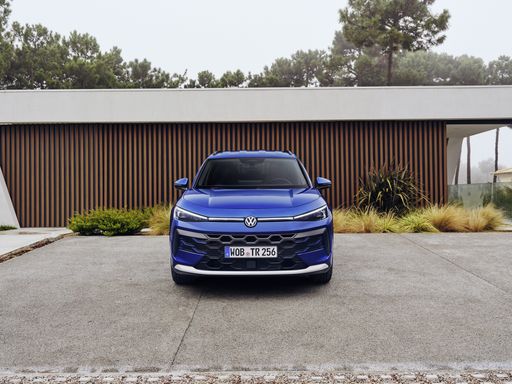
Meanwhile, the VW T-Roc boasts a compact form at 4236 to 4271 mm in length, and a width of either 1819 or 1811 mm. Its height varies between 1527 and 1584 mm. The T-Roc is noted for its bold visual stance and vibrant aesthetic options that appeal to a youthful and adventurous audience.

CX-30

Interior and Practicality

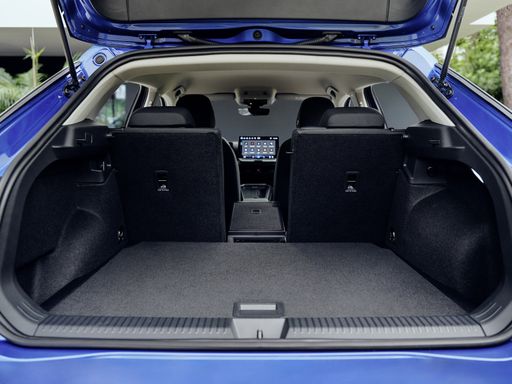
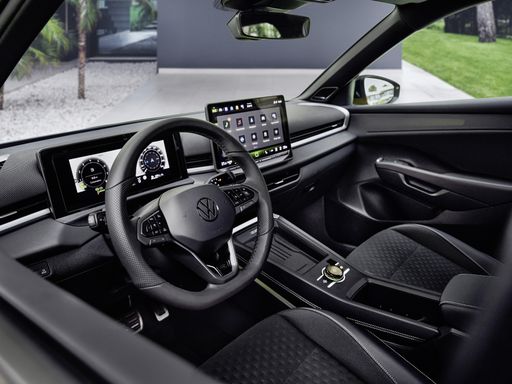
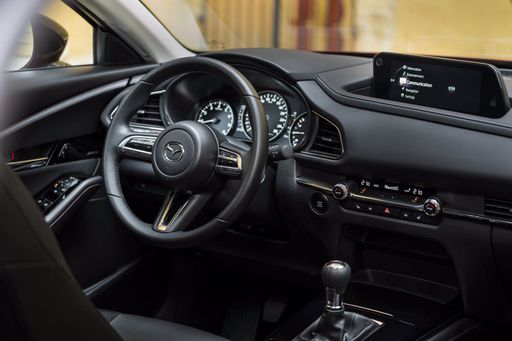
On the inside, the Mazda CX-30 and VW T-Roc both cater to comfort and utility with seating for up to five passengers. The CX-30 offers a trunk capacity of 422 to 430 liters, ideal for daily errands and short trips alike. It is designed with ergonomic excellence and refined material quality, aimed at creating an upscale ambiance.

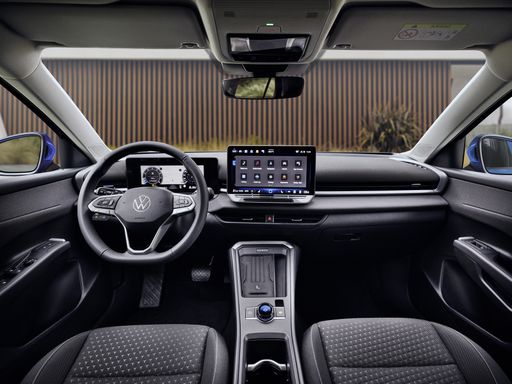
The T-Roc, however, edges ahead with a slightly broader trunk capacity of 392 to 445 liters in the five-door versions, providing a practical edge for those valuing space efficiency. Its interior is characterized by practicality and intuitive technology that ensure a connected journey.

T-Roc

Efficiency and Environmental Impact

Both models deliver strong performances in terms of environmental impact. The Mazda CX-30 has a CO2 efficiency class ranging from D to E, with CO2 emissions spanning from 129 to 148 g/km. The T-Roc, on the other hand, spans a wider range from D to G class, with emissions tracking between 125 and 194 g/km, offering more variability within its engine choices.

CX-30

Conclusion

The Mazda CX-30 and VW T-Roc both represent compelling choices in the compact SUV category, each aiming to capture the hearts of drivers with distinct strengths. The CX-30 is inclined towards those valuing refinement and a smooth driving experience, while the T-Roc appeals to those seeking versatility, power, and bold styling. Ultimately, the choice between these two will depend on individual preferences and requirements, along with their respective design and driving dynamics.

Here’s where it gets real: The technical differences in detail

T-Roc

Costs and Efficiency:

Price and efficiency are key factors when choosing a car – and this is often where the real differences emerge.

Mazda CX-30 is only slightly cheaper – starting at 25,200 £ , while the VW T-Roc costs 26,400 £ . That’s a price difference of around 1,204 £.

Fuel consumption also shows a difference: the VW T-Roc uses 5.5 L/100km and is marginally more efficient than the Mazda CX-30 with 5.7 L/100km. The difference is about 0.2 L/100km.

CX-30

Engine and Performance:

Power, torque and acceleration are the classic benchmarks for car enthusiasts – and here, some clear differences start to show.

When it comes to engine power, the Mazda CX-30 offers a bit more power – delivering 186 HP compared to 150 HP. That’s roughly 36 HP more horsepower.

When accelerating from 0 to 100 km/h, the Mazda CX-30 is marginally quicker – completing the sprint in 8.3 s, while the VW T-Roc takes 8.9 s. That’s about 0.6 s quicker.

There’s also a difference in torque: the VW T-Roc delivers barely more torque with 250 Nm compared to 240 Nm. That’s about 10 Nm more.

T-Roc

Space and Everyday Use:

Whether family car or daily driver – which one offers more room, flexibility and comfort?

Both vehicles offer seating for 5 people.

In terms of curb weight, Mazda CX-30 is barely lighter – 1,455 kg compared to 1,465 kg. The difference is around 10 kg.

Looking at boot space, the Mazda CX-30 offers markedly more boot space – 430 L compared to 284 L. That’s a difference of about 146 L.

When it comes to payload, the VW T-Roc carries very slightly more – 515 kg compared to 496 kg. That’s a difference of about 19 kg.

Who wins the race in the data check?

The Mazda CX-30 is clearly superior overall in the objective data comparison.
This result only shows which model scores more points on paper – not which of the two cars feels right for you.

from £25,200
CX-30

Mazda CX-30

  • Engine Type : Petrol MHEV
  • Transmission : Manuel, Automatic
  • Drive Type : Front-Wheel Drive, All-Wheel Drive
  • Power HP : 140 - 186 HP
  • Consumption L/100km : 5.7 - 6.6 L/100km
VW T-Roc
Mazda CX-30

Costs and Consumption

View detailed analysis

Engine and Performance

View detailed analysis

Dimensions and Body

View detailed analysis

VW T-Roc

The VW T-Roc mixes cheeky, coupe-like styling with the everyday sense and space of an SUV, so it looks fun without sacrificing family sense. It’s a likeable all-rounder with tidy road manners and plenty of personality, ideal if you want a car that’s practical enough for chores but entertaining enough to enjoy.

details

Mazda CX-30

The Mazda CX-30 blends sleek coupe-like lines with the practicality of a compact crossover, feeling more premium than its price tag suggests. It’s a joy to drive for anyone who likes a taut chassis and an interior that treats daily commutes like a small luxury escape.

details
VW T-Roc
Mazda CX-30

Costs and Consumption

Price
26,400 - 38,600 £
Price
25,200 - 36,800 £
Consumption L/100km
5.5 - 6.3 L/100km
Consumption L/100km
5.7 - 6.6 L/100km
Consumption kWh/100km
-
Consumption kWh/100km
-
Electric Range
-
Electric Range
-
Battery Capacity
-
Battery Capacity
-
co2
126 - 143 g/km
co2
129 - 148 g/km
Fuel tank capacity
-
Fuel tank capacity
-

Dimensions and Body

Body Type
SUV
Body Type
SUV
Seats
4 - 5
Seats
5
Doors
-
Doors
-
Curb weight
1,465 - 1,539 kg
Curb weight
1,455 - 1,587 kg
Trunk capacity
284 L
Trunk capacity
422 - 430 L
Length
-
Length
-
Width
1,811 - 1,828 mm
Width
1,795 mm
Height
-
Height
-
Max trunk capacity
-
Max trunk capacity
-
Payload
368 - 515 kg
Payload
458 - 496 kg

Engine and Performance

Engine Type
Petrol, Petrol MHEV
Engine Type
Petrol MHEV
Transmission
Manuel, Automatic
Transmission
Manuel, Automatic
Transmission Detail
Manual Gearbox, Dual-Clutch Automatic
Transmission Detail
Manual Gearbox, Automatic Gearbox
Drive Type
Front-Wheel Drive
Drive Type
Front-Wheel Drive, All-Wheel Drive
Power HP
115 - 150 HP
Power HP
140 - 186 HP
Acceleration 0-100km/h
8.9 - 12.3 s
Acceleration 0-100km/h
8.3 - 10.3 s
Max Speed
-
Max Speed
-
Torque
200 - 250 Nm
Torque
238 - 240 Nm
Number of Cylinders
3 - 4
Number of Cylinders
4
Power kW
85 - 110 kW
Power kW
103 - 137 kW
Engine capacity
999 - 1,498 cm3
Engine capacity
1,998 - 2,488 cm3

General

Model Year
2,024 - 2,025
Model Year
2,025
CO2 Efficiency Class
E, D
CO2 Efficiency Class
D, E
Brand
VW
Brand
Mazda
DriveDuel uses data analysis and artificial intelligence to evaluate vehicle data and create content. Content is regularly reviewed and improved. The displayed prices are estimates based on German list prices, adjusted to the respective country’s VAT. Country-specific registration taxes are not included. This information is not legally binding.