VS

VW T-Roc vs SEAT Leon comparison

Compare performance (150 HP vs 272 HP), boot space and price (26,400 £ vs 24,800 £ ) at a glance. Find out which car is the better choice for you – VW T-Roc or SEAT Leon?

VW T-Roc vs SEAT Leon: Key differences

VW T-Roc

4.8 (6 Reviews)
rate
details

SEAT Leon

4.4 (2 Reviews)
rate
  • marginally cheaper
  • considerably more power
  • considerably more efficient
  • somewhat quicker 0–100 km/h
  • barely lighter
  • visibly more trunk space
details

All details on performance, efficiency, range and trunk space can be found in the technical comparison below – including user reviews for both models.

By Achim Sedelmaier

T-Roc

SEAT León vs VW T-Roc: A Detailed Comparison

When it comes to choosing a vehicle that marries performance, style, and practicality, the SEAT León and VW T-Roc are both outstanding candidates. As we dive into the specifics of each, let's explore what makes these two rivals stand out in the crowded automotive market.
Leon

Performance and Engine Options

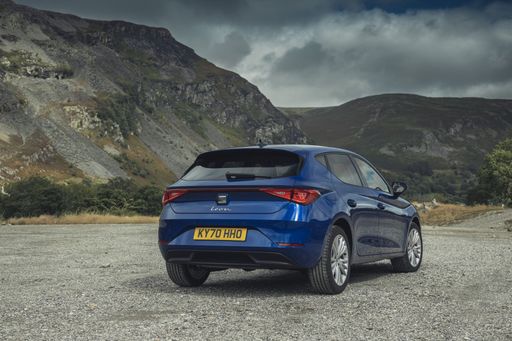
The SEAT León, predominantly a hatchback, offers an impressive range of engine types, including petrol, petrol MHEV, diesel, and plug-in hybrid. It provides a power output ranging from 110 HP to a robust 272 HP. The vehicle supports both manual and dual-clutch automatic transmissions, all equipped with front-wheel drive. Notably, the León displays a balanced mix of efficiency and power, boasting fuel consumption as low as 4.5 L/100km in its diesel variant.

Conversely, the VW T-Roc, categorized as an SUV, presents an array of petrol and diesel engines, with power spanning from 115 HP to an energetic 300 HP. It caters to diverse driving preferences with options for both front- and all-wheel-drive systems. Though slightly higher on fuel consumption, topping at 8.5 L/100km, the T-Roc offers a more potent engine range for high-performance seekers.

T-Roc

Dimensions and Practicality

The SEAT León is 4,368 mm long, 1,799 mm wide, and varies slightly in height around 1,456 mm. It offers a trunk capacity of 380 liters, which is adequate for a hatchback design, while seating five comfortably. With a load capacity of up to 521 kg, the León is well-suited for family trips and daily commutes alike.

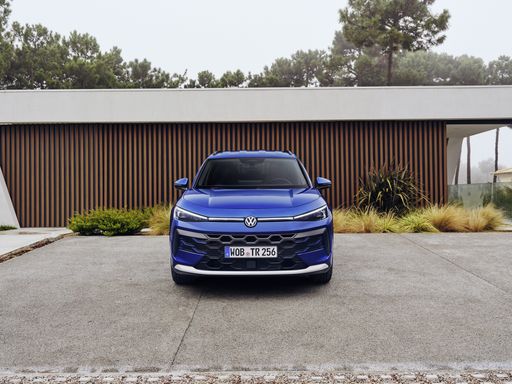
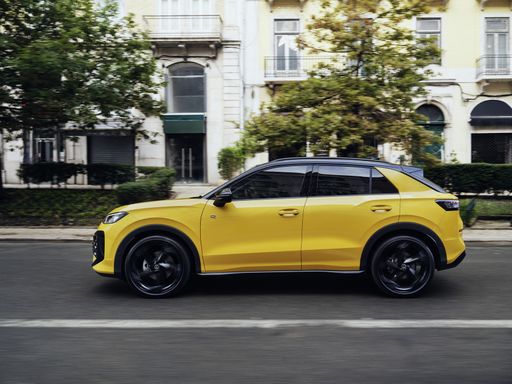
The VW T-Roc is more compact, measuring between 4,236 mm and 4,271 mm in length, and slightly wider at 1,819 mm. Its SUV design means a higher stance with heights around 1,584 mm. Impressively, it offers a larger trunk space of up to 445 liters, providing ample room for cargo. This, combined with a load capacity of up to 509 kg, positions it as a practical choice for those needing more space.

Leon

Innovations and Features

The SEAT León shines with its plug-in hybrid option, featuring a 19.7 kWh battery providing an electric range of 133 km, a clear win for those considering an eco-friendlier option. This model also balances CO2 emissions efficiently, with classes ranging from B to D, depending on the engine choice.

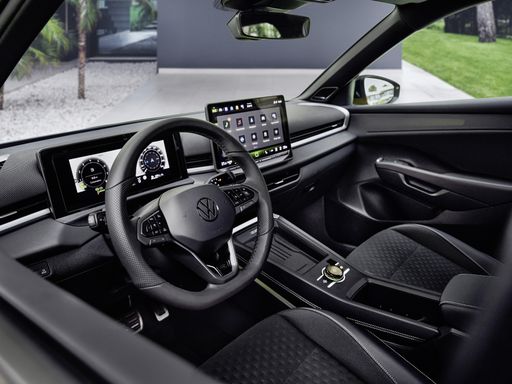
Meanwhile, the VW T-Roc, with its rugged SUV appeal, delivers advanced safety features and an intuitive infotainment system. While its CO2 efficiency class ranges from D to G, the T-Roc emphasizes an enhanced driving experience, particularly with its higher-end all-wheel-drive models.

T-Roc

Conclusion

The choice between the SEAT León and VW T-Roc boils down to individual priorities. For those seeking a blend of performance, eco-friendly initiatives, and a traditional hatchback design, the León is an apt choice. On the other hand, if space, SUV stature, and potential off-road capability are paramount, the VW T-Roc stands out. Both models showcase innovation and practicality, confirming their worthiness in the competitive automotive arena.

Here’s where it gets real: The technical differences in detail

T-Roc

Costs and Efficiency:

Price and efficiency are key factors when choosing a car – and this is often where the real differences emerge.

SEAT Leon is marginally cheaper – starting at 24,800 £ , while the VW T-Roc costs 26,400 £ . That’s a price difference of around 1,633 £.

Fuel consumption also shows a difference: the SEAT Leon uses 1.2 L/100km and is considerably more efficient than the VW T-Roc with 5.5 L/100km. The difference is about 4.3 L/100km.

Leon

Engine and Performance:

Under the bonnet, it becomes clear which model is tuned for sportiness and which one takes the lead when you hit the accelerator.

When it comes to engine power, the SEAT Leon offers considerably more power – delivering 272 HP compared to 150 HP. That’s roughly 122 HP more horsepower.

When accelerating from 0 to 100 km/h, the SEAT Leon is somewhat quicker – completing the sprint in 7.7 s, while the VW T-Roc takes 8.9 s. That’s about 1.2 s quicker.

There’s also a difference in torque: the SEAT Leon delivers clearly more torque with 360 Nm compared to 250 Nm. That’s about 110 Nm more.

T-Roc

Space and Everyday Use:

Beyond pure performance, interior space and usability matter most in daily life. This is where you see which car is more practical and versatile.

Both vehicles offer seating for 5 people.

In terms of curb weight, SEAT Leon is barely lighter – 1,344 kg compared to 1,465 kg. The difference is around 121 kg.

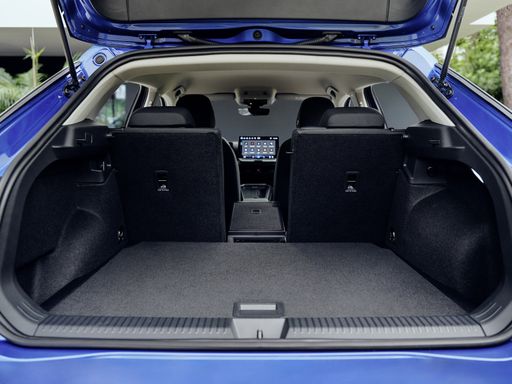
Looking at boot space, the SEAT Leon offers visibly more boot space – 380 L compared to 284 L. That’s a difference of about 96 L.

When it comes to payload, the SEAT Leon carries only slightly more – 521 kg compared to 515 kg. That’s a difference of about 6 kg.

Who wins the race in the data check?

The SEAT Leon holds a decisive overall lead in the objective data comparison.
This result only shows which model scores more points on paper – not which of the two cars feels right for you.

from £24,800
Leon

SEAT Leon

  • Engine Type : Petrol, Petrol MHEV, Plugin Hybrid, Diesel
  • Transmission : Manuel, Automatic
  • Drive Type : Front-Wheel Drive
  • Power HP : 116 - 272 HP
  • Consumption L/100km : 1.2 - 5.5 L/100km
  • Electric Range : 133 km
VW T-Roc
SEAT Leon

Costs and Consumption

View detailed analysis

Engine and Performance

View detailed analysis

Dimensions and Body

View detailed analysis

VW T-Roc

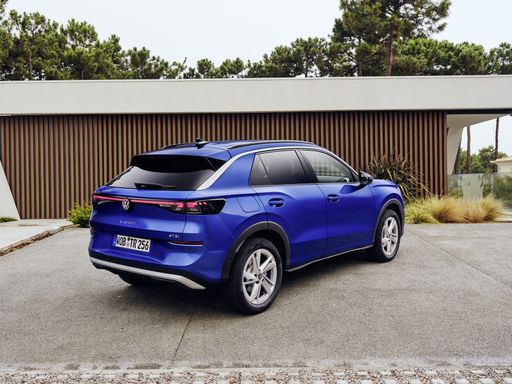
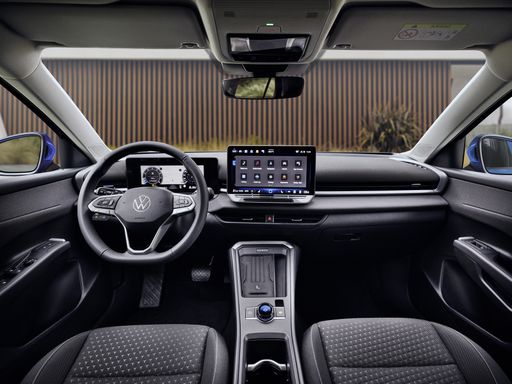
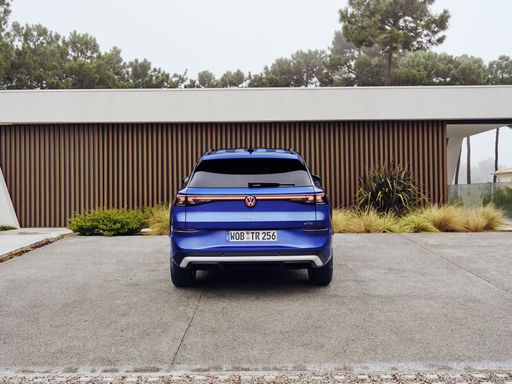
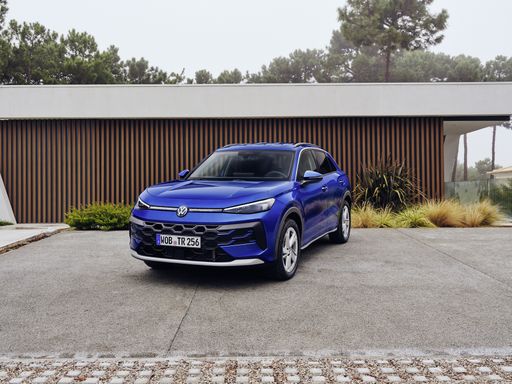
The Volkswagen T‑Roc is a stylish, well-proportioned crossover that blends hatchback agility with SUV presence. It delivers a comfortable cabin, user-friendly tech and a composed ride, making it a sensible choice for buyers who want practicality with a bit of character.

details

SEAT Leon

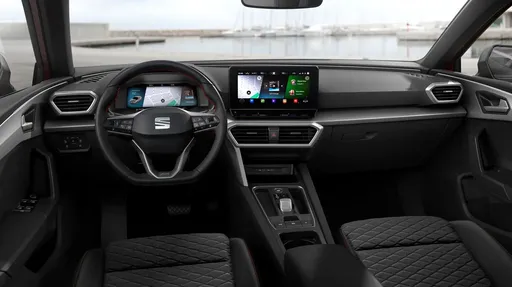
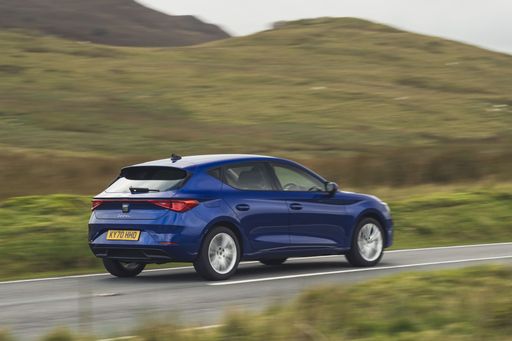
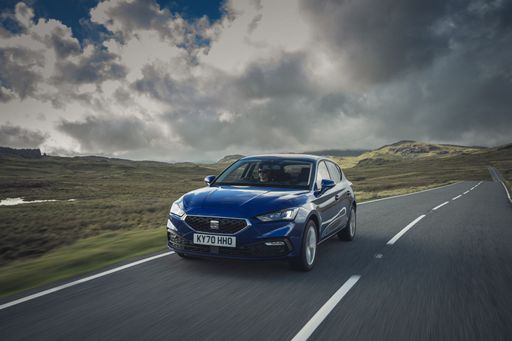
SEAT Leon pairs sharp, modern styling with a cabin that's sensible and slightly sporty, making it an appealing choice for buyers who want flair without fuss. It drives with eager composure and offers a neat balance of comfort and agility, so you get everyday usability with a wink of fun.

details
VW T-Roc
SEAT Leon

Costs and Consumption

Price
26,400 - 38,600 £
Price
24,800 - 36,800 £
Consumption L/100km
5.5 - 6.3 L/100km
Consumption L/100km
1.2 - 5.5 L/100km
Consumption kWh/100km
-
Consumption kWh/100km
-
Electric Range
-
Electric Range
133 km
Battery Capacity
-
Battery Capacity
-
co2
126 - 143 g/km
co2
28 - 126 g/km
Fuel tank capacity
-
Fuel tank capacity
-

Dimensions and Body

Body Type
SUV
Body Type
Hatchback
Seats
4 - 5
Seats
5
Doors
-
Doors
-
Curb weight
1,465 - 1,539 kg
Curb weight
1,344 - 1,657 kg
Trunk capacity
284 L
Trunk capacity
270 - 380 L
Length
-
Length
-
Width
1,811 - 1,828 mm
Width
1,799 mm
Height
-
Height
-
Max trunk capacity
-
Max trunk capacity
-
Payload
368 - 515 kg
Payload
473 - 521 kg

Engine and Performance

Engine Type
Petrol, Petrol MHEV
Engine Type
Petrol, Petrol MHEV, Plugin Hybrid, Diesel
Transmission
Manuel, Automatic
Transmission
Manuel, Automatic
Transmission Detail
Manual Gearbox, Dual-Clutch Automatic
Transmission Detail
Manual Gearbox, Dual-Clutch Automatic
Drive Type
Front-Wheel Drive
Drive Type
Front-Wheel Drive
Power HP
115 - 150 HP
Power HP
116 - 272 HP
Acceleration 0-100km/h
8.9 - 12.3 s
Acceleration 0-100km/h
7.7 - 10.5 s
Max Speed
-
Max Speed
-
Torque
200 - 250 Nm
Torque
220 - 360 Nm
Number of Cylinders
3 - 4
Number of Cylinders
4
Power kW
85 - 110 kW
Power kW
85 - 200 kW
Engine capacity
999 - 1,498 cm3
Engine capacity
1,498 - 1,968 cm3

General

Model Year
2,024 - 2,025
Model Year
2,024 - 2,026
CO2 Efficiency Class
E, D
CO2 Efficiency Class
D, B
Brand
VW
Brand
SEAT
DriveDuel uses data analysis and artificial intelligence to evaluate vehicle data and create content. Content is regularly reviewed and improved. The displayed prices are estimates based on German list prices, adjusted to the respective country’s VAT. Country-specific registration taxes are not included. This information is not legally binding.