VS

VW T-Roc vs Suzuki S-Cross comparison

Compare performance (150 HP vs 110 HP), boot space and price (26,400 £ vs 21,800 £ ) at a glance. Find out which car is the better choice for you – VW T-Roc or Suzuki S-Cross?

VW T-Roc vs Suzuki S-Cross: Key differences

VW T-Roc

4.7 (4 Reviews)
rate
  • noticeably more power

Suzuki S-Cross

4.7 (4 Reviews)
rate
  • markedly cheaper
  • marginally more efficient
  • somewhat lighter
  • noticeably more trunk space

All details on performance, efficiency, range and trunk space can be found in the technical comparison below – including user reviews for both models.

T-Roc

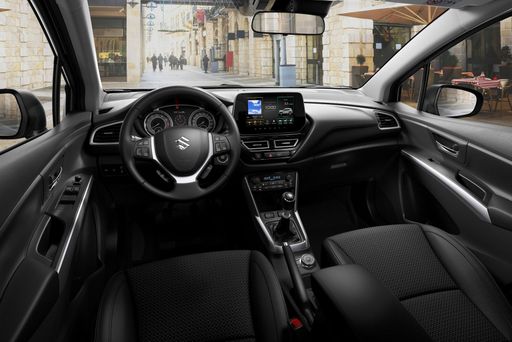
The automotive market is brimming with intriguing options, especially when it comes to compact SUVs. Today, we delve into a comparison between the Suzuki S-Cross and the Volkswagen T-Roc, both of which have made significant strides in 2024. Each SUV carries distinct features, but which one better aligns with the desires of modern drivers? Let's explore the technical aspects and innovations of both vehicles.
S-Cross

Design and Dimensions

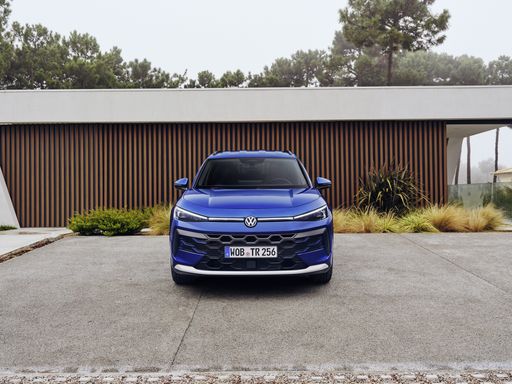
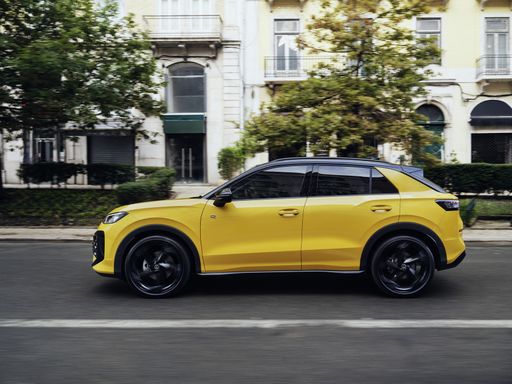
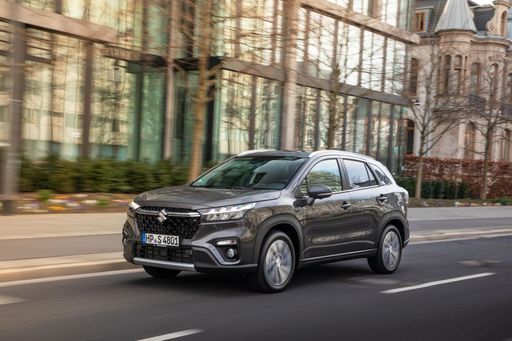
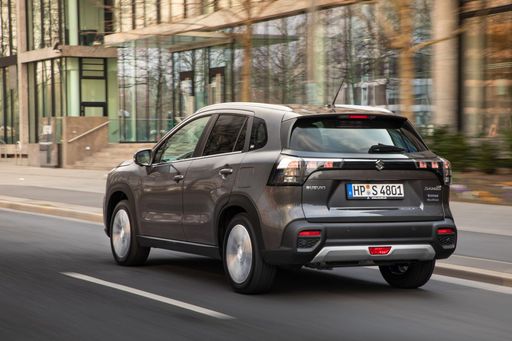
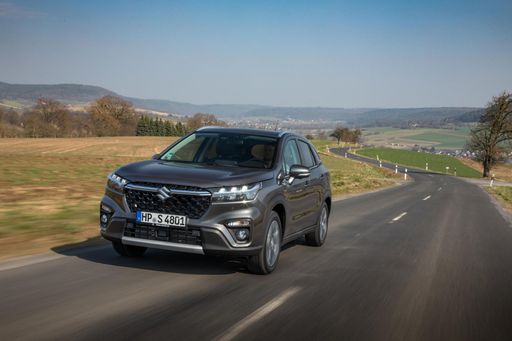
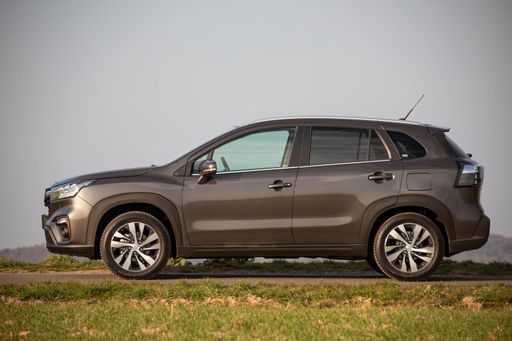
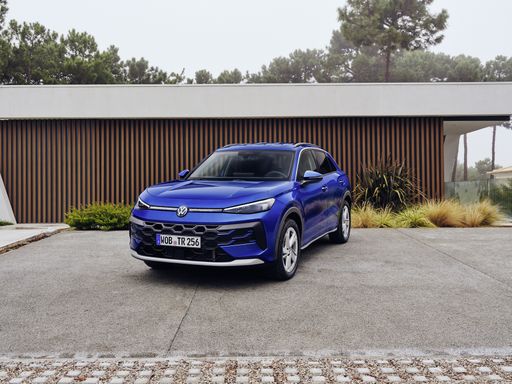
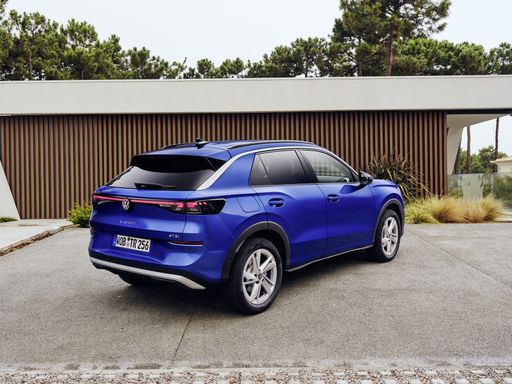
The Suzuki S-Cross boasts a robust and muscular design, measuring 4300mm in length, 1785mm in width, and standing 1580mm tall. Its five-door configuration offers practicality for families or those needing extra space. On the other hand, the VW T-Roc presents a slightly smaller footprint with a length of 4236mm and a width of 1819mm, but it comes in various heights, ranging from 1527mm to 1584mm depending on the variant. The T-Roc's slick design prioritizes a sporty appearance, appealing particularly to younger consumers.

T-Roc

Powertrains and Performance

When it comes to engine options, the Suzuki S-Cross offers two variants: a Full Hybrid and a Petrol Mild Hybrid (MHEV), with power outputs of 116 and 129 HP respectively. The S-Cross features both Front-Wheel Drive and All-Wheel Drive configurations, delivering a 0-100 km/h acceleration range of 9.5 seconds. In contrast, the VW T-Roc flaunts a broader array of powertrains. Its offerings include petrol engines generating 115 to 300 HP and diesel options reaching up to 1968cc. With various settings for performance, the T-Roc achieves acceleration as impressive as 4.9 seconds for its highest-performing variant. This extensive range allows drivers to choose a model that best fits their driving style.

S-Cross

Fuel Efficiency

Fuel consumption is a critical factor for many buyers, and here the S-Cross boasts an edge in efficiency, with figures ranging from 5.1 to 5.8 L/100km. Its hybrid tech significantly lowers CO2 emissions, with ratings around 116 to 130 g/km. Meanwhile, the T-Roc's consumption varies based on its engine options, ranging from 4.7 to 8.5 L/100km, and CO2 emissions can climb up to 194 g/km—reflecting the potential trade-off for the higher performance variants.

T-Roc

Comfort and Interior Features

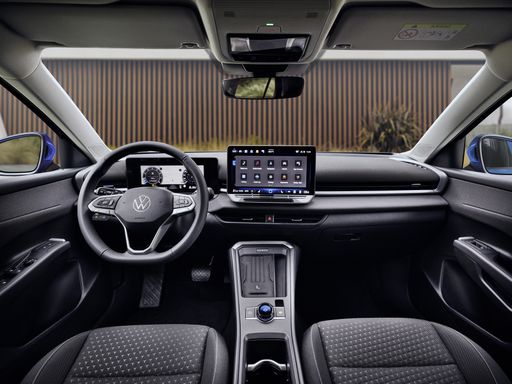
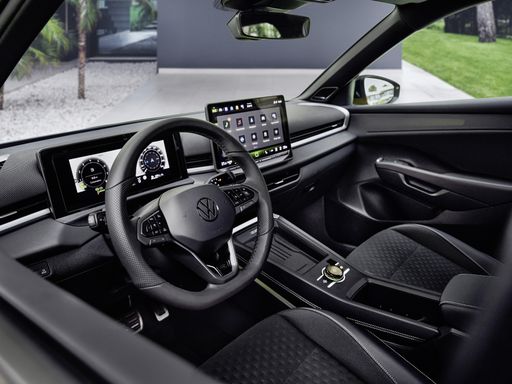
Both SUVs are designed with 5 occupant capacity in mind, but the T-Roc offers a more customizable interior. The trunk space slightly favors the T-Roc as well, providing 445L compared to the S-Cross's 430L. Technologically, both models come equipped with modern infotainment systems, though the T-Roc's high-end trims include a digital cockpit that enhances user experience. The S-Cross, while innovative with its infotainment, may not match VW's level of technological sophistication.

S-Cross

Safety and Innovations

Safety is paramount for any vehicle, and both the Suzuki S-Cross and VW T-Roc come equipped with comprehensive safety features. The S-Cross offers advanced driver-assistance systems such as adaptive cruise control and lane keep assist, while the VW T-Roc competes fiercely with a robust suite of drivers’ aids including automatic emergency braking and pedestrian detection. Both models are built with a focus on keeping occupants safe, but VW's reputation for engineering may give it a slight edge in perceived safety technology.

T-Roc

Final Verdict

Ultimately, the choice between the Suzuki S-Cross and the Volkswagen T-Roc may hinge on the driver's specific needs. If you prioritize fuel efficiency and hybrid technology, the S-Cross could be your ideal partner. However, if performance and cutting-edge technology are at the top of your list, the T-Roc stands ready to impress. Both vehicles exemplify the capabilities of modern compact SUVs, yet the decision comes down to individual tastes and driving preferences.

Here’s where it gets real: The technical differences in detail

T-Roc

Costs and Efficiency:

Price and efficiency are key factors when choosing a car – and this is often where the real differences emerge.

Suzuki S-Cross is markedly cheaper – starting at 21,800 £ , while the VW T-Roc costs 26,400 £ . That’s a price difference of around 4,676 £.

Fuel consumption also shows a difference: the Suzuki S-Cross uses 5.3 L/100km and is marginally more efficient than the VW T-Roc with 5.5 L/100km. The difference is about 0.2 L/100km.

S-Cross

Engine and Performance:

Power, torque and acceleration are the classic benchmarks for car enthusiasts – and here, some clear differences start to show.

When it comes to engine power, the VW T-Roc offers noticeably more power – delivering 150 HP compared to 110 HP. That’s roughly 40 HP more horsepower.

There’s also a difference in torque: the VW T-Roc delivers marginally more torque with 250 Nm compared to 235 Nm. That’s about 15 Nm more.

T-Roc

Space and Everyday Use:

Whether family car or daily driver – which one offers more room, flexibility and comfort?

Both vehicles offer seating for 5 people.

In terms of curb weight, Suzuki S-Cross is somewhat lighter – 1,280 kg compared to 1,465 kg. The difference is around 185 kg.

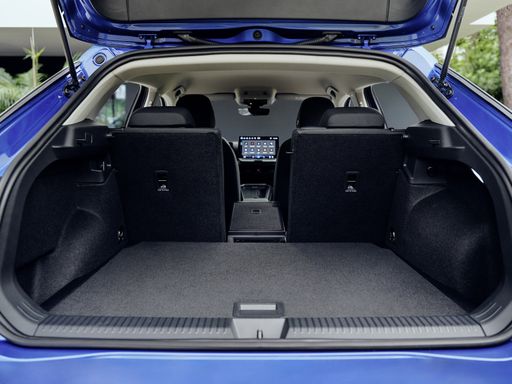
Looking at boot space, the Suzuki S-Cross offers noticeably more boot space – 430 L compared to 284 L. That’s a difference of about 146 L.

When it comes to payload, the VW T-Roc carries markedly more – 515 kg compared to 405 kg. That’s a difference of about 110 kg.

Who wins the race in the data check?

The VW T-Roc is narrowly ahead in the objective data comparison.
This result only shows which model scores more points on paper – not which of the two cars feels right for you.

from £26,400
T-Roc

VW T-Roc

  • Engine Type : Petrol, Petrol MHEV
  • Transmission : Manuel, Automatic
  • Drive Type : Front-Wheel Drive
  • Power HP : 115 - 150 HP
  • Consumption L/100km : 5.5 - 6.3 L/100km
VW T-Roc
Suzuki S-Cross

Costs and Consumption

View detailed analysis

Engine and Performance

View detailed analysis

Dimensions and Body

View detailed analysis

VW T-Roc

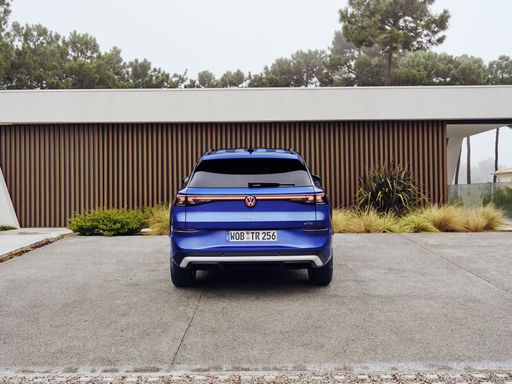
The VW T-Roc mixes cheeky, coupe-like styling with the everyday sense and space of an SUV, so it looks fun without sacrificing family sense. It’s a likeable all-rounder with tidy road manners and plenty of personality, ideal if you want a car that’s practical enough for chores but entertaining enough to enjoy.

details

Suzuki S-Cross

The Suzuki S-Cross is a neatly packaged crossover that puts everyday practicality ahead of showy theatrics, offering a comfortable cabin and predictable handling that suit family life and weekend errands alike. It’s not a headline-grabber, but its sensible packaging, low-key charm and reputation for reliability make it a shrewd choice for buyers who prefer smart value over flash.

details
VW T-Roc
Suzuki S-Cross

Costs and Consumption

Price
26,400 - 38,600 £
Price
21,800 - 34,200 £
Consumption L/100km
5.5 - 6.3 L/100km
Consumption L/100km
5.3 - 5.8 L/100km
Consumption kWh/100km
-
Consumption kWh/100km
-
Electric Range
-
Electric Range
-
Battery Capacity
-
Battery Capacity
-
co2
126 - 143 g/km
co2
119 - 138 g/km
Fuel tank capacity
-
Fuel tank capacity
47 L

Dimensions and Body

Body Type
SUV
Body Type
SUV
Seats
4 - 5
Seats
5
Doors
-
Doors
5
Curb weight
1,465 - 1,539 kg
Curb weight
1,280 - 1,385 kg
Trunk capacity
284 L
Trunk capacity
430 L
Length
-
Length
4,305 mm
Width
1,811 - 1,828 mm
Width
1,785 mm
Height
-
Height
1,580 mm
Max trunk capacity
-
Max trunk capacity
1,230 L
Payload
368 - 515 kg
Payload
395 - 405 kg

Engine and Performance

Engine Type
Petrol, Petrol MHEV
Engine Type
Petrol MHEV
Transmission
Manuel, Automatic
Transmission
Manuel, Automatic
Transmission Detail
Manual Gearbox, Dual-Clutch Automatic
Transmission Detail
Manual Gearbox, Automatic Gearbox
Drive Type
Front-Wheel Drive
Drive Type
Front-Wheel Drive, All-Wheel Drive
Power HP
115 - 150 HP
Power HP
110 HP
Acceleration 0-100km/h
8.9 - 12.3 s
Acceleration 0-100km/h
-
Max Speed
-
Max Speed
180 - 185 km/h
Torque
200 - 250 Nm
Torque
235 Nm
Number of Cylinders
3 - 4
Number of Cylinders
4
Power kW
85 - 110 kW
Power kW
81 kW
Engine capacity
999 - 1,498 cm3
Engine capacity
1,373 cm3

General

Model Year
2,024 - 2,025
Model Year
2,025
CO2 Efficiency Class
E, D
CO2 Efficiency Class
D, E
Brand
VW
Brand
Suzuki
DriveDuel uses data analysis and artificial intelligence to evaluate vehicle data and create content. Content is regularly reviewed and improved. The displayed prices are estimates based on German list prices, adjusted to the respective country’s VAT. Country-specific registration taxes are not included. This information is not legally binding.