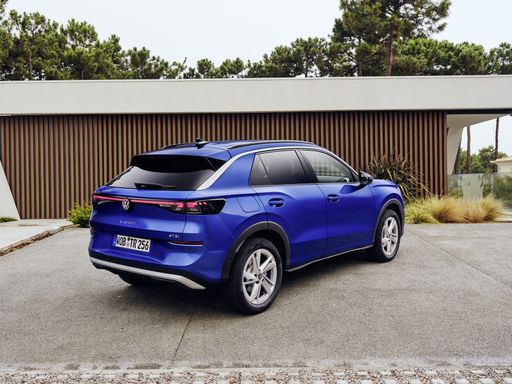
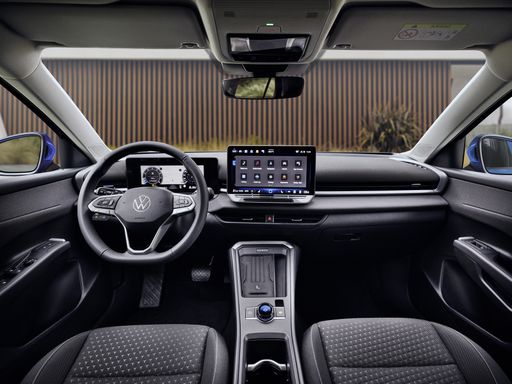
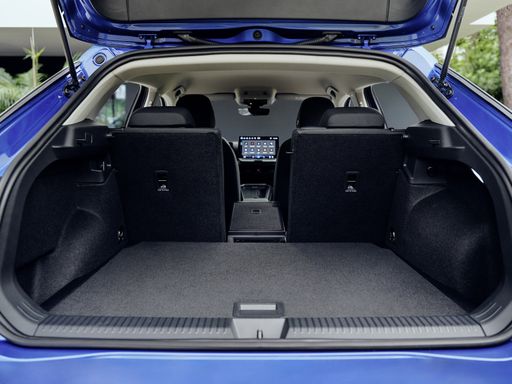
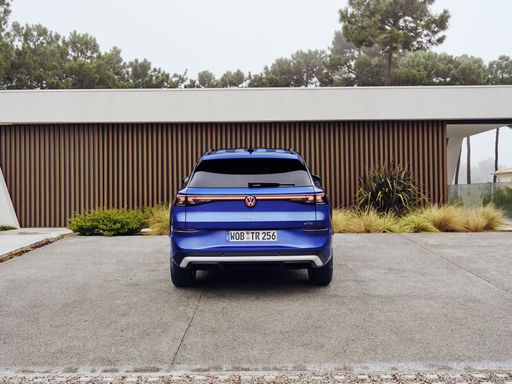
@ Volkswagen AG / VW Media
VS

VW T-Roc vs VW Tayron – Performance, range & efficiency compared

Both models have their strengths – but which one suits you more?
Compare performance, efficiency, price and space directly: VW T-Roc or VW Tayron?

T-Roc @ Volkswagen AG / VW Media

VW T-Roc vs VW Tayron: A Battle of Innovation and Performance

When it comes to compact SUVs, Volkswagen has set the bar high with models like the T-Roc and the Tayron. While both vehicles offer a robust combination of performance, comfort, and cutting-edge technology, they cater to slightly different audiences. In this article, we’ll delve into a detailed comparison of these two impressive contenders, focusing on their technical aspects and innovations.
Tayron @ Volkswagen AG / VW Media

Design and Dimensions

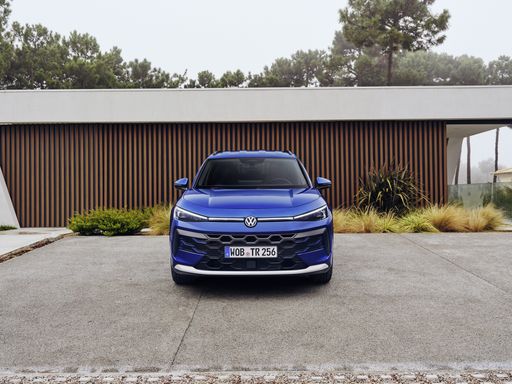
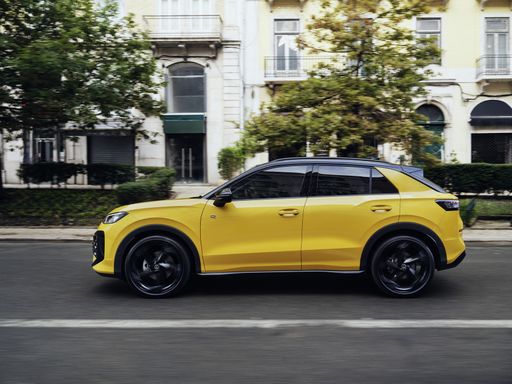
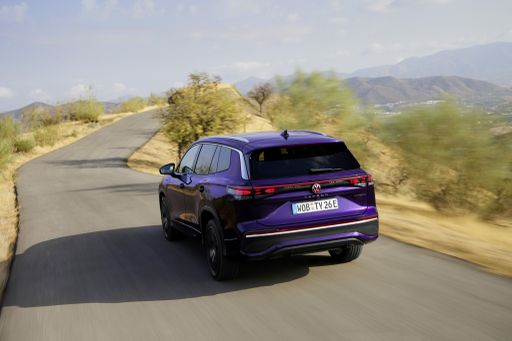
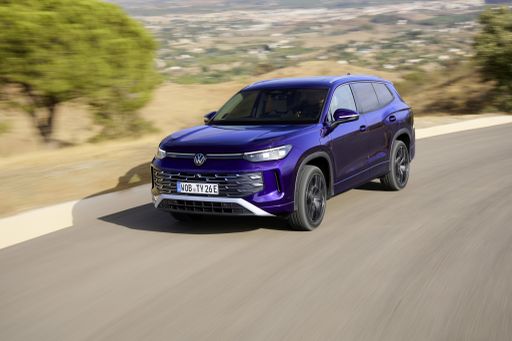
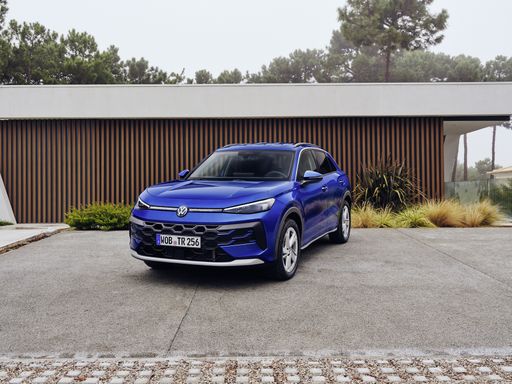
The T-Roc is compact yet stylish, measuring 4236 mm in length, 1819 mm in width, and standing 1584 mm tall. Its sporty design is well-suited for urban driving as well as weekend getaways. On the other hand, the Tayron is larger, stretching to 4792 mm in length and 1853 mm in width, with a height of 1668 mm. This increase in dimensions translates to a more spacious interior, making the Tayron ideal for families and those needing extra passenger comfort.

T-Roc @ Volkswagen AG / VW Media

Engine Options and Performance

The T-Roc offers a diverse lineup of engine options, including petrol and diesel variants ranging from 115 to 300 HP. With acceleration figures from 10.8 to as low as 4.9 seconds (depending on the configuration), the T-Roc stands out for its spirited performance. The engine choices come with either manual or dual-clutch automatic transmission systems.

In comparison, the Tayron boasts an impressive power range from 150 to 272 HP, with a focus on hybrid efficiency in some variants. It features a choice of petrol, diesel, and mild-hybrid engines, catering to a broader market, including environmentally conscious consumers. The acceleration for the Tayron ranges from 9.4 to a brisk 6.1 seconds, with the model maintaining its edge in top speed over the T-Roc, reaching up to 240 km/h.

Tayron @ Volkswagen AG / VW Media

Fuel Efficiency and Consumption

Fuel economy is a crucial consideration for many buyers. The T-Roc offers consumption levels between 4.7 and 8.5 L/100 km, depending on the engine type, with CO2 emissions varying from 125 to 194 g/km. On the other hand, the Tayron’s consumption ranges from a remarkable 0.4 L/100 km for its hybrid model to 7.8 L/100 km for the diesel variant, making it incredibly efficient, particularly for those commuting in urban settings. Its electric range of up to 126 km for the MHEV models can further reduce emissions and fuel costs.

T-Roc @ Volkswagen AG / VW Media

Interior and Tech Innovations

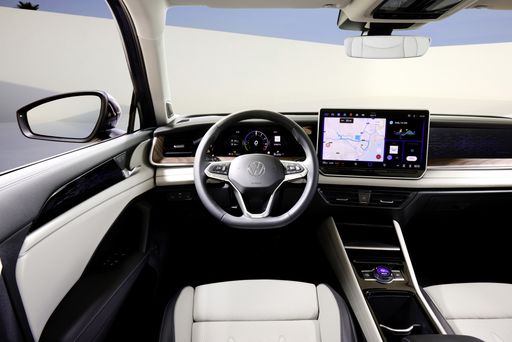
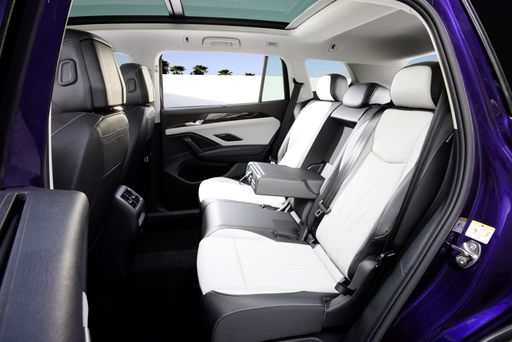
Inside, both models offer modern and comfortable interiors, with the T-Roc providing trunk space of up to 445 liters, while the Tayron expands this to an impressive 885 liters. This makes the Tayron not only a great family car but also an attractive choice for adventurers needing extra gear space.

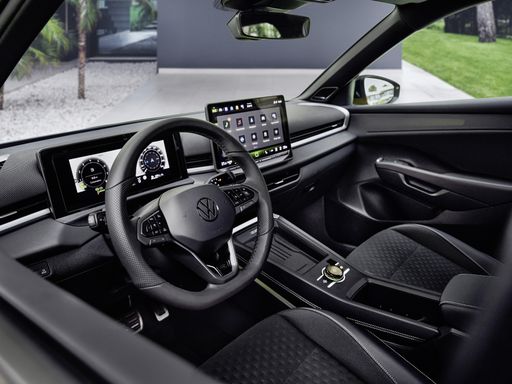
Both vehicles are equipped with the latest technology in terms of infotainment systems, connectivity, and safety features. The T-Roc integrates Volkswagen's Digital Cockpit, offering customizable digital displays and smart connectivity options. The Tayron goes a step further with advanced driver-assistance systems and a more comprehensive selection of sustainable features, such as smart hybrid power management.

Tayron @ Volkswagen AG / VW Media

Conclusion: Choosing the Right SUV for You

Choosing between the VW T-Roc and Tayron ultimately comes down to personal preference and specific needs. If you lean towards a sportier, more compact SUV that offers exciting performance and agile handling, the T-Roc is likely your best bet. Conversely, if you're looking for a larger, family-friendly vehicle with advanced hybrid options and more interior space, the Tayron stands out as an excellent choice.

Both SUVs showcase Volkswagen’s commitment to innovation, performance, and efficiency, each suitable for different lifestyles and driving needs. Whichever model you choose, you can expect a high-quality vehicle with the backing of one of the automotive industry's most trusted brands.

Here’s where it gets real: The technical differences in detail

T-Roc @ Volkswagen AG / VW Media

Costs and Efficiency:

Price and efficiency are key factors when choosing a car – and this is often where the real differences emerge.

VW T-Roc has a decisively advantage in terms of price – it starts at 26400 £, while the VW Tayron costs 39600 £. That’s a price difference of around 13174 £.

Fuel consumption also shows a difference: VW Tayron manages with 1.50 L and is therefore significantly more efficient than the VW T-Roc with 5.50 L. The difference is about 4 L per 100 km.

Tayron @ Volkswagen AG / VW Media

Engine and Performance:

Under the bonnet, it becomes clear which model is tuned for sportiness and which one takes the lead when you hit the accelerator.

When it comes to engine power, the VW Tayron has a clearly edge – offering 272 HP compared to 150 HP. That’s roughly 122 HP more horsepower.

In acceleration from 0 to 100 km/h, the VW Tayron is significantly quicker – completing the sprint in 6.10 s, while the VW T-Roc takes 8.90 s. That’s about 2.80 s faster.

In terms of top speed, the VW Tayron performs to a small extent better – reaching 240 km/h, while the VW T-Roc tops out at 212 km/h. The difference is around 28 km/h.

There’s also a difference in torque: VW Tayron pulls clearly perceptible stronger with 400 Nm compared to 250 Nm. That’s about 150 Nm difference.

Space and Everyday Use:

Beyond pure performance, interior space and usability matter most in daily life. This is where you see which car is more practical and versatile.

Both vehicles offer seating for 5 people.

In curb weight, VW T-Roc is slightly lighter – 1465 kg compared to 1682 kg. The difference is around 217 kg.

In terms of boot space, the VW Tayron offers convincingly more room – 885 L compared to 475 L. That’s a difference of about 410 L.

In maximum load capacity, the VW Tayron performs clearly perceptible better – up to 2090 L, which is about 740 L more than the VW T-Roc.

When it comes to payload, VW Tayron minimal takes the win – 566 kg compared to 515 kg. That’s a difference of about 51 kg.

Who comes out on top?

Overall, the VW Tayron shows itself to be is largely superior and secures the title of DriveDuel Champion.
It convinces with the more balanced overall package and proves to be the more versatile choice for everyday use.

from about £39,600
Tayron @ Volkswagen AG / VW Media

VW Tayron

  • Engine Type : Petrol MHEV, Diesel, Petrol, Plugin Hybrid
  • Transmission : Automatic
  • Drive Type : Front-Wheel Drive, All-Wheel Drive
  • Power HP : 150 - 272 HP
  • Consumption L/100km : 1.5 - 8.5 L
  • Electric Range : 116 - 123 km

VW T-Roc

5 (2)
rate

The VW T-Roc mixes cheeky, coupe-like styling with the everyday sense and space of an SUV, so it looks fun without sacrificing family sense. It’s a likeable all-rounder with tidy road manners and plenty of personality, ideal if you want a car that’s practical enough for chores but entertaining enough to enjoy.

details

VW Tayron

The VW Tayron is Volkswagen's roomy, no-nonsense SUV that pairs clean, familiar styling with a practical cabin built for families and everyday use. It rides comfortably, packs sensible tech and creature comforts, and feels like the sensible sweater of SUVs for buyers who prefer steady value over headline-grabbing drama.

details
VW T-Roc
VW Tayron
T-Roc @ Volkswagen AG / VW Media
Tayron @ Volkswagen AG / VW Media

Costs and Consumption

Price
26400 - 38000 £
Price
39600 - 53300 £
Consumption L/100km
5.5 - 6.3 L
Consumption L/100km
1.5 - 8.5 L
Consumption kWh/100km
-
Consumption kWh/100km
-
Electric Range
-
Electric Range
116 - 123 km
Battery Capacity
-
Battery Capacity
19.70 kWh
co2
126 - 143 g/km
co2
33 - 192 g/km
Fuel tank capacity
50 L
Fuel tank capacity
45 - 58 L

Dimensions and Body

Body Type
SUV
Body Type
SUV
Seats
4 - 5
Seats
5
Doors
2 - 5
Doors
5
Curb weight
1465 - 1539 kg
Curb weight
1682 - 1948 kg
Trunk capacity
284 - 475 L
Trunk capacity
705 - 885 L
Length
4271 - 4373 mm
Length
4792 mm
Width
1811 - 1828 mm
Width
1853 - 1866 mm
Height
1527 - 1573 mm
Height
1666 - 1668 mm
Max trunk capacity
1350 L
Max trunk capacity
1915 - 2090 L
Payload
368 - 515 kg
Payload
489 - 566 kg

Engine and Performance

Engine Type
Petrol, Petrol MHEV
Engine Type
Petrol MHEV, Diesel, Petrol, Plugin Hybrid
Transmission
Manuel, Automatic
Transmission
Automatic
Transmission Detail
Manual Gearbox, Dual-Clutch Automatic
Transmission Detail
Dual-Clutch Automatic
Drive Type
Front-Wheel Drive
Drive Type
Front-Wheel Drive, All-Wheel Drive
Power HP
115 - 150 HP
Power HP
150 - 272 HP
Acceleration 0-100km/h
8.9 - 12.3 s
Acceleration 0-100km/h
6.1 - 9.7 s
Max Speed
187 - 212 km/h
Max Speed
204 - 240 km/h
Torque
200 - 250 Nm
Torque
250 - 400 Nm
Number of Cylinders
3 - 4
Number of Cylinders
4
Power kW
85 - 110 kW
Power kW
110 - 200 kW
Engine capacity
999 - 1498 cm3
Engine capacity
1498 - 1984 cm3

General

Model Year
2024 - 2025
Model Year
2025
CO2 Efficiency Class
E, D
CO2 Efficiency Class
E, F, G, B
Brand
VW
Brand
VW
Is the VW T-Roc offered with different drivetrains?

Available configurations include Front-Wheel Drive.

The prices and data displayed are estimates based on German list prices and may vary by country. This information is not legally binding.