VS

VW T-Roc vs VW Touareg comparison

Compare performance (150 HP vs 462 HP), boot space and price (26,400 £ vs 64,300 £ ) at a glance. Find out which car is the better choice for you – VW T-Roc or VW Touareg?

VW T-Roc vs VW Touareg: Key differences

VW T-Roc

4.8 (6 Reviews)
rate
  • substantially cheaper
  • clearly lighter

VW Touareg

4.9 (4 Reviews)
rate
  • substantially more power
  • only slightly more efficient
  • clearly quicker 0–100 km/h
  • clearly more trunk space

All details on performance, efficiency, range and trunk space can be found in the technical comparison below – including user reviews for both models.

By Achim Sedelmaier

T-Roc

Volkswagen T-Roc vs Volkswagen Touareg: A Comprehensive Comparison

When discussing the dynamic world of SUVs, the Volkswagen T-Roc and Touareg stand out as two prominent contenders in Volkswagen's lineup, each catering to different market segments and driver needs. The T-Roc, a compact SUV, leans towards the urban environment while offering plenty of versatility, whereas the Touareg, a larger luxury SUV, boasts premium features and advanced performance capabilities. In this article, we'll delve into the technical aspects, innovations, and user experience of both models to determine which one suits your lifestyle better.
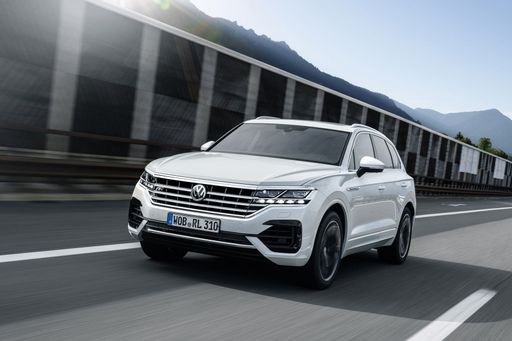
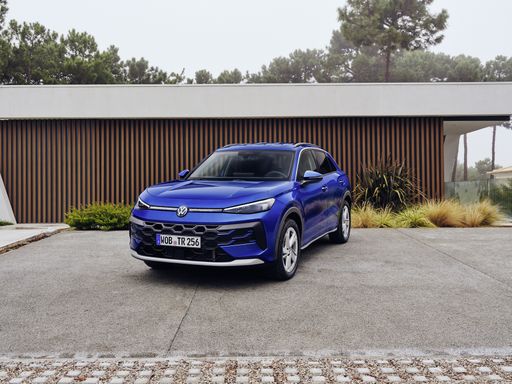
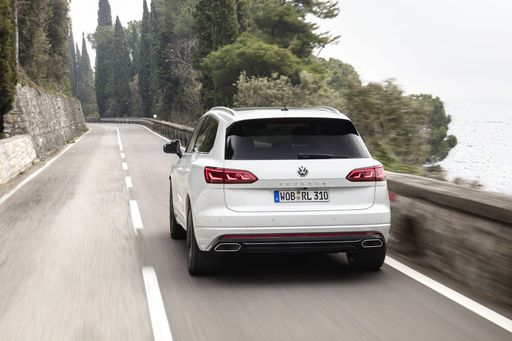
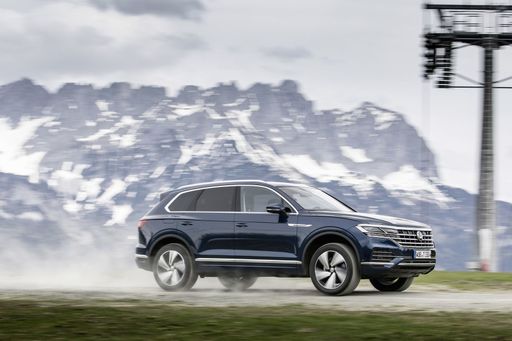
Touareg

Design and Dimensions

Starting with dimensions, the T-Roc is versatile yet compact, measuring 4,236 mm in length, 1,819 mm in width, and 1,584 mm in height. This makes it ideal for city driving, where maneuverability is key. In contrast, the Touareg is much larger, measuring 4,902 mm in length, 1,984 mm in width, and 1,712 mm in height. Its larger stature not only conveys a more commanding road presence but also contributes to spacious interior comfort, making it a seamless choice for longer trips and family outings.

T-Roc

Performance and Engine Options

The T-Roc comes equipped with a variety of engine options, providing a great range in performance and efficiency. Buyers can choose between petrol and diesel variants that deliver between 115 and 300 HP, complemented by both manual and dual-clutch automatic transmissions. The compact SUV can achieve 0-100 km/h in as little as 4.9 seconds with its powerful engine option, while fuel consumption ranges from a remarkably economical 4.7 to an average of 8.5 L/100 km.

On the other hand, the Touareg comes exclusively with an advanced automatic transmission and an all-wheel drive setup, emphasizing performance and stability. Its engine range includes petrol, diesel, and even a plugin hybrid configuration, with power outputs ranging from 231 to 462 HP. This SUV can sprint from 0-100 km/h in as fast as 5.1 seconds, depending on the variant, but fuel consumption can range from 2.2 L/100 km in the hybrid model to as high as 11 L/100 km in some petrol configurations.

Touareg

Interior and Technology Innovations

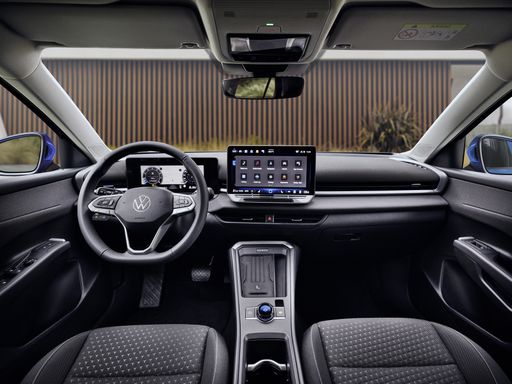
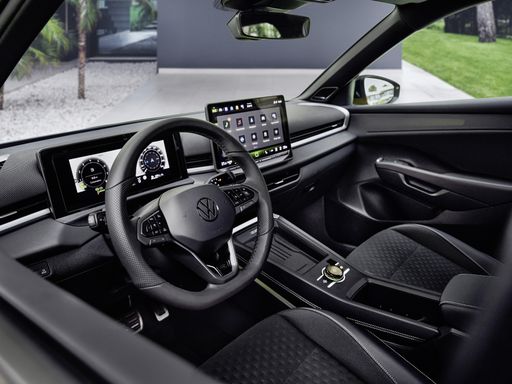
The T-Roc, while smaller, does not sacrifice comfort or features. With an interior designed for 5 passengers, its trunk offers ample space at 445 liters, and the cabin comes well-equipped with state-of-the-art technology. Notably, the T-Roc features Volkswagen's MIB3 infotainment system, providing seamless smartphone integration, voice commands, and a digital cockpit to make driving more enjoyable.

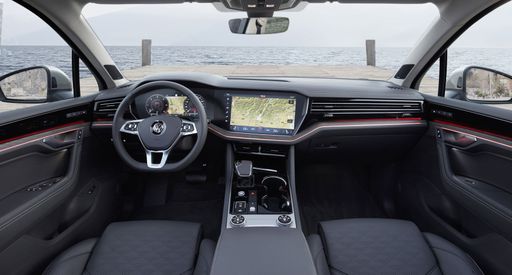
Conversely, the Touareg boasts a luxurious interior tailored for an upscale experience. Accommodating 5 passengers as well, it provides a massive trunk capacity of 810 liters. The Touareg comes equipped with an array of advanced technology, including an innovative 15-inch touchscreen display, a digital cockpit, features such as adaptive cruise control, lane assist, and even an air quality package. The vehicle’s premium sound system also enhances the driving experience, particularly for those who prioritize audiophile standards.

T-Roc

Safety Ratings and Environmental Impact

In terms of safety, both models have been designed with robust safety features and received impressive ratings. The T-Roc boasts advanced safety technologies, including a proactive occupant protection system and various driver assistance systems. The Touareg, with its luxury focus, incorporates more advanced safety measures, such as predictive adaptive cruise control and emergency braking systems, categorizing it under a higher safety echelon.

From an environmental standpoint, the T-Roc is available in CO2 efficiency classes ranging from D to G, while the Touareg has emissions between B and G, particularly benefiting from its hybrid variant. This reflects Volkswagen's commitment to greener driving solutions without compromising performance.

Touareg

Conclusion: Which SUV Comes Out on Top?

Choosing between the Volkswagen T-Roc and Touareg ultimately comes down to your personal preferences and requirements. If you seek a compact SUV that is sporty and efficient, the T-Roc certainly fits the bill with its modern features and versatile performance. However, if you desire a larger vehicle that exudes luxury and offers robust performance, the Touareg is undoubtedly the choice for you.

Whether you prioritize practicality or luxury, both vehicles showcase Volkswagen's commitment to quality, ensuring either choice will deliver reliability and drive satisfaction. As you weigh your options, consider taking both models for a test drive to discover which best aligns with your lifestyle.

Here’s where it gets real: The technical differences in detail

T-Roc

Costs and Efficiency:

Price and efficiency are often the first things buyers look at. Here it becomes clear which model has the long-term edge – whether at the pump, the plug, or in purchase price.

VW T-Roc is substantially cheaper – starting at 26,400 £ , while the VW Touareg costs 64,300 £ . That’s a price difference of around 37,869 £.

Fuel consumption also shows a difference: the VW Touareg uses 5.2 L/100km and is only slightly more efficient than the VW T-Roc with 5.5 L/100km. The difference is about 0.3 L/100km.

Touareg

Engine and Performance:

Power, torque and acceleration are the classic benchmarks for car enthusiasts – and here, some clear differences start to show.

When it comes to engine power, the VW Touareg offers substantially more power – delivering 462 HP compared to 150 HP. That’s roughly 312 HP more horsepower.

When accelerating from 0 to 100 km/h, the VW Touareg is clearly quicker – completing the sprint in 5.1 s, while the VW T-Roc takes 8.9 s. That’s about 3.8 s quicker.

There’s also a difference in torque: the VW Touareg delivers significantly more torque with 700 Nm compared to 250 Nm. That’s about 450 Nm more.

T-Roc

Space and Everyday Use:

Cabin size, boot volume and payload all play a role in everyday practicality. Here, comfort and flexibility make the difference.

Both vehicles offer seating for 5 people.

In terms of curb weight, VW T-Roc is clearly lighter – 1,465 kg compared to 2,059 kg. The difference is around 594 kg.

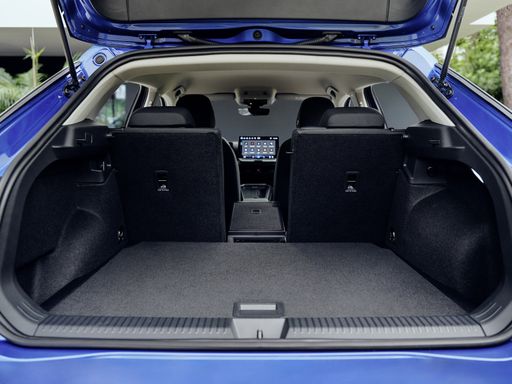
Looking at boot space, the VW Touareg offers clearly more boot space – 810 L compared to 284 L. That’s a difference of about 526 L.

When it comes to payload, the VW Touareg carries markedly more – 751 kg compared to 515 kg. That’s a difference of about 236 kg.

Who wins the race in the data check?

The VW Touareg stands well ahead of its rival in the objective data comparison.
This result only shows which model scores more points on paper – not which of the two cars feels right for you.

from £64,300
Touareg

VW Touareg

  • Engine Type : Petrol, Plugin Hybrid, Diesel
  • Transmission : Automatic
  • Drive Type : All-Wheel Drive
  • Power HP : 231 - 462 HP
  • Consumption L/100km : 5.2 - 10.5 L/100km
  • Electric Range : 47 - 49 km
VW T-Roc
VW Touareg

Costs and Consumption

View detailed analysis

Engine and Performance

View detailed analysis

Dimensions and Body

View detailed analysis

VW T-Roc

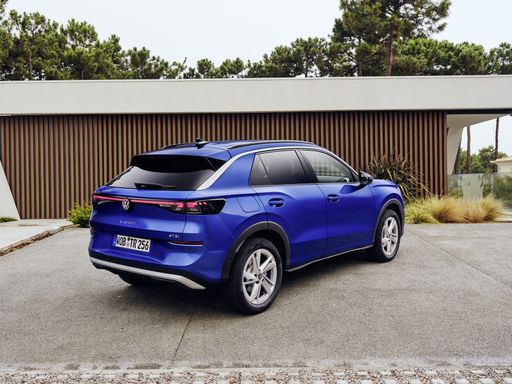
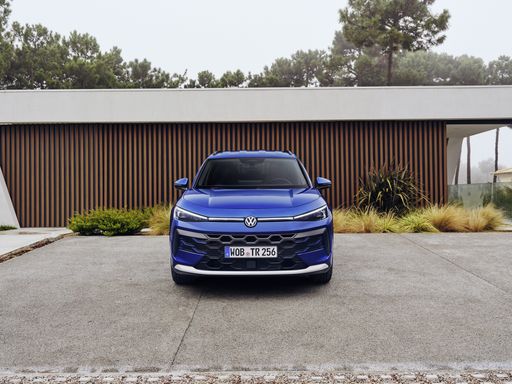
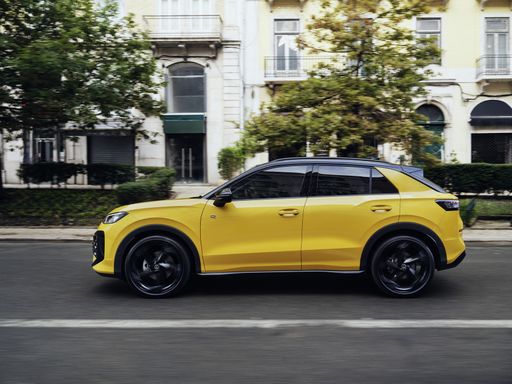
The VW T-Roc mixes cheeky, coupe-like styling with the everyday sense and space of an SUV, so it looks fun without sacrificing family sense. It’s a likeable all-rounder with tidy road manners and plenty of personality, ideal if you want a car that’s practical enough for chores but entertaining enough to enjoy.

details

VW Touareg

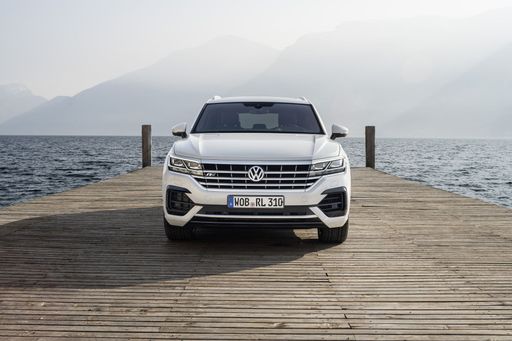
Volkswagen Touareg wraps a grown-up presence in a classy, well-appointed cabin that feels more like a premium saloon than an SUV. It glides with quiet composure, devours long journeys and tucks away clever tech that makes life easier whether you’re stuck in town or nipping off the beaten track.

details
VW T-Roc
VW Touareg

Costs and Consumption

Price
26,400 - 38,600 £
Price
64,300 - 88,300 £
Consumption L/100km
5.5 - 6.3 L/100km
Consumption L/100km
5.2 - 10.5 L/100km
Consumption kWh/100km
-
Consumption kWh/100km
-
Electric Range
-
Electric Range
47 - 49 km
Battery Capacity
-
Battery Capacity
14.3 kWh
co2
126 - 143 g/km
co2
119 - 239 g/km
Fuel tank capacity
-
Fuel tank capacity
75 L

Dimensions and Body

Body Type
SUV
Body Type
SUV
Seats
4 - 5
Seats
5
Doors
-
Doors
5
Curb weight
1,465 - 1,539 kg
Curb weight
2,059 - 2,470 kg
Trunk capacity
284 L
Trunk capacity
665 - 810 L
Length
-
Length
4,878 - 4,902 mm
Width
1,811 - 1,828 mm
Width
1,984 mm
Height
-
Height
1,693 - 1,712 mm
Max trunk capacity
-
Max trunk capacity
1,675 - 1,800 L
Payload
368 - 515 kg
Payload
550 - 751 kg

Engine and Performance

Engine Type
Petrol, Petrol MHEV
Engine Type
Petrol, Plugin Hybrid, Diesel
Transmission
Manuel, Automatic
Transmission
Automatic
Transmission Detail
Manual Gearbox, Dual-Clutch Automatic
Transmission Detail
Automatic Gearbox
Drive Type
Front-Wheel Drive
Drive Type
All-Wheel Drive
Power HP
115 - 150 HP
Power HP
231 - 462 HP
Acceleration 0-100km/h
8.9 - 12.3 s
Acceleration 0-100km/h
5.1 - 7.7 s
Max Speed
-
Max Speed
222 - 250 km/h
Torque
200 - 250 Nm
Torque
450 - 700 Nm
Number of Cylinders
3 - 4
Number of Cylinders
6
Power kW
85 - 110 kW
Power kW
170 - 340 kW
Engine capacity
999 - 1,498 cm3
Engine capacity
2,967 - 2,995 cm3

General

Model Year
2,024 - 2,025
Model Year
2,025
CO2 Efficiency Class
E, D
CO2 Efficiency Class
G, D
Brand
VW
Brand
VW
DriveDuel uses data analysis and artificial intelligence to evaluate vehicle data and create content. Content is regularly reviewed and improved. The displayed prices are estimates based on German list prices, adjusted to the respective country’s VAT. Country-specific registration taxes are not included. This information is not legally binding.