VS

VW Tayron vs Skoda Kodiaq comparison

Compare performance (272 HP vs 265 HP), boot space and price (39,600 £ vs 37,900 £ ) at a glance. Find out which car is the better choice for you – VW Tayron or Skoda Kodiaq?

VW Tayron vs Skoda Kodiaq: Key differences

VW Tayron

4.8 (2 Reviews)
rate
  • barely more power
  • only slightly more electric range
  • very slightly quicker 0–100 km/h
  • very slightly lighter
details

Skoda Kodiaq

5 (4 Reviews)
rate
  • only slightly cheaper
  • very slightly more trunk space
details

All details on performance, efficiency, range and trunk space can be found in the technical comparison below – including user reviews for both models.

By Achim Sedelmaier

Tayron

Dress for the driveway

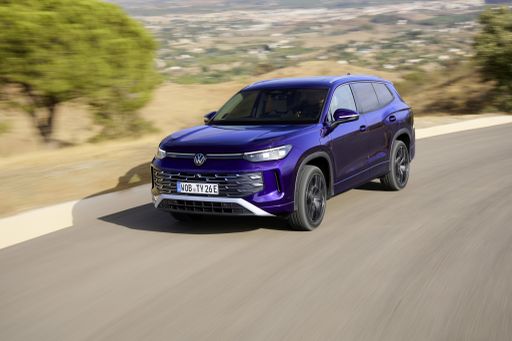
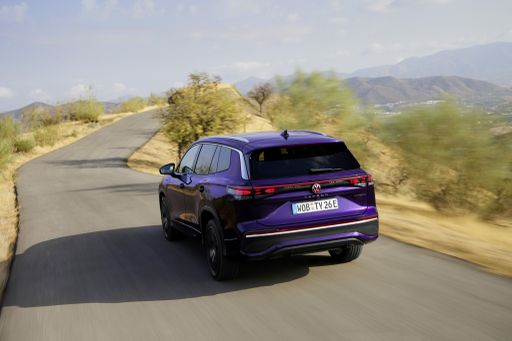
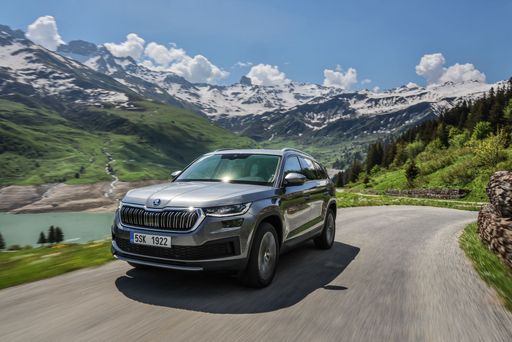
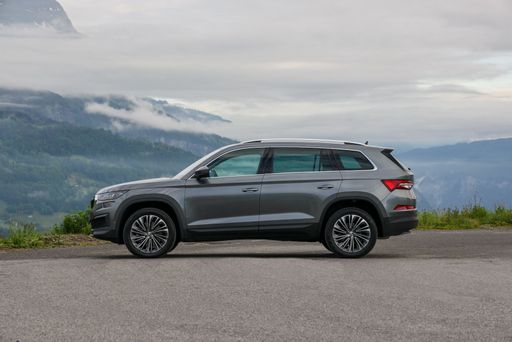
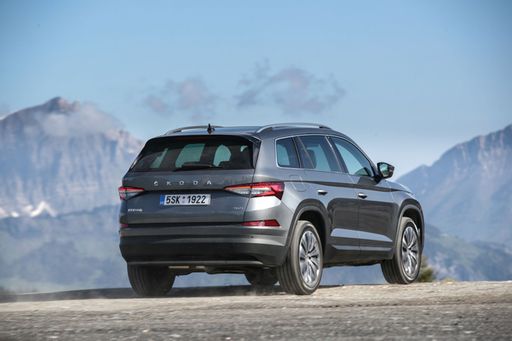
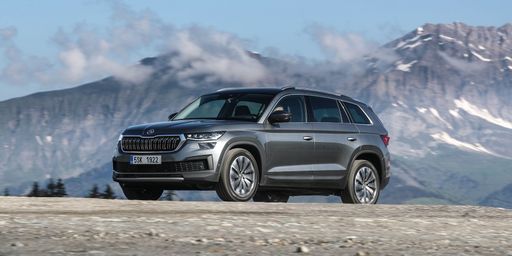
If you judge a car by its wardrobe, the Kodiaq arrives in practical, purposeful cuts while the Tayron wears a sleeker, more upscale coat. The Kodiaq feels like the sensible family member who never tries too hard, offering honest engineering and few surprises. The Tayron, on the other hand, leans toward polish and presence, with styling that whispers premium even before you get inside. Both have character, but each speaks to a different kind of buyer.

Kodiaq

Life on the tarmac

On the move the two reveal their personalities plainly: the Kodiaq soaks up the daily grind with an easygoing ride, while the Tayron rewards the driver with crisper responses. The Kodiaq's setup soothes long stints and delivers predictable manners, ideal for mile-munching commuters or relaxed family runs. The Tayron trades a touch of plushness for sharper steering and a more planted feel when you push on, appealing to those who enjoy a bit more engagement. Neither is brutish; it's a matter of preference between comfort and a firmer, more composed road manner.

Tayron

Cabin character

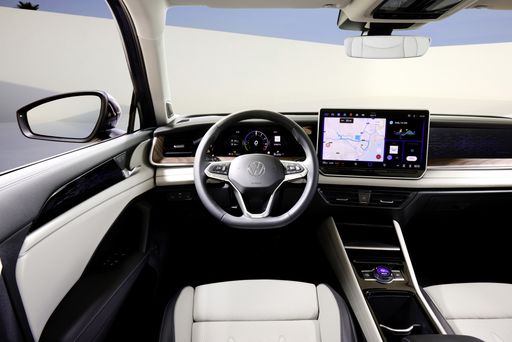
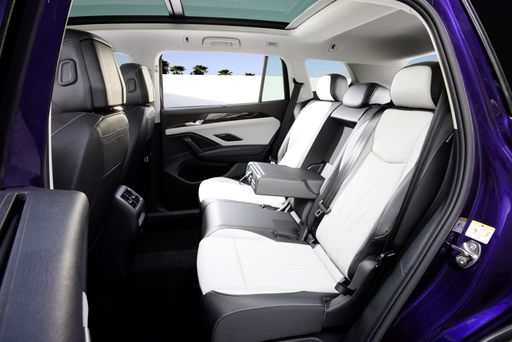
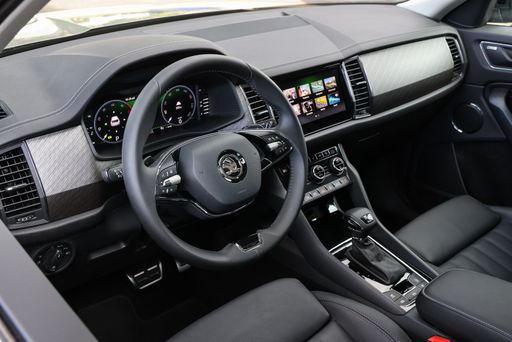
Step inside and the difference becomes tactile: the Kodiaq cabin prioritises space and function with durable surfaces and plenty of practical spots for the detritus of modern life. Its seats feel inviting and the layout keeps things simple so you aren't hunting for essentials on a busy morning. The Tayron's interior tilts toward refinement, with softer finishes and a more sophisticated ambience that elevates routine journeys. For buyers who value material quality and a serene cocoon, the Tayron nudges the conversation toward premium.

Kodiaq

Packing for weekends

For weekend warriors and families the Kodiaq is built around usefulness: loading is straightforward, and its flexible packaging makes life with bikes, prams and awkward purchases noticeably easier. The Tayron remains practical but finesses the experience, offering neat compromises between cargo space and cabin elegance. If you regularly haul bulky kit and prefer a no-nonsense approach, the Kodiaq's utility will make sense, while those wanting a tidier, more refined experience will appreciate the Tayron. Both cars handle the practical chores of family life well, just with different emphases.

Tayron

Screens and shortcuts

Tech-wise the Kodiaq favours clear logic over flash, with controls that don't require a software manual and an infotainment approach that keeps the essentials close at hand. The Tayron is more showy, treating occupants to sharper graphics and more extensive digital layers that can feel modern and slightly more complex. Driver assistance and adaptive systems feel slightly more polished in the Tayron, but the Kodiaq's ease of use is a strong counterargument for busy households. Ultimately it's a choice between straightforward usability and a more technologically glossy experience.

Kodiaq

Who should turn the key?

The Kodiaq suits buyers who prioritise practicality, a comfortable daily companion and a value-focused package that gets the job done without fuss. The Tayron will attract those who want a touch of premium polish, more engaging dynamics and a cabin that looks and feels a step above. Both are strong contenders in the family SUV field, and your lifestyle will easily tip the scales. Keep reading to see which model takes the DriveDuel Champion title—details and context are coming up next.

Here’s where it gets real: The technical differences in detail

Tayron

Costs and Efficiency:

Price and efficiency are often the first things buyers look at. Here it becomes clear which model has the long-term edge – whether at the pump, the plug, or in purchase price.

Skoda Kodiaq is only slightly cheaper – starting at 37,900 £ , while the VW Tayron costs 39,600 £ . That’s a price difference of around 1,735 £.

Both cars consume an average of 1.5 L/100km – no difference here.

As for electric range, the VW Tayron offers only slightly more range – reaching up to 123 km, about 1 km more than the Skoda Kodiaq.

Kodiaq

Engine and Performance:

Power, torque and acceleration say a lot about how a car feels on the road. This is where you see which model delivers more driving dynamics.

When it comes to engine power, the VW Tayron offers barely more power – delivering 272 HP compared to 265 HP. That’s roughly 7 HP more horsepower.

When accelerating from 0 to 100 km/h, the VW Tayron is very slightly quicker – completing the sprint in 6.1 s, while the Skoda Kodiaq takes 6.3 s. That’s about 0.2 s quicker.

Looking at top speed, the Skoda Kodiaq is barely faster – reaching 226 km/h, while the VW Tayron tops out at 221 km/h. The difference is around 5 km/h.

Both models offer the same torque – 400 Nm.

Tayron

Space and Everyday Use:

Beyond pure performance, interior space and usability matter most in daily life. This is where you see which car is more practical and versatile.

Both vehicles offer seating for 5 people.

In terms of curb weight, VW Tayron is very slightly lighter – 1,682 kg compared to 1,684 kg. The difference is around 2 kg.

Looking at boot space, the Skoda Kodiaq offers very slightly more boot space – 910 L compared to 885 L. That’s a difference of about 25 L.

For maximum load capacity, the Skoda Kodiaq offers marginally more capacity – up to 2,105 L, about 15 L more than the VW Tayron.

When it comes to payload, the VW Tayron carries only slightly more – 566 kg compared to 563 kg. That’s a difference of about 3 kg.

Who wins the race in the data check?

The VW Tayron has only a minor advantage in the objective data comparison.
This result only shows which model scores more points on paper – not which of the two cars feels right for you.

from £39,600
Tayron

VW Tayron

  • Engine Type : Petrol MHEV, Diesel, Petrol, Plugin Hybrid
  • Transmission : Automatic
  • Drive Type : Front-Wheel Drive, All-Wheel Drive
  • Power HP : 150 - 272 HP
  • Consumption L/100km : 1.5 - 8.5 L/100km
  • Electric Range : 116 - 123 km
VW Tayron
Skoda Kodiaq

Costs and Consumption

View detailed analysis

Engine and Performance

View detailed analysis

Dimensions and Body

View detailed analysis

VW Tayron

The VW Tayron is Volkswagen's roomy, no-nonsense SUV that pairs clean, familiar styling with a practical cabin built for families and everyday use. It rides comfortably, packs sensible tech and creature comforts, and feels like the sensible sweater of SUVs for buyers who prefer steady value over headline-grabbing drama.

details

Skoda Kodiaq

The Skoda Kodiaq blends sensible practicality with surprising style, so families and weekend adventurers get roomy comfort without looking like a moving van. It feels calm and composed on the road, packs clever storage and user-friendly tech, and manages to deliver a near-premium vibe without the pretension.

details
VW Tayron
Skoda Kodiaq

Costs and Consumption

Price
39,600 - 56,000 £
Price
37,900 - 50,600 £
Consumption L/100km
1.5 - 8.5 L/100km
Consumption L/100km
1.5 - 8.2 L/100km
Consumption kWh/100km
-
Consumption kWh/100km
-
Electric Range
116 - 123 km
Electric Range
119 - 122 km
Battery Capacity
19.7 kWh
Battery Capacity
-
co2
33 - 192 g/km
co2
35 - 186 g/km
Fuel tank capacity
45 - 58 L
Fuel tank capacity
58 L

Dimensions and Body

Body Type
SUV
Body Type
SUV
Seats
5
Seats
5
Doors
5
Doors
5
Curb weight
1,682 - 1,948 kg
Curb weight
1,684 - 1,970 kg
Trunk capacity
705 - 885 L
Trunk capacity
745 - 910 L
Length
4,792 mm
Length
4,758 mm
Width
1,853 - 1,866 mm
Width
1,864 mm
Height
1,666 - 1,668 mm
Height
1,679 - 1,683 mm
Max trunk capacity
1,915 - 2,090 L
Max trunk capacity
2,105 L
Payload
489 - 566 kg
Payload
460 - 563 kg

Engine and Performance

Engine Type
Petrol MHEV, Diesel, Petrol, Plugin Hybrid
Engine Type
Petrol, Petrol MHEV, Diesel, Plugin Hybrid
Transmission
Automatic
Transmission
Automatic
Transmission Detail
Dual-Clutch Automatic
Transmission Detail
Dual-Clutch Automatic
Drive Type
Front-Wheel Drive, All-Wheel Drive
Drive Type
All-Wheel Drive, Front-Wheel Drive
Power HP
150 - 272 HP
Power HP
150 - 265 HP
Acceleration 0-100km/h
6.1 - 9.7 s
Acceleration 0-100km/h
6.3 - 9.7 s
Max Speed
204 - 221 km/h
Max Speed
226 km/h
Torque
250 - 400 Nm
Torque
250 - 400 Nm
Number of Cylinders
4
Number of Cylinders
4
Power kW
110 - 200 kW
Power kW
110 - 195 kW
Engine capacity
1,498 - 1,984 cm3
Engine capacity
1,498 - 1,984 cm3

General

Model Year
2,025 - 2,026
Model Year
2,024 - 2,025
CO2 Efficiency Class
E, F, G, B
CO2 Efficiency Class
F, G, E, B
Brand
VW
Brand
Skoda
DriveDuel uses data analysis and artificial intelligence to evaluate vehicle data and create content. Content is regularly reviewed and improved. The displayed prices are estimates based on German list prices, adjusted to the respective country’s VAT. Country-specific registration taxes are not included. This information is not legally binding.