VS

VW Touran vs Dacia Bigster comparison

Compare performance (150 HP vs 158 HP), boot space and price (36,000 £ vs 20,600 £ ) at a glance. Find out which car is the better choice for you – VW Touran or Dacia Bigster?

VW Touran vs Dacia Bigster: Key differences

VW Touran

4.9 (2 Reviews)
rate
  • very slightly quicker 0–100 km/h
  • noticeably more trunk space
details

Dacia Bigster

4.6 (7 Reviews)
rate
  • significantly cheaper
  • only slightly more power
  • slightly more efficient
  • barely lighter
details

All details on performance, efficiency, range and trunk space can be found in the technical comparison below – including user reviews for both models.

By Achim Sedelmaier

Touran

Exploring the Dynamics: VW Touran vs. Dacia Bigster

The automotive market offers a myriad of choices when it comes to family-friendly vehicles. Among the contenders, the VW Touran and the Dacia Bigster stand out with their unique offerings. Both cars target families and adventure enthusiasts alike but differ significantly in their technical specifications and innovative features. Let’s dive deep into what each of these models brings to the table.
Bigster

Body and Design: The Aesthetic Appeal

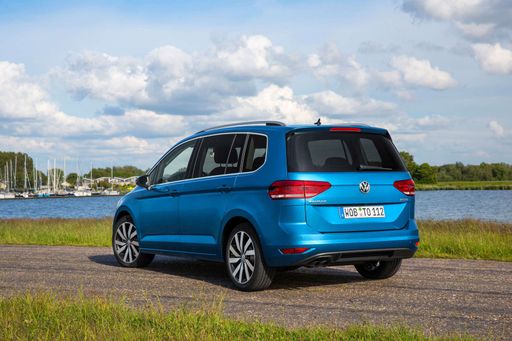
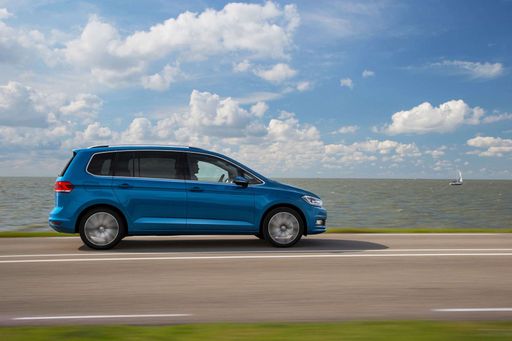
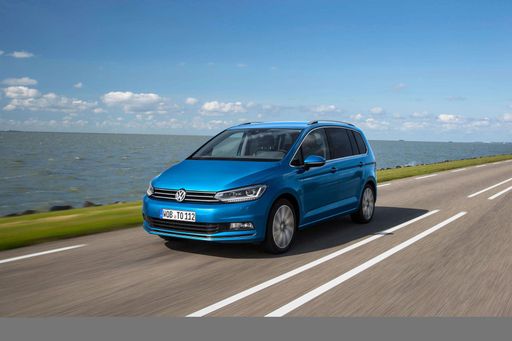
The VW Touran is engineered as a compact yet spacious MPV, known for its practicality in urban settings and family-oriented design. With dimensions of 4527 mm in length, 1829 mm in width, and 1668 mm in height, it offers a streamlined profile without compromising on space.

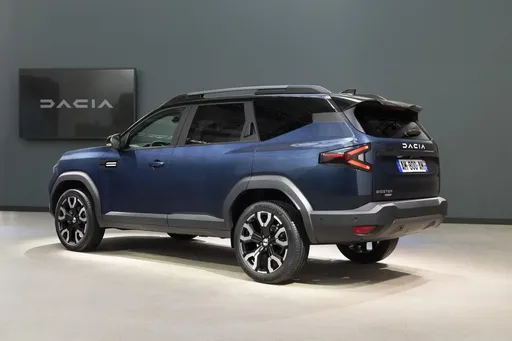
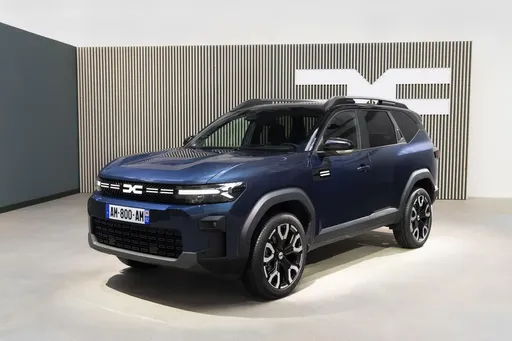
On the other hand, the Dacia Bigster, debuting in 2025, presents itself as a robust SUV designed for those with a penchant for adventure. Its larger dimensions, 4570 mm in length, 1813 mm in width, and 1705 mm in height, ensures ample space and presence on the road, perfect for outdoor expeditions.

Touran

Engine Performance and Efficiency

The engines define the core dynamics of any vehicle. The VW Touran provides a choice between petrol and diesel options, with power outputs ranging from 122 to 150 HP and torque reaching up to 360 Nm. Its fuel consumption ranges between 5.1 and 6.4 L/100km depending on the variant, and it boasts a top speed of up to 209 km/h.

In comparison, the Dacia Bigster offers a variety of powertrains, including petrol MHEV, full hybrid, and LPG options. Its power is slightly less aggressive but still competent, with the strongest setup producing 155 HP and a torque of 230 Nm. Its fuel efficiency is commendable, ranging from 4.7 to 6.1 L/100km, making it both powerful and economical for an SUV.

Bigster

Transmission and Drive Dynamics

The Touran provides a balanced ride with both manual and sophisticated dual-clutch automatic transmissions. Its front-wheel-drive ensures ease of handling, especially in urban environments. Conversely, the Bigster offers both manual and automatic options but stands out with its all-wheel-drive capabilities, perfect for rough terrains and variable conditions.

Touran

Interior: Comfort Meets Utility

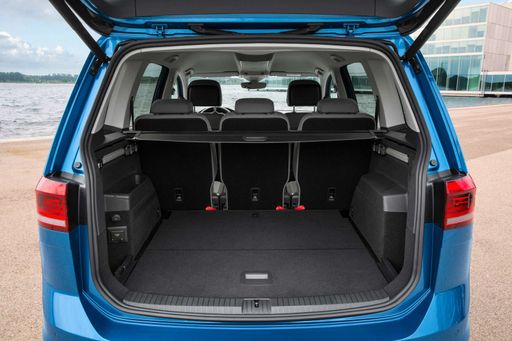
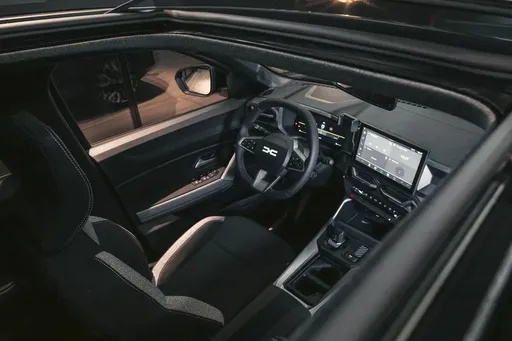
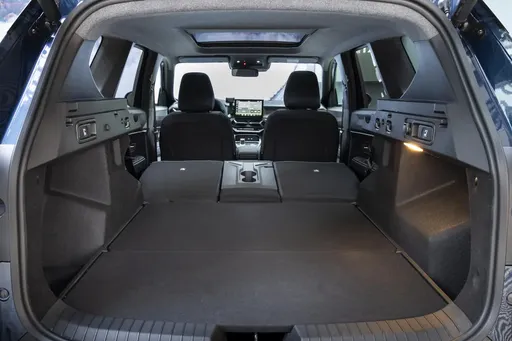
Both vehicles offer seating for five, but the VW Touran takes a lead in trunk space with an expansive 834 liters, ideal for family trips and additional cargo. The Dacia Bigster, with a maximum trunk capacity of 667 liters, offers reasonable space within its SUV class but compensates in ride comfort and versatility.

Bigster

Safety and Innovation

Safety and emissions are critical in today’s automotive world. The VW Touran, featuring CO2 emissions between 133 and 147 g/km, aligns itself with efficiency standards, though it falls within the E to D CO2 efficiency class.

Meanwhile, the Bigster places itself more progressively in the C to E range with emissions starting at 106 g/km, due primarily to its hybrid options. This makes it a forward-thinking choice for environmentally conscious buyers.

Touran

Conclusion: Choosing Your Companion

In the comparison between the VW Touran and the Dacia Bigster, the choice boils down to individual preference and lifestyle. The Touran shines with its compact MPV agility and larger cargo space, making it an excellent option for city living. The Bigster, however, targets those desiring a rugged SUV experience infused with environmental wisdom, ideal for those whose journeys often lead off the beaten path.

Each model holds its ground with unique strengths, redefining what it means to cater to the modern driver and their aspirations.

Here’s where it gets real: The technical differences in detail

Touran

Costs and Efficiency:

Looking at overall running costs, both models reveal some interesting differences in everyday economy.

Dacia Bigster is significantly cheaper – starting at 20,600 £ , while the VW Touran costs 36,000 £ . That’s a price difference of around 15,433 £.

Fuel consumption also shows a difference: the Dacia Bigster uses 4.7 L/100km and is slightly more efficient than the VW Touran with 5.2 L/100km. The difference is about 0.5 L/100km.

Bigster

Engine and Performance:

Power, torque and acceleration are the classic benchmarks for car enthusiasts – and here, some clear differences start to show.

When it comes to engine power, the Dacia Bigster offers only slightly more power – delivering 158 HP compared to 150 HP. That’s roughly 8 HP more horsepower.

When accelerating from 0 to 100 km/h, the VW Touran is very slightly quicker – completing the sprint in 8.9 s, while the Dacia Bigster takes 9.7 s. That’s about 0.8 s quicker.

There’s also a difference in torque: the VW Touran delivers markedly more torque with 360 Nm compared to 230 Nm. That’s about 130 Nm more.

Touran

Space and Everyday Use:

Beyond pure performance, interior space and usability matter most in daily life. This is where you see which car is more practical and versatile.

Both vehicles offer seating for 5 people.

In terms of curb weight, Dacia Bigster is barely lighter – 1,425 kg compared to 1,520 kg. The difference is around 95 kg.

Looking at boot space, the VW Touran offers noticeably more boot space – 834 L compared to 667 L. That’s a difference of about 167 L.

When it comes to payload, the VW Touran carries markedly more – 601 kg compared to 465 kg. That’s a difference of about 136 kg.

Who wins the race in the data check?

The Dacia Bigster comes out modestly ahead in the objective data comparison.
This result only shows which model scores more points on paper – not which of the two cars feels right for you.

from £20,600
Bigster

Dacia Bigster

  • Engine Type : Petrol MHEV, Full Hybrid, LPG
  • Transmission : Manuel, Automatic
  • Drive Type : Front-Wheel Drive, All-Wheel Drive
  • Power HP : 140 - 158 HP
  • Consumption L/100km : 4.7 - 7.2 L/100km
VW Touran
Dacia Bigster

Costs and Consumption

View detailed analysis

Engine and Performance

View detailed analysis

Dimensions and Body

View detailed analysis

VW Touran

The VW Touran is a sensible family people‑carrier that mixes practical packaging with tidy, German-built refinement, making everyday life with kids and shopping feel a lot less chaotic. If you want a reliable, no-nonsense companion that drives with surprising poise and values usefulness over flash, the Touran is a very persuasive choice.

details

Dacia Bigster

The Bigster is poised to redefine the SUV segment with its bold design and spacious interior, catering to the needs of both families and adventure seekers alike. Emphasizing sustainability and practicality, this model reflects a modern approach to automotive engineering, making it a compelling choice for environmentally conscious drivers. With its striking presence on the road, the Bigster not only captures attention but also embodies a new era of versatile mobility.

details
VW Touran
Dacia Bigster

Costs and Consumption

Price
36,000 - 45,300 £
Price
20,600 - 28,100 £
Consumption L/100km
5.2 - 6.5 L/100km
Consumption L/100km
4.7 - 7.2 L/100km
Consumption kWh/100km
-
Consumption kWh/100km
-
Electric Range
-
Electric Range
-
Battery Capacity
-
Battery Capacity
-
co2
136 - 149 g/km
co2
106 - 134 g/km
Fuel tank capacity
-
Fuel tank capacity
-

Dimensions and Body

Body Type
MPV
Body Type
SUV
Seats
5
Seats
5
Doors
-
Doors
-
Curb weight
1,520 - 1,631 kg
Curb weight
1,425 - 1,611 kg
Trunk capacity
834 L
Trunk capacity
546 - 667 L
Length
-
Length
-
Width
1,829 mm
Width
1,813 mm
Height
-
Height
-
Max trunk capacity
-
Max trunk capacity
-
Payload
590 - 601 kg
Payload
434 - 465 kg

Engine and Performance

Engine Type
Petrol, Diesel
Engine Type
Petrol MHEV, Full Hybrid, LPG
Transmission
Manuel, Automatic
Transmission
Manuel, Automatic
Transmission Detail
Manual Gearbox, Dual-Clutch Automatic
Transmission Detail
Manual Gearbox, Automated Manual, Dual-Clutch Automatic
Drive Type
Front-Wheel Drive
Drive Type
Front-Wheel Drive, All-Wheel Drive
Power HP
122 - 150 HP
Power HP
140 - 158 HP
Acceleration 0-100km/h
8.9 - 10.8 s
Acceleration 0-100km/h
9.7 - 10.5 s
Max Speed
-
Max Speed
-
Torque
250 - 360 Nm
Torque
230 Nm
Number of Cylinders
4
Number of Cylinders
3 - 4
Power kW
90 - 110 kW
Power kW
103 - 116 kW
Engine capacity
1,498 - 1,968 cm3
Engine capacity
1,199 - 1,799 cm3

General

Model Year
2,024 - 2,025
Model Year
2025
CO2 Efficiency Class
E
CO2 Efficiency Class
D, C
Brand
VW
Brand
Dacia
DriveDuel uses data analysis and artificial intelligence to evaluate vehicle data and create content. Content is regularly reviewed and improved. The displayed prices are estimates based on German list prices, adjusted to the respective country’s VAT. Country-specific registration taxes are not included. This information is not legally binding.