@ BMW Group Press
@ Toyota Motor Corporation
VS

BMW 1 Series vs Toyota C-HR – Differences & prices compared

Both models have their strengths – but which one suits you more?
Compare performance, efficiency, price and space directly: BMW 1 Series or Toyota C-HR?

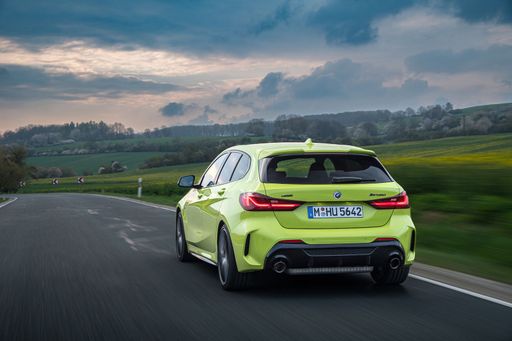
1 Series @ BMW Group Press

A Clash of Styles: BMW 1 Series vs Toyota C-HR

In the world of compact cars, the BMW 1 Series and the Toyota C-HR stand out as unique offerings, each targeting a different echelon of the modern driver. The BMW 1 Series, a premium hatchback, promises a blend of performance and luxury, while the Toyota C-HR stands out as a chic and environmentally conscious SUV. This comparison will delve into the specifics of each model, examining their technical aspects and innovations, as we decide which car outpaces the other.
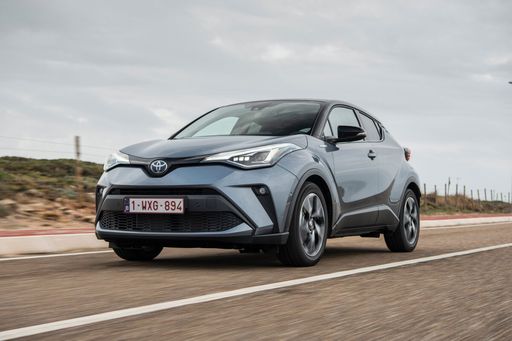
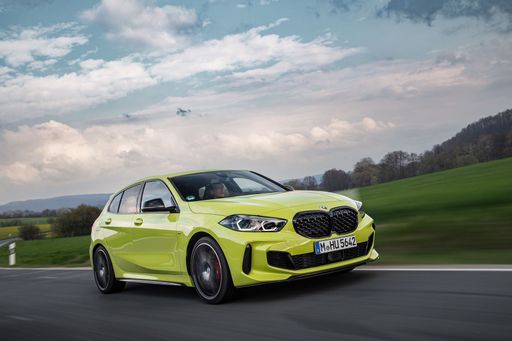
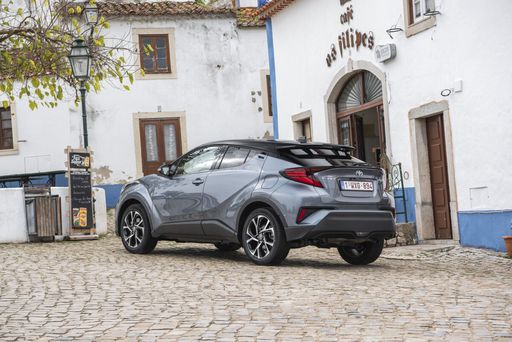
C-HR @ Toyota Motor Corporation

Engine Performance and Efficiency

The BMW 1 Series offers a selection of engines that cater to both performance enthusiasts and those seeking efficiency. With power ranging from 122 HP to a sportier 300 HP, complemented by a refined dual-clutch automatic transmission, the 1 Series covers a versatile spectrum. Average fuel consumption figures range from an economical 4.3 L/100km to a more spirited 7.6 L/100km, depending on the engine choice. The shift between efficiency and speed is seamless, offering an option for every driver’s preference.

In contrast, the Toyota C-HR leverages hybrid technology to its fullest. With engine options that include both full hybrid and plug-in hybrid configurations, it demonstrates Toyota’s commitment to reducing carbon footprints without sacrificing performance. Power outputs range from 140 HP to 223 HP, achieving remarkable fuel efficiencies as low as 0.8 L/100km when in electric range mode. The C-HR stands out for its eco-friendliness, with CO2 emissions as low as 19 g/km.

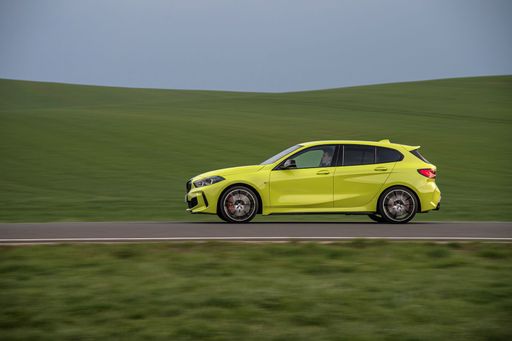
1 Series @ BMW Group Press

Drivability and Ride Comfort

Built on its storied motorsport heritage, the BMW 1 Series provides an engaging driving experience. Available in both front-wheel and all-wheel drive, the 1 Series is engineered for precise handling and agility, perfect for urban driving or a spirited ride through winding roads. An array of torque options peaking at 400 Nm ensures responsive acceleration, with 0-100km/h in as little as 4.9 seconds in its performance variants.

The Toyota C-HR, meanwhile, embraces a more leisurely and comfortable driving persona. With its continuously variable transmission (CVT), the ride remains smooth and uninterrupted, emphasizing comfort over sportiness. The front-wheel-drive and all-wheel-drive options allow for adaptability based on driving conditions, enhancing its capabilities as a versatile urban SUV.

C-HR @ Toyota Motor Corporation

Design and Practicality

When it comes to aesthetics, the two models could not be more distinct. The BMW 1 Series holds to its classic, sophisticated design language with a focus on luxury. With dimensions of 4361 mm in length, 1800 mm in width, and 1459 mm in height, the 1 Series possesses a compact yet elegant stance—complemented by a respectable trunk capacity of 300 to 380 liters for everyday practicality.

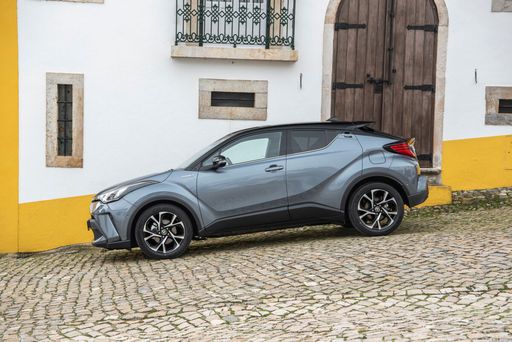
On the other hand, the Toyota C-HR exudes a bold and futuristic design, pushing boundaries with its coupe-like silhouette. With its slightly larger dimensions—4362 mm in length, 1832 mm in width, and between 1558 and 1564 mm in height—it offers a striking presence on the road. Its trunk is notably more spacious, with up to 447 liters available, catering to those needing extra room for luggage or gear.

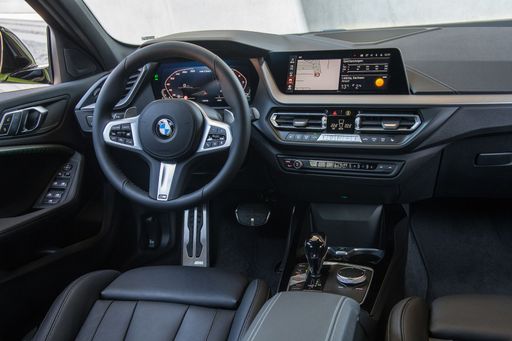
1 Series @ BMW Group Press

Conclusion: Choice Defines the Experience

Ultimately, the choice between the BMW 1 Series and the Toyota C-HR is dependent on the driver's priorities. For those who seek a passionate drive infused with a touch of luxury, the 1 Series is an excellent choice. For the eco-conscious buyer who values innovative hybrid technology wrapped in a stylish SUV package, the C-HR emerges as a strong contender.

Both vehicles excel in their respective domains, showcasing the diversity and innovation present in today’s automotive landscape.

Here’s where it gets real: The technical differences in detail

C-HR @ Toyota Motor Corporation

Costs and Efficiency:

When it comes to price and running costs, the biggest differences usually appear. This is often where you see which car fits your budget better in the long run.

BMW 1 Series has a hardly perceptible advantage in terms of price – it starts at 28800 £, while the Toyota C-HR costs 29100 £. That’s a price difference of around 334 £.

Fuel consumption also shows a difference: Toyota C-HR manages with 0.80 L and is therefore clearly more efficient than the BMW 1 Series with 4.30 L. The difference is about 3.50 L per 100 km.

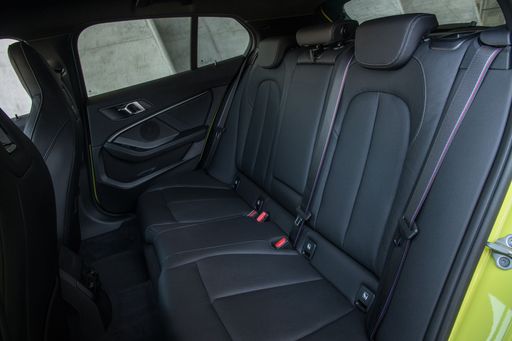
1 Series @ BMW Group Press

Engine and Performance:

Power, torque and acceleration say a lot about how a car feels on the road. This is where you see which model delivers more driving dynamics.

When it comes to engine power, the BMW 1 Series has a noticeable edge – offering 300 HP compared to 223 HP. That’s roughly 77 HP more horsepower.

In acceleration from 0 to 100 km/h, the BMW 1 Series is clearly quicker – completing the sprint in 4.90 s, while the Toyota C-HR takes 7.40 s. That’s about 2.50 s faster.

In terms of top speed, the BMW 1 Series performs distinct better – reaching 250 km/h, while the Toyota C-HR tops out at 180 km/h. The difference is around 70 km/h.

C-HR @ Toyota Motor Corporation

Space and Everyday Use:

Beyond pure performance, interior space and usability matter most in daily life. This is where you see which car is more practical and versatile.

Both vehicles offer seating for 5 people.

In curb weight, BMW 1 Series is slight lighter – 1465 kg compared to 1505 kg. The difference is around 40 kg.

In terms of boot space, the Toyota C-HR offers a bit more room – 447 L compared to 380 L. That’s a difference of about 67 L.

In maximum load capacity, the BMW 1 Series performs minimal better – up to 1200 L, which is about 45 L more than the Toyota C-HR.

When it comes to payload, BMW 1 Series slightly takes the win – 510 kg compared to 425 kg. That’s a difference of about 85 kg.

Who wins the race?

The Toyota C-HR proves to be outperforms in nearly all aspects and therefore becomes our DriveDuel Champion!
Toyota C-HR is the better all-rounder in this comparison.

from about £29,100
C-HR @ Toyota Motor Corporation

Toyota C-HR

  • Engine Type : Full Hybrid, Plugin Hybrid
  • Transmission : Automatic
  • Drive Type : Front-Wheel Drive, All-Wheel Drive
  • Power HP : 140 - 223 HP
  • Consumption L/100km : 0.8 - 5.1 L
  • Electric Range : 68 km

BMW 1 Series

5 (1)
rate

The BMW 1 Series is a compact premium hatchback that injects a proper sense of driving fun into everyday life, with sharp handling and a cabin that punches above its class. It’s a great pick for buyers who want sporty manners without losing practicality, and yes, you’ll still get that unmistakable BMW grin behind the wheel.

details

Toyota C-HR

5 (1)
rate

The Toyota C-HR cuts a striking figure with its angular styling and coupe-like profile, so you’ll never go unnoticed in the supermarket car park. It balances everyday practicality with a nimble, city-friendly personality, making routine commutes feel a touch more fun without asking for forgiveness.

details
BMW 1 Series
Toyota C-HR
1 Series @ BMW Group Press
C-HR @ Toyota Motor Corporation

Costs and Consumption

Price
28800 - 51100 £
Price
29100 - 42800 £
Consumption L/100km
4.3 - 7.6 L
Consumption L/100km
0.8 - 5.1 L
Consumption kWh/100km
-
Consumption kWh/100km
-
Electric Range
-
Electric Range
68 km
Battery Capacity
-
Battery Capacity
-
co2
112 - 173 g/km
co2
17 - 115 g/km
Fuel tank capacity
49 L
Fuel tank capacity
43 L

Dimensions and Body

Body Type
Hatchback
Body Type
SUV
Seats
5
Seats
5
Doors
5
Doors
5
Curb weight
1465 - 1625 kg
Curb weight
1505 - 1755 kg
Trunk capacity
300 - 380 L
Trunk capacity
350 - 447 L
Length
4361 mm
Length
4362 mm
Width
1800 mm
Width
1832 mm
Height
1459 mm
Height
1558 - 1564 mm
Max trunk capacity
1135 - 1200 L
Max trunk capacity
1076 - 1155 L
Payload
475 - 510 kg
Payload
375 - 425 kg

Engine and Performance

Engine Type
Diesel, Petrol MHEV, Diesel MHEV, Petrol
Engine Type
Full Hybrid, Plugin Hybrid
Transmission
Automatic
Transmission
Automatic
Transmission Detail
Dual-Clutch Automatic
Transmission Detail
CVT
Drive Type
Front-Wheel Drive, All-Wheel Drive
Drive Type
Front-Wheel Drive, All-Wheel Drive
Power HP
122 - 300 HP
Power HP
140 - 223 HP
Acceleration 0-100km/h
4.9 - 9.8 s
Acceleration 0-100km/h
7.4 - 9.9 s
Max Speed
210 - 250 km/h
Max Speed
175 - 180 km/h
Torque
230 - 400 Nm
Torque
-
Number of Cylinders
3 - 4
Number of Cylinders
4
Power kW
90 - 221 kW
Power kW
103 - 164 kW
Engine capacity
1499 - 1998 cm3
Engine capacity
1798 - 1987 cm3

General

Model Year
2024
Model Year
2024 - 2025
CO2 Efficiency Class
D, C, F
CO2 Efficiency Class
C, B
Brand
BMW
Brand
Toyota
What drive types are available for the BMW 1 Series?

The BMW 1 Series is offered with Front-Wheel Drive or All-Wheel Drive.

The prices and data displayed are estimates based on German list prices and may vary by country. This information is not legally binding.