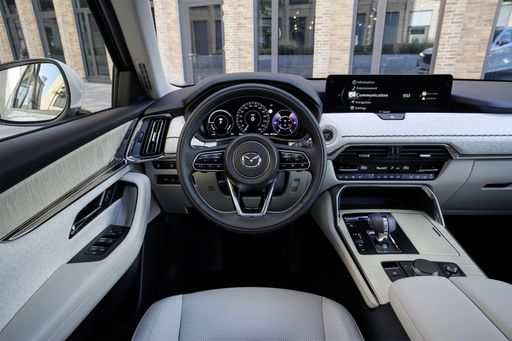
VS

CUPRA Terramar vs Mazda CX-60 comparison

Compare performance (272 HP vs 327 HP), boot space and price (42,000 £ vs 43,700 £ ) at a glance. Find out which car is the better choice for you – CUPRA Terramar or Mazda CX-60?

CUPRA Terramar vs Mazda CX-60: Key differences

CUPRA Terramar

4.9 (8 Reviews)
rate
  • barely cheaper
  • clearly more efficient
  • substantially more electric range
  • somewhat lighter
details

Mazda CX-60

4.5 (9 Reviews)
rate
  • a bit more power
  • very slightly quicker 0–100 km/h
  • barely more trunk space
details

All details on performance, efficiency, range and trunk space can be found in the technical comparison below – including user reviews for both models.

By Achim Sedelmaier

Terramar

In the competitive SUV market, the CUPRA Terramar and Mazda CX-60 are two contenders looking to capture the hearts of drivers. Both models bring a blend of performance, innovation, and comfort, but they cater to slightly different preferences and driving styles. This comparison will delve into their technical specifications, innovative features, and overall driving experience.
CX-60

Design and Dimensions

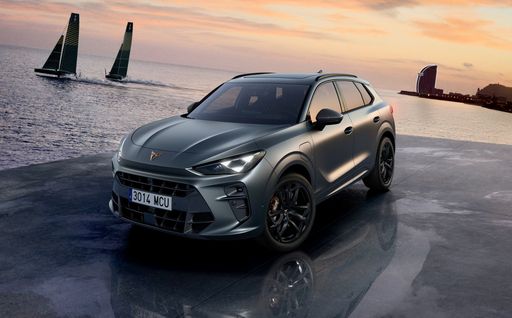
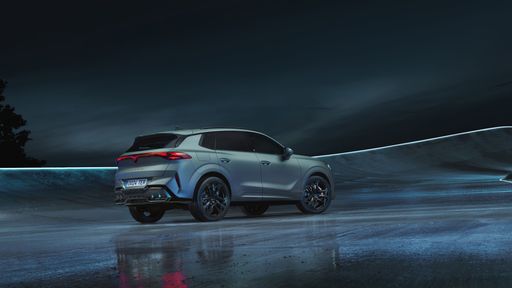
The CUPRA Terramar presents a striking, athletic design that emphasizes its performance-oriented nature. Measuring 4,519 mm in length, 1,869 mm in width, and 1,586 mm in height, it offers a robust stance on the road. It’s engineered to accommodate five passengers comfortably, with a trunk capacity of 450 liters, expanding to 540 liters with the rear seats down.

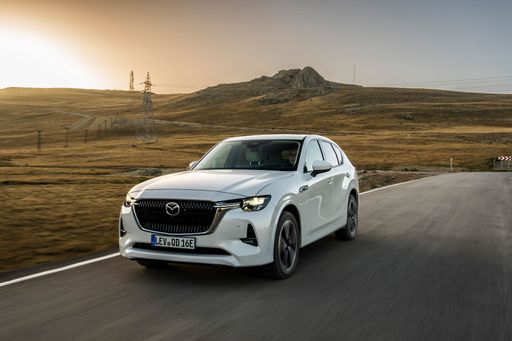
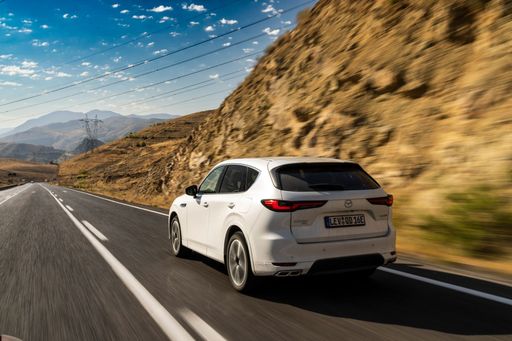
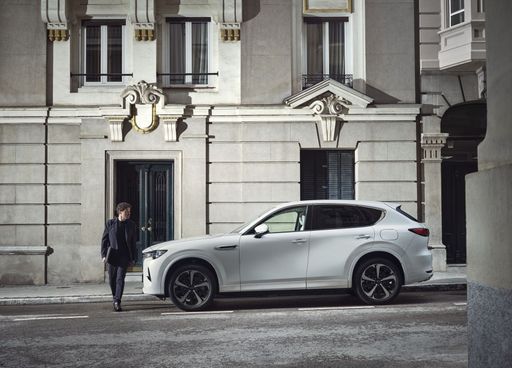
In contrast, the Mazda CX-60 is slightly larger at 4,745 mm long, 1,890 mm wide, and 1,680 mm high. Also designed for five occupants, it boasts a more generous trunk space of 570 liters. The CX-60’s exterior has a sophisticated and elegant allure, appealing to those who appreciate stylish utility vehicles.

Terramar

Powertrain and Performance

The CUPRA Terramar offers a range of powertrains including petrol, plugin hybrid, and MHEV options, with power outputs ranging from 150 HP to an impressive 272 HP. The hybrid variant features a 19.7 kWh battery and boasts an electric range of up to 120 km, making it a compelling option for eco-conscious drivers. The 0-100 km/h acceleration times are respectable, with the fastest variant hitting this benchmark in just 5.3 seconds.

On the other hand, the Mazda CX-60 is equipped with even more potent engine choices, including a 327 HP plugin hybrid and an efficient diesel MHEV. The electric range on the CX-60 is rated at 64 km, sufficient for short urban commutes. Its fastest variant reaches 100 km/h in a swift 5.8 seconds, showcasing its dynamic performance capabilities. With a torque output reaching up to 550 Nm in some variants, the CX-60 promises vigorous acceleration and towing capacity.

CX-60

Fuel Efficiency and Emissions

When it comes to fuel efficiency, the CUPRA Terramar impresses with its hybrid models, offering remarkably low consumption figures. The plugin hybrid’s consumption can drop to as low as 0.4 L/100 km in electric mode. However, its petrol variants show a higher consumption rate, reaching up to 8.5 L/100 km, with CO2 emissions ranging from 10 to 192 g/km depending on the engine choice.

Conversely, the Mazda CX-60’s diesel variants are particularly efficient, with fuel consumption as low as 5 L/100 km. The petrol models, while slightly less efficient at 5.4 L/100 km, also exhibit competitive figures. CO2 emissions for the CX-60 start at 31 g/km, underscoring Mazda’s commitment to reducing its environmental footprint.

Terramar

Technology and Innovations

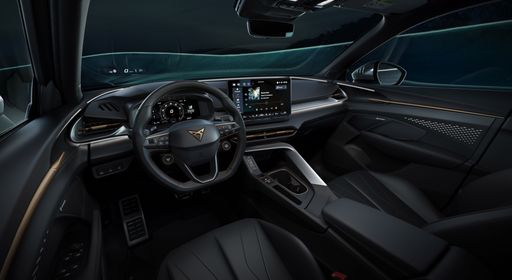
Both models are equipped with cutting-edge technology to enhance driving dynamics and occupant comfort. The CUPRA Terramar features an advanced infotainment system with a large touchscreen display, smartphone connectivity, and a suite of driver-assistance systems designed to simplify driving and ensure safety.

In comparison, the Mazda CX-60 includes the latest iteration of Mazda's connected technologies, offering seamless integration with smartphones and smart devices. The CX-60 also enhances the driving experience with an optional heads-up display that keeps essential information right in the driver’s line of sight.

CX-60

Driving Experience and Handling

The driving experience in the CUPRA Terramar is geared towards sportiveness, with precise steering and agility that handles both urban roads and open highways effortlessly. The all-wheel-drive option enhances stability, making it a thrilling choice for driving enthusiasts.

Meanwhile, the Mazda CX-60 shines with its rear-wheel-drive platform, delivering a balanced and engaging drive. It combines a sporty feel with the comfort expected from an SUV, making it ideal for long drives and city commuting alike. Its close attention to detail in handling dynamics makes it a joy to drive.

Conclusion: Which SUV Reigns Supreme?

Choosing between the CUPRA Terramar and the Mazda CX-60 ultimately depends on what the driver prioritizes. If performance and hybrid technology are at the forefront of your needs, the Terramar is a compelling choice. Conversely, those who lean towards a combination of power, efficiency, and elegant design may find the CX-60 to be more suited to their preferences.

Both SUVs represent their brands well, bringing innovation, style, and performance to the table. As the automotive industry continues to evolve, it's exciting to see how each will adapt and grow in the future.

Here’s where it gets real: The technical differences in detail

Terramar

Costs and Efficiency:

When it comes to price and running costs, the biggest differences usually appear. This is often where you see which car fits your budget better in the long run.

CUPRA Terramar is barely cheaper – starting at 42,000 £ , while the Mazda CX-60 costs 43,700 £ . That’s a price difference of around 1,689 £.

Fuel consumption also shows a difference: the CUPRA Terramar uses 1.6 L/100km and is clearly more efficient than the Mazda CX-60 with 3.8 L/100km. The difference is about 2.2 L/100km.

As for electric range, the CUPRA Terramar offers substantially more range – reaching up to 118 km, about 55 km more than the Mazda CX-60.

CX-60

Engine and Performance:

Under the bonnet, it becomes clear which model is tuned for sportiness and which one takes the lead when you hit the accelerator.

When it comes to engine power, the Mazda CX-60 offers a bit more power – delivering 327 HP compared to 272 HP. That’s roughly 55 HP more horsepower.

When accelerating from 0 to 100 km/h, the Mazda CX-60 is very slightly quicker – completing the sprint in 5.8 s, while the CUPRA Terramar takes 5.9 s. That’s about 0.1 s quicker.

There’s also a difference in torque: the Mazda CX-60 delivers clearly more torque with 550 Nm compared to 400 Nm. That’s about 150 Nm more.

Terramar

Space and Everyday Use:

Cabin size, boot volume and payload all play a role in everyday practicality. Here, comfort and flexibility make the difference.

Both vehicles offer seating for 5 people.

In terms of curb weight, CUPRA Terramar is somewhat lighter – 1,638 kg compared to 1,890 kg. The difference is around 252 kg.

Looking at boot space, the Mazda CX-60 offers barely more boot space – 570 L compared to 540 L. That’s a difference of about 30 L.

When it comes to payload, the Mazda CX-60 carries a bit more – 612 kg compared to 542 kg. That’s a difference of about 70 kg.

Who wins the race in the data check?

The CUPRA Terramar is decisively ahead in the objective data comparison.
This result only shows which model scores more points on paper – not which of the two cars feels right for you.

from £42,000
Terramar

CUPRA Terramar

  • Engine Type Petrol, Petrol MHEV, Plugin Hybrid
  • Transmission Automatic
  • Drive Type All-Wheel Drive, Front-Wheel Drive
  • Power HP 150 - 272 HP
  • Consumption L/100km 1.6 - 8.4 L/100km
  • Electric Range 118 km
CUPRA Terramar
Mazda CX-60

Costs and Consumption

View detailed analysis

Engine and Performance

View detailed analysis

Dimensions and Body

View detailed analysis

CUPRA Terramar

The CUPRA Terramar blends the brand’s sporty DNA with the practicality of a compact crossover, offering striking design and a driver-focused, premium-feeling cabin. It’s aimed at buyers who want engaging handling and athletic looks without giving up everyday usability and modern connectivity.

details

Mazda CX-60

The Mazda CX-60 pairs sculpted, understated looks with poised handling and a cabin that punches above its class, making long drives feel unexpectedly civilized. For buyers who want a premium feel without the showroom swagger, it's the sort of car that earns respect quietly — and still manages a wink when you push on.

details
CUPRA Terramar
Mazda CX-60

Costs and Consumption

Price
42,000 - 51,100 £
Price
43,700 - 57,900 £
Consumption L/100km
1.6 - 8.4 L/100km
Consumption L/100km
3.8 - 5.2 L/100km
Consumption kWh/100km
-
Consumption kWh/100km
-
Electric Range
118 km
Electric Range
63 km
Battery Capacity
-
Battery Capacity
-
co2
36 - 191 g/km
co2
85 - 137 g/km
Fuel tank capacity
-
Fuel tank capacity
-

Dimensions and Body

Body Type
SUV
Body Type
SUV
Seats
5
Seats
5
Doors
-
Doors
-
Curb weight
1,638 - 1,904 kg
Curb weight
1,890 - 2,055 kg
Trunk capacity
450 - 540 L
Trunk capacity
570 L
Length
-
Length
-
Width
1,869 mm
Width
1,890 mm
Height
-
Height
-
Max trunk capacity
-
Max trunk capacity
-
Payload
512 - 542 kg
Payload
581 - 612 kg

Engine and Performance

Engine Type
Petrol, Petrol MHEV, Plugin Hybrid
Engine Type
Plugin Hybrid, Diesel MHEV
Transmission
Automatic
Transmission
Automatic
Transmission Detail
Dual-Clutch Automatic
Transmission Detail
Automatic Gearbox
Drive Type
All-Wheel Drive, Front-Wheel Drive
Drive Type
All-Wheel Drive, Rear-Wheel Drive
Power HP
150 - 272 HP
Power HP
200 - 327 HP
Acceleration 0-100km/h
5.9 - 9.3 s
Acceleration 0-100km/h
5.8 - 8.4 s
Max Speed
-
Max Speed
-
Torque
250 - 400 Nm
Torque
450 - 550 Nm
Number of Cylinders
4
Number of Cylinders
4 - 6
Power kW
110 - 200 kW
Power kW
147 - 241 kW
Engine capacity
1,498 - 1,984 cm3
Engine capacity
2,488 - 3,283 cm3

General

Model Year
2,024 - 2,025
Model Year
2025
CO2 Efficiency Class
F, E, B, G
CO2 Efficiency Class
B, D, E
Brand
CUPRA
Brand
Mazda
DriveDuel uses data analysis and artificial intelligence to evaluate vehicle data and create content. Content is regularly reviewed and improved. The displayed prices are estimates based on German list prices, adjusted to the respective country’s VAT. Country-specific registration taxes are not included. This information is not legally binding.