VS

Dacia Bigster vs Nissan X-Trail comparison

Compare performance (158 HP vs 213 HP), boot space and price (20,600 £ vs 34,200 £ ) at a glance. Find out which car is the better choice for you – Dacia Bigster or Nissan X-Trail?

Dacia Bigster vs Nissan X-Trail: Key differences

Dacia Bigster

4.6 (10 Reviews)
rate
  • significantly cheaper
  • markedly more efficient
  • slightly lighter
  • somewhat more trunk space
details

Nissan X-Trail

4.6 (5 Reviews)
rate
  • visibly more power
  • visibly quicker 0–100 km/h
details

All details on performance, efficiency, range and trunk space can be found in the technical comparison below – including user reviews for both models.

By Achim Sedelmaier

Bigster

When it comes to the ever-growing SUV segment, two names that have captured attention are the Nissan X-Trail and the Dacia Bigster. Both vehicles come with modern features and attractive designs aimed at meeting the demands of today’s families and adventure seekers. This comparison will delve into the technical specifications and innovative features that each model brings to the table.
X-Trail

Design and Dimensions

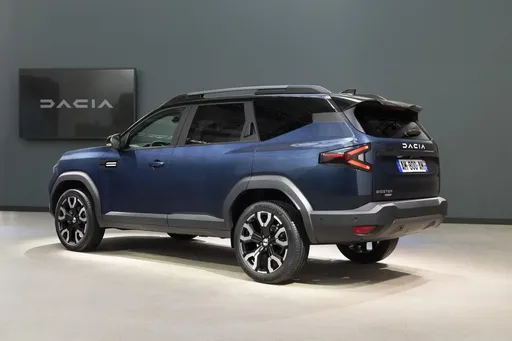
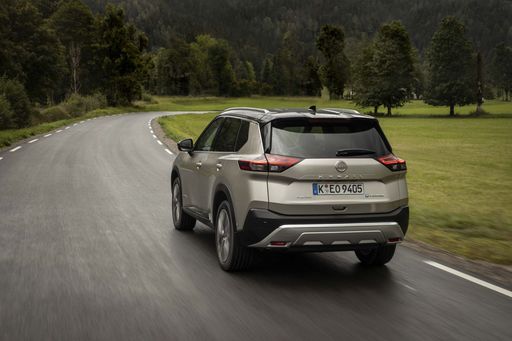
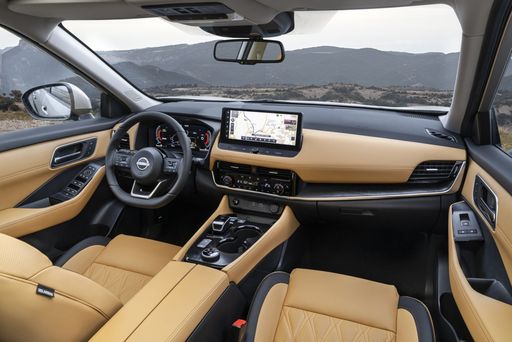
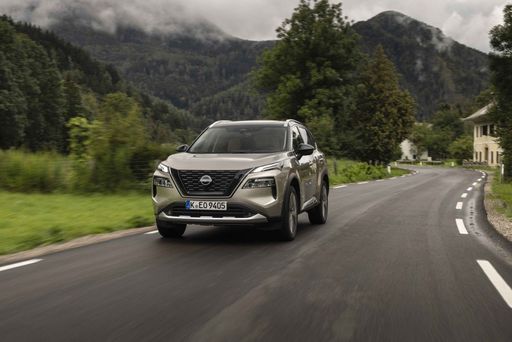
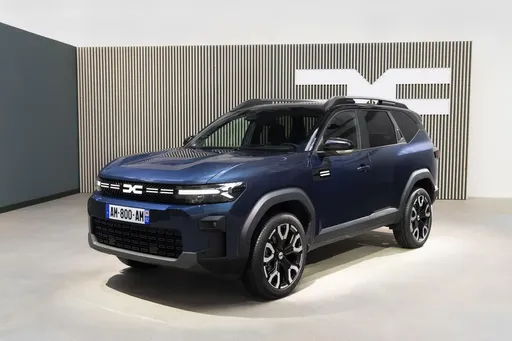
The Nissan X-Trail carries a robust SUV silhouette, measuring 4680 mm in length, 1840 mm in width, and standing 1720 mm tall. Its aggressive stance and contemporary design elements make it a popular choice among compact SUVs. In contrast, the Dacia Bigster has slightly more compact dimensions at 4570 mm in length, 1813 mm in width, and a height of 1705 mm. The understated character of its design emphasizes functionality and practicality.

Bigster

Performance and Engine Options

Under the hood, the Nissan X-Trail offers a choice of petrol MHEV and full hybrid engines, producing power outputs ranging from 163 to 213 HP. The X-Trail also boasts an efficient fuel consumption rate, with variants consuming between 5.7 to 6.9 L/100km. The vehicle is available in both front-wheel and all-wheel drive configurations, catering to a variety of driving preferences.

On the other hand, the Dacia Bigster is equipped with petrol MHEV and full hybrid engines, along with a rare LPG option. Power outputs for the Bigster are slightly lower, ranging from 130 to 155 HP, with remarkable fuel efficiency reaching as low as 4.7 L/100km. Like the X-Trail, the Bigster offers both front-wheel and all-wheel drive options, providing flexibility based on driving conditions.

X-Trail

Acceleration and Speed

The Nissan X-Trail accelerates from 0-100 km/h in as little as 7 seconds, a notable performance feature and testament to its sporty handling. Its top speed reaches up to 200 km/h, appealing to those who desire an exhilarating driving experience. In comparison, the Dacia Bigster has an acceleration time of around 9.7 to 11.2 seconds, with a maximum speed of 180 km/h—still respectable but not as dynamic as the X-Trail.

Bigster

Interior Comfort and Capacity

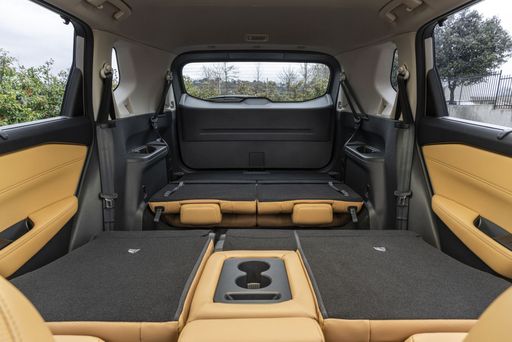
Inside, the Nissan X-Trail offers a flexible seating arrangement for either 5 or 7 passengers, along with generous trunk space varying from 575 to 585 liters, making it an ideal family vehicle. The modern dashboard layout comes equipped with a suite of the latest technology, such as a digital instrument cluster and advanced infotainment system.

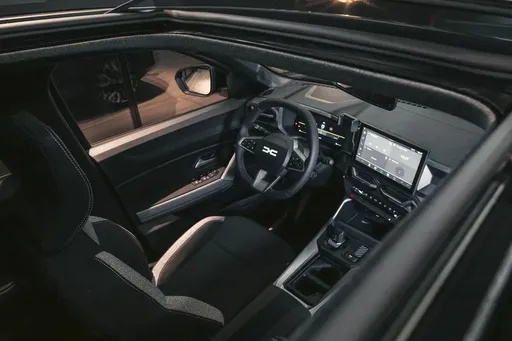
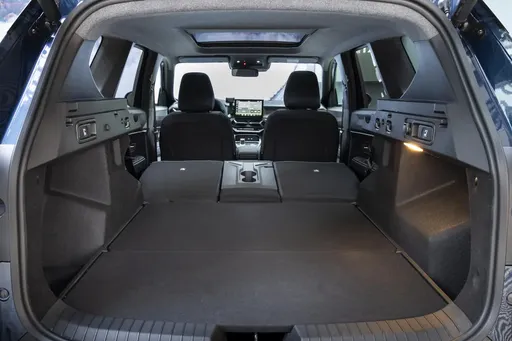
In contrast, the Dacia Bigster is more focused on simplicity and functionality, seating up to 5 passengers with a trunk capacity of up to 667 liters. Although it may lack some of the high-end tech found in the X-Trail, the interior is designed for durability and practicality, appealing to budget-conscious buyers.

X-Trail

Innovative Features and Safety

Both vehicles are equipped with a range of safety and driver-assist features; however, the Nissan X-Trail has an edge with its extensive safety suite that includes advanced intelligent driving aids, lane-keeping assistance, and adaptive cruise control. The emphasis on safety is a critical selling point, especially for families.

The Dacia Bigster, while offering basic safety features, does not have the same level of technological sophistication but does include essential safety measures to ensure peace of mind on the road.

Bigster

Conclusion

Ultimately, the choice between the Nissan X-Trail and the Dacia Bigster may come down to individual preferences and needs. The X-Trail excels in performance, interior technology, and safety features, making it a top pick for those willing to invest a little more for added luxury. Meanwhile, the Bigster appeals to value-seekers looking for functionality and efficiency without the frills. Both models reflect the versatility and capacity expected from modern SUVs, ensuring they will continue to compete strongly in the market.

Here’s where it gets real: The technical differences in detail

Bigster

Costs and Efficiency:

When it comes to price and running costs, the biggest differences usually appear. This is often where you see which car fits your budget better in the long run.

Dacia Bigster is significantly cheaper – starting at 20,600 £ , while the Nissan X-Trail costs 34,200 £ . That’s a price difference of around 13,595 £.

Fuel consumption also shows a difference: the Dacia Bigster uses 4.7 L/100km and is markedly more efficient than the Nissan X-Trail with 5.7 L/100km. The difference is about 1 L/100km.

X-Trail

Engine and Performance:

Power, torque and acceleration are the classic benchmarks for car enthusiasts – and here, some clear differences start to show.

When it comes to engine power, the Nissan X-Trail offers visibly more power – delivering 213 HP compared to 158 HP. That’s roughly 55 HP more horsepower.

When accelerating from 0 to 100 km/h, the Nissan X-Trail is visibly quicker – completing the sprint in 7 s, while the Dacia Bigster takes 9.7 s. That’s about 2.7 s quicker.

There’s also a difference in torque: the Nissan X-Trail delivers substantially more torque with 525 Nm compared to 230 Nm. That’s about 295 Nm more.

Bigster

Space and Everyday Use:

Cabin size, boot volume and payload all play a role in everyday practicality. Here, comfort and flexibility make the difference.

Seats: Nissan X-Trail offers more seats – 7 vs 5.

In terms of curb weight, Dacia Bigster is slightly lighter – 1,425 kg compared to 1,668 kg. The difference is around 243 kg.

Looking at boot space, the Dacia Bigster offers somewhat more boot space – 667 L compared to 585 L. That’s a difference of about 82 L.

When it comes to payload, the Nissan X-Trail carries moderately more – 574 kg compared to 465 kg. That’s a difference of about 109 kg.

Who wins the race in the data check?

The Nissan X-Trail has only a minor advantage in the objective data comparison.
This result only shows which model scores more points on paper – not which of the two cars feels right for you.

from £34,200
X-Trail

Nissan X-Trail

  • Engine Type Petrol MHEV, Full Hybrid
  • Transmission Automatic
  • Drive Type Front-Wheel Drive, All-Wheel Drive
  • Power HP 163 - 213 HP
  • Consumption L/100km 5.7 - 6.9 L/100km
Dacia Bigster
Nissan X-Trail

Costs and Consumption

View detailed analysis

Engine and Performance

View detailed analysis

Dimensions and Body

View detailed analysis

Dacia Bigster

The Dacia Bigster is a straightforward, value-driven SUV that emphasizes space, practicality and low running costs rather than flashy tech. It’s a sensible choice for buyers who want a roomy, well-built family car with rugged styling and easy-to-use features at an affordable price.

details

Nissan X-Trail

The Nissan X-Trail is a roomy, no-nonsense family SUV that mixes sensible practicality with a quietly modern look, making it an easy choice for busy lives and weekend escapes. It drives with calm confidence, delivers a comfortable ride and sensible tech, and won’t demand drama while doing the everyday heavy lifting.

details
Dacia Bigster
Nissan X-Trail

Costs and Consumption

Price
20,600 - 28,100 £
Price
34,200 - 50,500 £
Consumption L/100km
4.7 - 7.2 L/100km
Consumption L/100km
5.7 - 6.9 L/100km
Consumption kWh/100km
-
Consumption kWh/100km
-
Electric Range
-
Electric Range
-
Battery Capacity
-
Battery Capacity
-
co2
106 - 134 g/km
co2
131 - 161 g/km
Fuel tank capacity
-
Fuel tank capacity
-

Dimensions and Body

Body Type
SUV
Body Type
SUV
Seats
5
Seats
5 - 7
Doors
-
Doors
-
Curb weight
1,425 - 1,611 kg
Curb weight
1,668 - 1,961 kg
Trunk capacity
444 - 667 L
Trunk capacity
177 - 585 L
Length
-
Length
-
Width
1,813 mm
Width
1,840 mm
Height
-
Height
-
Max trunk capacity
-
Max trunk capacity
-
Payload
434 - 465 kg
Payload
432 - 574 kg

Engine and Performance

Engine Type
Petrol MHEV, Full Hybrid, LPG
Engine Type
Petrol MHEV, Full Hybrid
Transmission
Manuel, Automatic
Transmission
Automatic
Transmission Detail
Manual Gearbox, Automated Manual, Dual-Clutch Automatic
Transmission Detail
CVT, Reduction Gearbox
Drive Type
Front-Wheel Drive, All-Wheel Drive
Drive Type
Front-Wheel Drive, All-Wheel Drive
Power HP
140 - 158 HP
Power HP
163 - 213 HP
Acceleration 0-100km/h
9.7 - 10.5 s
Acceleration 0-100km/h
7 - 9.6 s
Max Speed
-
Max Speed
-
Torque
230 Nm
Torque
300 - 525 Nm
Number of Cylinders
3 - 4
Number of Cylinders
3
Power kW
103 - 116 kW
Power kW
120 - 157 kW
Engine capacity
1,199 - 1,789 cm3
Engine capacity
1,497 cm3

General

Model Year
2025
Model Year
2025
CO2 Efficiency Class
D, C
CO2 Efficiency Class
F, D, E
Brand
Dacia
Brand
Nissan
DriveDuel uses data analysis and artificial intelligence to evaluate vehicle data and create content. Content is regularly reviewed and improved. The displayed prices are estimates based on German list prices, adjusted to the respective country’s VAT. Country-specific registration taxes are not included. This information is not legally binding.