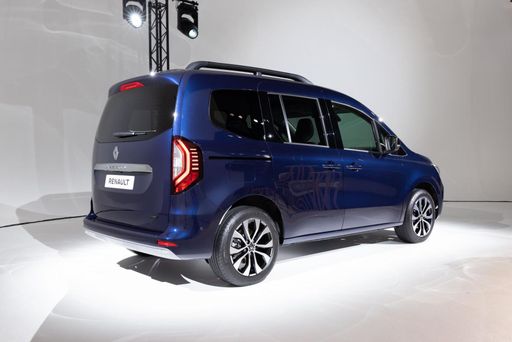
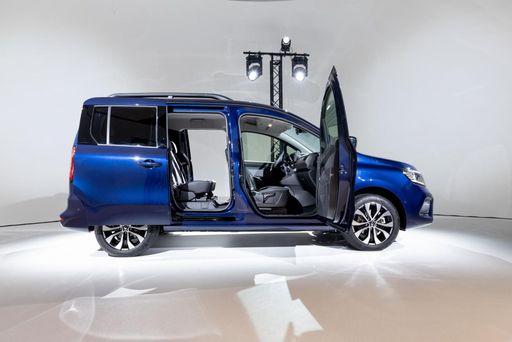
VS

Dacia Bigster vs Renault Kangoo comparison

Compare performance (158 HP vs 130 HP), boot space and price (20,600 £ vs 25,700 £ ) at a glance. Find out which car is the better choice for you – Dacia Bigster or Renault Kangoo?

Dacia Bigster vs Renault Kangoo: Key differences

Dacia Bigster

4.5 (12 Reviews)
rate
  • clearly cheaper
  • somewhat more power
  • somewhat more efficient
  • somewhat quicker 0–100 km/h
  • barely lighter
details

Renault Kangoo

5 (1 Reviews)
rate
  • a bit more trunk space
details

All details on performance, efficiency, range and trunk space can be found in the technical comparison below – including user reviews for both models.

By Achim Sedelmaier

Bigster

The Renault Kangoo vs. Dacia Bigster: A Comprehensive Comparison

The automotive landscape is ever-evolving, and today we compare two intriguing options in the segment: the Renault Kangoo and the Dacia Bigster. Both vehicles cater to different needs yet share a common goal of providing practicality and performance. Let's delve into their technical specifications and innovative features.
Kangoo

Body Types and Dimensions

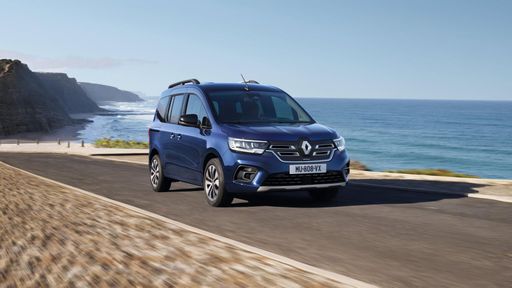
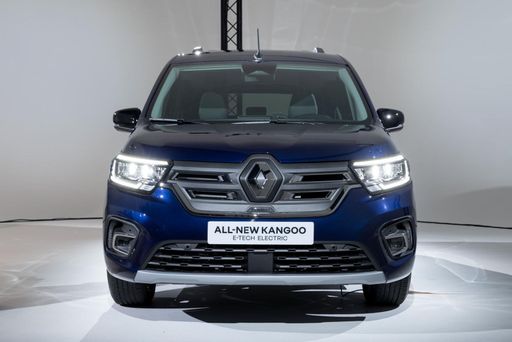
The Renault Kangoo is classified as a high-roof wagon, making it an ideal choice for families or businesses requiring spacious interiors. With lengths ranging from 4,486 mm to 4,911 mm, a width of 1,919 mm, and standing tall at 1,869 mm, it provides ample space for passengers and cargo alike.

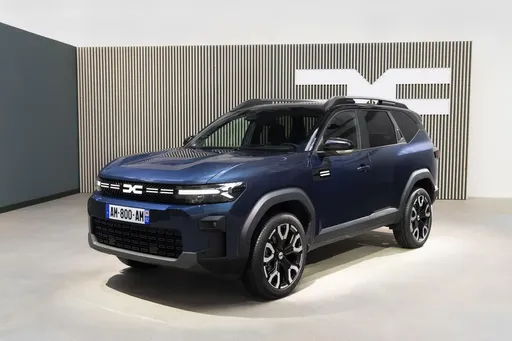
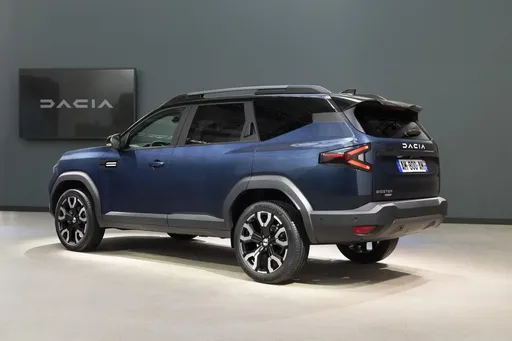
On the other hand, the Dacia Bigster is positioned as an SUV, typically appealing to the adventurous at heart. It measures 4,570 mm in length, 1,813 mm in width, and 1,705 mm in height, offering a more compact yet robust footprint suitable for varied terrains.

Bigster

Under the Hood: Engine Choices and Performance

The Kangoo offers a versatile range of propulsion systems, including diesel, petrol, and even an electric variant. Engines vary in power from 95 HP to 130 HP, providing decent flexibility for urban and rural drives. The electric edition stands out with an impressive range of 278 to 285 km on a full charge, with an efficient consumption between 20.2 and 21.5 kWh/100km.

The Bigster, meanwhile, competes with petrol MHEV, full hybrid, and LPG options, prioritizing eco-friendliness alongside power. With engines ranging from 130 HP to 155 HP and a torque output of up to 230 Nm, the Bigster promises competent performance coupled with CO2 efficiency across E, D, and C classes.

Kangoo

Transmission and Drive

Renault Kangoo presents a selection between manual, dual-clutch automatic, and reduction gearboxes, all paired with a front-wheel drive setup, ensuring a balance between efficiency and driving ease.

Dacia Bigster offers manual and automatic transmissions with the flexibility of all-wheel and front-wheel drive options, catering to those who prefer more control over their driving dynamics.

Bigster

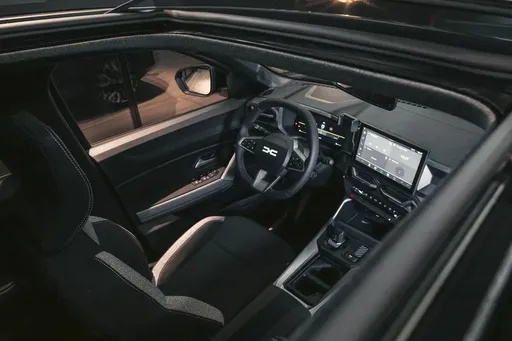
Interior Space and Comfort

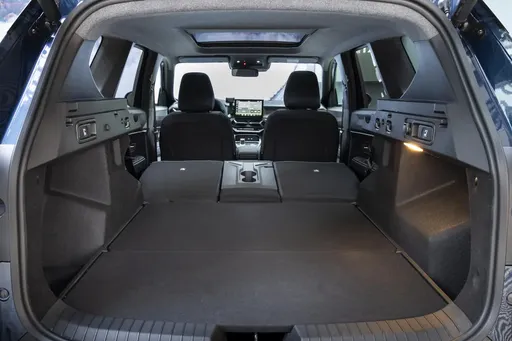
Inside, the Kangoo is designed for adaptability, offering seating for either 5 or 7 occupants. It boasts significant trunk capacities ranging from 513 liters up to 950 liters, suited for both everyday needs and heavier hauls.

The Bigster, accommodating 5 passengers, provides a trunk capacity between 546 and 667 liters, ideal for family outings or gear-heavy adventures. Despite its SUV build, it surprisingly competes closely with the Kangoo in cargo space.

Kangoo

Efficiency and Environmental Impact

Fuel consumption for the Kangoo varies from 5.2 to 7.1 L/100km, reflecting its diverse engine options. Its appeal is heightened by its lower CO2 emissions compared to many contemporaries, adhering to classes as efficient as 'A'.

The Bigster promises an economical ride, with its fuel consumption figures between 4.7 and 6.1 L/100km, also supporting an eco-conscious drive memo with CO2 emissions as low as 106 g/km, setting a benchmark in its class.

Bigster

Conclusion: Tailoring to Different Tastes

Both the Renault Kangoo and the Dacia Bigster offer compelling propositions within their respective segments. The Kangoo shines in versatility and space, while the Bigster stands out with its rugged SUV appeal and efficient powertrains. Whether you are looking for expansive utility or a balanced SUV experience, these cars illustrate the diverse options available in today's automotive market.

Here’s where it gets real: The technical differences in detail

Bigster

Costs and Efficiency:

Looking at overall running costs, both models reveal some interesting differences in everyday economy.

Dacia Bigster is clearly cheaper – starting at 20,600 £ , while the Renault Kangoo costs 25,700 £ . That’s a price difference of around 5,152 £.

Fuel consumption also shows a difference: the Dacia Bigster uses 4.7 L/100km and is somewhat more efficient than the Renault Kangoo with 5.2 L/100km. The difference is about 0.5 L/100km.

Kangoo

Engine and Performance:

Under the bonnet, it becomes clear which model is tuned for sportiness and which one takes the lead when you hit the accelerator.

When it comes to engine power, the Dacia Bigster offers somewhat more power – delivering 158 HP compared to 130 HP. That’s roughly 28 HP more horsepower.

When accelerating from 0 to 100 km/h, the Dacia Bigster is somewhat quicker – completing the sprint in 9.7 s, while the Renault Kangoo takes 11.6 s. That’s about 1.9 s quicker.

There’s also a difference in torque: the Renault Kangoo delivers somewhat more torque with 270 Nm compared to 230 Nm. That’s about 40 Nm more.

Bigster

Space and Everyday Use:

Beyond pure performance, interior space and usability matter most in daily life. This is where you see which car is more practical and versatile.

Seats: Renault Kangoo offers more seats – 7 vs 5.

In terms of curb weight, Dacia Bigster is barely lighter – 1,425 kg compared to 1,489 kg. The difference is around 64 kg.

Looking at boot space, the Renault Kangoo offers a bit more boot space – 775 L compared to 667 L. That’s a difference of about 108 L.

When it comes to payload, the Renault Kangoo carries clearly more – 610 kg compared to 465 kg. That’s a difference of about 145 kg.

Who wins the race in the data check?

The Dacia Bigster holds a decisive overall lead in the objective data comparison.
This result only shows which model scores more points on paper – not which of the two cars feels right for you.

from £20,600
Bigster

Dacia Bigster

  • Engine Type Petrol MHEV, Full Hybrid, LPG
  • Transmission Manuel, Automatic
  • Drive Type Front-Wheel Drive, All-Wheel Drive
  • Power HP 140 - 158 HP
  • Consumption L/100km 4.7 - 7.2 L/100km
Dacia Bigster
Renault Kangoo

Costs and Consumption

View detailed analysis

Engine and Performance

View detailed analysis

Dimensions and Body

View detailed analysis

Dacia Bigster

The Dacia Bigster is a straightforward, value-driven SUV that emphasizes space, practicality and low running costs rather than flashy tech. It’s a sensible choice for buyers who want a roomy, well-built family car with rugged styling and easy-to-use features at an affordable price.

details

Renault Kangoo

The Renault Kangoo is the pragmatic chameleon of small vans, marrying van-like practicality with carlike comfort and a cheerful, friendly face that suits both family runs and workday hauls. It's sensible, versatile and annoyingly useful — easy to live with, cheap to run and clever where it counts, so you get more space and fewer compromises than the price suggests.

details
Dacia Bigster
Renault Kangoo

Costs and Consumption

Price
20,600 - 28,100 £
Price
25,700 - 32,100 £
Consumption L/100km
4.7 - 7.2 L/100km
Consumption L/100km
5.2 - 7.4 L/100km
Consumption kWh/100km
-
Consumption kWh/100km
-
Electric Range
-
Electric Range
-
Battery Capacity
-
Battery Capacity
-
co2
106 - 134 g/km
co2
136 - 168 g/km
Fuel tank capacity
-
Fuel tank capacity
-

Dimensions and Body

Body Type
SUV
Body Type
High Roof Estate
Seats
5
Seats
5 - 7
Doors
-
Doors
-
Curb weight
1,425 - 1,611 kg
Curb weight
1,489 - 1,830 kg
Trunk capacity
444 - 667 L
Trunk capacity
500 - 775 L
Length
-
Length
-
Width
1,813 mm
Width
1,860 mm
Height
-
Height
-
Max trunk capacity
-
Max trunk capacity
-
Payload
434 - 465 kg
Payload
459 - 610 kg

Engine and Performance

Engine Type
Petrol MHEV, Full Hybrid, LPG
Engine Type
Petrol, Diesel
Transmission
Manuel, Automatic
Transmission
Manuel, Automatic
Transmission Detail
Manual Gearbox, Automated Manual, Dual-Clutch Automatic
Transmission Detail
Manual Gearbox, Dual-Clutch Automatic
Drive Type
Front-Wheel Drive, All-Wheel Drive
Drive Type
Front-Wheel Drive
Power HP
140 - 158 HP
Power HP
95 - 130 HP
Acceleration 0-100km/h
9.7 - 10.5 s
Acceleration 0-100km/h
11.6 - 16.7 s
Max Speed
-
Max Speed
-
Torque
230 Nm
Torque
240 - 270 Nm
Number of Cylinders
3 - 4
Number of Cylinders
4
Power kW
103 - 116 kW
Power kW
70 - 96 kW
Engine capacity
1,199 - 1,789 cm3
Engine capacity
1,332 - 1,461 cm3

General

Model Year
2025
Model Year
2025
CO2 Efficiency Class
D, C
CO2 Efficiency Class
F, E
Brand
Dacia
Brand
Renault
DriveDuel uses data analysis and artificial intelligence to evaluate vehicle data and create content. Content is regularly reviewed and improved. The displayed prices are estimates based on German list prices, adjusted to the respective country’s VAT. Country-specific registration taxes are not included. This information is not legally binding.