VS

Dacia Bigster vs Renault Symbioz comparison

Compare performance (158 HP vs 158 HP), boot space and price (20,600 £ vs 24,700 £ ) at a glance. Find out which car is the better choice for you – Dacia Bigster or Renault Symbioz?

Dacia Bigster vs Renault Symbioz: Key differences

Dacia Bigster

4.6 (10 Reviews)
rate
  • noticeably cheaper
  • slightly more trunk space
details

Renault Symbioz

4.5 (5 Reviews)
rate
  • marginally more efficient
  • very slightly quicker 0–100 km/h
  • very slightly lighter
details

All details on performance, efficiency, range and trunk space can be found in the technical comparison below – including user reviews for both models.

By Achim Sedelmaier

Bigster

Design DNA: City couture versus rugged honesty

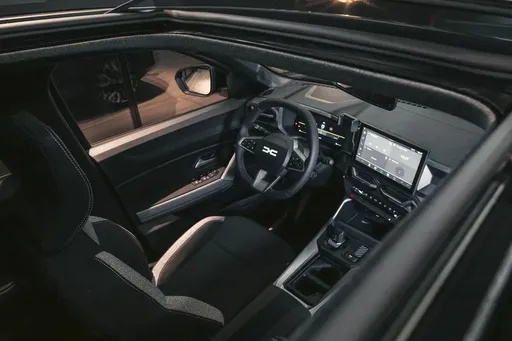
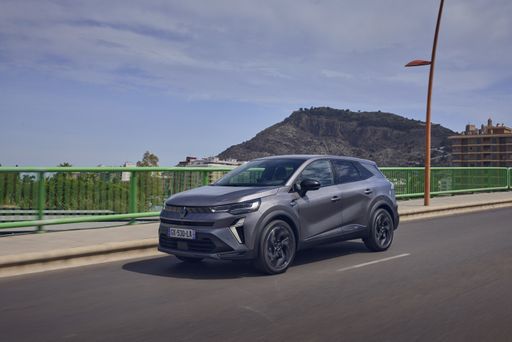
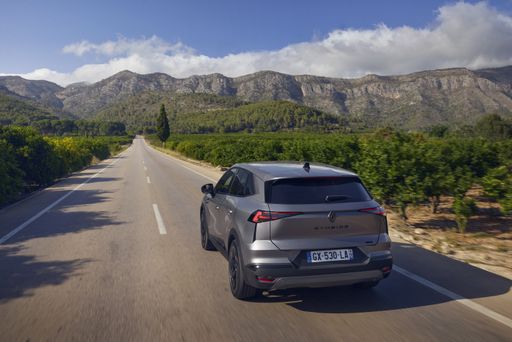
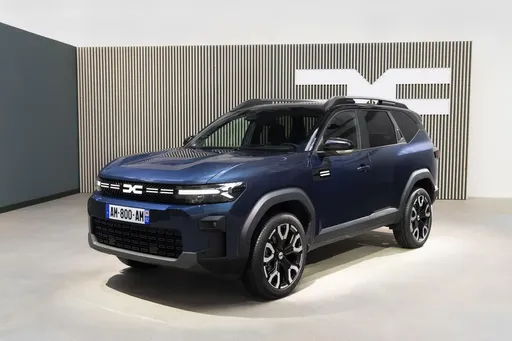
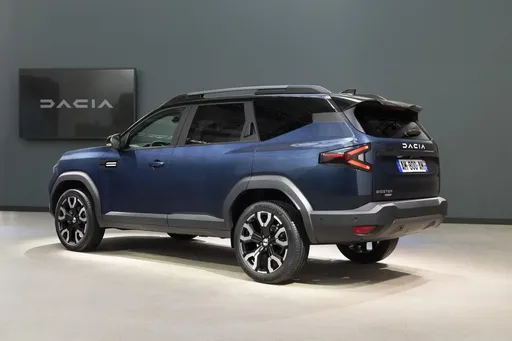
The Renault Symbioz arrives with a sculpted, almost concept-car poise that flirts with futurism, while the Dacia Bigster opts for honest, blocky proportions that promise practicality over pretense. One reads as a fashion statement in the urban theatre, the other as a dependable companion that won’t shout for attention. Both have clear personalities, so your choice quickly becomes more about image than about features.
Symbioz

On the road: agile finesse against composed stability

Drive the Symbioz and you’ll notice a light-footed, composed character that rewards brisk B-road runs with responsive steering and controlled body motions, whereas the Bigster feels more like a steady hand — reassuring, planted and designed to soak up daily chores without drama. Neither humiliates its occupants in traffic, but they approach corners and country lanes with different philosophies: one prefers nimble assurance, the other dependable calm. That contrast frames how each car turns everyday driving into either a small thrill or a comfortable routine.

Bigster

Cabin atmosphere: considered luxury or clever simplicity

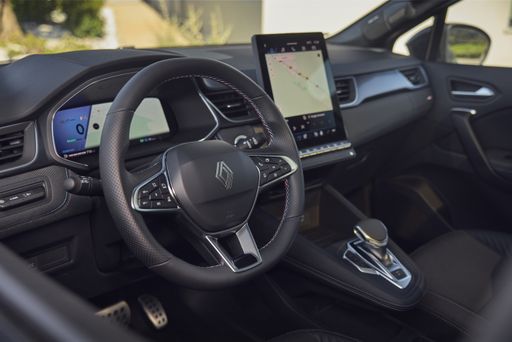
Step inside the Symbioz and you’re greeted by softer materials, a slightly more polished layout and finishing that hints at a premium intent; the Bigster, by comparison, keeps things pragmatic with rugged surfaces and straightforward ergonomics that reward common-sense users. Controls are easy to live with in both, but the Renault aims to pamper while the Dacia aims to work hard without fuss. For buyers, it’s the choice between boutique comfort and a cabin that forgives the reality of family life.

Symbioz

Practical life: how family-friendly are they really?

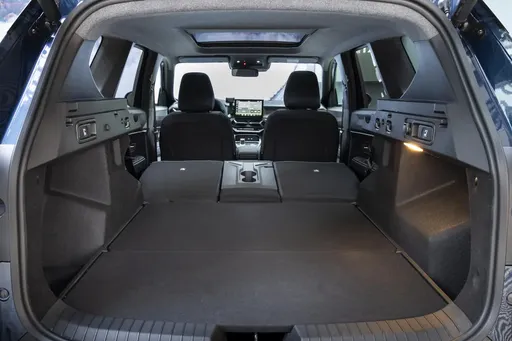
When the weekend arrives the differences become practical rather than philosophical — one car leans towards flexible load-carrying and everyday usability with clever packaging, while the other balances a refined interior with sensible space solutions. Both swallow the essentials of family duty, but they present that capability in distinct ways: one prioritises straightforward, utilitarian room and the other wraps usable space in more comfortable surroundings. Either way, you’ll find both are built to handle school runs, trips to the DIY store and impromptu escapes with minimal fuss.

Bigster

Running costs and ownership: frugal ambition versus budget pragmatism

If your checklist starts with affordability, the Bigster wears that badge proudly and appeals to buyers who prize low entry cost and simple ownership. The Symbioz nudges the conversation towards a slightly-more-refined ownership experience with hints of greater long-term efficiency and a few extra comfort-focused details. The trade-off is classic: raw value and predictability on one side, a touch more polish and potential savings in consumption on the other.

Symbioz

Who should put each key on their shortlist?

Choose the Symbioz if you care about cabin refinement, a more engaging urban-driving feel and want a car that doubles as a style statement for daily commutes and weekend drives. Opt for the Bigster if your priorities are straightforward practicality, lower cost of entry and a no-nonsense approach to family life and load-hauling. Either way, they’re aimed at real people: commuters, small families and anyone who needs a versatile car that fits a busy routine.

Bigster

Curious which one takes the DriveDuel crown?

Both models bring clear strengths to the table and appeal to different kinds of buyers, so the best pick depends on what you value most in daily motoring. Read on — the DriveDuel Champion will be revealed afterwards, and the details might just change your mind.

Here’s where it gets real: The technical differences in detail

Bigster

Costs and Efficiency:

Looking at overall running costs, both models reveal some interesting differences in everyday economy.

Dacia Bigster is noticeably cheaper – starting at 20,600 £ , while the Renault Symbioz costs 24,700 £ . That’s a price difference of around 4,123 £.

Fuel consumption also shows a difference: the Renault Symbioz uses 4.5 L/100km and is marginally more efficient than the Dacia Bigster with 4.7 L/100km. The difference is about 0.2 L/100km.

Symbioz

Engine and Performance:

Under the bonnet, it becomes clear which model is tuned for sportiness and which one takes the lead when you hit the accelerator.

Both models deliver identical power – 158 HP each.

When accelerating from 0 to 100 km/h, the Renault Symbioz is very slightly quicker – completing the sprint in 9.1 s, while the Dacia Bigster takes 9.7 s. That’s about 0.6 s quicker.

There’s also a difference in torque: the Renault Symbioz delivers somewhat more torque with 265 Nm compared to 230 Nm. That’s about 35 Nm more.

Bigster

Space and Everyday Use:

Cabin size, boot volume and payload all play a role in everyday practicality. Here, comfort and flexibility make the difference.

Both vehicles offer seating for 5 people.

In terms of curb weight, Renault Symbioz is very slightly lighter – 1,359 kg compared to 1,425 kg. The difference is around 66 kg.

Looking at boot space, the Dacia Bigster offers slightly more boot space – 667 L compared to 576 L. That’s a difference of about 91 L.

When it comes to payload, the Dacia Bigster carries very slightly more – 465 kg compared to 459 kg. That’s a difference of about 6 kg.

Who wins the race in the data check?

The Dacia Bigster sits just ahead overall in the objective data comparison.
This result only shows which model scores more points on paper – not which of the two cars feels right for you.

from £20,600
Bigster

Dacia Bigster

  • Engine Type Petrol MHEV, Full Hybrid, LPG
  • Transmission Manuel, Automatic
  • Drive Type Front-Wheel Drive, All-Wheel Drive
  • Power HP 140 - 158 HP
  • Consumption L/100km 4.7 - 7.2 L/100km
Dacia Bigster
Renault Symbioz

Costs and Consumption

View detailed analysis

Engine and Performance

View detailed analysis

Dimensions and Body

View detailed analysis

Dacia Bigster

The Dacia Bigster is a straightforward, value-driven SUV that emphasizes space, practicality and low running costs rather than flashy tech. It’s a sensible choice for buyers who want a roomy, well-built family car with rugged styling and easy-to-use features at an affordable price.

details

Renault Symbioz

The Renault Symbioz is a forward-looking concept car that imagines a seamless link between vehicle and home, pairing a lounge-like cabin with striking, futuristic styling. More idea than production plan, it showcases Renault's vision for connected, autonomous and sustainable mobility while provoking debate about how we will live and travel.

details
Dacia Bigster
Renault Symbioz

Costs and Consumption

Price
20,600 - 28,100 £
Price
24,700 - 31,100 £
Consumption L/100km
4.7 - 7.2 L/100km
Consumption L/100km
4.5 - 6 L/100km
Consumption kWh/100km
-
Consumption kWh/100km
-
Electric Range
-
Electric Range
-
Battery Capacity
-
Battery Capacity
-
co2
106 - 134 g/km
co2
102 - 136 g/km
Fuel tank capacity
-
Fuel tank capacity
-

Dimensions and Body

Body Type
SUV
Body Type
SUV
Seats
5
Seats
5
Doors
-
Doors
-
Curb weight
1,425 - 1,611 kg
Curb weight
1,359 - 1,465 kg
Trunk capacity
444 - 667 L
Trunk capacity
492 - 576 L
Length
-
Length
-
Width
1,813 mm
Width
1,797 mm
Height
-
Height
-
Max trunk capacity
-
Max trunk capacity
-
Payload
434 - 465 kg
Payload
455 - 459 kg

Engine and Performance

Engine Type
Petrol MHEV, Full Hybrid, LPG
Engine Type
Full Hybrid, Petrol MHEV
Transmission
Manuel, Automatic
Transmission
Automatic, Manuel
Transmission Detail
Manual Gearbox, Automated Manual, Dual-Clutch Automatic
Transmission Detail
Automatic Gearbox, Manual Gearbox, Dual-Clutch Automatic
Drive Type
Front-Wheel Drive, All-Wheel Drive
Drive Type
Front-Wheel Drive
Power HP
140 - 158 HP
Power HP
140 - 158 HP
Acceleration 0-100km/h
9.7 - 10.5 s
Acceleration 0-100km/h
9.1 - 11 s
Max Speed
-
Max Speed
-
Torque
230 Nm
Torque
250 - 265 Nm
Number of Cylinders
3 - 4
Number of Cylinders
4
Power kW
103 - 116 kW
Power kW
103 - 116 kW
Engine capacity
1,199 - 1,789 cm3
Engine capacity
1,332 - 1,789 cm3

General

Model Year
2025
Model Year
2025
CO2 Efficiency Class
D, C
CO2 Efficiency Class
C, D, E
Brand
Dacia
Brand
Renault
DriveDuel uses data analysis and artificial intelligence to evaluate vehicle data and create content. Content is regularly reviewed and improved. The displayed prices are estimates based on German list prices, adjusted to the respective country’s VAT. Country-specific registration taxes are not included. This information is not legally binding.