VS

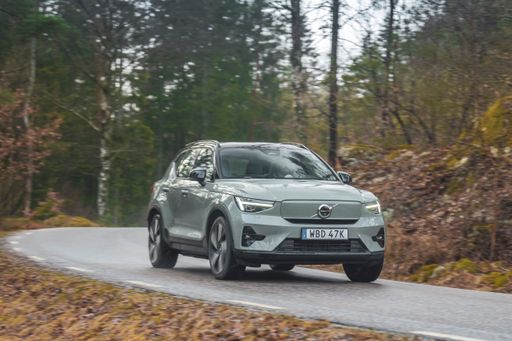
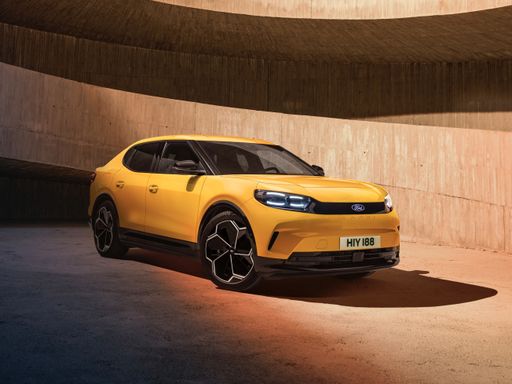
Ford Capri vs Volvo EX40 comparison

Compare performance (340 HP vs 442 HP), boot space and price (36,300 £ vs 45,200 £ ) at a glance. Find out which car is the better choice for you – Ford Capri or Volvo EX40?

Ford Capri vs Volvo EX40: Key differences

Ford Capri

4.7 (5 Reviews)
rate
  • markedly cheaper
  • markedly more efficient
  • barely more electric range
  • marginally lighter
  • visibly more trunk space
details

Volvo EX40

4.5 (3 Reviews)
rate
  • clearly more power
  • slightly quicker 0–100 km/h
details

All details on performance, efficiency, range and trunk space can be found in the technical comparison below – including user reviews for both models.

By Achim Sedelmaier

Capri

Classic Meets Modern: Ford Capri vs. Volvo EX40

In an era where electric vehicles are swiftly taking over the roads, the comparison between Ford Capri and Volvo EX40 offers intriguing insights into the convergence of classic automotive heritage with cutting-edge technology. Both models proudly showcase the elegance of the SUV body type while embodying the future of electric mobility. Let’s delve into the technical aspects and innovations that define these models, heralding a new age in the automotive industry.

EX40

Power and Performance: Handling the Future

The Ford Capri electrifies the road with its multiple power options, offering up to 340 HP from a robust electric engine. Its impressive torque capability maxes out at 679 Nm, allowing for swift acceleration from 0 to 100 km/h in just 5.3 seconds. The Capri is available in both rear-wheel and all-wheel drive configurations, ensuring maximum traction and handling precision.

On the other hand, the Volvo EX40 stands out with its remarkable 408 HP, presenting an exhilarating driving experience with an acceleration of 0 to 100 km/h achieved in a mere 4.6 seconds. With a maximum torque of 670 Nm, the EX40 promises a thrilling ride, available in versatile drivetrain options of rear-wheel and all-wheel drive.

Capri

Efficiency and Range: Redefining Electric Mobility

The Ford Capri leads the charge in efficiency, offering a consumption rate as low as 13.3 kWh/100km. With a top electric range of 627 km, Capri ensures extended journeys with fewer charging interruptions, courtesy of battery capacities up to 79 kWh.

In contrast, the Volvo EX40 prides itself on a balanced blend of power and efficiency, consuming 16.6 kWh/100km and delivering an electric range of up to 576 km. The EX40's battery options match the demands of different driving styles, catering to extended trips and regular urban commutes.

EX40

Design and Dimensions: A Matter of Space and Style

Both models accommodate five passengers and promise ample space, yet their dimensions vary significantly. The Ford Capri measures 4634 mm in length, 1872 mm in width, and 1626 mm in height, boasting a substantial trunk capacity of 572 L. These dimensions make Capri an excellent choice for those needing more cargo space without compromising on comfort or style.

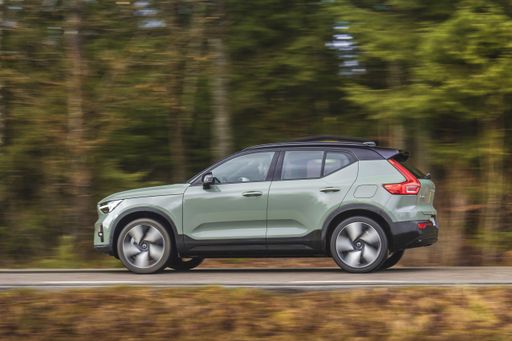
The Volvo EX40, slightly more compact at 4440 mm in length, 1863 mm in width, and 1647 mm in height, offers a trunk capacity of 410 L. This makes it ideal for urban environments, where maneuverability and storage are well-balanced considerations.

Innovative Engineering: Features that Stand Out

With zero CO2 emissions, both SUVs adhere to rigorous environmental standards, boasting an A-class CO2 efficiency rating. The inclusion of reduction gearboxes and automatic transmission systems across both models signifies a dedication to continual innovation in electric driving dynamics.

While both cars have a maximum speed of 180 km/h, their payload capacities differ, with the Ford Capri supporting up to 587 kg, aligning with its emphasis on versatility and capacity. The Volvo EX40, though supporting a payload up to 480 kg, compensates with superior urban-friendly dimensions and powerful acceleration.

Conclusion: A Choice for Every Driver

Ultimately, the choice between the Ford Capri and Volvo EX40 hinges on individual preferences. The Ford Capri caters to those seeking unmatched range and utility, fitting seamlessly into the lifestyles of those who yearn for long road trips or outdoor adventures. The Volvo EX40, with its agile performance and sleek design, is designed for the dynamic city dweller, delivering spirited driving and sophisticated elegance in one complete package.

Both cars, however, signal an exciting shift towards electric vehicle prominence, each offering a unique testament to the future of driving. As classic automotive appeal meets groundbreaking innovation, both Ford Capri and Volvo EX40 continue to redefine what we expect from electric SUVs.

Here’s where it gets real: The technical differences in detail

Capri

Costs and Efficiency:

Looking at overall running costs, both models reveal some interesting differences in everyday economy.

Ford Capri is markedly cheaper – starting at 36,300 £ , while the Volvo EX40 costs 45,200 £ . That’s a price difference of around 8,906 £.

In terms of energy consumption, the Ford Capri is markedly more efficient: consuming 13.8 kWh/100km compared to 16.6 kWh/100km for the Volvo EX40. That’s a difference of about 2.8 kWh/100km.

As for electric range, the Ford Capri offers barely more range – reaching up to 627 km, about 51 km more than the Volvo EX40.

EX40

Engine and Performance:

Power, torque and acceleration are the classic benchmarks for car enthusiasts – and here, some clear differences start to show.

When it comes to engine power, the Volvo EX40 offers clearly more power – delivering 442 HP compared to 340 HP. That’s roughly 102 HP more horsepower.

When accelerating from 0 to 100 km/h, the Volvo EX40 is slightly quicker – completing the sprint in 4.6 s, while the Ford Capri takes 5.3 s. That’s about 0.7 s quicker.

There’s also a difference in torque: the Ford Capri delivers very slightly more torque with 679 Nm compared to 670 Nm. That’s about 9 Nm more.

Capri

Space and Everyday Use:

Beyond pure performance, interior space and usability matter most in daily life. This is where you see which car is more practical and versatile.

Both vehicles offer seating for 5 people.

In terms of curb weight, Ford Capri is marginally lighter – 2,001 kg compared to 2,040 kg. The difference is around 39 kg.

Looking at boot space, the Ford Capri offers visibly more boot space – 572 L compared to 410 L. That’s a difference of about 162 L.

When it comes to payload, the Ford Capri carries slightly more – 587 kg compared to 480 kg. That’s a difference of about 107 kg.

Who wins the race in the data check?

The Ford Capri stands out in the key areas in the objective data comparison.
This result only shows which model scores more points on paper – not which of the two cars feels right for you.

from £36,300
Capri

Ford Capri

  • Engine Type Electric
  • Transmission Automatic
  • Drive Type Rear-Wheel Drive, All-Wheel Drive
  • Power HP 190 - 340 HP
  • Consumption kWh/100km 13.8 - 16.5 kWh/100km
  • Electric Range 439 - 627 km
Ford Capri
Volvo EX40

Costs and Consumption

View detailed analysis

Engine and Performance

View detailed analysis

Dimensions and Body

View detailed analysis

Ford Capri

The Ford Capri turned the family car into something cheekily sporty, with a long, rakish profile that still promises fun at a glance. Today it lives on as a lovable classic — easy to tinker with, enjoyable to drive and guaranteed to raise smiles at any meet.

details

Volvo EX40

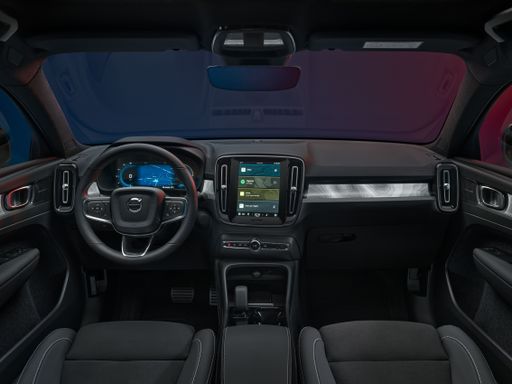
The Volvo EX40 is a compact electric SUV that blends Scandinavian minimalism with a comfortable, high-quality interior suited to daily driving and longer trips. It prioritizes safety and intuitive technology, delivering a calm, refined experience that feels mature and easy to live with.

details
Ford Capri
Volvo EX40

Costs and Consumption

Price
36,300 - 51,800 £
Price
45,200 - 56,000 £
Consumption L/100km
-
Consumption L/100km
-
Consumption kWh/100km
13.8 - 16.5 kWh/100km
Consumption kWh/100km
16.6 - 17.6 kWh/100km
Electric Range
439 - 627 km
Electric Range
477 - 576 km
Battery Capacity
-
Battery Capacity
-
co2
0 g/km
co2
0 g/km
Fuel tank capacity
-
Fuel tank capacity
-

Dimensions and Body

Body Type
SUV
Body Type
SUV
Seats
5
Seats
5
Doors
-
Doors
-
Curb weight
2,001 - 2,206 kg
Curb weight
2,040 - 2,170 kg
Trunk capacity
572 L
Trunk capacity
410 L
Length
-
Length
-
Width
1,872 mm
Width
1,863 mm
Height
-
Height
-
Max trunk capacity
-
Max trunk capacity
-
Payload
539 - 587 kg
Payload
430 - 480 kg

Engine and Performance

Engine Type
Electric
Engine Type
Electric
Transmission
Automatic
Transmission
Automatic
Transmission Detail
Reduction Gearbox
Transmission Detail
Reduction Gearbox
Drive Type
Rear-Wheel Drive, All-Wheel Drive
Drive Type
Rear-Wheel Drive, All-Wheel Drive
Power HP
190 - 340 HP
Power HP
238 - 442 HP
Acceleration 0-100km/h
5.3 - 8 s
Acceleration 0-100km/h
4.6 - 7.3 s
Max Speed
-
Max Speed
-
Torque
350 - 679 Nm
Torque
420 - 670 Nm
Number of Cylinders
-
Number of Cylinders
-
Power kW
140 - 250 kW
Power kW
175 - 325 kW
Engine capacity
-
Engine capacity
-

General

Model Year
2026
Model Year
2,024 - 2,026
CO2 Efficiency Class
A
CO2 Efficiency Class
A
Brand
Ford
Brand
Volvo
DriveDuel uses data analysis and artificial intelligence to evaluate vehicle data and create content. Content is regularly reviewed and improved. The displayed prices are estimates based on German list prices, adjusted to the respective country’s VAT. Country-specific registration taxes are not included. This information is not legally binding.