VS

Ford Mustang Mach-E vs Ford Capri comparison

Compare performance (487 HP vs 340 HP), boot space and price (48,400 £ vs 36,300 £ ) at a glance. Find out which car is the better choice for you – Ford Mustang Mach-E or Ford Capri?

Ford Mustang Mach-E vs Ford Capri: Key differences

Ford Mustang Mach-E

3.4 (3 Reviews)
rate
  • visibly more power
  • markedly quicker 0–100 km/h
details

Ford Capri

4.8 (4 Reviews)
rate
  • clearly cheaper
  • visibly more efficient
  • very slightly more electric range
  • only slightly lighter
  • only slightly more trunk space
details

All details on performance, efficiency, range and trunk space can be found in the technical comparison below – including user reviews for both models.

By Achim Sedelmaier

Mustang Mach-E

Two Fords, Different Souls

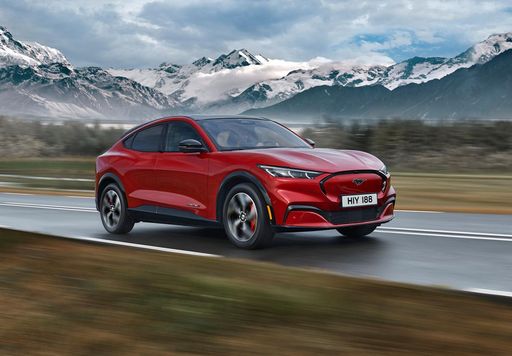
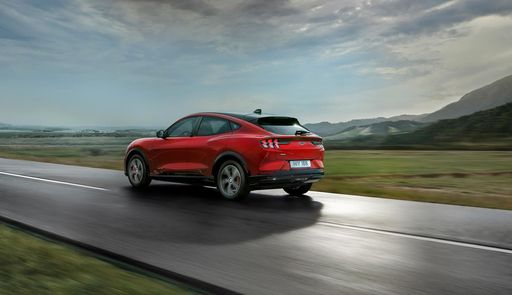
The contrast between the two is more about character than badge: the Ford Capri plays the part of a cheeky, driver-focused coupe while the Ford Mustang Mach-E channels modern muscle with electric composure. One feels like a wink to the past with a lively personality, the other is a declaration of what a contemporary, tech-rich Ford can be. Buyers will be picking not just a car but a point of view—classic sportiness versus contemporary performance and convenience.
Capri

Throttle and Smile

On the road the differences are immediate — the Capri rewards quick inputs and a chirpy, engaging demeanor that makes B-roads a grin-inducing playground, while the Mach-E delivers smooth, relentless shove and a planted composure that favours calm confidence over theatrical drama. Steering and chassis tuning underline that split: one prioritises communicative agility, the other composure and effortless momentum. Both are enjoyable in their own ways, it simply comes down to whether you prefer to hustle the car or have it hum along for you.

Mustang Mach-E

Daily Life: Commutes and Carparks

For everyday usability the picture shifts from thrills to practicality — the Capri feels nimble in town and easy to place in tight spots, while the Mach-E soaks up motorway miles and delivers a more relaxed long-distance demeanour. Visibility, ride comfort and noise insulation diverge in ways that matter: one keeps you engaged and aware, the other isolates and pampers. Your commute will tell you which compromise is easier to live with day after day.

Capri

Cabin and Controls: Buttoned-up vs Futuristic

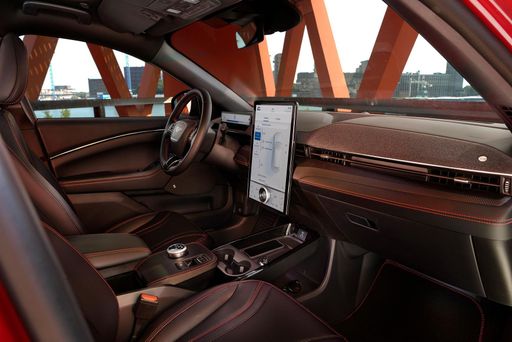
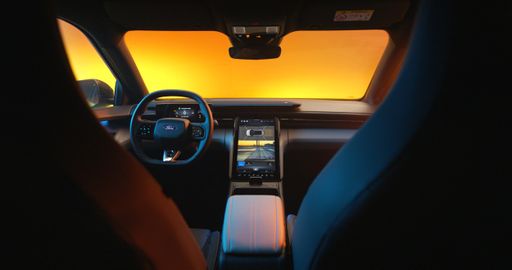
Inside, the mood is split between tactile familiarity and digital theatre — the Capri offers a cabin that encourages hands-on interaction and a purposeful layout, the Mach-E leans into large screens and software-forward features that change the way you live with a car. Material quality and ergonomics feel contemporary in both, but the user experience is different: intuitive physical controls versus a more integrated, evolving digital ecosystem. Buyers who love knobs and immediate feedback will feel at home in one, while tech-forward buyers will be seduced by the other's gadgetry.

Mustang Mach-E

Boots, Bins and Weekend Plans

Practicality isn’t an afterthought for either, though packaging tells different stories — the Capri sacrifices some packaging for poise and style, whereas the Mach-E exploits its body shape to offer a more flexible load-lugging attitude. Rear-seat space and everyday stowage are usable in both, but the kind of cargo you haul will reveal which layout suits your life. For family chores, sports kit or supermarket runs, consider how often you need maximum flexibility versus how much you value driving character.

Living with It: Running and Peace of Mind

Ownership comes down to lifestyle choices as much as maintenance spreadsheets: the Mach-E suits buyers ready to embrace electric routines and plug-in convenience, while the Capri will appeal to those who prioritise familiar servicing patterns and lower initial compromise. Insurance, parking, charging or refuelling habits and the local dealer network will all influence how happy you are after the novelty wears off. Think about the rhythms of your week before you decide which trade-offs you’re willing to live with.

Which Drives Your Story?

If you crave analogue thrills and a compact, characterful companion you’ll gravitate one way; if you want modern refinement, effortless pace and a tech-rich cocoon you’ll drift the other. Both cars have clear personalities and both make persuasive cases depending on how you use them, so the best pick is the one that fits your daily narrative. Keep reading — the DriveDuel Champion will be revealed afterwards.

Here’s where it gets real: The technical differences in detail

Mustang Mach-E

Costs and Efficiency:

Price and efficiency are often the first things buyers look at. Here it becomes clear which model has the long-term edge – whether at the pump, the plug, or in purchase price.

Ford Capri is clearly cheaper – starting at 36,300 £ , while the Ford Mustang Mach-E costs 48,400 £ . That’s a price difference of around 12,086 £.

In terms of energy consumption, the Ford Capri is visibly more efficient: consuming 13.8 kWh/100km compared to 17.7 kWh/100km for the Ford Mustang Mach-E. That’s a difference of about 3.9 kWh/100km.

As for electric range, the Ford Capri offers very slightly more range – reaching up to 627 km, about 27 km more than the Ford Mustang Mach-E.

Capri

Engine and Performance:

Under the bonnet, it becomes clear which model is tuned for sportiness and which one takes the lead when you hit the accelerator.

When it comes to engine power, the Ford Mustang Mach-E offers visibly more power – delivering 487 HP compared to 340 HP. That’s roughly 147 HP more horsepower.

When accelerating from 0 to 100 km/h, the Ford Mustang Mach-E is markedly quicker – completing the sprint in 3.8 s, while the Ford Capri takes 5.3 s. That’s about 1.5 s quicker.

There’s also a difference in torque: the Ford Mustang Mach-E delivers clearly more torque with 950 Nm compared to 679 Nm. That’s about 271 Nm more.

Mustang Mach-E

Space and Everyday Use:

Whether family car or daily driver – which one offers more room, flexibility and comfort?

Both vehicles offer seating for 5 people.

In terms of curb weight, Ford Capri is only slightly lighter – 2,001 kg compared to 2,161 kg. The difference is around 160 kg.

Looking at boot space, the Ford Capri offers only slightly more boot space – 572 L compared to 519 L. That’s a difference of about 53 L.

When it comes to payload, the Ford Capri carries markedly more – 587 kg compared to 450 kg. That’s a difference of about 137 kg.

Who wins the race in the data check?

The Ford Mustang Mach-E shows a few small advantages in the objective data comparison.
This result only shows which model scores more points on paper – not which of the two cars feels right for you.

from £48,400
Mustang Mach-E

Ford Mustang Mach-E

  • Engine Type : Electric
  • Transmission : Automatic
  • Drive Type : Rear-Wheel Drive, All-Wheel Drive
  • Power HP : 268 - 487 HP
  • Consumption kWh/100km : 17.7 - 21 kWh/100km
  • Electric Range : 470 - 600 km
Ford Mustang Mach-E
Ford Capri

Costs and Consumption

View detailed analysis

Engine and Performance

View detailed analysis

Dimensions and Body

View detailed analysis

Ford Mustang Mach-E

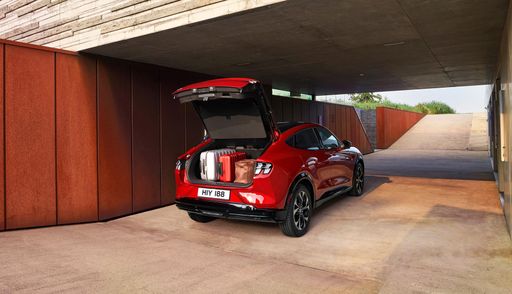
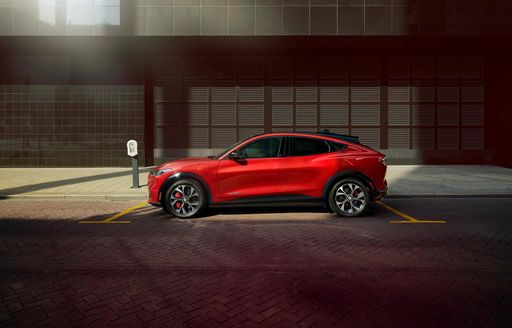
The Mustang Mach-E proves an electric SUV can be both playful and practical, with the Mustang name bringing muscle-car charisma to a family-friendly package. It delivers eager performance, a comfortable cabin, and a slick infotainment setup that keeps daily driving fun — and yes, you’ll still get admiring glances at the lights.

details

Ford Capri

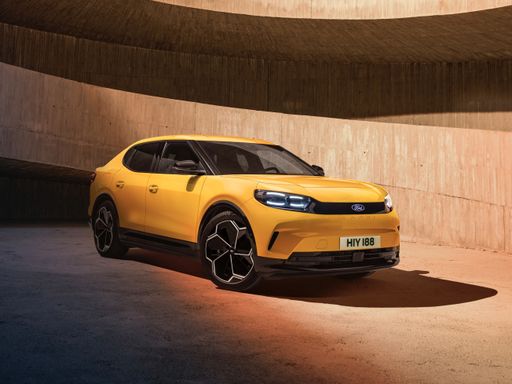
The Ford Capri turned the family car into something cheekily sporty, with a long, rakish profile that still promises fun at a glance. Today it lives on as a lovable classic — easy to tinker with, enjoyable to drive and guaranteed to raise smiles at any meet.

details
Ford Mustang Mach-E
Ford Capri

Costs and Consumption

Price
48,400 - 66,900 £
Price
36,300 - 51,800 £
Consumption L/100km
-
Consumption L/100km
-
Consumption kWh/100km
17.7 - 21 kWh/100km
Consumption kWh/100km
13.8 - 16.5 kWh/100km
Electric Range
470 - 600 km
Electric Range
439 - 627 km
Battery Capacity
-
Battery Capacity
-
co2
0 g/km
co2
0 g/km
Fuel tank capacity
-
Fuel tank capacity
-

Dimensions and Body

Body Type
SUV
Body Type
SUV
Seats
5
Seats
5
Doors
-
Doors
-
Curb weight
2,161 - 2,351 kg
Curb weight
2,001 - 2,206 kg
Trunk capacity
519 L
Trunk capacity
572 L
Length
-
Length
-
Width
1,881 mm
Width
1,872 mm
Height
-
Height
-
Max trunk capacity
-
Max trunk capacity
-
Payload
368 - 450 kg
Payload
539 - 587 kg

Engine and Performance

Engine Type
Electric
Engine Type
Electric
Transmission
Automatic
Transmission
Automatic
Transmission Detail
Reduction Gearbox
Transmission Detail
Reduction Gearbox
Drive Type
Rear-Wheel Drive, All-Wheel Drive
Drive Type
Rear-Wheel Drive, All-Wheel Drive
Power HP
268 - 487 HP
Power HP
190 - 340 HP
Acceleration 0-100km/h
3.8 - 6.2 s
Acceleration 0-100km/h
5.3 - 8 s
Max Speed
-
Max Speed
-
Torque
525 - 950 Nm
Torque
350 - 679 Nm
Number of Cylinders
-
Number of Cylinders
-
Power kW
197 - 358 kW
Power kW
140 - 250 kW
Engine capacity
-
Engine capacity
-

General

Model Year
2025
Model Year
2026
CO2 Efficiency Class
A
CO2 Efficiency Class
A
Brand
Ford
Brand
Ford
DriveDuel uses data analysis and artificial intelligence to evaluate vehicle data and create content. Content is regularly reviewed and improved. The displayed prices are estimates based on German list prices, adjusted to the respective country’s VAT. Country-specific registration taxes are not included. This information is not legally binding.