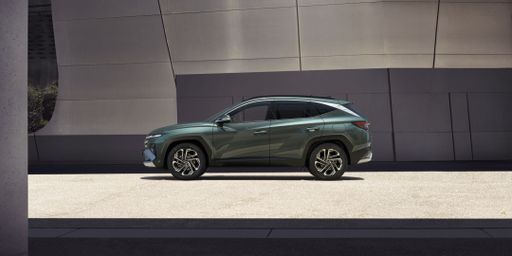
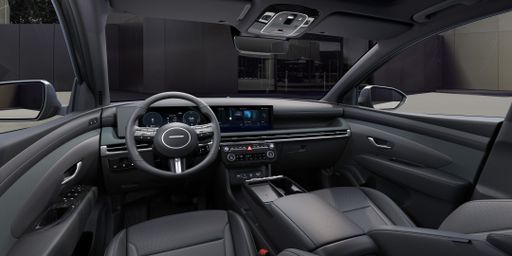
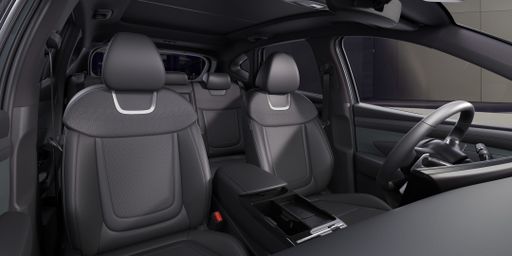
@ Hyundai Motor Company
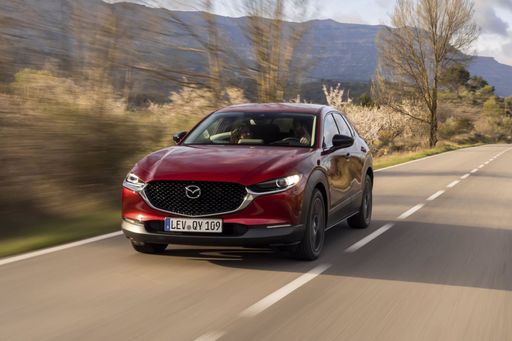
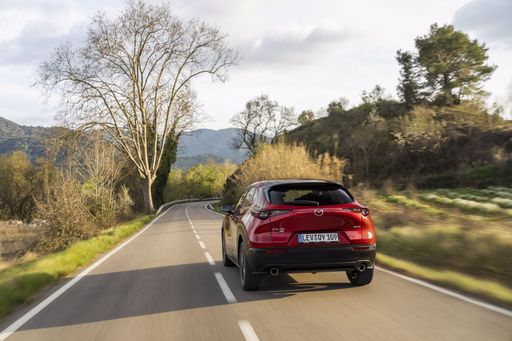
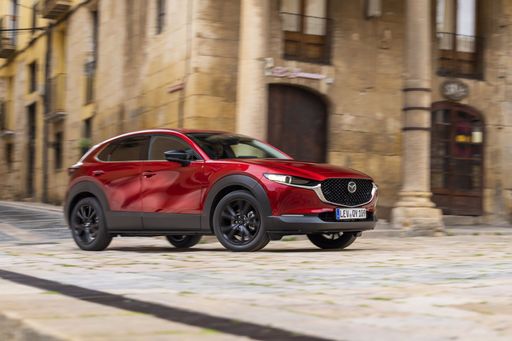
@ Mazda Motor Corporation
VS

Hyundai Tucson vs Mazda CX-30 – Which car suits you better?

Compare performance, boot capacity, efficiency and price at a glance.
Find out which car is the better choice for you – Hyundai Tucson or Mazda CX-30?

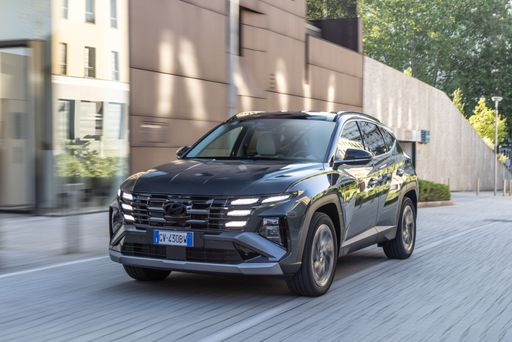
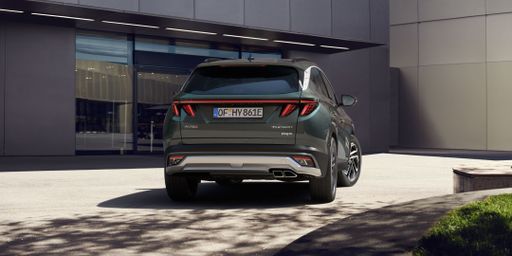
Tucson @ Hyundai Motor Company

A Comprehensive Comparison: Hyundai Tucson vs. Mazda CX-30

The compact SUV market is more competitive than ever, with an increasing number of models that blend practicality, style, and advanced technology. This article delves into a detailed comparison between the Hyundai Tucson and the Mazda CX-30, two prominent players in this segment. Both vehicles showcase innovative features and striking designs, but how do they stack up against each other on various fronts? Let’s explore their technical aspects and innovations.
CX-30 @ Mazda Motor Corporation

Engine Performance and Efficiency

The Hyundai Tucson offers a wider range of engine options compared to the Mazda CX-30. With choices ranging from diesel to full hybrid and plug-in hybrid variants, the Tucson caters to a variety of consumer needs. Power outputs of the Tucson range from 136 HP to an impressive 252 HP, depending on the selected engine and configuration. Its optional all-wheel-drive capabilities enhance traction and control, making it suitable for diverse driving conditions.

In contrast, the Mazda CX-30 presents a more streamlined lineup with petrol MHEV engines that produce up to 186 HP. While its performance is commendable, especially with acceleration times of around 8.3 seconds for 0-100 km/h, it doesn’t quite reach the power thresholds offered by the Tucson's engine lineup. That said, the CX-30 is known for its fuel efficiency, with consumption figures ranging from 5.7 to 6.5 L/100 km.

Tucson @ Hyundai Motor Company

Transmission Options and Driving Experience

Both the Tucson and CX-30 provide options for manual and automatic transmissions. The Tucson enhances the driving experience with a dual-clutch automatic gearbox for a seamless transition between gears, providing a sportier feel. The Mazda CX-30, while also equipped with automatic and manual gearboxes, focuses heavily on driver engagement, offering a responsive handling experience that drivers have come to expect from the brand.

CX-30 @ Mazda Motor Corporation

Dimensions and Interior Space

In terms of size, the Hyundai Tucson has a length of 4510 mm, width of 1865 mm, and a height of 1650 mm, giving it a commanding presence on the road. The trunk capacity ranges between 546 to 620 liters, which is impressive for families and those needing extra storage. Its spacious interior and comfortable seating for five make it a practical choice for daily commutes or long trips.

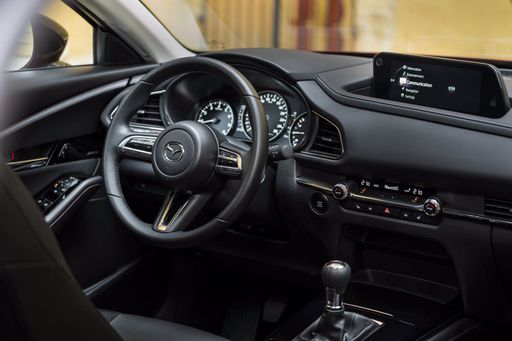
On the other hand, the Mazda CX-30 measures 4395 mm in length and offers a slightly narrower width of 1795 mm and a lower height at 1540 mm. While its trunk capacity of 430 to 422 liters is respectable, it is less impressive compared to the Tucson. The interior of the CX-30 features high-quality materials and a driver-centric layout, providing a more premium feel that enhances the overall driving experience.

Tucson @ Hyundai Motor Company

Technological Innovations

When it comes to technology, both vehicles are well-equipped with modern features. The Tucson incorporates Hyundai's latest infotainment system, which includes a large touchscreen display, smartphone integration via Apple CarPlay and Android Auto, and advanced safety features, including adaptive cruise control and lane-keeping assist.

The Mazda CX-30, known for its minimalist interior design, offers an intuitive infotainment system positioned to minimize distraction. It also boasts several advanced safety features, making it a strong contender in the technological arena. Both vehicles support various driver assistance technologies, but the Tucson edges out with more comprehensive options across its trim levels.

CX-30 @ Mazda Motor Corporation

Conclusion: Which One Should You Choose?

In conclusion, the choice between the Hyundai Tucson and the Mazda CX-30 ultimately depends on what a driver values most in an SUV. If you prioritize versatility in engine options, trunk space, and a broader set of technological features, the Hyundai Tucson is likely the better choice. However, if you’re looking for a more engaging driving experience, premium interiors, and a stylish design, the Mazda CX-30 stands out as a compelling alternative. Both vehicles represent their manufacturers' commitment to excellence and provide an exciting driving experience suited for the modern consumer.

Here’s where it gets real: The technical differences in detail

Tucson @ Hyundai Motor Company

Costs and Efficiency:

Price and efficiency are often the first things buyers look at. Here it becomes clear which model has the long-term edge – whether at the pump, the plug, or in purchase price.

Mazda CX-30 has a distinct advantage in terms of price – it starts at 25200 £, while the Hyundai Tucson costs 30600 £. That’s a price difference of around 5400 £.

Fuel consumption also shows a difference: Hyundai Tucson manages with 1 L and is therefore convincingly more efficient than the Mazda CX-30 with 5.70 L. The difference is about 4.70 L per 100 km.

CX-30 @ Mazda Motor Corporation

Engine and Performance:

Under the bonnet, it becomes clear which model is tuned for sportiness and which one takes the lead when you hit the accelerator.

When it comes to engine power, the Hyundai Tucson has a distinct edge – offering 252 HP compared to 186 HP. That’s roughly 66 HP more horsepower.

In acceleration from 0 to 100 km/h, the Hyundai Tucson is barely noticeable quicker – completing the sprint in 7.90 s, while the Mazda CX-30 takes 8.30 s. That’s about 0.40 s faster.

There’s no difference in top speed – both reach 204 km/h.

There’s also a difference in torque: Hyundai Tucson pulls clearly perceptible stronger with 379 Nm compared to 240 Nm. That’s about 139 Nm difference.

Tucson @ Hyundai Motor Company

Space and Everyday Use:

Whether family car or daily driver – which one offers more room, flexibility and comfort?

Both vehicles offer seating for 5 people.

In curb weight, Mazda CX-30 is hardly perceptible lighter – 1455 kg compared to 1542 kg. The difference is around 87 kg.

In terms of boot space, the Hyundai Tucson offers evident more room – 620 L compared to 430 L. That’s a difference of about 190 L.

In maximum load capacity, the Hyundai Tucson performs evident better – up to 1799 L, which is about 393 L more than the Mazda CX-30.

When it comes to payload, Hyundai Tucson slight takes the win – 545 kg compared to 496 kg. That’s a difference of about 49 kg.

Who wins the race?

The Hyundai Tucson proves to be is largely superior and therefore becomes our DriveDuel Champion!
Hyundai Tucson is the better all-rounder in this comparison.

from about £30,600
Tucson @ Hyundai Motor Company

Hyundai Tucson

  • Engine Type : Diesel MHEV, Plugin Hybrid, Petrol, Full Hybrid
  • Transmission : Automatic, Manuel
  • Drive Type : Front-Wheel Drive, All-Wheel Drive
  • Power HP : 136 - 252 HP
  • Consumption L/100km : 1 - 7.6 L
  • Electric Range : 64 - 70 km

Hyundai Tucson

5 (2)
rate

Hyundai Tucson marries bold, sculpted looks with a clever, roomy cabin that feels smarter than its price tag suggests. It's composed on the road, easy to live with day-to-day, and a sensible choice for buyers who want SUV style without the showroom theatrics.

details

Mazda CX-30

5 (1)
rate

The Mazda CX-30 blends sleek coupe-like lines with the practicality of a compact crossover, feeling more premium than its price tag suggests. It’s a joy to drive for anyone who likes a taut chassis and an interior that treats daily commutes like a small luxury escape.

details
Hyundai Tucson
Mazda CX-30
Tucson @ Hyundai Motor Company
CX-30 @ Mazda Motor Corporation

Costs and Consumption

Price
30600 - 46300 £
Price
25200 - 36800 £
Consumption L/100km
1 - 7.6 L
Consumption L/100km
5.7 - 6.6 L
Consumption kWh/100km
-
Consumption kWh/100km
-
Electric Range
64 - 70 km
Electric Range
-
Battery Capacity
-
Battery Capacity
-
co2
22 - 172 g/km
co2
129 - 148 g/km
Fuel tank capacity
42 - 54 L
Fuel tank capacity
48 - 51 L

Dimensions and Body

Body Type
SUV
Body Type
SUV
Seats
5
Seats
5
Doors
5
Doors
5
Curb weight
1542 - 1889 kg
Curb weight
1455 - 1587 kg
Trunk capacity
546 - 620 L
Trunk capacity
422 - 430 L
Length
4510 - 4535 mm
Length
4395 mm
Width
1865 mm
Width
1795 mm
Height
1650 mm
Height
1540 mm
Max trunk capacity
1721 - 1799 L
Max trunk capacity
1398 - 1406 L
Payload
523 - 545 kg
Payload
458 - 496 kg

Engine and Performance

Engine Type
Diesel MHEV, Plugin Hybrid, Petrol, Full Hybrid
Engine Type
Petrol MHEV
Transmission
Automatic, Manuel
Transmission
Manuel, Automatic
Transmission Detail
Dual-Clutch Automatic, Automatic Gearbox, Manual Gearbox
Transmission Detail
Manual Gearbox, Automatic Gearbox
Drive Type
Front-Wheel Drive, All-Wheel Drive
Drive Type
Front-Wheel Drive, All-Wheel Drive
Power HP
136 - 252 HP
Power HP
140 - 186 HP
Acceleration 0-100km/h
7.9 - 11.6 s
Acceleration 0-100km/h
8.3 - 10.3 s
Max Speed
180 - 204 km/h
Max Speed
191 - 204 km/h
Torque
250 - 379 Nm
Torque
238 - 240 Nm
Number of Cylinders
4
Number of Cylinders
4
Power kW
100 - 185 kW
Power kW
103 - 137 kW
Engine capacity
1598 cm3
Engine capacity
1998 - 2488 cm3

General

Model Year
2024 - 2025
Model Year
2025
CO2 Efficiency Class
E, B, F, D
CO2 Efficiency Class
D, E
Brand
Hyundai
Brand
Mazda
What drive types are available for the Hyundai Tucson?

Available configurations include Front-Wheel Drive or All-Wheel Drive.

The prices and data displayed are estimates based on German list prices and may vary by country. This information is not legally binding.