VS

Jeep Avenger vs Ford Puma comparison

Compare performance (156 HP vs 168 HP), boot space and price (22,500 £ vs 23,900 £ ) at a glance. Find out which car is the better choice for you – Jeep Avenger or Ford Puma?

Jeep Avenger vs Ford Puma: Key differences

Jeep Avenger

4.1 (9 Reviews)
rate
  • very slightly cheaper
  • a bit more efficient
  • moderately lighter
details

Ford Puma

3 (11 Reviews)
rate
  • very slightly more power
  • somewhat more efficient
  • marginally more electric range
  • noticeably quicker 0–100 km/h
  • visibly more trunk space
details

All details on performance, efficiency, range and trunk space can be found in the technical comparison below – including user reviews for both models.

By Achim Sedelmaier

Avenger

Ford Puma vs Jeep Avenger — what this matchup is about

Ford Puma vs Jeep Avenger pits a playful, driver‑focused small SUV against a compact, comfort‑minded city Jeep with a rugged look. The Ford Puma leans into agility, tech and an unusually clever boot for the class, while the Jeep Avenger trades sporting ambition for easy parking, protective cladding and a softer ride. This comparison looks at how those different characters translate into daily life: who will enjoy longer trips, who will appreciate boot usability, and who will feel at home in the cabin. Read on for clear, buyer‑relevant contrasts that make the practical differences obvious before we dig into the specs.
Puma

Character and driving feel

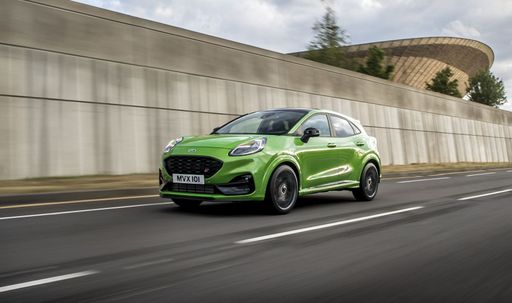
The Ford Puma feels like a small car that grew into an SUV: sharp steering, eager turn‑in and a generally engaging personality that rewards active drivers. The Jeep Avenger, by contrast, steers a calmer course — its setup is forgiving and confidence‑building in town, not sporty on sweeping country roads. If you enjoy threading through corners and want a car that feels lively on twisty routes, the Puma will put a smile on your face; if you prefer relaxed responses and predictable composure for everyday driving, the Avenger will feel less demanding. Both have modern drivetrains, but the Puma’s sportier setup comes with compromises (firmer ride, a gruff low‑rev thrum) that the Avenger largely avoids.

Avenger

Comfort and long‑distance behavior

On long stretches the Ford Puma can be perfectly acceptable, with supportive front seats and a stable highway demeanor, yet it never quite masks its compact‑car origins and firmer suspension choices show on sharp potholes. The Jeep Avenger tends to be the gentler companion for longer stints thanks to a more cushioned ride and a front cabin that feels airy and less intimate. Noise and refinement trade places too: the Puma’s small‑engine rasp is noticeable at lower revs, while the Avenger can reveal wind noise at higher speeds depending on tyres and variant. If motorway miles dominate your usage, you’ll feel the difference — Puma is livelier but more fidgety, Avenger is softer but less composed in high‑speed scenarios.

Puma

City friendliness and everyday practicality

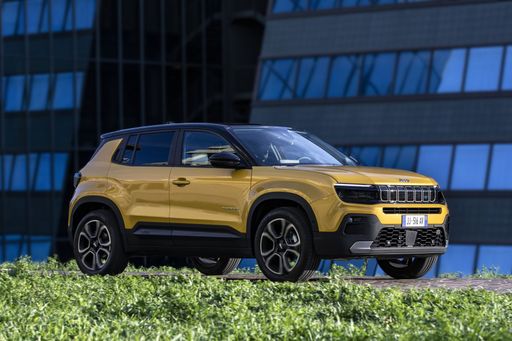
Both cars are compact enough for tight streets, yet they help you in different ways: the Jeep Avenger excels at simple, confident parking and forward visibility, and its protective plastic cladding takes the sting out of urban scrapes. The Ford Puma wins on cargo cleverness — its wide boot opening and a practical washable compartment make loading bikes, muddy boots or pet carriers far less fiddly. Rear passenger space is tight in both, but the Puma’s trade is a more usable boot while the Avenger gives a more relaxed driving position up front and easier placement in narrow spots. Choose Avenger if you prioritise urban manoeuvrability and a tough exterior; choose Puma if weekend gear and trunk practicality matter more.

Avenger

Cabin feel and perceived quality

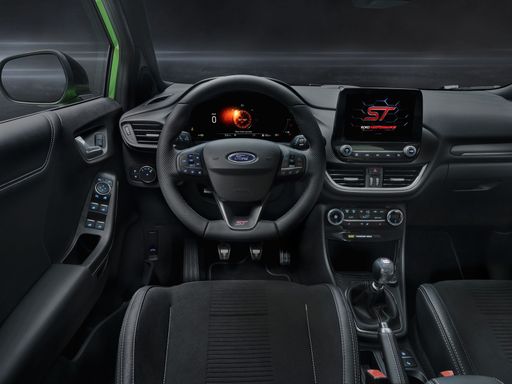
The Puma’s interior reads as modern: large screens, connected software and a cleaner, tech‑led design, although many physical buttons have been removed and some materials feel basic at close inspection. The Avenger keeps things straightforward with physical climate controls and a tactile layout, but its interior leans on durable hard plastics that lower the premium feel. In short, the Ford Puma looks newer and smarter at a glance, while the Jeep Avenger feels functionally honest and built to live with bangs and scrapes. Buyers sensitive to touchscreen‑centric ergonomics will notice the Puma’s compromises, while those who like buttons and a rugged cabin will prefer the Avenger’s simplicity.

Puma

Which buyer suits which car — final fit contrast

If you want a small SUV that drives with enthusiasm, carries awkward loads cleverly and showcases the latest infotainment, the Ford Puma is aimed squarely at you; it suits solo drivers, couples and active‑lifestyle owners who accept a snug back seat for sharp handling and smart trunk solutions. If your life is tighter streets, frequent short trips, a need for easy parking and a more forgiving ride, the Jeep Avenger fits better — especially for buyers who value simple controls, protective styling and a comfortable city cruiser. Neither choice is objectively superior; think about whether you prize sportiness and luggage ingenuity (Puma) or relaxed comfort and urban practicality (Avenger) before moving on to the technical comparison.

Here’s where it gets real: The technical differences in detail

Avenger

Costs and Efficiency:

Price and efficiency are often the first things buyers look at. Here it becomes clear which model has the long-term edge – whether at the pump, the plug, or in purchase price.

Jeep Avenger is very slightly cheaper – starting at 22,500 £ , while the Ford Puma costs 23,900 £ . That’s a price difference of around 1,372 £.

Fuel consumption also shows a difference: the Jeep Avenger uses 4.9 L/100km and is a bit more efficient than the Ford Puma with 5.4 L/100km. The difference is about 0.5 L/100km.

In terms of energy consumption, the Ford Puma is somewhat more efficient: consuming 13 kWh/100km compared to 15.5 kWh/100km for the Jeep Avenger. That’s a difference of about 2.5 kWh/100km.

As for electric range, the Ford Puma offers marginally more range – reaching up to 417 km, about 17 km more than the Jeep Avenger.

Puma

Engine and Performance:

Under the bonnet, it becomes clear which model is tuned for sportiness and which one takes the lead when you hit the accelerator.

When it comes to engine power, the Ford Puma offers very slightly more power – delivering 168 HP compared to 156 HP. That’s roughly 12 HP more horsepower.

When accelerating from 0 to 100 km/h, the Ford Puma is noticeably quicker – completing the sprint in 7.4 s, while the Jeep Avenger takes 9 s. That’s about 1.6 s quicker.

There’s also a difference in torque: the Ford Puma delivers a bit more torque with 290 Nm compared to 260 Nm. That’s about 30 Nm more.

Avenger

Space and Everyday Use:

Cabin size, boot volume and payload all play a role in everyday practicality. Here, comfort and flexibility make the difference.

Both vehicles offer seating for 5 people.

In terms of curb weight, Jeep Avenger is moderately lighter – 1,180 kg compared to 1,316 kg. The difference is around 136 kg.

Looking at boot space, the Ford Puma offers visibly more boot space – 523 L compared to 380 L. That’s a difference of about 143 L.

When it comes to payload, the Jeep Avenger carries barely more – 502 kg compared to 469 kg. That’s a difference of about 33 kg.

Who wins the race in the data check?

The Ford Puma is clearly ahead overall in the objective data comparison.
This result only shows which model scores more points on paper – not which of the two cars feels right for you.

from £23,900
Puma

Ford Puma

  • Engine Type Petrol MHEV, Electric
  • Transmission Manuel, Automatic
  • Drive Type Front-Wheel Drive
  • Power HP 125 - 168 HP
  • Consumption L/100km 5.4 - 5.9 L/100km
  • Consumption kWh/100km 13 - 13.9 kWh/100km
  • Electric Range 404 - 417 km
Jeep Avenger
Ford Puma

Costs and Consumption

View detailed analysis

Engine and Performance

View detailed analysis

Dimensions and Body

View detailed analysis

Jeep Avenger

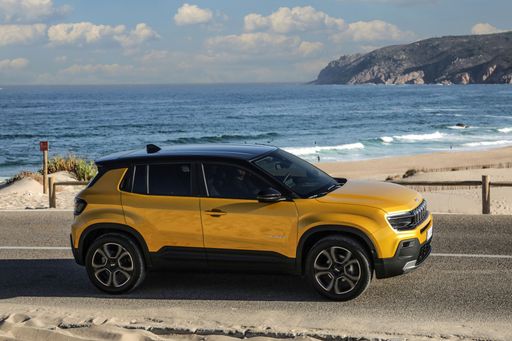
The Jeep Avenger mixes rugged styling with a compact, city‑friendly footprint that makes it easy to maneuver while keeping Jeep’s adventurous character. Inside it offers a practical, modern cabin with sensible tech and comfort aimed at everyday driving and light weekend getaways.

details

Ford Puma

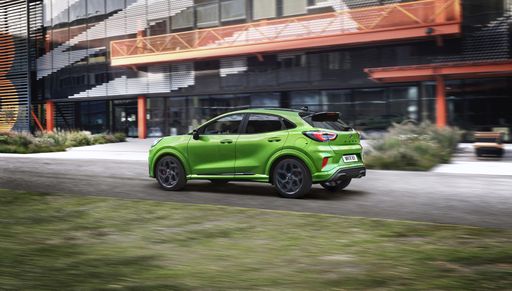
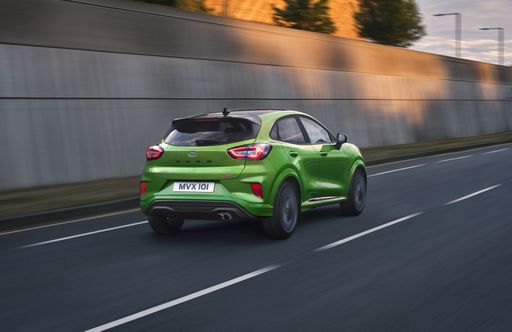
The Ford Puma blends sporty styling with practical everyday usability, making it a smart choice for drivers who want flair without sacrificing versatility. Its engaging driving character and clever interior packaging give it a more dynamic and useful feel than many rivals.

details
Jeep Avenger
Ford Puma

Costs and Consumption

Price
22,500 - 36,800 £
Price
23,900 - 36,300 £
Consumption L/100km
4.9 - 5.7 L/100km
Consumption L/100km
5.4 - 5.9 L/100km
Consumption kWh/100km
15.5 kWh/100km
Consumption kWh/100km
13 - 13.9 kWh/100km
Electric Range
400 km
Electric Range
404 - 417 km
Battery Capacity
-
Battery Capacity
-
co2
0 - 129 g/km
co2
0 - 135 g/km
Fuel tank capacity
-
Fuel tank capacity
-

Dimensions and Body

Body Type
SUV
Body Type
SUV
Seats
5
Seats
5
Doors
-
Doors
-
Curb weight
1,180 - 1,520 kg
Curb weight
1,316 - 1,563 kg
Trunk capacity
325 - 380 L
Trunk capacity
456 - 523 L
Length
-
Length
-
Width
1,776 mm
Width
1,805 mm
Height
-
Height
-
Max trunk capacity
-
Max trunk capacity
-
Payload
490 - 502 kg
Payload
367 - 469 kg

Engine and Performance

Engine Type
Petrol MHEV, Electric, Petrol
Engine Type
Petrol MHEV, Electric
Transmission
Automatic, Manuel
Transmission
Manuel, Automatic
Transmission Detail
Dual-Clutch Automatic, Reduction Gearbox, Manual Gearbox
Transmission Detail
Manual Gearbox, Dual-Clutch Automatic, Reduction Gearbox
Drive Type
Front-Wheel Drive, All-Wheel Drive
Drive Type
Front-Wheel Drive
Power HP
100 - 156 HP
Power HP
125 - 168 HP
Acceleration 0-100km/h
9 - 10.6 s
Acceleration 0-100km/h
7.4 - 9.8 s
Max Speed
-
Max Speed
-
Torque
205 - 260 Nm
Torque
170 - 290 Nm
Number of Cylinders
3
Number of Cylinders
3
Power kW
74 - 115 kW
Power kW
92 - 124 kW
Engine capacity
1,199 cm3
Engine capacity
999 cm3

General

Model Year
2026
Model Year
2,025 - 2,026
CO2 Efficiency Class
C, A, D
CO2 Efficiency Class
D, A
Brand
Jeep
Brand
Ford
DriveDuel uses data analysis and artificial intelligence to evaluate vehicle data and create content. Content is regularly reviewed and improved. The displayed prices are estimates based on German list prices, adjusted to the respective country’s VAT. Country-specific registration taxes are not included. This information is not legally binding.