VS

Jeep Avenger vs Volvo EX40 comparison

Compare performance (156 HP vs 442 HP), boot space and price (22,500 £ vs 42,800 £ ) at a glance. Find out which car is the better choice for you – Jeep Avenger or Volvo EX40?

Jeep Avenger vs Volvo EX40: Key differences

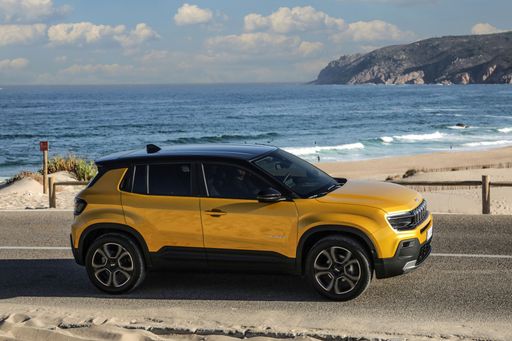
Jeep Avenger

4.2 (4 Reviews)
rate
  • significantly cheaper
  • only slightly more efficient
  • clearly lighter

Volvo EX40

5 (1 Reviews)
rate
  • clearly more power
  • visibly more electric range
  • substantially quicker 0–100 km/h
  • very slightly more trunk space

All details on performance, efficiency, range and trunk space can be found in the technical comparison below – including user reviews for both models.

Avenger

Jeep Avenger vs. Volvo EX40: Battle of the Compact SUVs

The automotive world has seen a remarkable shift towards innovative, eco-friendly solutions, and two brands are at the forefront: Jeep with its Avenger and Volvo's EX40. Both vehicles promise to deliver an exhilarating drive and cutting-edge technology, but how do they really stack up against each other? In this head-to-head comparison, we dissect the features, performance, and innovations of these two automotive marvels.
EX40

Design and Dimensions

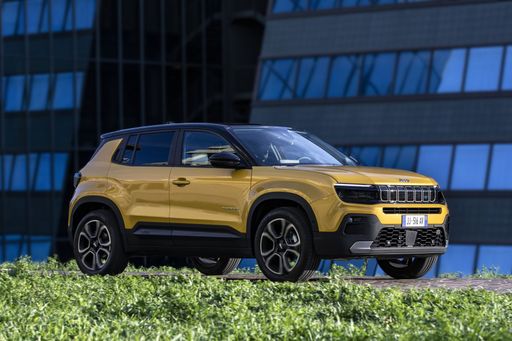
When it comes to design, the Jeep Avenger and Volvo EX40 embody the unique philosophies of their respective manufacturers. The Avenger is a compact SUV that measures 4,084 mm in length, making it slightly smaller than the Volvo EX40, which measures 4,440 mm. Both vehicles sport a modern and robust exterior, but the Avenger leans more towards rugged aesthetics typical of Jeep's off-road heritage.

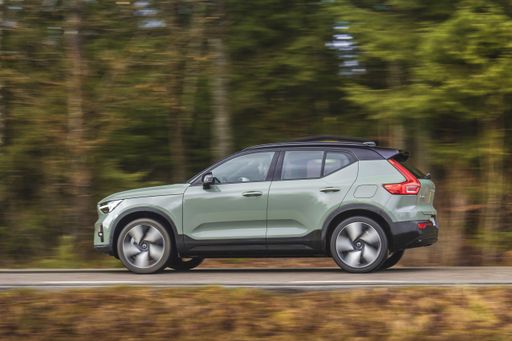
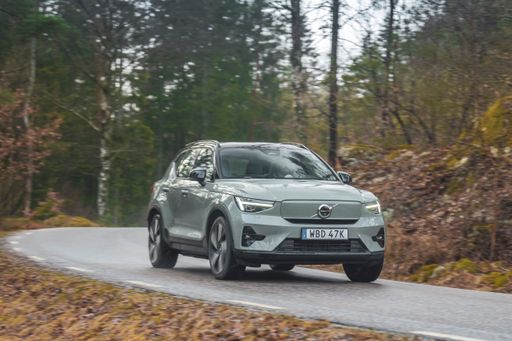
The Volvo EX40, on the other hand, offers a sleeker and more aerodynamic profile, in line with Volvo's reputation for understated elegance. The EX40 is also slightly wider at 1,863 mm compared to the Avenger’s width of 1,776 mm, which translates into more interior space and comfort.

Avenger

Powertrain and Performance

The Avenger comes versatile with multiple engine options, including electric, petrol MHEV, and petrol, catering to different preferences. The electric version offers a power output of 156 HP with a torque of 260 Nm. It boasts an impressive electric range of 400 km on a single charge, coupled with a battery capacity of 51 kWh. This configuration allows the electric Avenger to accelerate from 0 to 100 km/h in just 9 seconds.

In contrast, the Volvo EX40 is purely electric, offering two drivetrain options: rear-wheel drive and all-wheel drive. Its various configurations provide power outputs ranging from 238 HP to a commanding 408 HP, with torque figures reaching up to 670 Nm. The EX40’s electric range extends to a remarkable 576 km, depending on the model chosen, and it is supported by battery capacities of either 67 or 79 kWh. The fastest version of the EX40 can sprint from 0 to 100 km/h in a blistering 4.6 seconds, showcasing its superior performance edge.

EX40

Innovations and Technology

Both SUVs harness the latest in automotive technology, although their approaches differ. Jeep’s Avenger delivers a balance of practical daily usability with features like a dual-clutch automatic or manual gearbox for those who prefer traditional driving dynamics. Its onboard tech is designed to cater to enthusiasts who enjoy off-road adaptability without forsaking modern comforts.

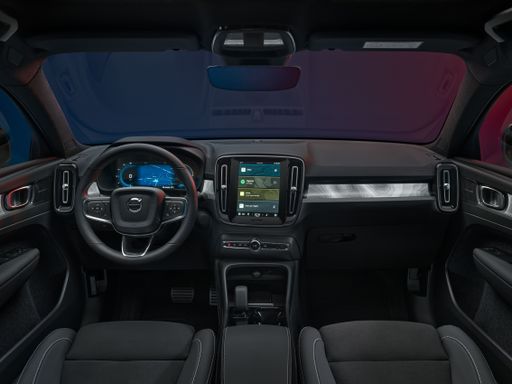
Volvo’s EX40, however, taps deep into a fully digital ecosystem. It offers an advanced reduction gearbox, seamless integration with infotainment, and smart autonomous drive capabilities. Volvo’s emphasis on safety is further solidified with extensive driver-assist features and its CO2 efficiency class of 'A', ensuring that the EX40 remains a leader in environmentally sustainable luxury vehicles.

Avenger

Conclusion

Choosing between the Jeep Avenger and the Volvo EX40 ultimately hinges on individual preferences and lifestyle needs. The Avenger is versatile, offering a tried-and-true SUV experience coupled with electric innovation for urban and off-road adventures. Meanwhile, the Volvo EX40 shines in its all-electric offering with powerful performance, extensive range, and top-tier technological advancements, catering to drivers looking for a high-tech, luxury experience. Both vehicles set remarkable standards in their class, ensuring that either choice is a step towards the future of mobility.

Here’s where it gets real: The technical differences in detail

Avenger

Costs and Efficiency:

Price and efficiency are key factors when choosing a car – and this is often where the real differences emerge.

Jeep Avenger is significantly cheaper – starting at 22,500 £ , while the Volvo EX40 costs 42,800 £ . That’s a price difference of around 20,306 £.

In terms of energy consumption, the Jeep Avenger is only slightly more efficient: consuming 15.5 kWh/100km compared to 16.6 kWh/100km for the Volvo EX40. That’s a difference of about 1.1 kWh/100km.

As for electric range, the Volvo EX40 offers visibly more range – reaching up to 576 km, about 176 km more than the Jeep Avenger.

EX40

Engine and Performance:

Power, torque and acceleration are the classic benchmarks for car enthusiasts – and here, some clear differences start to show.

When it comes to engine power, the Volvo EX40 offers clearly more power – delivering 442 HP compared to 156 HP. That’s roughly 286 HP more horsepower.

When accelerating from 0 to 100 km/h, the Volvo EX40 is substantially quicker – completing the sprint in 4.6 s, while the Jeep Avenger takes 9 s. That’s about 4.4 s quicker.

Looking at top speed, the Jeep Avenger is barely faster – reaching 194 km/h, while the Volvo EX40 tops out at 180 km/h. The difference is around 14 km/h.

There’s also a difference in torque: the Volvo EX40 delivers clearly more torque with 670 Nm compared to 260 Nm. That’s about 410 Nm more.

Avenger

Space and Everyday Use:

Beyond pure performance, interior space and usability matter most in daily life. This is where you see which car is more practical and versatile.

Both vehicles offer seating for 5 people.

In terms of curb weight, Jeep Avenger is clearly lighter – 1,180 kg compared to 2,040 kg. The difference is around 860 kg.

Looking at boot space, the Volvo EX40 offers very slightly more boot space – 410 L compared to 380 L. That’s a difference of about 30 L.

For maximum load capacity, the Volvo EX40 offers very slightly more capacity – up to 1,400 L, about 123 L more than the Jeep Avenger.

When it comes to payload, the Jeep Avenger carries marginally more – 502 kg compared to 480 kg. That’s a difference of about 22 kg.

Who wins the race in the data check?

The Volvo EX40 is decisively ahead in the objective data comparison.
This result only shows which model scores more points on paper – not which of the two cars feels right for you.

from £42,800
EX40

Volvo EX40

  • Engine Type : Electric
  • Transmission : Automatic
  • Drive Type : Rear-Wheel Drive, All-Wheel Drive
  • Power HP : 238 - 442 HP
  • Consumption kWh/100km : 16.6 - 17.6 kWh/100km
  • Electric Range : 480 - 576 km
Jeep Avenger
Volvo EX40

Costs and Consumption

View detailed analysis

Engine and Performance

View detailed analysis

Dimensions and Body

View detailed analysis

Jeep Avenger

The Jeep Avenger shrinks Jeep's boxy, adventurous styling into a city-friendly electric crossover that looks just as at home on tight streets as it does on muddy weekend lanes. It's a savvy pick for drivers who want go-anywhere attitude without the truck-size ego — practical inside, lively around town and ready to tackle a bit of rough stuff when the mood strikes.

details

Volvo EX40

The Volvo EX40 wraps Scandinavian calm and clever practicality into a compact electric package that feels both premium and refreshingly uncomplicated. It's the grown-up answer to flashier rivals — a safe, comfy, and city-friendly EV with thoughtful tech that makes everyday driving quietly satisfying.

details
Jeep Avenger
Volvo EX40

Costs and Consumption

Price
22,500 - 36,900 £
Price
42,800 - 58,200 £
Consumption L/100km
4.9 - 5.7 L/100km
Consumption L/100km
-
Consumption kWh/100km
15.5 kWh/100km
Consumption kWh/100km
16.6 - 17.6 kWh/100km
Electric Range
400 km
Electric Range
480 - 576 km
Battery Capacity
51 kWh
Battery Capacity
67 - 79 kWh
co2
0 - 129 g/km
co2
0 g/km
Fuel tank capacity
44 L
Fuel tank capacity
-

Dimensions and Body

Body Type
SUV
Body Type
SUV
Seats
5
Seats
5
Doors
5
Doors
5
Curb weight
1,180 - 1,520 kg
Curb weight
2,040 - 2,170 kg
Trunk capacity
325 - 380 L
Trunk capacity
410 L
Length
4,084 - 4,088 mm
Length
4,440 mm
Width
1,776 mm
Width
1,863 mm
Height
1,527 - 1,541 mm
Height
1,647 mm
Max trunk capacity
1,218 - 1,277 L
Max trunk capacity
1,400 L
Payload
494 - 502 kg
Payload
430 - 480 kg

Engine and Performance

Engine Type
Electric, Petrol MHEV, Petrol
Engine Type
Electric
Transmission
Automatic, Manuel
Transmission
Automatic
Transmission Detail
Reduction Gearbox, Dual-Clutch Automatic, Manual Gearbox
Transmission Detail
Reduction Gearbox
Drive Type
Front-Wheel Drive, All-Wheel Drive
Drive Type
Rear-Wheel Drive, All-Wheel Drive
Power HP
100 - 156 HP
Power HP
238 - 442 HP
Acceleration 0-100km/h
9 - 10.6 s
Acceleration 0-100km/h
4.6 - 7.3 s
Max Speed
150 - 194 km/h
Max Speed
180 km/h
Torque
205 - 260 Nm
Torque
420 - 670 Nm
Number of Cylinders
3
Number of Cylinders
-
Power kW
74 - 115 kW
Power kW
175 - 325 kW
Engine capacity
1,199 cm3
Engine capacity
-

General

Model Year
2,023 - 2,026
Model Year
2,024
CO2 Efficiency Class
A, C, D
CO2 Efficiency Class
A
Brand
Jeep
Brand
Volvo
DriveDuel uses data analysis and artificial intelligence to evaluate vehicle data and create content. Content is regularly reviewed and improved. The displayed prices are estimates based on German list prices, adjusted to the respective country’s VAT. Country-specific registration taxes are not included. This information is not legally binding.