VS

Kia Sportage vs Audi Q5 comparison

Compare performance (288 HP vs 367 HP), boot space and price (30,200 £ vs 46,400 £ ) at a glance. Find out which car is the better choice for you – Kia Sportage or Audi Q5?

Kia Sportage vs Audi Q5: Key differences

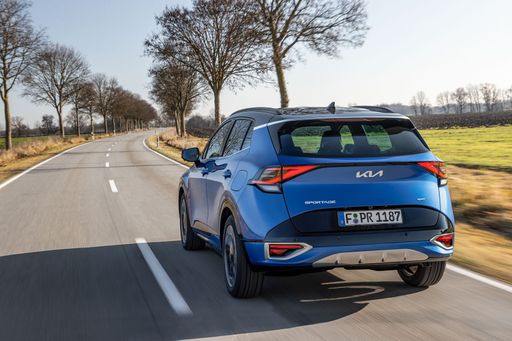
Kia Sportage

5 (3 Reviews)
rate
  • substantially cheaper
  • visibly lighter
  • slightly more trunk space
details

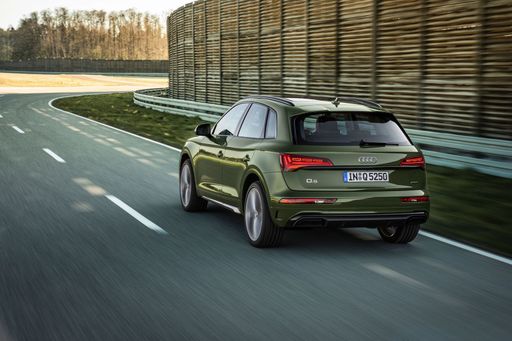
Audi Q5

4.4 (6 Reviews)
rate
  • markedly more power
  • a bit more efficient
  • visibly more electric range
  • substantially quicker 0–100 km/h
details

All details on performance, efficiency, range and trunk space can be found in the technical comparison below – including user reviews for both models.

By Achim Sedelmaier

Sportage

Compact SUV Face-Off: Audi Q5 vs Kia Sportage

The compact SUV market continues to thrive with increasingly advanced and performance-oriented models. In this article, we closely examine two of the prominent contenders: the Audi Q5 and the Kia Sportage. Both vehicles promise a blend of style, innovation, and functionality. Here, we’ll delve into their technical aspects and distinctive innovations.
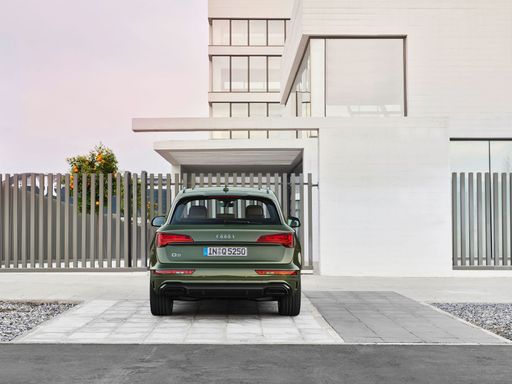
Q5

Under the Hood: Power and Performance

The Audi Q5 offers a diverse range of engine options, suiting different driver preferences. It provides a choice between diesel and petrol engines, both with a mild-hybrid (MHEV) variant, as well as a plug-in hybrid option. Power output varies from a solid 163 HP to a robust 367 HP, claiming impressive acceleration times ranging from 4.5 to 9 seconds for a 0-100 km/h sprint. The Q5 also features both all-wheel and front-wheel drive, catering to various driving needs.

On the other hand, the Kia Sportage spans a range that includes diesel and petrol MHEVs, a full hybrid, and a plug-in hybrid variant. The power spectrum for the Sportage is slightly more modest, ranging from 136 HP to 252 HP. While it may not match the blistering pace of the Q5, the Sportage still provides a lively driving experience with 0-100 km/h times from 8.3 to 11.6 seconds. Like the Q5, it is available with both front-wheel and all-wheel drive configurations.

Sportage

Fuel Efficiency and Eco-Friendliness

In terms of fuel consumption, the Audi Q5 delivers an impressive array of figures, thanks to its variety of engine options. Fuel efficiency ranges from 1.5 L/100 km for the plug-in hybrid to more conventional figures up to 8.4 L/100 km for larger engine sizes. Additionally, the Q5 offers an electric-only range of up to 62 km, emphasizing its eco-friendly credentials.

The Kia Sportage, meanwhile, edges closer in terms of frugality with its plug-in hybrid achieving as low as 1.2 L/100 km. Other variants offer consumption figures between 5 and 7.2 L/100 km. The Sportage features an electric range of 64 km, showcasing its effectiveness as a hybrid contender.

Q5

Dimensions and Capacity: Practicality for Daily Needs

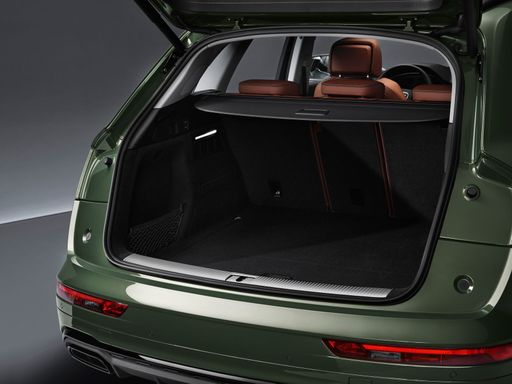
As versatile SUVs, both the Audi Q5 and Kia Sportage provide ample space for passengers and cargo. The Q5 slightly edges out with trunk capacities ranging from 455 to 520 L, while the Sportage offers a slightly more expansive range from 526 to 587 L. Both SUVs comfortably seat five, making them ideal for family outings.

In terms of external dimensions, the Q5’s body measures between 4682 mm to 4717 mm in length. It stands taller with a height range from 1633 mm to 1662 mm, accommodating its robust design. In contrast, the Sportage is more compact at 4515 mm in length and 1650 mm in height, which might appeal to those looking for an easier-to-maneuver vehicle.

Sportage

Innovations in Technology and Comfort

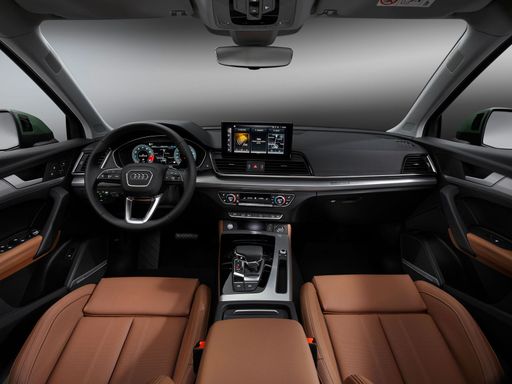
Audi has embedded its Q5 with advanced technology, emphasizing both luxury and safety. The vehicle boasts features such as a virtual cockpit, advanced driver assistance systems, and a top-notch infotainment experience that aligns with its premium image.

The Kia Sportage doesn't lag far behind, offering cutting-edge features like an all-digital dashboard, comprehensive connectivity options, and an extensive suite of safety technologies. These components have been designed to enhance the driving experience and cater to tech-savvy consumers.

Q5

Conclusion: Choosing Between the Two

The Audi Q5 and Kia Sportage both represent strong contenders within the compact SUV segment. The Q5 appeals to drivers seeking performance, luxury, and an impressive array of powertrain options. On the other hand, the Kia Sportage stands out with its strong efficiency credentials, competitive pricing, and practical design.

Ultimately, the choice between these two will depend on individual preferences for performance, style, and technology, catering to diverse consumer needs within the bustling automotive landscape.

Here’s where it gets real: The technical differences in detail

Sportage

Costs and Efficiency:

Price and efficiency are key factors when choosing a car – and this is often where the real differences emerge.

Kia Sportage is substantially cheaper – starting at 30,200 £ , while the Audi Q5 costs 46,400 £ . That’s a price difference of around 16,209 £.

Fuel consumption also shows a difference: the Audi Q5 uses 2.5 L/100km and is a bit more efficient than the Kia Sportage with 2.9 L/100km. The difference is about 0.4 L/100km.

As for electric range, the Audi Q5 offers visibly more range – reaching up to 100 km, about 34 km more than the Kia Sportage.

Q5

Engine and Performance:

Under the bonnet, it becomes clear which model is tuned for sportiness and which one takes the lead when you hit the accelerator.

When it comes to engine power, the Audi Q5 offers markedly more power – delivering 367 HP compared to 288 HP. That’s roughly 79 HP more horsepower.

When accelerating from 0 to 100 km/h, the Audi Q5 is substantially quicker – completing the sprint in 4.5 s, while the Kia Sportage takes 7.5 s. That’s about 3 s quicker.

There’s also a difference in torque: the Audi Q5 delivers visibly more torque with 580 Nm compared to 380 Nm. That’s about 200 Nm more.

Sportage

Space and Everyday Use:

Whether family car or daily driver – which one offers more room, flexibility and comfort?

Both vehicles offer seating for 5 people.

In terms of curb weight, Kia Sportage is visibly lighter – 1,552 kg compared to 1,910 kg. The difference is around 358 kg.

Looking at boot space, the Kia Sportage offers slightly more boot space – 587 L compared to 520 L. That’s a difference of about 67 L.

When it comes to payload, the Kia Sportage carries barely more – 580 kg compared to 565 kg. That’s a difference of about 15 kg.

Who wins the race in the data check?

The Audi Q5 is clearly superior overall in the objective data comparison.
This result only shows which model scores more points on paper – not which of the two cars feels right for you.

from £46,400
Q5

Audi Q5

  • Engine Type : Plugin Hybrid, Petrol MHEV, Diesel MHEV
  • Transmission : Automatic
  • Drive Type : All-Wheel Drive, Front-Wheel Drive
  • Power HP : 204 - 367 HP
  • Consumption L/100km : 2.5 - 8.3 L/100km
  • Electric Range : 92 - 100 km
Kia Sportage
Audi Q5

Costs and Consumption

View detailed analysis

Engine and Performance

View detailed analysis

Dimensions and Body

View detailed analysis

Kia Sportage

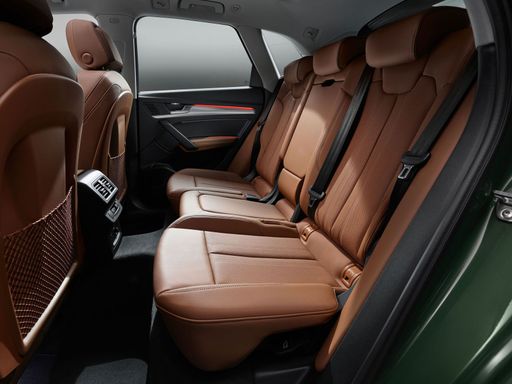
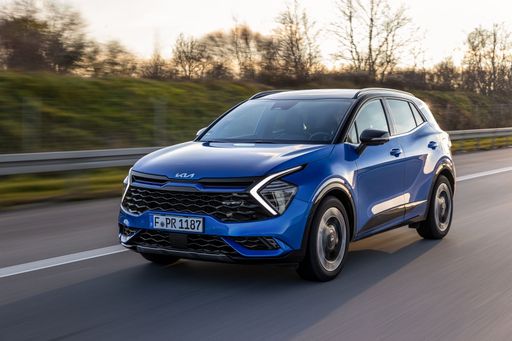
The Kia Sportage proves you don't have to choose between style and sensible family motoring, wrapping modern, confident looks around a roomy, well-equipped cabin. It's an easy car to live with — comfortable on daily runs, pleasantly engaging when you want a bit of fun, and kind to your wallet so you can keep smiling at the fuel pump.

details

Audi Q5

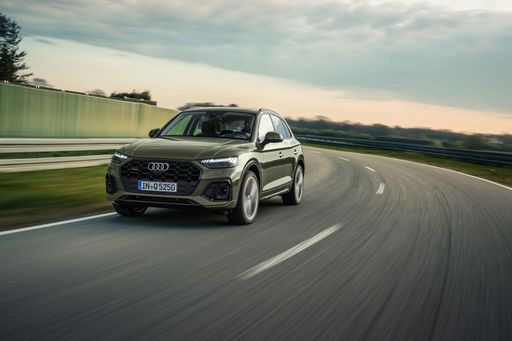
The Audi Q5 feels like the sensible luxury choice — polished cabin materials, a calm ride and enough tech to keep commuters and weekend adventurers equally pleased. It won't shout for attention but will quietly check the boxes for buyers who want refinement, space and everyday usability with a dash of Audi charisma.

details
Kia Sportage
Audi Q5

Costs and Consumption

Price
30,200 - 47,100 £
Price
46,400 - 79,600 £
Consumption L/100km
2.9 - 7.8 L/100km
Consumption L/100km
2.5 - 8.3 L/100km
Consumption kWh/100km
-
Consumption kWh/100km
-
Electric Range
63 - 66 km
Electric Range
92 - 100 km
Battery Capacity
-
Battery Capacity
-
co2
67 - 177 g/km
co2
56 - 189 g/km
Fuel tank capacity
-
Fuel tank capacity
-

Dimensions and Body

Body Type
SUV
Body Type
SUV
Seats
5
Seats
5
Doors
-
Doors
-
Curb weight
1,552 - 1,896 kg
Curb weight
1,910 - 2,245 kg
Trunk capacity
526 - 587 L
Trunk capacity
433 - 520 L
Length
-
Length
-
Width
1,865 mm
Width
1,900 mm
Height
-
Height
-
Max trunk capacity
-
Max trunk capacity
-
Payload
533 - 580 kg
Payload
490 - 565 kg

Engine and Performance

Engine Type
Petrol, Full Hybrid, Diesel MHEV, Plugin Hybrid
Engine Type
Plugin Hybrid, Petrol MHEV, Diesel MHEV
Transmission
Manuel, Automatic
Transmission
Automatic
Transmission Detail
Manual Gearbox, Dual-Clutch Automatic, Automatic Gearbox
Transmission Detail
Dual-Clutch Automatic
Drive Type
Front-Wheel Drive, All-Wheel Drive
Drive Type
All-Wheel Drive, Front-Wheel Drive
Power HP
136 - 288 HP
Power HP
204 - 367 HP
Acceleration 0-100km/h
7.5 - 11.6 s
Acceleration 0-100km/h
4.5 - 8.6 s
Max Speed
-
Max Speed
-
Torque
250 - 380 Nm
Torque
340 - 580 Nm
Number of Cylinders
4
Number of Cylinders
4 - 6
Power kW
100 - 212 kW
Power kW
150 - 270 kW
Engine capacity
1,598 cm3
Engine capacity
1,968 - 2,995 cm3

General

Model Year
2,025 - 2,026
Model Year
2025
CO2 Efficiency Class
F, D, E, G, B
CO2 Efficiency Class
B, E, F, G
Brand
Kia
Brand
Audi
DriveDuel uses data analysis and artificial intelligence to evaluate vehicle data and create content. Content is regularly reviewed and improved. The displayed prices are estimates based on German list prices, adjusted to the respective country’s VAT. Country-specific registration taxes are not included. This information is not legally binding.