VS

Land Rover Discovery Sport vs Dacia Bigster comparison

Compare performance (269 HP vs 158 HP), boot space and price (46,500 £ vs 20,600 £ ) at a glance. Find out which car is the better choice for you – Land Rover Discovery Sport or Dacia Bigster?

Land Rover Discovery Sport vs Dacia Bigster: Key differences

Land Rover Discovery Sport

4.9 (2 Reviews)
rate
  • clearly more power
  • slightly more efficient
  • visibly quicker 0–100 km/h
  • a bit more trunk space
details

Dacia Bigster

4.6 (10 Reviews)
rate
  • clearly cheaper
  • clearly lighter
details

All details on performance, efficiency, range and trunk space can be found in the technical comparison below – including user reviews for both models.

By Achim Sedelmaier

Discovery Sport

An SUV Showdown: Land Rover Discovery Sport vs. Dacia Bigster

When it comes to SUVs, few segments offer as much versatility and appeal as the compact SUV class. The year 2024 brings us an exciting showdown between two compelling contenders: the Land Rover Discovery Sport and the Dacia Bigster. These vehicles combine rugged capability with modern conveniences, but each takes a distinct approach to the SUV formula. Let's dive into the technical details and innovations that set these models apart.
Bigster

Powertrain and Performance

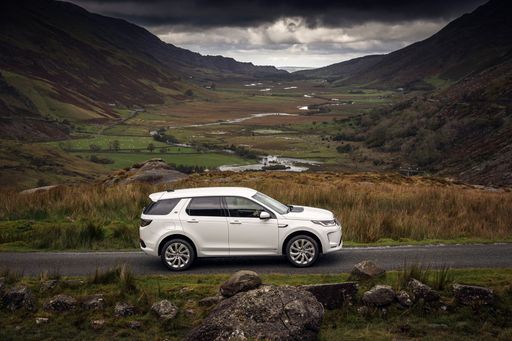
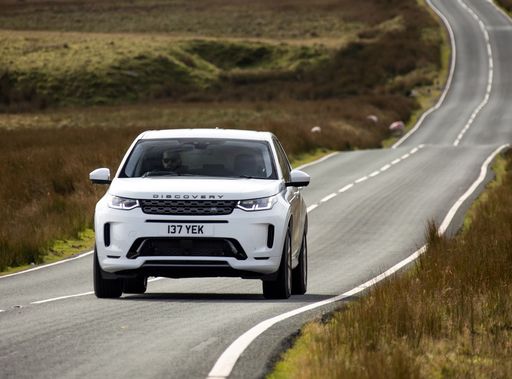
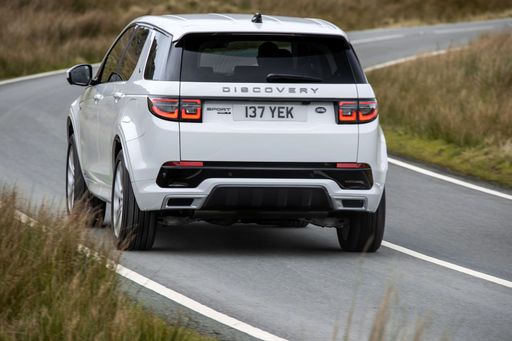
The Land Rover Discovery Sport offers a range of powertrains to suit diverse preferences. With options including Diesel Mild Hybrid Electric Vehicle (MHEV) and Plugin Hybrid setups, it caters to eco-conscious drivers and performance enthusiasts alike. The Discovery Sport's engine options boast outputs of 163, 204, and an impressive 269 HP, mated to an Automatic Gearbox. A highlight is its Plugin Hybrid variant, achieving an electric range of 60 km with a 12.2 kWh battery, and accelerating from 0-100 km/h as quickly as 7.4 seconds.

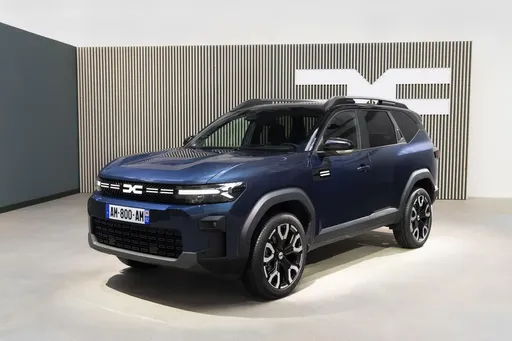
In contrast, the Dacia Bigster presents a selection of Petrol MHEV, Full Hybrid, and LPG engines. Its powertrain offers outputs ranging from 130 to 155 HP, and a straightforward manual gearbox. Those prioritizing efficiency will appreciate its Full Hybrid option, which features a combined fuel consumption as low as 4.7 L/100km. The Bigster reaches a 0-100 km/h sprint in under 10 seconds, highlighting its practical yet engaging performance.

Discovery Sport

Efficiency and Environmental Impact

CO2 emissions play a significant role in the modern automotive landscape. The Discovery Sport, with its advanced hybrid technologies, manages CO2 emissions ranging from 38 to 186 g/km, depending on the selected powertrain. Its CO2 efficiency class varies, with the Plugin Hybrid achieving a respectable "B" class rating.

The Bigster, on the other hand, emphasizes affordability and efficiency, with CO2 emissions between 106 and 137 g/km. It achieves a balanced footprint, with CO2 efficiency classes spanning from "C" to "E." Its eco-friendly options and practical fuel consumption make it an attractive choice for the budget-conscious and environmentally aware.

Bigster

Dimensions and Practicality

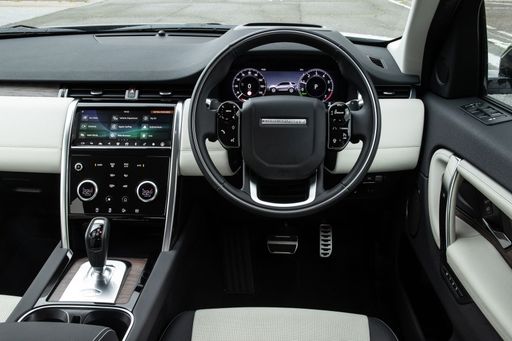
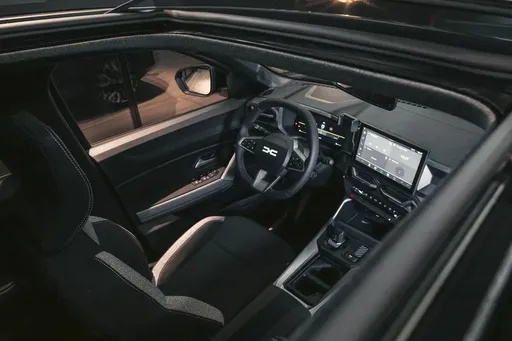
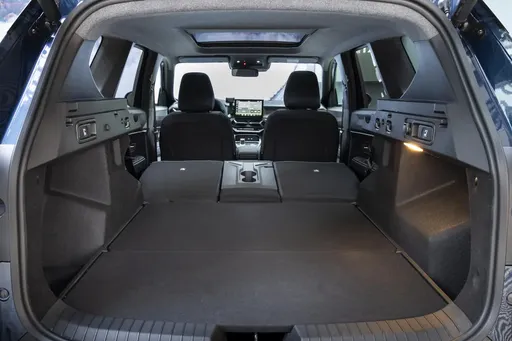
Space and versatility are critical factors for SUV buyers. The Discovery Sport impresses with a robust 4597 mm length and a generous 780-liter trunk capacity, making it ideal for family outings and adventure trips. It accommodates five passengers with ample comfort, enhanced by its sophisticated interior design.

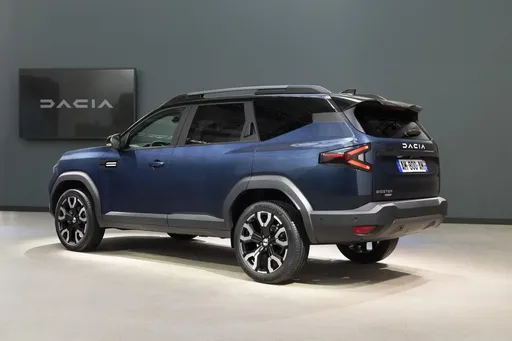
The Bigster, while slightly shorter at 4570 mm, maintains a practical approach with cargo capacities of up to 667 liters. This, combined with a lower curb weight range between 1425 to 1503 kg, enhances agility and driving dynamics. Its straightforward design ensures reliability and convenience for everyday use.

Discovery Sport

Conclusion: The Rugged vs. the Practical

Both the Land Rover Discovery Sport and Dacia Bigster offer unique takes on the modern SUV. The Discovery Sport stands out with its luxurious appointments and advanced hybrid technology, appealing to those who seek performance with green credentials. Meanwhile, the Bigster provides a no-frills, efficient SUV for those who emphasize practicality and budget without compromising on style and capability.

Ultimately, the choice between the two will come down to individual preferences and priorities, whether it’s the embrace of cutting-edge hybrid technology and a premium experience or opting for efficient simplicity and robust utility.

Here’s where it gets real: The technical differences in detail

Discovery Sport

Costs and Efficiency:

Price and efficiency are key factors when choosing a car – and this is often where the real differences emerge.

Dacia Bigster is clearly cheaper – starting at 20,600 £ , while the Land Rover Discovery Sport costs 46,500 £ . That’s a price difference of around 25,895 £.

Fuel consumption also shows a difference: the Land Rover Discovery Sport uses 4.2 L/100km and is slightly more efficient than the Dacia Bigster with 4.7 L/100km. The difference is about 0.5 L/100km.

Bigster

Engine and Performance:

Power, torque and acceleration are the classic benchmarks for car enthusiasts – and here, some clear differences start to show.

When it comes to engine power, the Land Rover Discovery Sport offers clearly more power – delivering 269 HP compared to 158 HP. That’s roughly 111 HP more horsepower.

When accelerating from 0 to 100 km/h, the Land Rover Discovery Sport is visibly quicker – completing the sprint in 7.4 s, while the Dacia Bigster takes 9.7 s. That’s about 2.3 s quicker.

There’s also a difference in torque: the Land Rover Discovery Sport delivers considerably more torque with 540 Nm compared to 230 Nm. That’s about 310 Nm more.

Discovery Sport

Space and Everyday Use:

Whether family car or daily driver – which one offers more room, flexibility and comfort?

Both vehicles offer seating for 5 people.

In terms of curb weight, Dacia Bigster is clearly lighter – 1,425 kg compared to 1,949 kg. The difference is around 524 kg.

Looking at boot space, the Land Rover Discovery Sport offers a bit more boot space – 780 L compared to 667 L. That’s a difference of about 113 L.

When it comes to payload, the Land Rover Discovery Sport carries markedly more – 641 kg compared to 465 kg. That’s a difference of about 176 kg.

Who wins the race in the data check?

The Land Rover Discovery Sport holds a decisive overall lead in the objective data comparison.
This result only shows which model scores more points on paper – not which of the two cars feels right for you.

from £46,500
Discovery Sport

Land Rover Discovery Sport

  • Engine Type Diesel MHEV, Plugin Hybrid
  • Transmission Automatic
  • Drive Type All-Wheel Drive
  • Power HP 163 - 269 HP
  • Consumption L/100km 4.2 - 7.1 L/100km
  • Electric Range 58 km
Land Rover Discovery Sport
Dacia Bigster

Costs and Consumption

View detailed analysis

Engine and Performance

View detailed analysis

Dimensions and Body

View detailed analysis

Land Rover Discovery Sport

Discovery Sport wears Land Rover’s rugged badge with compact poise, blending a comfortable, well-crafted cabin and genuine off-road confidence for buyers who want versatility without showroom bluster. It settles smoothly on the road with composed manners and a cheeky British charm, making it an appealing pick for families who crave practicality with a hint of adventure.

details

Dacia Bigster

The Dacia Bigster is a straightforward, value-driven SUV that emphasizes space, practicality and low running costs rather than flashy tech. It’s a sensible choice for buyers who want a roomy, well-built family car with rugged styling and easy-to-use features at an affordable price.

details
Land Rover Discovery Sport
Dacia Bigster

Costs and Consumption

Price
46,500 - 65,700 £
Price
20,600 - 28,100 £
Consumption L/100km
4.2 - 7.1 L/100km
Consumption L/100km
4.7 - 7.2 L/100km
Consumption kWh/100km
-
Consumption kWh/100km
-
Electric Range
58 km
Electric Range
-
Battery Capacity
-
Battery Capacity
-
co2
95 - 187 g/km
co2
106 - 134 g/km
Fuel tank capacity
-
Fuel tank capacity
-

Dimensions and Body

Body Type
SUV
Body Type
SUV
Seats
5
Seats
5
Doors
-
Doors
-
Curb weight
1,949 - 2,168 kg
Curb weight
1,425 - 1,611 kg
Trunk capacity
780 L
Trunk capacity
444 - 667 L
Length
-
Length
-
Width
1,894 mm
Width
1,813 mm
Height
-
Height
-
Max trunk capacity
-
Max trunk capacity
-
Payload
582 - 641 kg
Payload
434 - 465 kg

Engine and Performance

Engine Type
Diesel MHEV, Plugin Hybrid
Engine Type
Petrol MHEV, Full Hybrid, LPG
Transmission
Automatic
Transmission
Manuel, Automatic
Transmission Detail
Automatic Gearbox
Transmission Detail
Manual Gearbox, Automated Manual, Dual-Clutch Automatic
Drive Type
All-Wheel Drive
Drive Type
Front-Wheel Drive, All-Wheel Drive
Power HP
163 - 269 HP
Power HP
140 - 158 HP
Acceleration 0-100km/h
7.4 - 10.2 s
Acceleration 0-100km/h
9.7 - 10.5 s
Max Speed
-
Max Speed
-
Torque
380 - 540 Nm
Torque
230 Nm
Number of Cylinders
3 - 4
Number of Cylinders
3 - 4
Power kW
120 - 198 kW
Power kW
103 - 116 kW
Engine capacity
1,498 - 1,998 cm3
Engine capacity
1,199 - 1,789 cm3

General

Model Year
2025
Model Year
2025
CO2 Efficiency Class
G, B
CO2 Efficiency Class
D, C
Brand
Land Rover
Brand
Dacia
DriveDuel uses data analysis and artificial intelligence to evaluate vehicle data and create content. Content is regularly reviewed and improved. The displayed prices are estimates based on German list prices, adjusted to the respective country’s VAT. Country-specific registration taxes are not included. This information is not legally binding.